


Toilet Problems and Common Troubleshooting Checks
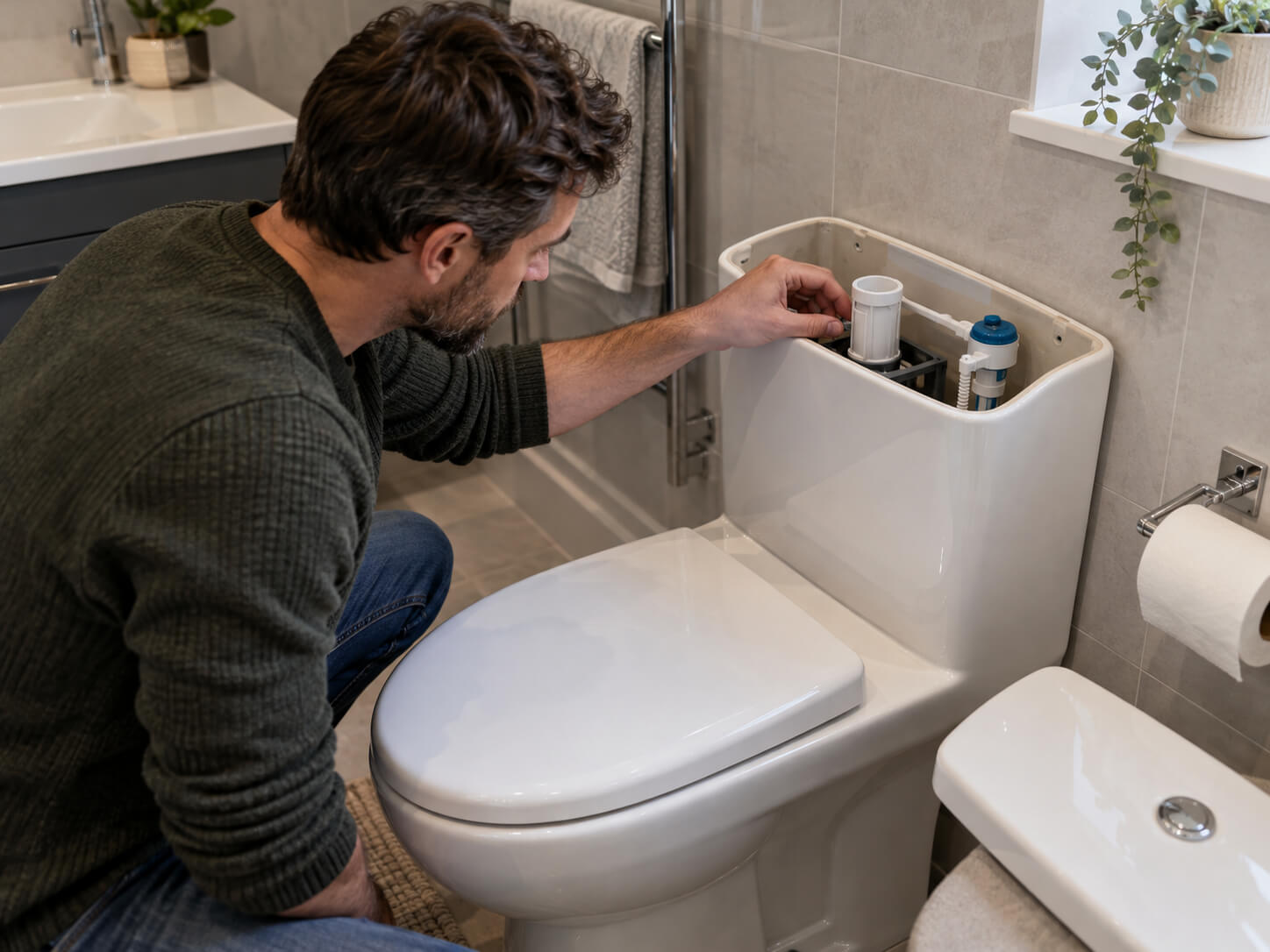
Toilet problems can come from the cistern, flush mechanism, inlet components, seals or the way water moves through the toilet. The most useful first step is to identify the symptom, when it happens and whether the toilet uses a push-button, dual-flush, siphon or concealed cistern system.
This guide explains how to recognise common toilet issues, distinguish between different toilet and flush-system problems, carry out safe initial checks and choose the correct troubleshooting guide when a more specific fault is identified.
Common Toilet Problem Checks
- Notice exactly what happens before, during and after the toilet is flushed
- Identify whether the toilet uses a push-button, dual-flush, siphon or other flush mechanism
- Check whether the cistern is visible, concealed or built into a wall-mounted toilet system
- Look for obvious water movement, unusual noises or accessible components that are not operating normally
- Use the booking form to describe the symptom and the type of toilet or flush system involved


Who will come to my home?
A certified local plumber from our vetted network, on the day and time you choose. You get a confirmation by email as soon as you book.
Are the parts included?
Small parts like washers, seals, valves and flush mechanisms are always included: the plumber brings the right one. For things you choose, like taps, toilets or radiators, you can supply your own or the plumber brings a standard one, as shown on your quote.
What if the plumber finds something else?
The fixed price covers the work on your quote. If the plumber finds something different on site, they explain it and quote it before starting, and you decide whether to go ahead.
What does the call-out fee cover?
When a fault needs to be found first, the plumber diagnoses it at your property and repairs what they can on the spot, with up to 1 hour of work included.
Do I pay now?
No. You see the price, then pick a date and time. Payment is only confirmed at checkout, and cancellation is free.

Recently booked jobs



What Are the Most Common Toilet Problems?
Common toilet problems can usually be narrowed down by looking at what happens before, during and after the toilet is flushed. The cistern may fail to refill normally, water may continue running, the flush may become weak or stop working, or water may appear where it should not.
The symptom is more useful than immediately assuming which component has failed. Different toilet designs use different fill valves, flush valves, siphons, buttons and concealed mechanisms, so identifying the behaviour first helps point the investigation in the right direction.
| What the Toilet Is Doing | Where to Continue Troubleshooting |
|---|---|
| The cistern does not refill normally after flushing | See our toilet cistern not filling guide |
| Water continues flowing after the flush has finished | See our toilet keeps running guide |
| The toilet will not flush or the flush is not working correctly | See our toilet not flushing guide |
| Water is appearing around the toilet, cistern or connected pipework | See our leaking toilet guide |
How to Identify What Type of Toilet Problem You Have
Identifying the toilet type and flush mechanism can make a fault easier to understand because different systems operate in different ways. A push-button toilet may use a modern flush valve, while an older lever-operated toilet may use a siphon mechanism. Concealed and wall-hung systems place more of the working parts behind a panel or inside the wall.
Before removing covers or adjusting components, check what is safely visible and note where the problem appears to originate. The type of mechanism can provide useful context, but the actual symptom should still determine which fault is investigated further.
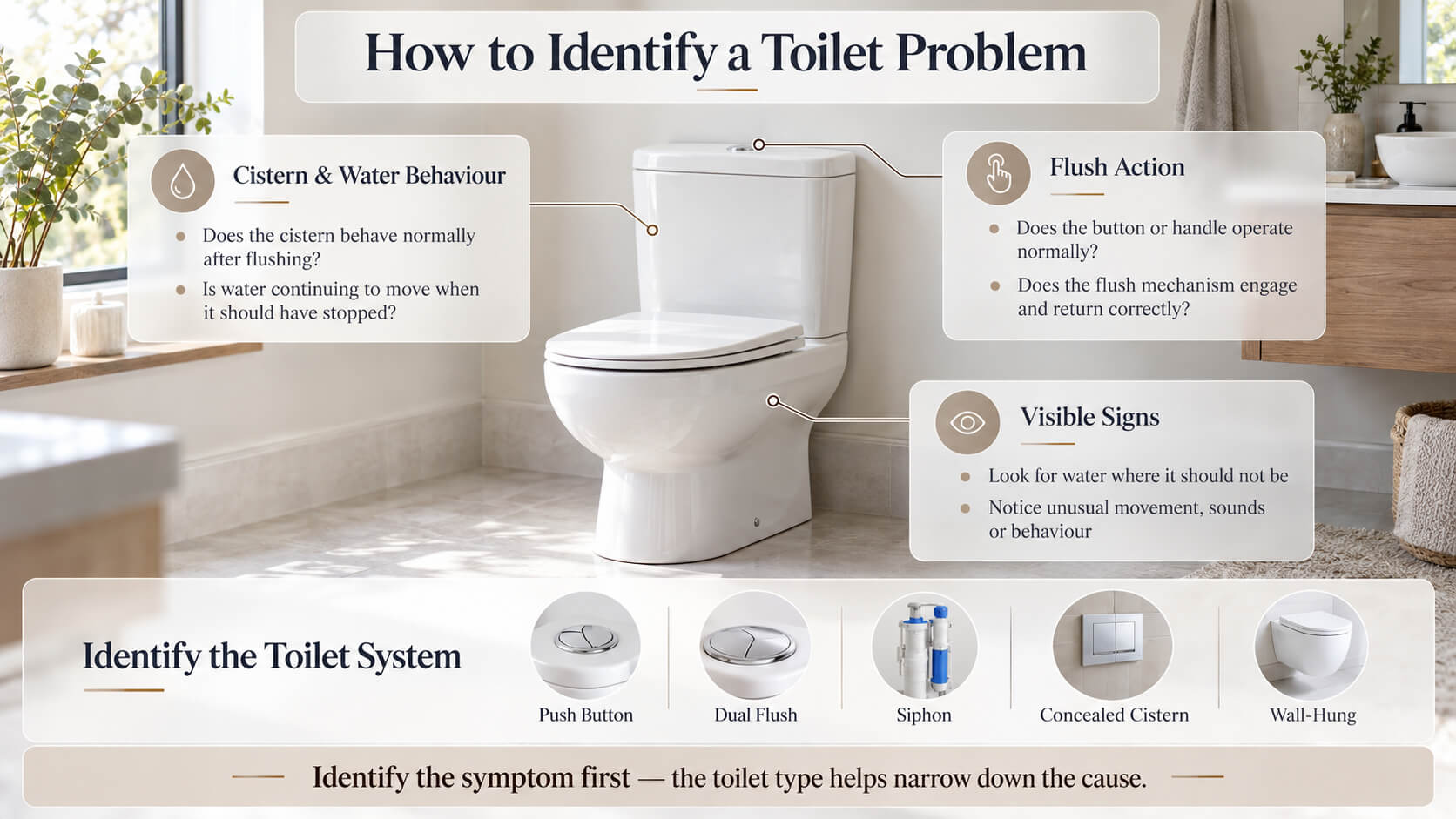
Push-Button Toilet Problems
Push-button toilet problems can involve the button, connecting mechanism or flush valve that the button operates. A button that feels loose, stiff or fails to return normally can provide a useful clue, but the underlying fault may still be elsewhere inside the cistern.
A push-button design does not automatically identify the cause. If the main symptom is that the toilet will not flush, continues running or does not refill, that specific symptom should be followed rather than treating every push-button fault as the same problem.
Dual-Flush Toilet Problems
Dual-flush toilet problems can affect either flush setting, the push-button assembly or the valve mechanism inside the cistern. Comparing whether the small and full flush behave differently can help narrow down which part of the mechanism may not be operating normally.
Modern dual-flush valves vary between manufacturers, so components should not be forced or dismantled simply because another toilet uses a similar-looking mechanism. Start with the visible behaviour and the specific symptom before deciding whether further access is necessary.
Concealed Cistern and Wall-Hung Toilet Problems
Concealed toilet cistern problems can be harder to inspect because the working components are positioned behind a flush plate, access panel or wall system. The same basic symptoms can still occur, but access to the fill and flush mechanisms may be more restricted than with a conventional exposed cistern.
Only use the access points intended by the toilet system. Fixed panels, tiles or wall finishes should not be removed merely to investigate a fault unless there is a clear reason and the system has been identified correctly.
Siphon and Traditional Flush Mechanism Problems
Older toilets may use a siphon rather than the drop-valve mechanisms found in many modern cisterns. The lever, linkage and siphon work together to initiate the flush, so the way the handle feels and how the flush responds can help distinguish a mechanism problem from another toilet fault.
A weak or failed flush should still be diagnosed by its specific behaviour rather than by replacing the siphon automatically. The toilet design is a useful clue, not a diagnosis by itself.
What Should You Check Before Investigating a Toilet Fault?
Before investigating a toilet fault, check the visible symptom, listen for unusual water movement and identify which parts can be accessed safely. Avoid dismantling valves, cistern fittings or concealed mechanisms while water is still flowing unless the relevant supply has been isolated correctly.
It can also help to operate the toilet once or twice while observing what happens inside an accessible cistern. Note whether water enters normally, whether the flush mechanism returns to its resting position and whether the problem starts immediately or only after the cistern has refilled.
Check Whether the Problem Is Inside the Toilet or Further Down the Drainage
Not every toilet problem comes from the cistern or flush mechanism. If the bowl water rises unusually high, drains very slowly or the toilet repeatedly blocks, the problem may involve the waste pipe or drainage system rather than the internal toilet components.
That distinction matters because adjusting the flush or fill mechanism will not solve a downstream blockage. Avoid repeatedly flushing a toilet that is close to overflowing, as this can increase the risk of water escaping from the bowl.
Check Whether the Water Supply Can Be Isolated Safely
If a toilet component needs to be opened, removed or adjusted, the water supply should be isolated before work begins. Some toilets have a local isolation valve on the supply pipe, while others may require the wider household water supply to be controlled.
If the supply cannot be isolated confidently, or the valve is difficult to access or operate, do not force fittings or continue dismantling the toilet while water is still available to the cistern.
When Does a Toilet Problem Need Professional Attention?
A toilet problem may need professional attention when the cause cannot be identified safely, the fault keeps returning or access to the relevant components is restricted. Concealed cisterns, damaged fittings and faults involving several connected components can require more investigation than a straightforward visible adjustment.
Prompt attention is also sensible when water is escaping onto floors or walls, the toilet cannot be used normally, or there is uncertainty about whether the problem comes from the toilet itself or the drainage system.
Frequently Asked Questions About Toilet Problems


Push-button toilets are generally reliable when the button, linkage and flush valve are correctly adjusted and in good condition. Problems can develop if the button becomes stiff, the connection to the valve moves out of position or internal parts wear over time, but the push-button design itself does not necessarily make a toilet unreliable.
Dual-flush toilets do not automatically have more problems, although their mechanisms can contain more moving parts than some simpler toilet systems. Reliability depends more on the design, installation, adjustment and condition of the flush valve and button assembly than on the fact that the toilet has two flush settings.
No, a problem with a wall-hung toilet is not always caused by the concealed cistern. The fault may involve the flush plate, operating mechanism, water supply, connections or another accessible part of the toilet system, so the visible symptom should be identified before assuming the concealed cistern needs to be opened.
A flush mechanism fault may be suspected when the button or handle does not engage normally, feels unusually loose or stiff, or fails to return to its normal position. The mechanism type should be identified before parts are adjusted or replaced, because siphons, drop valves and dual-flush systems operate differently.