


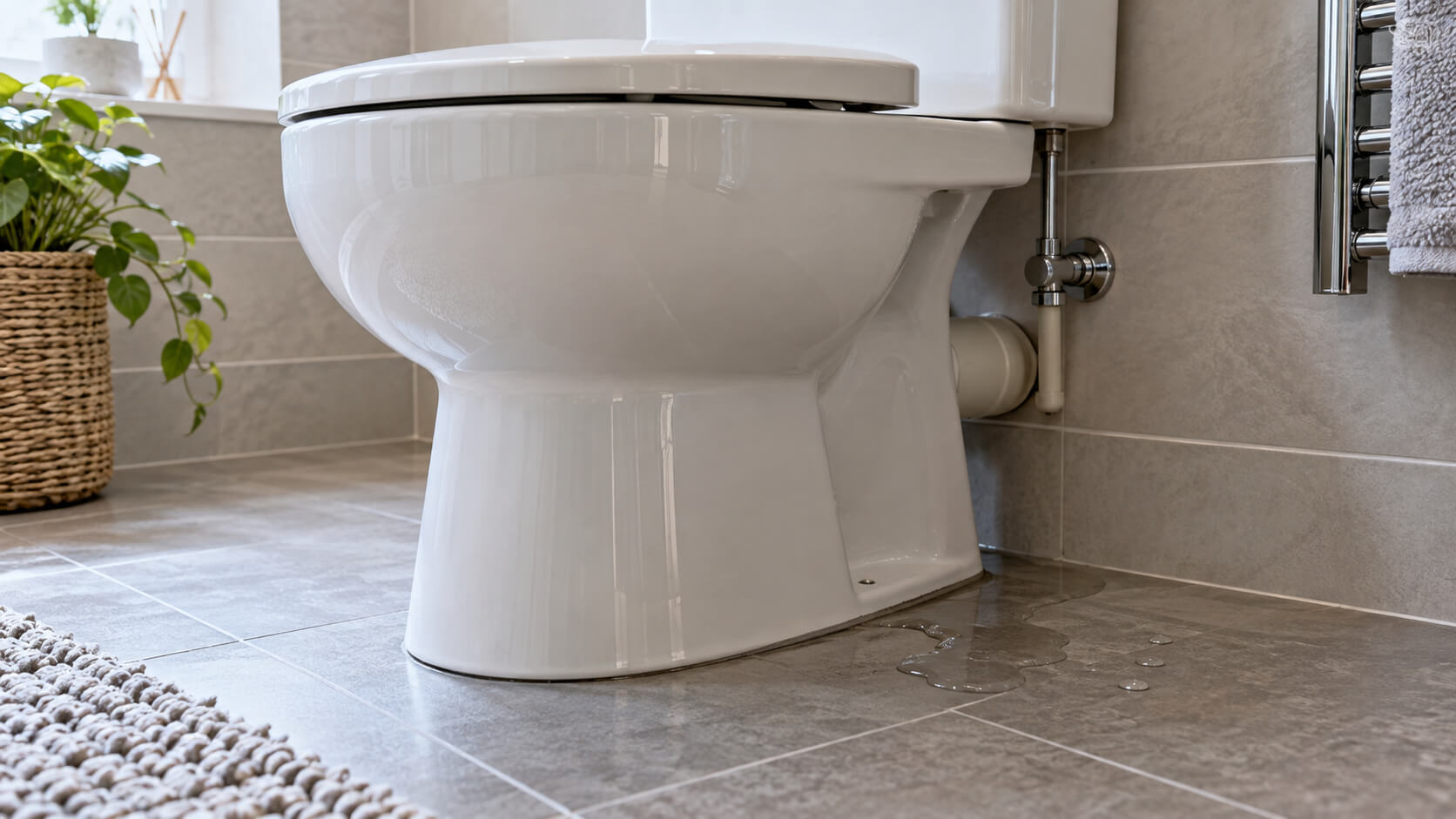
A toilet leaking onto the floor can lose water from the base, cistern, inlet connection, flush pipe or waste connection. The position of the water and whether it appears constantly or only when the toilet is flushed can help identify which part is involved.
This guide explains how to trace a visible toilet leak, distinguish leaks from the cistern, pipework and base, and recognise when the problem may involve a connection that should not be disturbed without first isolating the water supply.
Recently booked jobs



Where Is the Toilet Leaking From?
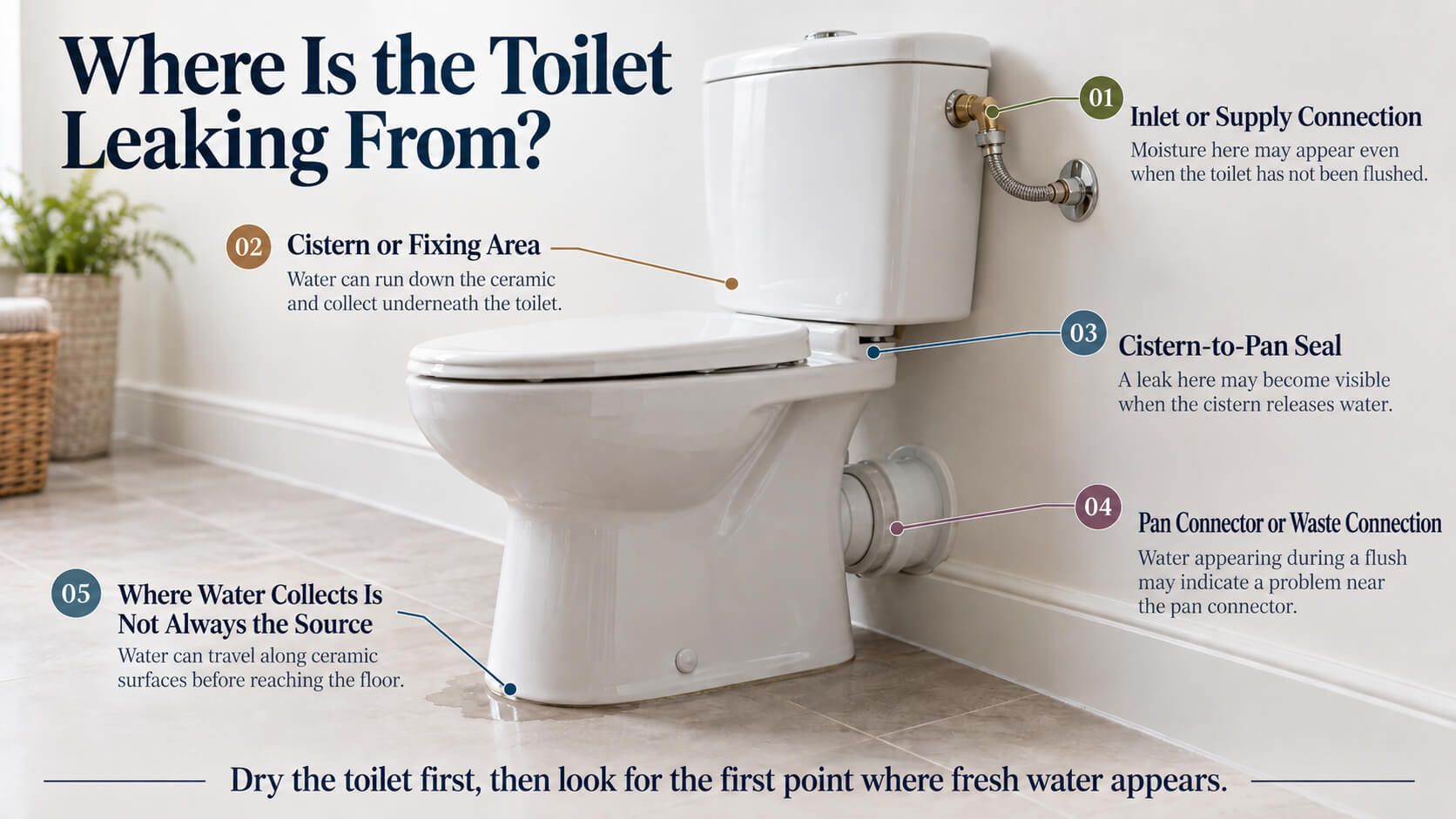
A toilet leaking onto the floor can lose water from several different points, so the first step is to identify where fresh moisture appears. Dry the toilet, nearby pipework and floor before checking again, because water can travel along ceramic surfaces and make the source look lower than it really is.
Also note whether the leak appears continuously or only when the toilet is flushed. That timing can help separate a supply-side leak from a fault around the flush pipe, cistern connection, base or waste connection.
Water Around the Base of the Toilet
If the toilet is leaking at the base, check whether the water appears only during or immediately after flushing. A leak that starts when the pan discharges can indicate a problem around the waste connection or pan connector rather than the cistern water supply.
Do not rock or move the toilet to investigate. Movement can worsen a weak seal or connection and may make the original source harder to identify.
Water Under or Below the Cistern
A leaking toilet cistern can allow water to run down the outside of the ceramic and collect underneath the toilet. Check the lower edge of the cistern, visible fixing points and the connection between the cistern and pan before assuming that water on the floor is coming from the base.
A small leak higher up can follow the shape of the toilet and only become visible once it reaches the floor.
Water Behind the Toilet
If the toilet is leaking from a pipe at the back, look for fresh moisture around the visible inlet, flush-pipe or waste connections. Dry each accessible connection separately and observe where the first new drop appears.
- Water appears while the toilet is unused
- Check the inlet connection, isolation valve and outside of the cistern first.
- Water appears only when flushing
- Focus on the flush pipe, cistern-to-pan seal and waste connection.
- Water collects around the base
- Check where the first fresh moisture appears before assuming the base seal is the source.
- Water appears behind the toilet
- Inspect accessible inlet, flush-pipe and pan-connector areas without moving the toilet.
What Causes a Toilet to Leak Onto the Floor?
The likely cause depends on both the location of the water and when it appears. Supply connections can leak while the toilet is unused, whereas some seals and waste-side connections may only show a fault when water moves through them during a flush.
Leaking Inlet or Water Supply Connection
A leaking toilet inlet pipe or supply connection may remain damp even when the toilet has not recently been flushed. Check for moisture around the connection where water enters the cistern and around any accessible isolation valve.
Do not tighten a plastic or compression fitting simply because it looks wet. First confirm that the water is actually originating from that joint rather than running down from above.
Flush Pipe or Cistern Connection Leaking
A toilet leaking when flushing may be losing water around a flush-pipe connection or the seal between the cistern and pan. These faults can remain dry while the toilet is idle and only become visible when the stored cistern water is released.
Watch the connection during a single flush rather than repeatedly operating the toilet if water is already reaching the floor.
Pan Connector or Waste Connection
A leaking toilet pan connector can allow water to appear behind or around the base when the toilet is flushed. The waste connection carries discharged water away from the pan, so a leak here is different from clean water escaping from the cistern or inlet supply.
If the connection is concealed or the toilet would need to be moved to inspect it properly, avoid disturbing the pan before the source has been confirmed.
Why Does the Toilet Leak Only When Flushed?
If the toilet leaks only when flushing, focus on components that carry or release water during the flush cycle. The flush pipe, cistern-to-pan seal and waste connection become more likely than a continuously pressurised inlet connection.
Observe whether the first water appears high behind the toilet, directly beneath the cistern or around the floor-level base. That first visible point is more useful than where the water eventually collects.
What If Water Is Running Into the Bowl Instead?
Water continuously passing from the cistern into the bowl is a different symptom from an external toilet leak. If the floor and external connections are dry but water keeps moving inside the bowl, follow the troubleshooting route for a running toilet rather than treating it as a base or pipe leak.
What Can You Check Safely?
Safe checks should focus on drying surfaces, identifying the first point where fresh water appears and noting whether the leak is constant or linked to flushing. If necessary, isolate the toilet water supply before touching an accessible water connection.
Do not force fittings, move the toilet or dismantle concealed waste connections simply to locate the leak. If the symptom does not match an external toilet leak, return to our toilet leaks and other toilet problems guide to identify the correct troubleshooting path.
Frequently Asked Questions About a Leaking Toilet


A leaking toilet can become urgent if water is spreading across the floor, reaching the room below or cannot be stopped by isolating the toilet supply. A small visible drip may not require emergency action, but it should still be investigated promptly because continued moisture can damage flooring, fittings and surrounding materials.
If water appears around the base while the toilet has not been flushed, the source may be higher up rather than the waste connection itself. Check the inlet connection, outside of the cistern and any accessible joints for fresh moisture that may be running down the ceramic before collecting at floor level.
A toilet that leaks between flushes is more likely to have a continuous supply-side or cistern connection leak than a fault that only carries water during flushing. Dry the visible surfaces and check whether fresh moisture forms around the inlet, isolation valve or lower cistern area while the toilet remains unused.
If water from a toilet is appearing through the ceiling below, stop using the toilet and isolate its water supply if it can be done safely. Water travelling through the floor structure can spread beyond the visible stain, so avoid repeated flushing and keep clear of affected electrical fittings until the source has been identified.