


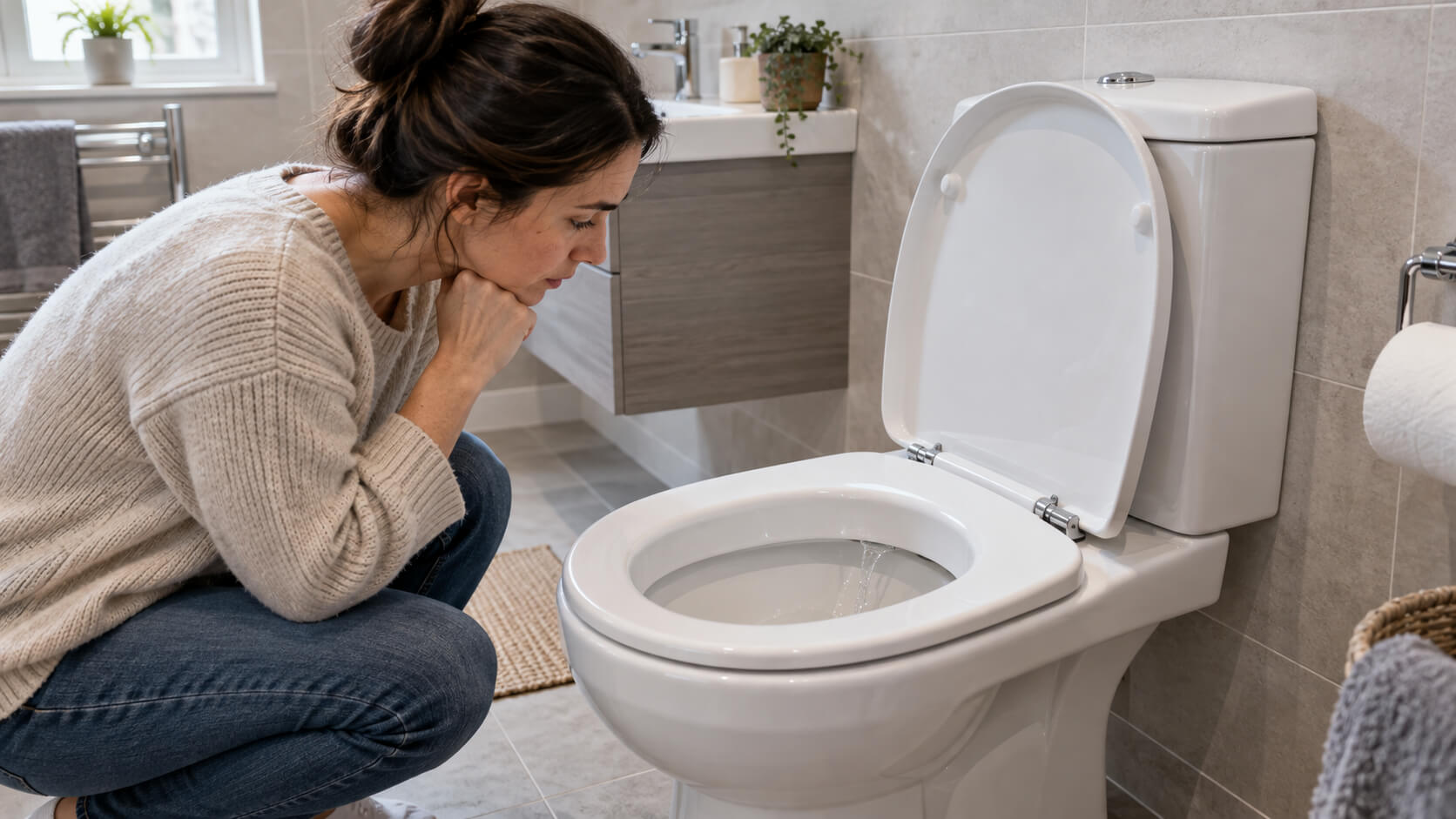
A toilet keeps running when water continues flowing after the flush should have finished. The cause may involve the fill valve, float, flush valve, seal or water level inside the cistern, depending on whether water continues entering the cistern or escapes into the bowl.
This guide explains how to identify where the water is moving, why the toilet may run continuously or intermittently, and which checks can help narrow down the fault safely.
Recently booked jobs



Why Does My Toilet Keep Running After a Flush?
A toilet keeps running after a flush when water continues moving after the cistern should have refilled and stopped. The first step is to identify where that water is moving, because continuous incoming water and water escaping into the bowl indicate different types of fault.
Watch the toilet immediately after flushing and again once the cistern appears full. The timing and direction of the water flow usually give a better clue than the running sound alone.
Water Keeps Entering the Cistern
If water continues entering after the cistern should be full, watch whether the float rises normally as the water level increases. The incoming flow should reduce and stop once the correct level has been reached.
If the flow continues, note whether the float appears stuck, restricted or unable to reach its normal position. Leave the actual valve or float adjustment until the cause has been identified.
Water Keeps Running Into the Toilet Bowl
If the cistern fills but a thin stream or trickle continues into the bowl, the water is being lost through the outlet side of the cistern. This may be visible as movement on the surface of the bowl or a narrow stream at the back.
Notice whether the flow begins immediately after flushing and continues constantly, or stops and then returns later. That distinction helps separate a continuous fault from intermittent refilling.
What Should You Notice Before Checking the Cistern?
Before adjusting anything, note exactly when the water runs and what the cistern does as it refills. A few simple observations can narrow down the problem without dismantling the mechanism.
- Water continues entering after the normal level is reached
- A thin stream or trickle continues into the bowl
- The float does not rise freely with the water level
- The flush button, handle or valve does not return fully
- The toilet starts refilling even though nobody has flushed it
- Water rises high enough to enter the overflow route
What Causes a Toilet to Keep Running?
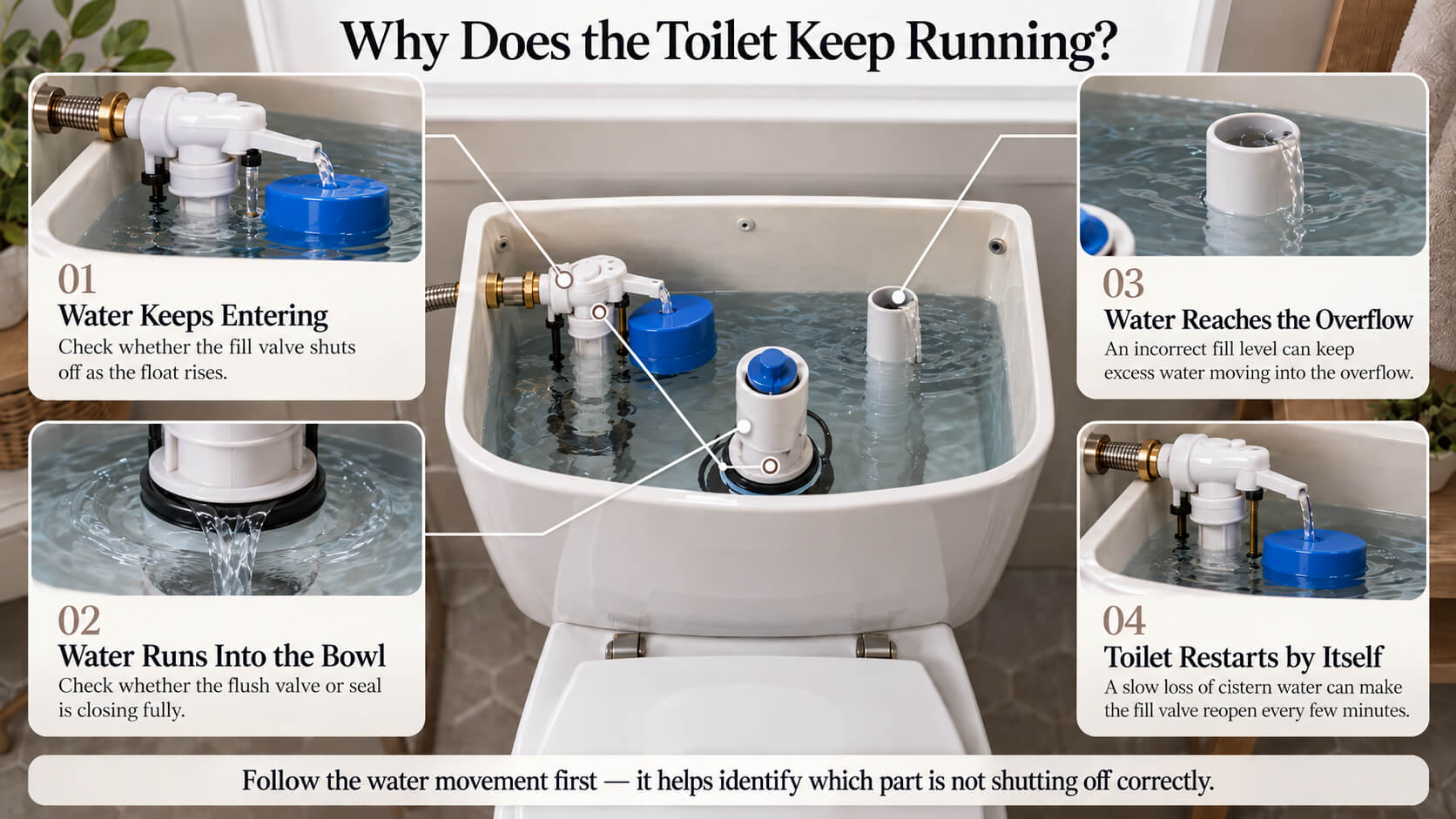
The most common causes involve the fill valve, float, flush valve or seal. Checking whether water is still entering the cistern or escaping into the bowl helps identify which part is not shutting off correctly.
Some faults cause water to run continuously, while others only make the toilet refill again after a short delay. Looking at the timing of the problem as well as the water path can help narrow down which mechanism is responsible.
Fill Valve or Float Not Shutting Off
If the toilet cistern keeps running after reaching its normal level, the fill valve may not be closing fully. A worn valve, restricted mechanism or float that sticks too low can allow water to keep entering when it should have stopped.
Flush Valve or Seal Not Closing Properly
A flush valve or seal that does not reseat correctly can allow water to pass continuously into the bowl. Wear, deposits or a displaced seal can leave a small gap, causing the cistern to keep topping itself up.
Water Level Reaching the Overflow
If the water level rises too high, water may enter the overflow instead of stopping at the normal fill level. This usually points to the fill valve, float position or shut-off adjustment.
Why Does My Toilet Keep Running Every Few Minutes?
A toilet that runs for a short time every few minutes may be losing a small amount of water from the cistern and then refilling automatically. This intermittent behaviour often means the cistern is not holding its water level between flushes.
Watch whether the fill valve starts by itself without anyone using the toilet. If it does, check whether the cistern level drops before the valve opens again. A cistern that sounds normal but repeatedly restarts can still be losing water slowly through the outlet. Do not assume the fill valve is faulty simply because it is the part you hear operating.
Push-Button and Dual-Flush Toilets That Keep Running
A push-button toilet can keep running if the flush valve does not return completely after the button is released. On dual-flush toilets, the button assembly or the valve below it can affect how the mechanism closes.
If the button returns normally but water continues running, focus on the flush valve, seal, float and fill valve rather than assuming the visible button is the cause.
What Can You Check Safely?
Safe checks should focus on where the water is moving, whether the float rises freely and whether the flush mechanism returns fully after use. An accessible cistern can often distinguish an incoming-water fault from water escaping into the bowl.
Before removing or adjusting any water-control component, isolate the toilet supply correctly. Do not force seized valves, plastic fittings or concealed mechanisms.
If the behaviour does not match a continuously or intermittently running toilet, return to our toilet running and cistern problems to identify the correct troubleshooting path.
Frequently Asked Questions About a Toilet That Keeps Running


Yes, a toilet that keeps running should not normally be ignored because it can continuously waste water and indicates that part of the cistern mechanism is not shutting off correctly. Even a small trickle into the bowl can cause the fill valve to keep reopening, so the fault is worth identifying rather than leaving the toilet to run indefinitely.
A running toilet does not necessarily overflow because many cisterns have an overflow route designed to carry excess water safely into the toilet bowl. However, continuously rising water still indicates that the fill level or shut-off mechanism is not working correctly, so the cause should be checked rather than relying on the overflow.
Yes, a toilet that continually allows water into the cistern or bowl can increase water use because fresh water is repeatedly replacing what is being lost. The amount depends on how quickly the water is flowing and how long the fault continues, but even a quiet continuous trickle can add unnecessary consumption over time.
A toilet may continue running briefly after the local water supply is turned off because water already stored in the cistern can still pass into the bowl. The flow should reduce as the cistern empties. If it continues for an unexpectedly long time, confirm that the correct toilet supply has actually been isolated before investigating the internal mechanism.