


A toilet cistern not filling usually means that water is not entering the cistern correctly or the inlet mechanism is preventing it from refilling. Common causes include a closed or restricted water supply, a sticking float, a faulty fill valve or debris affecting the inlet flow.
This guide explains how to tell whether the cistern is receiving water, why it may fill slowly or not at all, and which checks can be made safely before the toilet mechanism is adjusted or replaced.
Recently booked jobs



Why Is My Toilet Cistern Not Filling?
A toilet cistern not filling usually means that water is not reaching the cistern correctly or the inlet mechanism is preventing it from refilling. Common causes include a closed or restricted water supply, a sticking float, debris affecting the inlet, or a faulty fill valve.
The first useful check is whether no water is entering at all or whether the cistern is simply filling much more slowly than normal. That difference helps separate a supply problem from a fault inside the cistern.
No Water Entering the Cistern
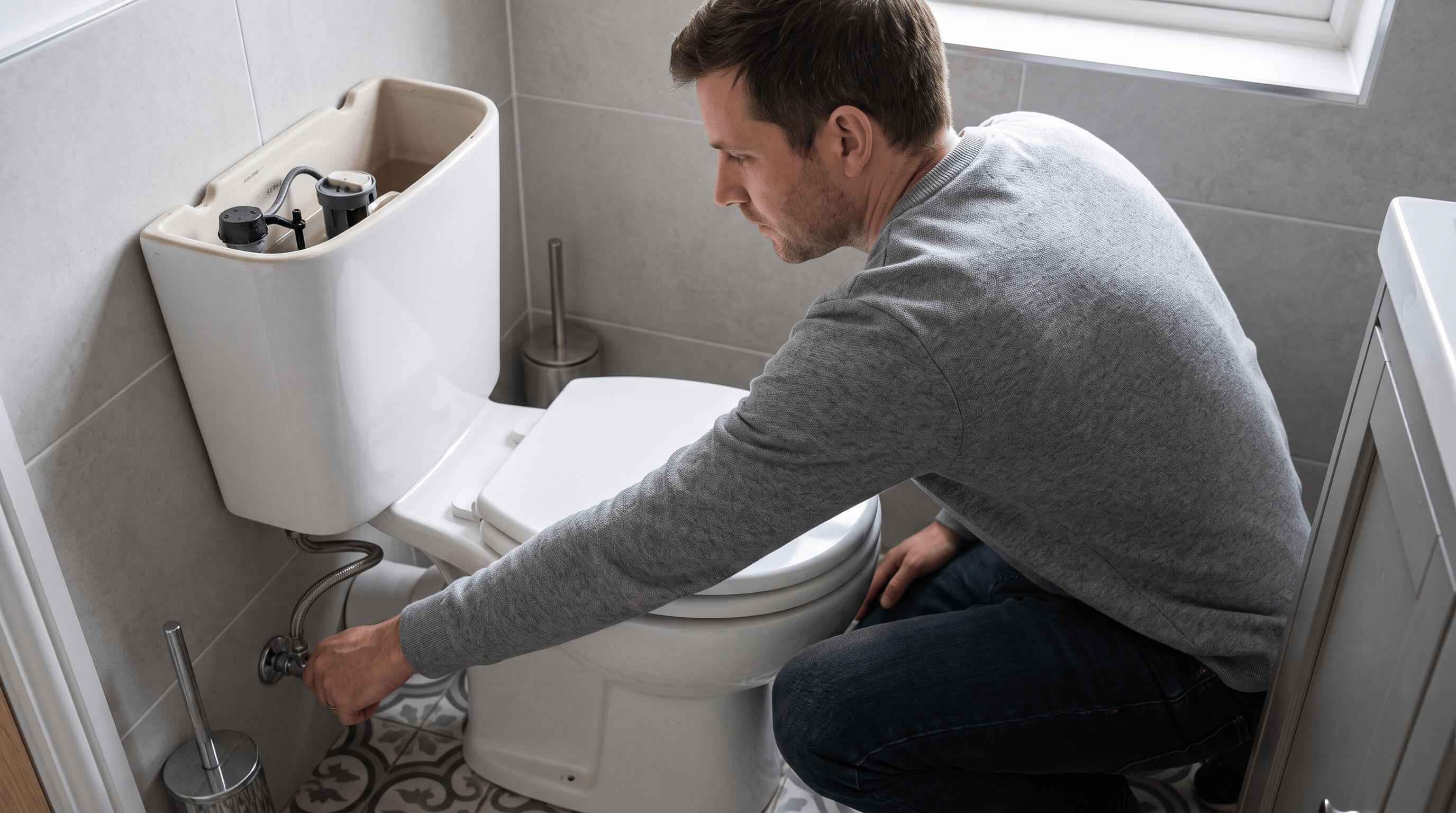
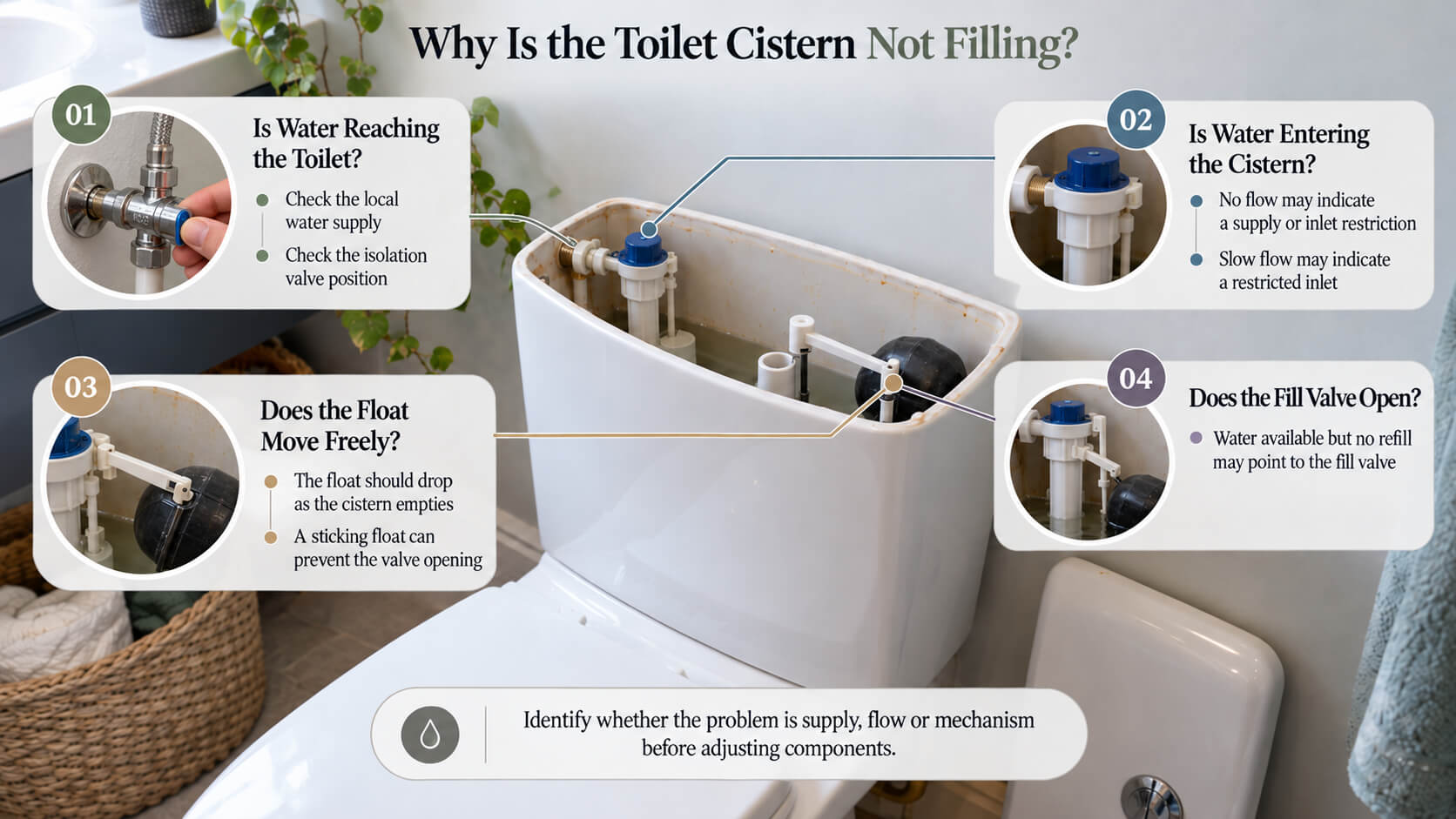
If no water enters after flushing, check whether the toilet still has an open water supply. Many toilets have a local isolation valve on the small pipe feeding the cistern. If it has been closed or left partly closed, the cistern may receive little or no water.
If the supply is open but the cistern remains empty, the fill valve may not be opening correctly. A stuck float, internal wear or debris can prevent water from entering even when water is available at the supply.
Toilet Cistern Filling Slowly
A toilet cistern filling slowly usually points to restricted flow rather than a complete loss of supply. A partially closed isolation valve, debris in the inlet valve or a worn fill valve can reduce the rate at which water enters the cistern.
If the toilet used to refill normally and has suddenly become slow, compare the current behaviour with its usual refill time.
| What You Notice | Likely Area to Check |
|---|---|
| No water enters after flushing | Local water supply or isolation valve |
| Water enters very slowly | Restricted inlet flow or fill valve |
| The float appears stuck | Float movement and fill-valve operation |
| Supply is available but the cistern stays empty | Fill or inlet valve not opening correctly |
What Causes a Toilet Cistern to Stop Refilling?
The most common causes involve the water supply, fill valve or float mechanism. These parts work together to let water into the cistern and stop the flow once the correct level has been reached.
Because several faults can create the same symptom, identify what the mechanism is doing before replacing a valve or adjusting the float. This helps show whether the problem is with the supply, valve or float.
Closed or Restricted Water Supply
A closed or partially closed isolation valve can stop a toilet cistern filling properly. This can happen after maintenance or other plumbing work. If the valve is accessible, check its position gently and avoid forcing it if it is stiff, corroded or difficult to turn.
If the valve is open but flow is still weak, the restriction may be before the cistern.
Faulty Fill Valve or Sticking Float
A fill valve can stop working correctly if it becomes worn, blocked or stuck, while a float that cannot move freely may keep the valve closed. In a working cistern, the float normally drops as the cistern empties and rises again as the water level returns.
Where the mechanism is safely visible, check whether the float is catching against the cistern wall or another component. Do not bend, force or dismantle the assembly while the water supply is still open.
Debris Restricting the Inlet
Small amounts of debris can reduce or stop the flow of water through the inlet valve. This can be more noticeable after the water supply has been isolated and restored or after nearby plumbing work.
Cleaning or dismantling an inlet valve normally requires the toilet supply to be isolated first. If the valve design is unfamiliar, avoid taking it apart without identifying how it operates.
Why Is the Toilet Cistern Not Filling After a Flush?
If the toilet cistern is not filling after a flush, watch what happens as the cistern empties. The float should normally fall and allow the fill valve to open so fresh water can enter.
If the float moves but no water arrives, the supply or inlet valve may be restricted. If the float does not move normally, the problem is more likely to involve the internal mechanism.
Is the Problem the Water Supply or the Fill Valve?
If the cistern does not refill after flushing, checking whether water is reaching the toilet can help separate a supply problem from a fill-valve fault. If there is little or no incoming flow, the local isolation valve or water supply may be restricted. If water reaches the toilet but does not enter the cistern normally, the fill valve becomes a more likely cause.
Watch what happens as the cistern empties rather than changing several components at once. If the float falls normally but no water enters, investigate the incoming supply and inlet valve. If the float or valve mechanism does not move freely, the fault is more likely to be inside the cistern.
What Can You Check Safely?
Safe checks should focus on the incoming water supply, the position of the isolation valve and the visible movement of the float and fill valve. These observations can often narrow down the cause without dismantling the cistern.
Before opening, removing or adjusting any water-control component, isolate the toilet supply correctly. Do not force plastic fittings, seized valves or concealed components, and stop if a connection begins to leak while being checked.
If the problem turns out not to be a refill issue, return to our toilet cistern and flushing problems to identify the correct troubleshooting path.
Frequently Asked Questions About a Toilet Cistern Not Filling


A push-button toilet cistern may stop filling because of a restricted water supply, sticking float or fill valve that is not opening correctly. The push button normally operates the flush mechanism rather than the refill valve, so a button that appears to work normally does not rule out a separate inlet problem.
If the cistern fills but stops below its normal water level, the float position, fill valve or incoming flow may be limiting how much water enters. Check whether the float moves freely and whether the valve stops the flow earlier than expected before making any adjustment.
A concealed toilet cistern can fail to fill for the same supply, float and inlet-valve reasons as an exposed cistern. The main difference is access, so use only the flush plate or service opening intended by the system and avoid removing fixed panels or tiles simply to investigate the fault.
A dual-flush cistern that does not refill usually has a problem with the water supply or fill mechanism rather than the two flush settings themselves. The dual-flush valve controls how water leaves the cistern, while the inlet valve and float normally control how it refills afterwards.