


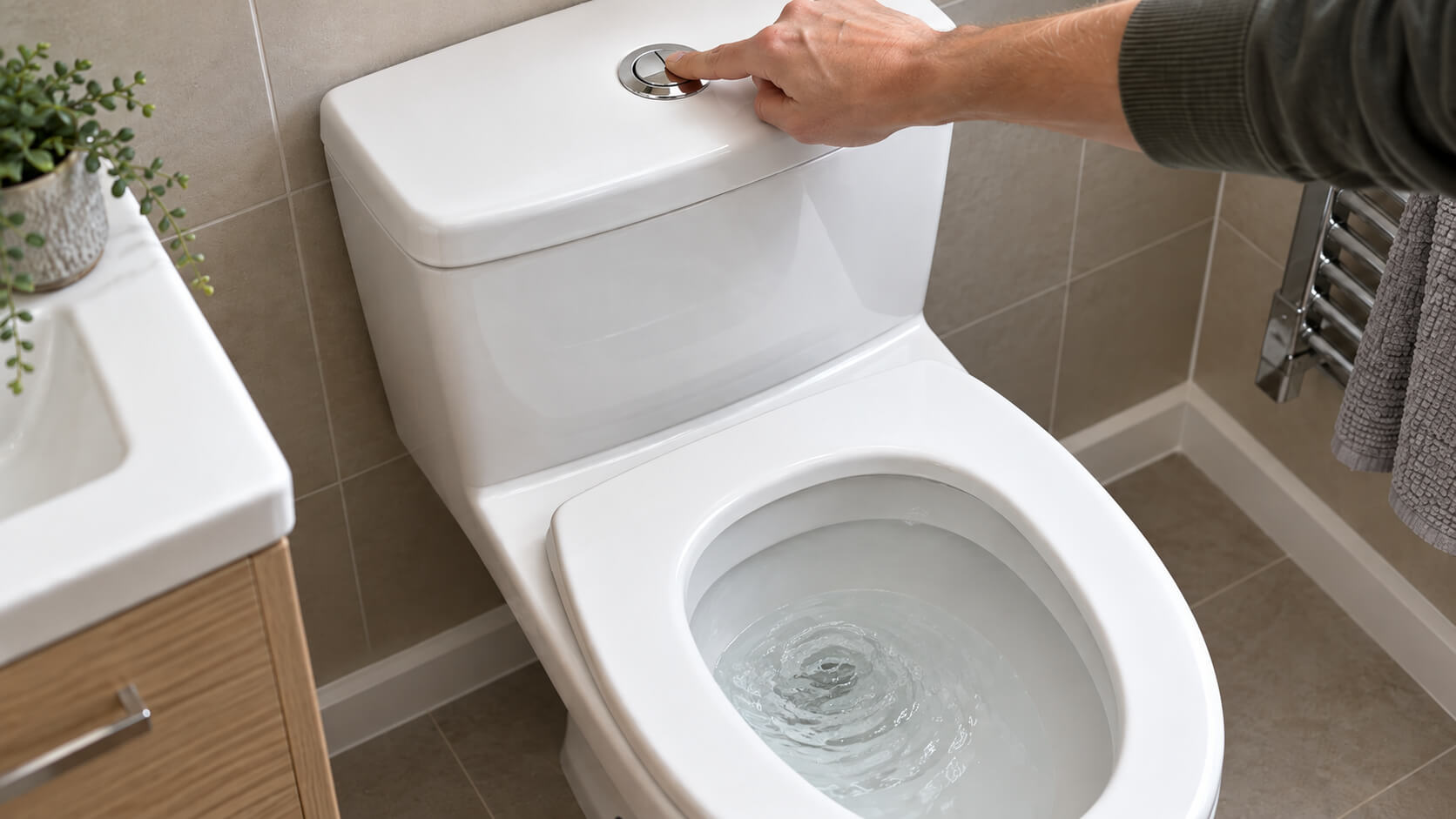
A toilet not flushing properly usually means the flush mechanism is not releasing enough water or is not being activated correctly. Common causes include a faulty push button or handle, a problem with the siphon or flush valve, a low cistern water level or a mechanism that is not completing its full movement.
This guide explains how to distinguish a weak flush from a flush that does not operate at all, which parts of the cistern may be involved, and which checks can be made safely before anything is adjusted or replaced.
Recently booked jobs



Why Is My Toilet Not Flushing Properly or at All?
A toilet not flushing properly usually means the flush mechanism is not releasing enough water or is not being activated correctly. The first useful distinction is whether nothing happens when the button or handle is used, or whether the toilet flushes but the flow is weak or incomplete.
That difference helps separate an operating problem from a low-water or poor-flush problem without confusing it with a blockage.
When the Flush Does Not Operate
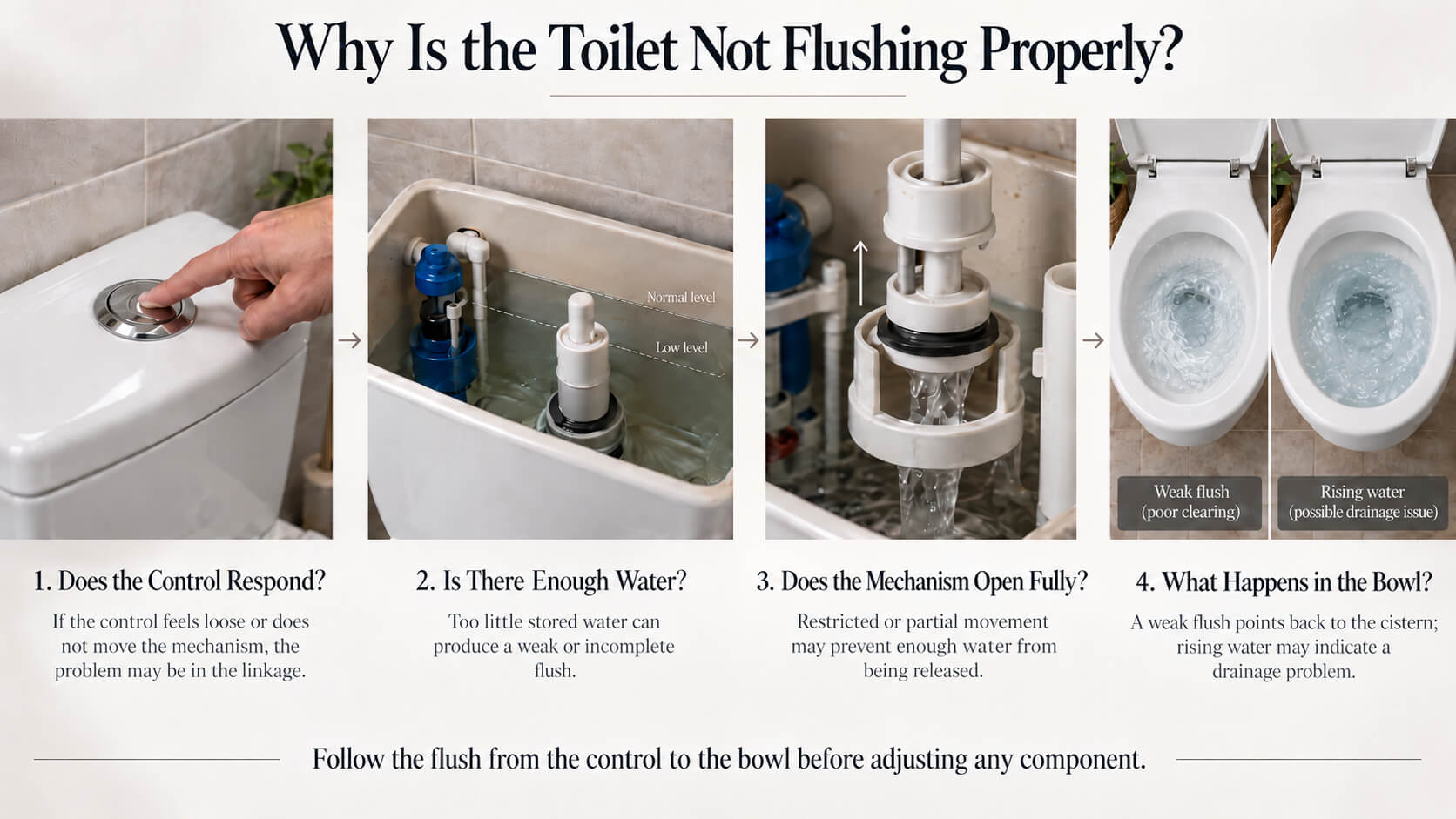
If pressing the button or moving the handle does not trigger a normal flush, watch whether the mechanism inside the cistern moves at all. A loose connection, failed button, handle linkage, siphon or flush valve can prevent the stored water from being released.
If the control moves but the mechanism below it does not, the fault is more likely to be with the connection or flush mechanism than with the water supply.
When the Toilet Flush Is Weak
A toilet not flushing well may still release water, but not with enough force or volume to clear the bowl normally. Check whether the cistern has reached its usual water level before the flush and whether the mechanism opens fully when operated.
A low cistern level, incomplete valve movement or restricted siphon action can all produce a weak or partial flush even when the toilet appears to be working.
What Should You Notice Before Checking the Mechanism?
Before adjusting anything, note exactly what happens when the flush is operated. These observations can help show whether the problem is with the control, water level or flush mechanism.
- The button or handle moves but nothing happens
- The mechanism moves only part of the way
- The cistern contains less water than usual
- The toilet flushes weakly or incompletely
- The flush works only after repeated pressing or holding
- The bowl water rises instead of clearing normally
If the bowl water rises significantly rather than draining away, stop repeated flushing. That symptom may indicate a blockage rather than a fault with the flush mechanism.
What Causes a Toilet Not to Flush?
The most common causes involve the flush control, linkage, siphon, flush valve or the amount of water available in the cistern. Identifying whether the problem is with activation, water volume or valve movement makes the next check more focused.
Push Button or Handle Not Operating the Flush
A push-button toilet flush not working can be caused by a disconnected, worn or restricted mechanism between the visible control and the valve inside the cistern. Handles can also become loose or fail to lift the mechanism far enough.
If the button or handle feels unusually loose, stiff or different from normal, avoid forcing it. Observe the movement first and check whether the internal mechanism responds.
Siphon or Flush Valve Not Releasing Enough Water
A siphon toilet not flushing or a flush valve that does not open fully may release too little water into the bowl. The mechanism should move through its intended travel and allow the cistern water to discharge quickly.
Wear, internal damage or restricted movement can reduce the flush without stopping it completely.
Low Water Level in the Cistern
If the cistern contains too little water, the toilet may not flush completely even when the flush mechanism is working. A low level can reduce both the volume and force of the flush.
If the cistern itself is not refilling correctly, treat that as a separate refill fault rather than adjusting the flush mechanism.
Why Won't the Toilet Flush Even Though It Is Not Clogged?
If the toilet won't flush but there is no sign of a blockage, the problem is more likely to be inside the cistern. Check whether the control operates the flush mechanism, whether the cistern contains enough water and whether the valve or siphon releases that water properly.
Do not assume a blockage simply because the bowl does not clear well. A weak or incomplete flush can come from insufficient water or incomplete mechanism movement.
What If the Bowl Water Rises?
If the bowl water rises when you try to flush, stop using the flush repeatedly. Rising water can indicate that the problem is on the drainage side rather than with the cistern mechanism, especially if the bowl drains only slowly afterwards.
What Can You Check Safely?
Safe checks should focus on the visible operation of the button or handle, the cistern water level and whether the flush mechanism moves normally. Do not force plastic parts, remove unfamiliar concealed components or repeatedly flush a bowl that is filling higher instead of draining.
If the symptom does not match a flush-mechanism problem, return to our toilet flushing and cistern problems to identify the correct troubleshooting path.
Frequently Asked Questions About a Toilet Not Flushing


A toilet that will not flush is not always an emergency, but it should be dealt with promptly if the toilet cannot be used normally. If the bowl water rises rather than draining, stop flushing repeatedly because a blockage may be involved. The situation is also more urgent where it is the only usable toilet in the property.
If the toilet only flushes after a second attempt, the control or flush mechanism may not be completing its full movement on the first operation. A low cistern water level, worn linkage or mechanism that only opens partially can also produce an inconsistent flush.
If the toilet only flushes while the handle is held down, the linkage or flush mechanism may not be staying engaged long enough to release the required amount of water. Check whether the handle feels loose and whether the mechanism completes its normal movement before adjusting any parts.
If operating the toilet produces a noise but little or no flush, part of the mechanism may be moving without releasing enough water. Check whether there is sufficient water in the cistern and whether the siphon or flush valve actually operates. If the cistern itself is not refilling, that is a separate refill problem.