


Moles in the Garden: Signs and Activity
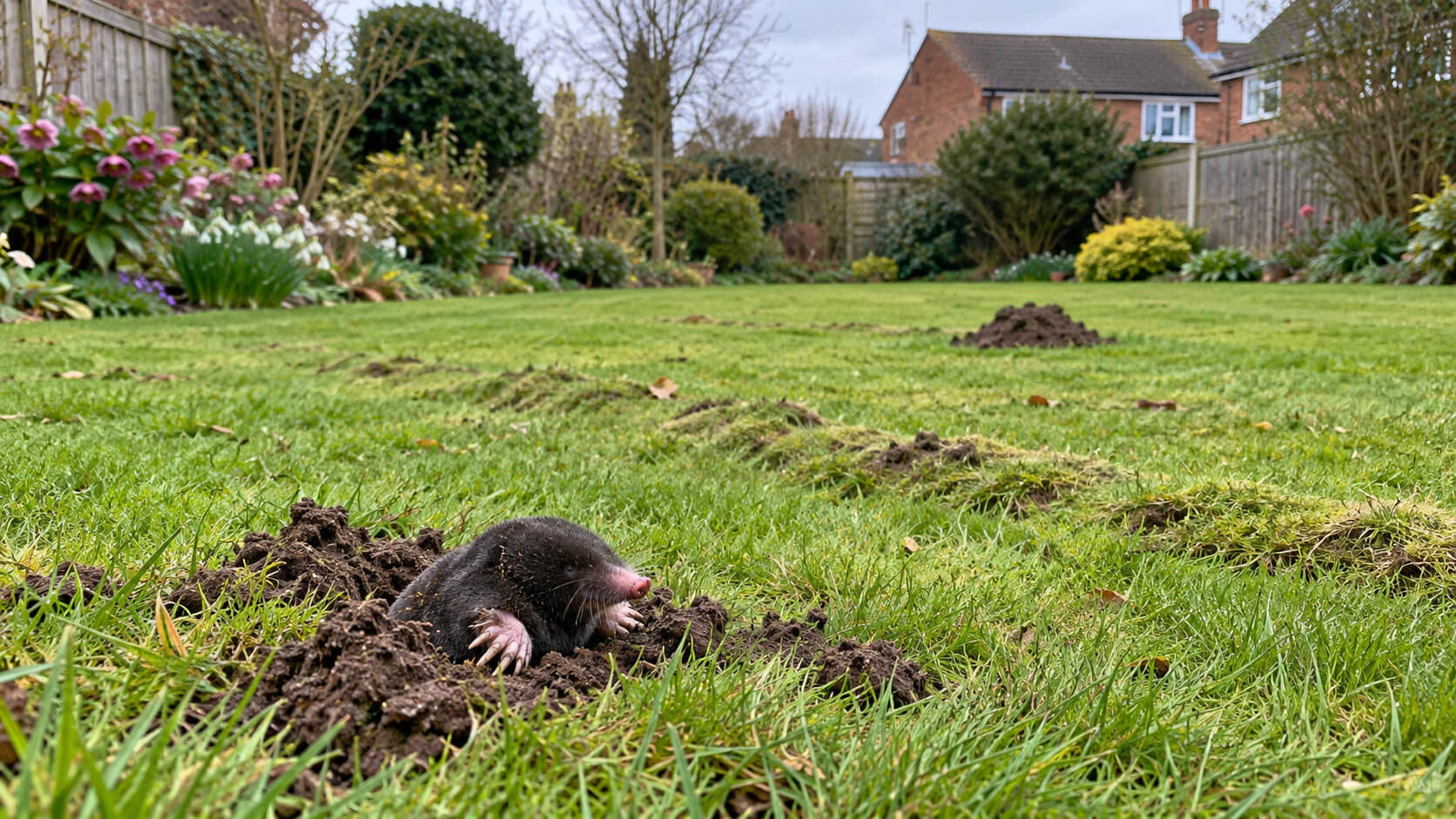
Moles in the garden are usually detected through signs of underground activity rather than by seeing the animal itself. Molehills, surface ridges and disturbed soil can all point to tunnelling below lawns or beds.
This guide explains how to recognise mole activity, when moles are most active, where they live and what their presence can mean for a garden.
Mole Pest Control
- Same-day bookings available
- Flexible appointment times
- Professional mole trapping across the affected garden area
- Pay us by Card, PayPal, Google Pay, Apple Pay or Pay on-site



Who will come to my home?
A certified pest control technician from our vetted network, on the day and time you choose. You get a confirmation by email as soon as you book.
Is the treatment safe for children and pets?
Yes. Technicians use HSE-approved products and methods: tamper-resistant bait stations for rodents, and sprays or gels that are safe for children and pets once dry. You are told before the visit if a room needs to stay clear for a few hours.
What if the pests come back?
Follow-up visits are included where the treatment lists them, so if activity continues after the first visit, the next one is already covered at no extra charge. The price you see is the full price for the whole treatment cycle.
Do I need to prepare anything or be at home?
Someone needs to be at the property to let the technician in. Preparation is minimal and depends on the pest; the technician confirms anything needed by SMS and email after you book.
Do I pay now?
No. You see the price, then pick a date and time. Payment is only confirmed at checkout, and cancellation is free.
Is the £50 inspection fee deducted from the treatment?
Yes. If you are not sure what the pest is, you can book a £50 inspection visit. The technician identifies the pest and quotes the treatment on site, and if you go ahead the £50 is deducted from that treatment price.
Recently booked jobs


How to Tell If You Have Moles in the Garden
Moles in the garden are usually identified by changes in the ground rather than by seeing the animal itself. In Britain, the mole found in gardens is the European mole (Talpa europaea), which spends most of its life underground. For species identification, size, lifespan and UK distribution, see our guide to moles in the UK.
In UK gardens, the most useful signs of mole activity are freshly excavated soil, raised or disturbed ground and tunnelling beneath lawns or planted areas. Looking at several signs together is more reliable than assuming that every patch of disturbed soil has been caused by a mole.
Molehills and Disturbed Soil
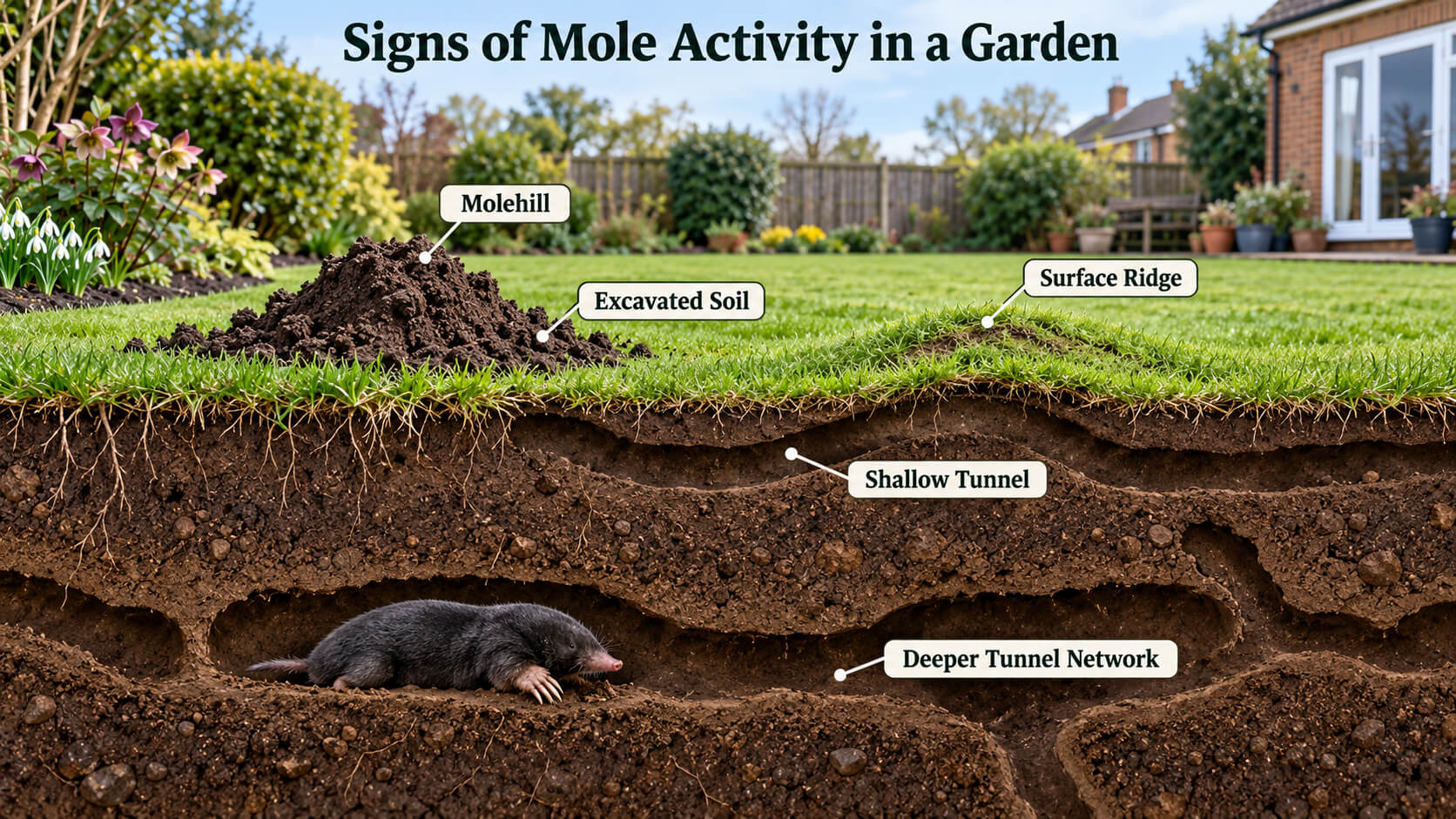
Molehills are one of the clearest signs of mole activity. A fresh mound of excavated soil can indicate recent tunnelling, but the number of hills should not be treated as a count of the number of moles present.
Moles are territorial and largely solitary, so activity across a small garden can sometimes come from one individual. For a detailed explanation of how these mounds form and what they indicate, see our guide to molehills and what they indicate.
Surface Tunnels and Ridges
Shallow mole tunnels can create raised ridges or uneven areas close to the surface. These signs may appear where soil has been pushed upwards as the mole moves through a temporary feeding tunnel.
Surface tunnels tend to be less permanent than deeper parts of a mole's underground network. Deeper tunnels can remain out of sight even while the mole continues to use them repeatedly for feeding and movement.
Moles in Lawns, Flower Beds and Vegetable Gardens
Mole activity can occur in lawns, flower beds and vegetable gardens where soil conditions allow tunnelling and support underground prey. Lawns often make fresh soil disturbance and raised ground particularly easy to notice, while disturbed soil around seedlings or small plants can be more obvious in cultivated beds.
The presence of a mole does not automatically mean that plants are being eaten. Much of the visible disturbance comes from the animal physically moving through the soil and excavating its tunnel system.
Are Moles in the Garden Good or Bad?
Moles can cause visible disturbance in gardens, but they are not normally feeding on the plants themselves. Their tunnelling can affect lawns, seedlings and cultivated beds, while moles are also part of Britain's native wildlife and feed mainly on soil-dwelling invertebrates.
For most gardens, the important distinction is between damage caused indirectly by tunnelling and direct feeding damage to plants.
Do Moles Damage Plants?
Moles do not normally eat garden plants or their roots. Their diet is centred on animal prey in the soil, particularly earthworms and other invertebrates. Plant damage can nevertheless occur indirectly when tunnelling loosens soil around seedlings, lifts roots or disturbs newly planted areas.
If you want the diet question in full, including worms, insects and whether moles eat plants, see what moles eat.
How Tunnelling Can Affect Lawns and Beds
Mole tunnelling can leave lawns uneven and disturb soil around planted areas. On lawns, displaced soil and shallow ridges can alter the surface, while tunnelling through flower beds or vegetable plots may disturb small plants or expose roots to loosened soil.
Visible disturbance can therefore look more extensive than the actual number of moles present. A network of signs across a relatively small area does not necessarily mean that several animals are living there.
Mole Activity Through the Year
Moles remain active throughout the year and do not disappear into winter hibernation. Their underground lifestyle means that changes in visible surface activity do not necessarily mean that the animals themselves have left an area.
Garden activity can be especially noticeable in late winter and early spring, when fresh soil disturbance and raised ground may become easier to spot.
Do Moles Hibernate?
No, moles do not hibernate. They continue to use underground tunnel systems through the year, including during colder weather. Deeper tunnels can become particularly important when conditions close to the surface are less favourable.
A reduction in visible surface activity should therefore not automatically be interpreted as the end of mole activity. Much of a mole's movement can happen below ground without producing an obvious new surface sign.
Are Moles Nocturnal?
Moles are not simply nocturnal animals. They can be active during both the day and night, with their behaviour organised around periods of underground feeding and rest rather than a normal above-ground day-night routine.
Their very small eyes suit a largely subterranean lifestyle, but moles are not blind. We cover that topic separately in our guide to mole eyesight and vision, so the full vision family remains outside this garden-activity page.
Where Do Moles Live in Gardens?
In gardens, European moles live mainly underground in tunnel systems built through suitable soil. Lawns, flower beds and cultivated ground can provide usable habitat where the soil can be tunnelled through and supports enough underground prey.
Moles spend almost all of their lives below ground. Their tunnel systems can include short-lived shallow routes as well as deeper, more permanent passages that are reused for feeding and movement.
What Attracts Moles to a Garden?
A garden can provide suitable mole habitat when the soil is workable for tunnelling and supports enough underground prey. Earthworms are particularly important in the mole's diet, along with other soil-dwelling invertebrates.
This means that mole activity is not necessarily a sign that something is wrong with the garden. Suitable soil and a productive soil ecosystem can simply make an area usable habitat. What homeowners usually notice is not the animal itself, but the soil displaced as it moves through that underground environment.
If repeated mole activity is causing a significant property problem and you want to check professional options rather than identification information, you can view mole pest control options and availability.
Frequently Asked Questions


European moles in Britain are typically around 11–16 cm long. They have a compact cylindrical body, broad digging forefeet, a pointed pink snout and very small eyes. Their body shape is adapted to moving through underground tunnels.
Yes, one mole can be responsible for several signs of activity in the same garden. Moles are largely solitary and territorial, so several molehills or disturbed areas should not automatically be interpreted as evidence of several animals.
Moles use areas where the soil is suitable for tunnelling and provides enough underground prey. Gardens with workable soil and populations of earthworms and other soil invertebrates can therefore provide suitable habitat even when there is nothing unusual about the property.
Yes, moles can bite if they are handled or feel threatened. They are wild animals with strong jaws and digging claws, so an injured or stranded mole should not be handled with bare hands. UK wildlife guidance recommends using thick protective gloves when handling is genuinely necessary.
Moles are largely solitary and territorial for most of the year. Their behaviour changes during the breeding season, when males may travel farther in search of females, but several signs across one small garden do not necessarily mean that several moles are present.