



Molehills are piles of excavated soil pushed to the surface as moles dig and maintain underground tunnels. Their freshness and position can help show where recent tunnelling has occurred.
This guide explains why moles make molehills, how they form, what they look like and what molehills in gardens and lawns can indicate.
Recently booked jobs



What Is a Molehill?
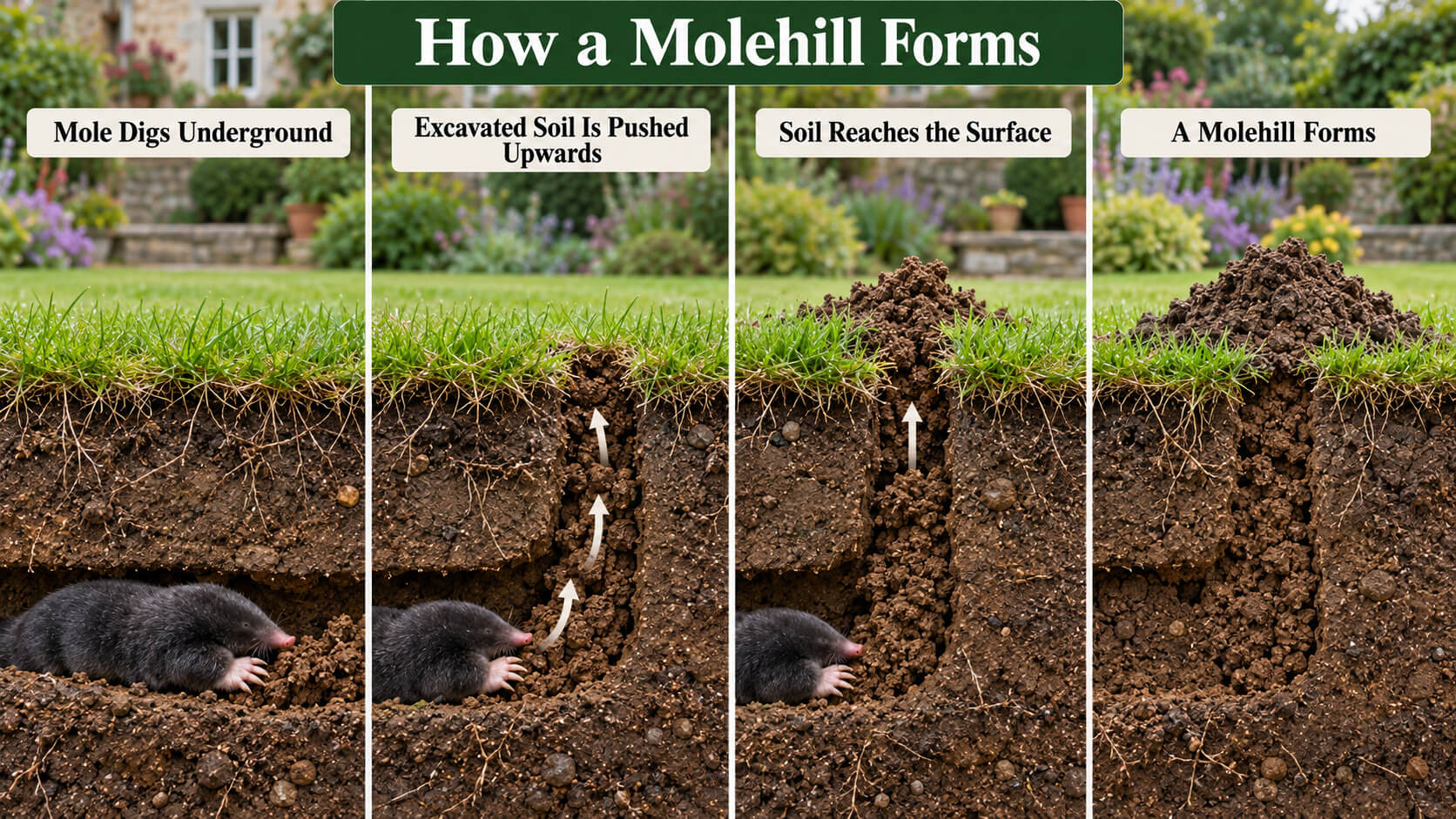
A molehill is a pile of loose soil pushed to the surface while a mole excavates or maintains its underground tunnel system. Moles spend most of their lives below ground, so these heaps of displaced earth are often a more visible sign of their presence than the animal itself.
Molehills are therefore evidence of soil being moved from below the surface. They should not be treated as a direct count of how many moles are present in an area.
What Do Molehills Look Like?
Molehills usually appear as obvious heaps of freshly excavated, loose soil on lawns, flower beds or other suitable ground. They are different from shallow surface ridges, which form when tunnelling lifts the ground without producing the same concentrated pile of earth.
The appearance can change as weather, mowing or foot traffic flattens an older mound, so a fresh loose heap is generally more useful as evidence of recent soil excavation than a weathered one.
Why Do Moles Make Molehills?
Moles make molehills because excavated soil has to be moved out of the way as they dig underground tunnels. Their tunnel systems are used mainly for travelling and finding soil-dwelling prey, including earthworms and insect larvae.
The molehill itself is therefore a by-product of tunnelling rather than the main purpose of the digging.
How Are Molehills Formed?
A mole forms a molehill by loosening soil underground and pushing the displaced earth up a shaft to the surface. Repeated excavation can create a visible pile above the tunnel network while much of the underground system remains hidden.
Do Moles Always Make Molehills?
No, a mole does not have to produce a new molehill every time it moves through its territory. Established tunnels can be reused, and visible surface activity may reduce when the animal is not extending or repairing parts of the system.
Molehills in Gardens and Lawns
Molehills in the garden or lawn are commonly noticed where excavated soil is pushed onto an otherwise level surface. They can also appear in flower beds and cultivated ground, where loose soil may blend into the surrounding area more easily. For the wider pattern of ridges, disturbed soil and tunnelling, see our guide to signs of moles in the garden.
A fresh mound can indicate recent tunnelling, but several molehills do not necessarily mean several moles are present.
What Do Fresh Molehills Indicate?
Fresh molehills can indicate that soil has been excavated recently in that part of the tunnel system. They show where displaced earth has reached the surface, but they do not reveal the full extent of deeper tunnels below the garden.
What Do Molehills Tell You About Mole Activity?
Molehills confirm that mole excavation has taken place, but the pattern of hills should be interpreted cautiously. One animal can create several visible mounds, while an established tunnel network may be used with relatively little new surface disturbance.
Can One Mole Make Several Molehills?
Yes, one mole can produce several molehills within the same garden or lawn. Moles are largely solitary and territorial, and activity across a small garden can often be caused by a single animal.
When Do Molehills Appear?
Molehills can appear at any time of year because moles remain active year round. Garden activity is often especially noticeable in late winter and early spring, although the amount of visible soil disturbance can vary as existing tunnels are reused or new sections are excavated.
Frequently Asked Questions


A fresh molehill can indicate recent soil excavation by a mole. Loose, newly displaced earth is more useful as evidence of recent tunnelling than an older mound that has already been flattened or weathered.
Moles can make molehills in winter because they remain active throughout the year rather than hibernating. Fresh mounds may appear when soil is excavated as tunnels are extended, repaired or used under suitable ground conditions.
Yes, moles can be present even when no new molehills are appearing. Established underground tunnels can be reused, so a mole may continue moving and feeding below ground without producing obvious new piles of excavated soil.
Yes, molehills can appear throughout the year because moles remain active year round. Visible garden activity is often especially noticeable in late winter and early spring, but the amount of fresh soil at the surface can vary.
A molehill is a concentrated pile of excavated soil, while a shallow surface tunnel can appear as a raised ridge in the ground. Both can indicate mole activity, but they are different visible effects of underground tunnelling.