


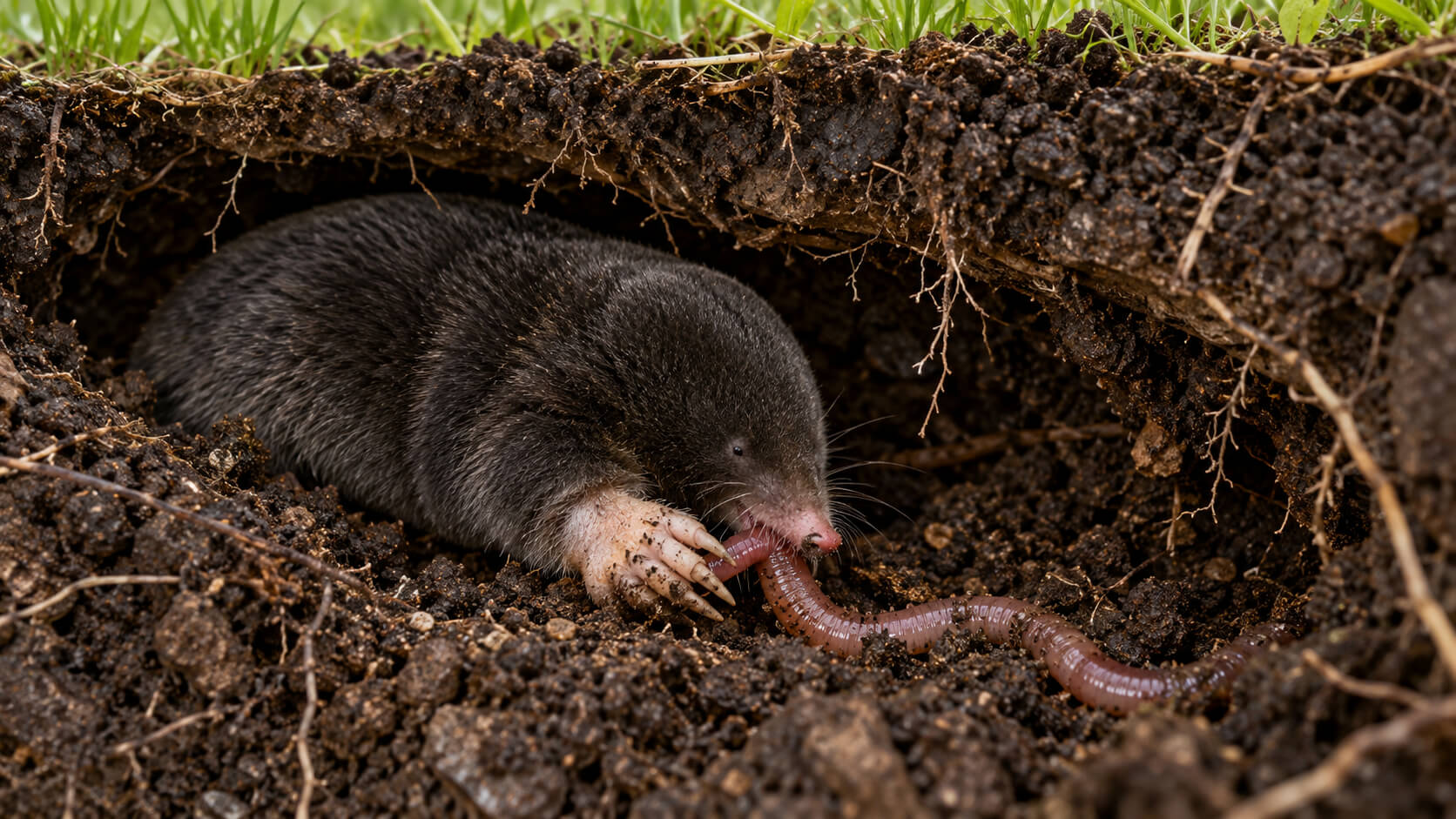
Moles eat mainly earthworms and other soil-dwelling invertebrates, including insect larvae. In UK gardens, they search for this prey through underground tunnel systems rather than feeding on plants.
This guide explains what moles eat, whether they eat worms, insects, plants or roots, and how their feeding relates to garden activity.
Recently booked jobs


Main Foods Moles Eat in the UK
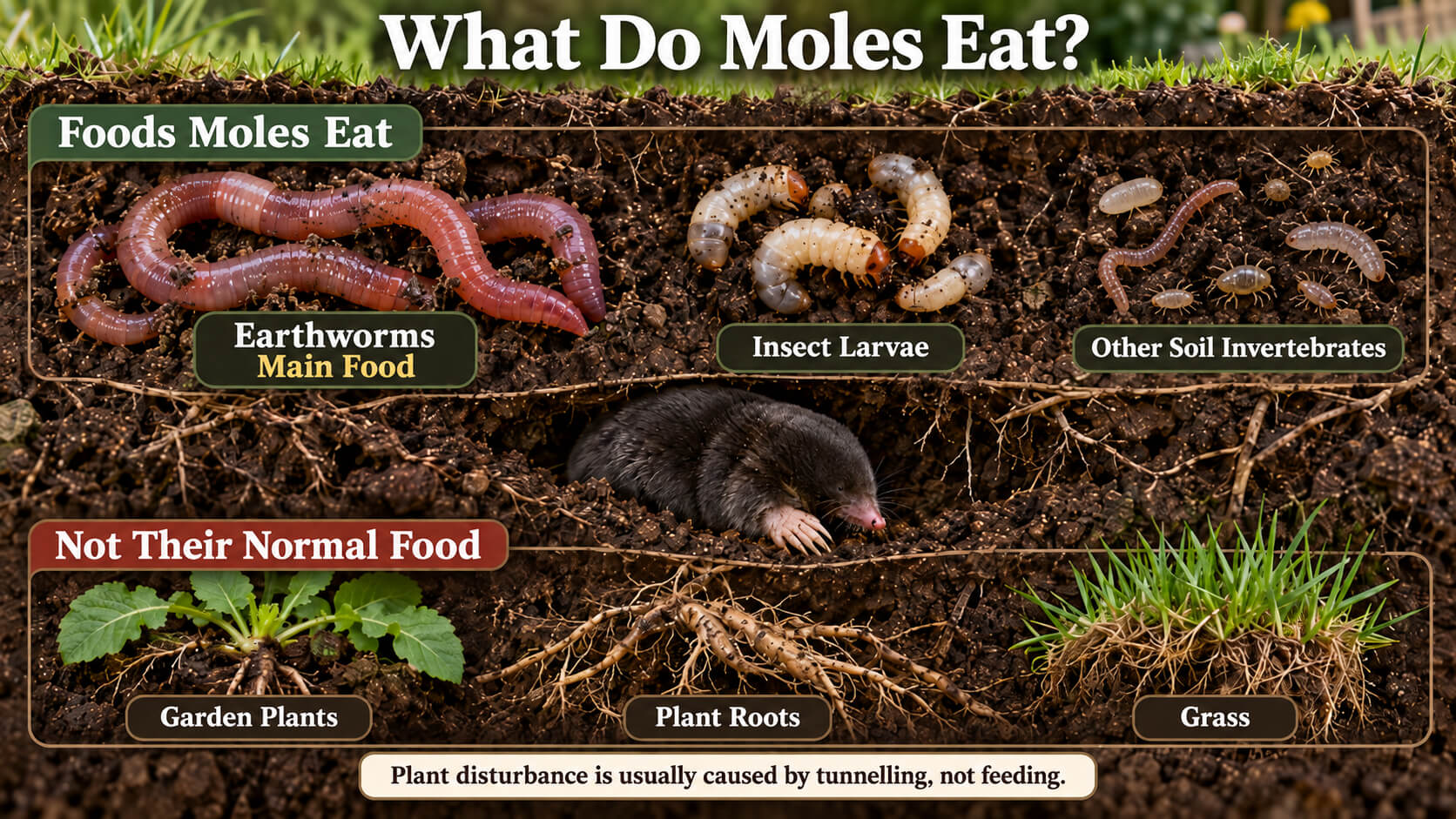
European moles in the UK eat mainly earthworms and other soil-dwelling invertebrates. Earthworms are the most important part of their diet, while insect larvae and other small animals found in the soil provide additional food.
Moles find much of this prey underground. Their tunnel systems are not only routes through the soil: they are also feeding areas that can be reused as the mole searches for prey moving through or close to the tunnels.
Because European moles spend almost all of their lives below ground, their feeding behaviour is closely tied to soil conditions and the availability of invertebrate prey. A garden can therefore offer useful feeding habitat without containing any special food deliberately provided for the animal.
Do Moles Eat Worms and Earthworms?
Yes, moles eat earthworms, and earthworms form the most important part of the European mole's diet. This is why productive soil with plenty of earthworms can provide suitable feeding habitat for moles.
Earthworms remain important throughout the year. They make up an especially large share of the mole's winter diet, and moles may also store live earthworms in underground food chambers for later use.
Do Moles Eat Insects and Other Invertebrates?
Moles also eat insect larvae and other soil-dwelling invertebrates. These foods supplement earthworms, particularly when suitable prey is available in the soil through which the mole is tunnelling.
Underground grubs can also be eaten. The key distinction is that a mole is primarily hunting animal prey below ground rather than searching for vegetation to eat.
What Do Moles Eat in the Garden?
In gardens, moles feed mainly on earthworms and other invertebrates living in the soil. A lawn, flower bed or vegetable plot may therefore provide feeding habitat when the ground supports enough underground prey.
The presence of a mole does not mean that it is eating the lawn or garden plants. What homeowners notice above ground is often the effect of tunnelling and displaced soil rather than feeding damage. For the wider pattern of disturbed soil, raised ridges and other evidence, see our guide to mole activity in the garden.
Because feeding takes place mostly underground, the prey itself is rarely obvious from the surface. The visible signs in a garden are usually linked to the mole's movement through the soil rather than to chewed leaves, stems or roots.
Do Moles Eat Plants or Roots?
Moles do not normally eat garden plants or plant roots. They feed on animal prey in the soil, while plant damage can occur incidentally as tunnelling disturbs the ground around seedlings and roots.
Tunnelling can loosen soil around seedlings or disturb roots even when the mole has not eaten the plant. This can make mole activity look like feeding damage when the underlying cause is physical disturbance around the root zone.
So if plants appear disturbed in an area with mole activity, it is useful to separate physical disturbance caused by tunnelling from actual feeding. The mole's normal food is animal prey in the soil, not grass, roots or garden vegetables.
Frequently Asked Questions


Yes, moles can eat underground grubs and other insect larvae. These form part of their wider invertebrate diet, although earthworms are the most important food for European moles.
Earthworms are especially important in a mole's winter diet. Moles continue feeding underground during winter, and earthworms remain a major source of food when other soil invertebrates may be less available.
No, moles do not normally eat grass roots. Their tunnelling can loosen soil and disturb roots beneath a lawn, which can make the damage look like feeding even though the mole is searching for animal prey underground.
Besides earthworms, moles eat insect larvae and other soil-dwelling invertebrates. Their diet is centred on animal prey found underground rather than plants, roots or grass.