


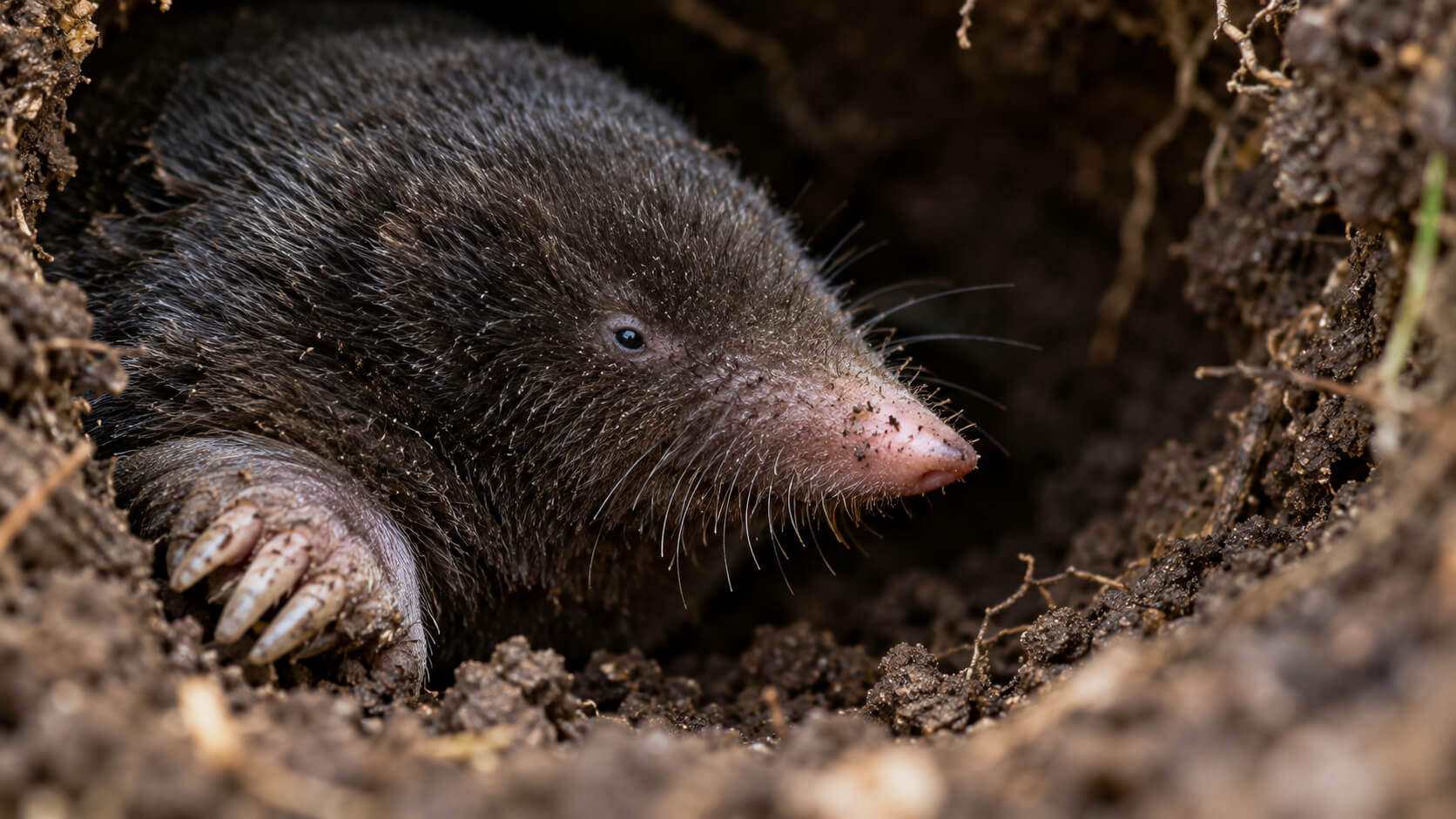
European moles do have eyes and are not completely blind. Their eyes are extremely small and their vision is limited, but they can detect changes in light while living mostly underground.
This guide explains how mole eyesight works, why their eyes are so small and what moles can actually see.
Recently booked jobs


Mole Eyes and Eyesight
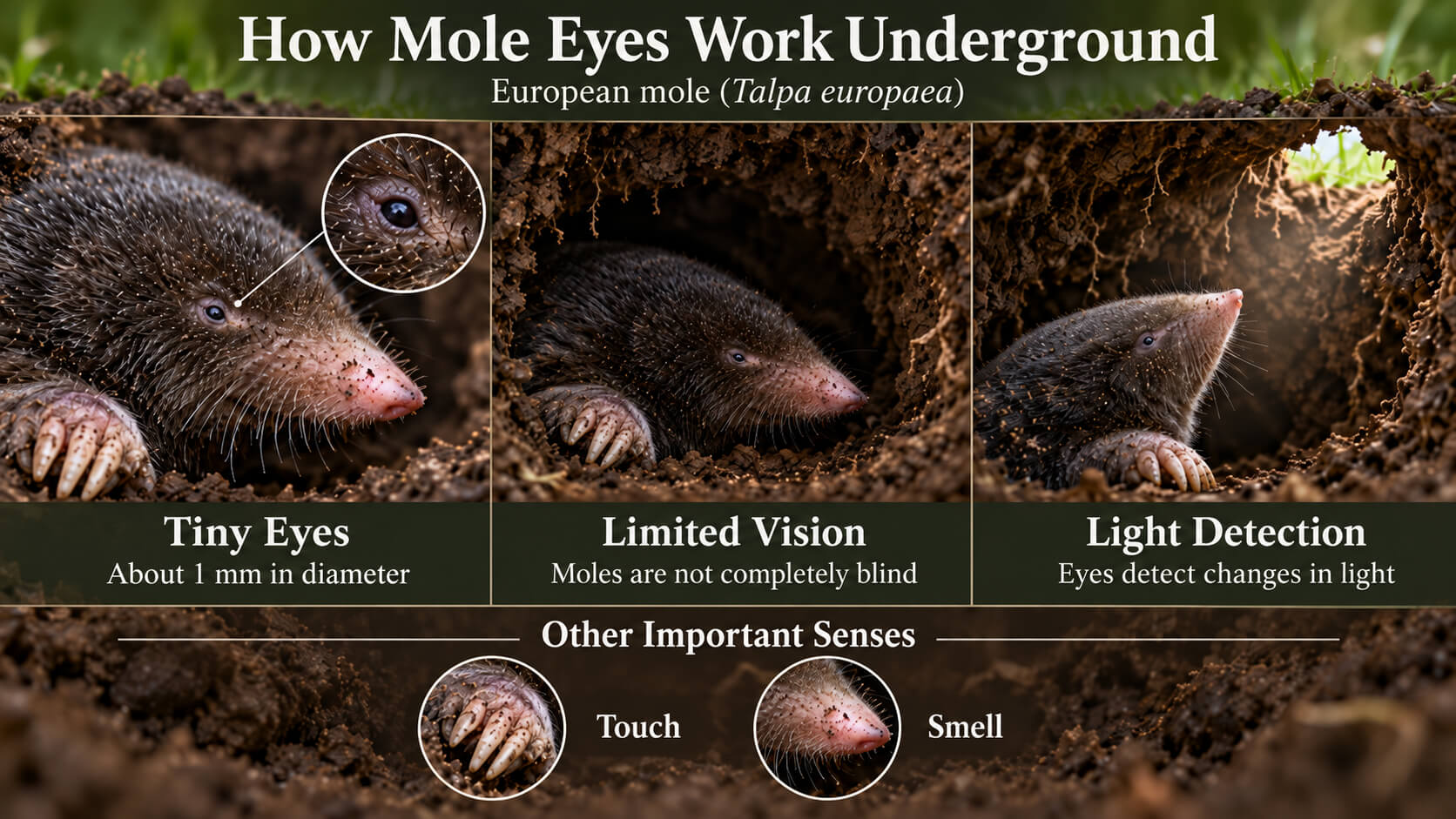
European moles have very small but functional eyes. Their eyes are only about 1 mm across, and their eyesight is much weaker than that of animals that depend heavily on vision above ground. Even so, the eyes are present and can respond to changes in light.
This reduced visual system suits an animal that spends almost all of its life underground. In dark tunnels, detailed long-distance vision is less useful than detecting changes in light and relying on other senses to navigate and find food.
Why Are Mole Eyes So Small?
Mole eyes are tiny because the European mole is highly adapted to a subterranean lifestyle. The eyes sit within the fur and are much less prominent than the broad digging forefeet or sensitive snout.
European moles still retain the main structures of the eye, including eyelids that can open and close. Their eyes are therefore reduced and limited rather than absent. Research on mole vision also shows that European moles can distinguish between light and dark.
Are Moles Blind?
No, European moles are not actually blind. They have relatively poor eyesight, but they can detect changes in light levels and distinguish between light and dark.
This ability can still be useful underground. An unexpected increase in light can indicate that a tunnel has been opened, allowing the mole to respond even without detailed vision.
Why Are Moles Thought to Be Blind?
The belief that moles are blind comes largely from their tiny eyes and almost entirely underground lifestyle. Their eyes can be difficult to see because they are small and partly concealed by fur, while the animals themselves are rarely observed above ground.
This hidden lifestyle is also why homeowners usually recognise moles in the garden through molehills, raised ground and disturbed soil rather than by seeing the animal itself.
European moles also rely heavily on senses other than vision. Specialised touch receptors on the snout help them investigate their surroundings, while smell is important for detecting prey and other information within their tunnels.
Can Moles See?
Yes, moles can see, but their vision is limited. European moles are better described as having poor eyesight than as being blind, with their eyes particularly useful for detecting differences in light rather than providing detailed vision.
Their small eyes are one part of a wider set of adaptations to underground life. Tiny eyes, powerful digging forelimbs and a highly sensitive snout all suit an animal that spends most of its time moving through enclosed soil tunnels.
Can Moles See Underground or in the Dark?
Moles can function in dark underground tunnels, but this does not mean they have strong night vision. Evidence suggests that their eyesight is more useful for detecting light and dark than for producing detailed vision in very low light.
Limited eyesight is therefore only one part of how a mole senses its environment. Touch through the snout and smell provide important information at close range while the animal moves and feeds underground.
Frequently Asked Questions


No, European moles are neither completely blind nor deaf. They have limited eyesight but can detect changes in light, and experimental research has also recorded hearing responses in European moles. Their underground lifestyle means they rely on several senses rather than vision alone.
Moles have limited vision and should not be thought of as animals with strong night vision. Their eyes can detect changes between light and dark, while touch and smell are especially important for navigating their underground environment.
Yes, mole eyes can provide useful information underground even though their vision is poor. European moles can detect changes in light, which may help them recognise when normally dark tunnel conditions have been disturbed.
European moles have relatively poor eyesight rather than complete blindness. Their tiny eyes can distinguish changes in light, but detailed vision is much less important to their underground lifestyle than other sensory information.