


How to Identify Common UK Pigeons
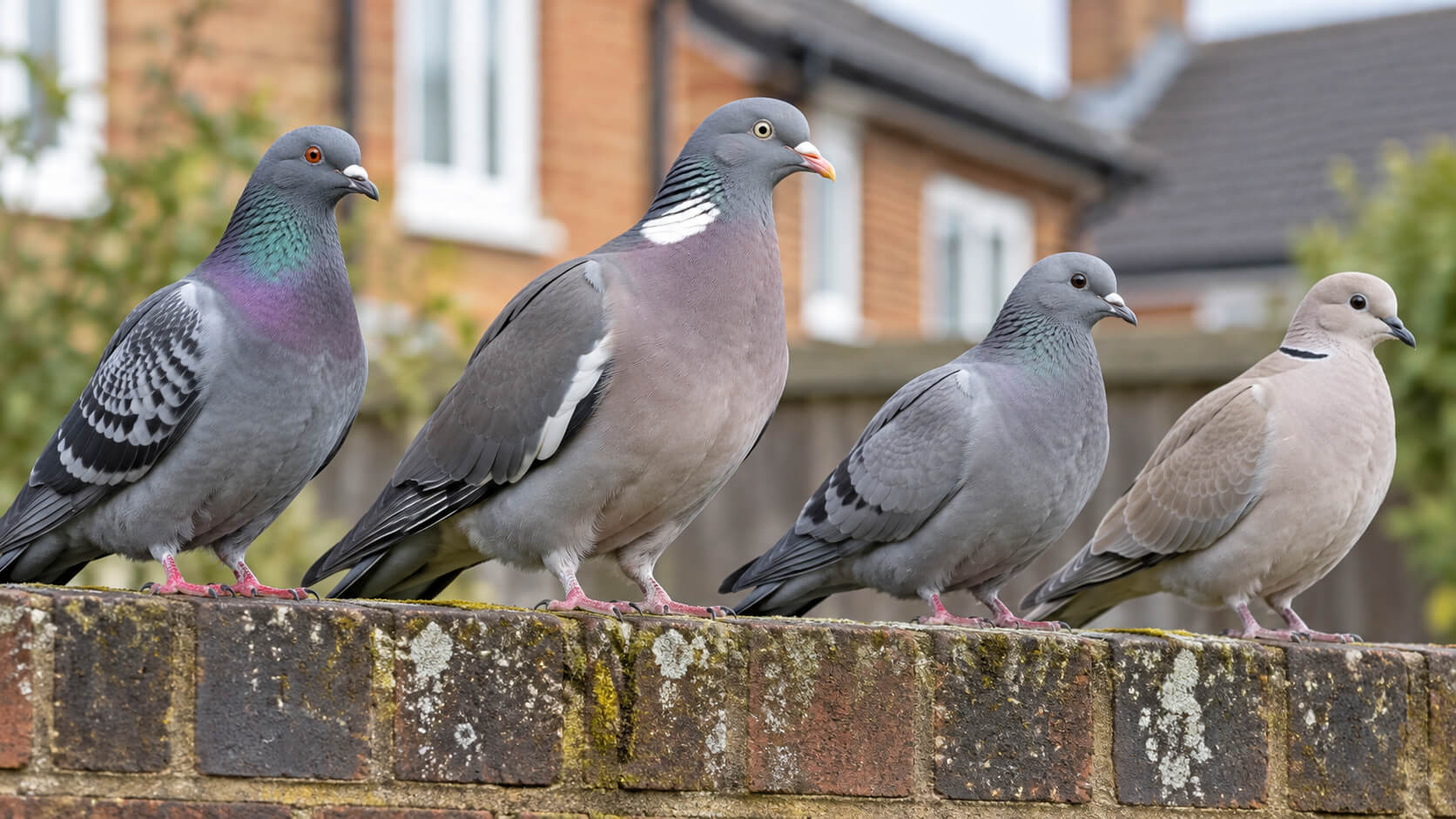
The common types of pigeons in the UK can usually be separated by body size, neck markings, wing pattern and overall colour. Feral pigeons vary widely, while woodpigeons, stock doves and collared doves have more consistent identification features.
Use this guide to identify the bird first, then move to the dedicated guides for pigeon nests, lifespan or droppings if those are the signs you are dealing with.
Checks for Identifying a UK Pigeon
- Compare the bird’s overall size and body shape
- Look for white, dark or iridescent markings around the neck
- Check for wing bars, white wing patches or other distinctive patterns
- Use colour as a supporting clue rather than the only identification feature
- Note whether the bird is usually seen on buildings, in gardens, woodland or farmland



Who will come to my home?
A certified pest control technician from our vetted network, on the day and time you choose. You get a confirmation by email as soon as you book.
Is the treatment safe for children and pets?
Yes. Technicians use HSE-approved products and methods: tamper-resistant bait stations for rodents, and sprays or gels that are safe for children and pets once dry. You are told before the visit if a room needs to stay clear for a few hours.
What if the pests come back?
Follow-up visits are included where the treatment lists them, so if activity continues after the first visit, the next one is already covered at no extra charge. The price you see is the full price for the whole treatment cycle.
Do I need to prepare anything or be at home?
Someone needs to be at the property to let the technician in. Preparation is minimal and depends on the pest; the technician confirms anything needed by SMS and email after you book.
Do I pay now?
No. You see the price, then pick a date and time. Payment is only confirmed at checkout, and cancellation is free.
Is the £50 inspection fee deducted from the treatment?
Yes. If you are not sure what the pest is, you can book a £50 inspection visit. The technician identifies the pest and quotes the treatment on site, and if you go ahead the £50 is deducted from that treatment price.
Recently booked jobs

How to Identify Different Types of Pigeons in the UK
The different types of pigeons in the UK are easiest to separate by combining body size, neck markings, wing pattern, colour and where the bird is seen. Pigeons and doves belong to the same bird family, so everyday names can be misleading. A bird called a “dove” is not automatically from a different scientific group from a bird called a “pigeon”.
Colour is useful, but it should not be the only clue. Feral pigeons can vary greatly in appearance, while woodpigeons, stock doves and collared doves have more consistent features. Start with the neck and wings, then compare overall build and the setting in which the bird is repeatedly seen.
Common Types of Pigeons Found in the UK
Common pigeon and dove species seen in the UK can often be separated by their size, markings, colour pattern and typical habitat. Feral pigeons show the greatest colour variation, while woodpigeons, stock doves, collared doves and turtle doves have more characteristic features.
Feral Pigeon
Feral pigeons are the familiar pigeons commonly seen around UK towns and cities. They descend from domesticated rock doves and can show a wide range of colours and patterns. Many are grey with darker wing bars and an iridescent neck, but paler, brown and darker individuals also occur. This variation means a feral pigeon cannot always be identified by colour alone.
Woodpigeon
Woodpigeons are larger and heavier-looking than feral pigeons and are recognised by white markings on the neck and wings. Their broad build, pinkish chest and conspicuous white wing bars make them easier to recognise than many other UK pigeon-like birds. They are common in gardens, parks, farmland, woodland and built-up areas.
Stock Dove
Stock doves resemble woodpigeons but lack the woodpigeon’s obvious white neck and wing patches. They have a grey body, pinkish chest and a metallic-looking neck patch. They are usually associated with woodland, parkland and farmland and are less typical of busy urban centres than feral pigeons.
If the bird is repeatedly returning to one sheltered spot and you are seeing twigs, eggs or other nesting evidence, use the pigeon nest and eggs guide for more detail on nests, eggs, hatching and the pigeon life cycle.
Collared Dove
Collared doves are smaller and paler than woodpigeons, with a slim build and a narrow dark collar around the back of the neck. They are regularly seen in gardens, parks and suburban or urban areas. Their pale beige-grey colour and neck collar make them relatively easy to separate from a typical feral pigeon.
Turtle Dove
Turtle doves are smaller, more patterned birds and are much less likely to be confused with the everyday urban feral pigeon once their plumage is visible. Their warm patterned wings and distinctive neck markings provide useful identification clues.
White, Brown and Black Pigeons in the UK
A white, brown or very dark pigeon in the UK is not automatically a separate species. Feral pigeons can show substantial colour variation because of their domestic ancestry, so colour-led searches such as “white pigeon UK”, “brown pigeon UK” or “black pigeon UK” need a second identification check. Look at wing bars, neck markings, body shape and behaviour before deciding what type of pigeon you are seeing.
How to Tell UK Pigeons and Doves Apart
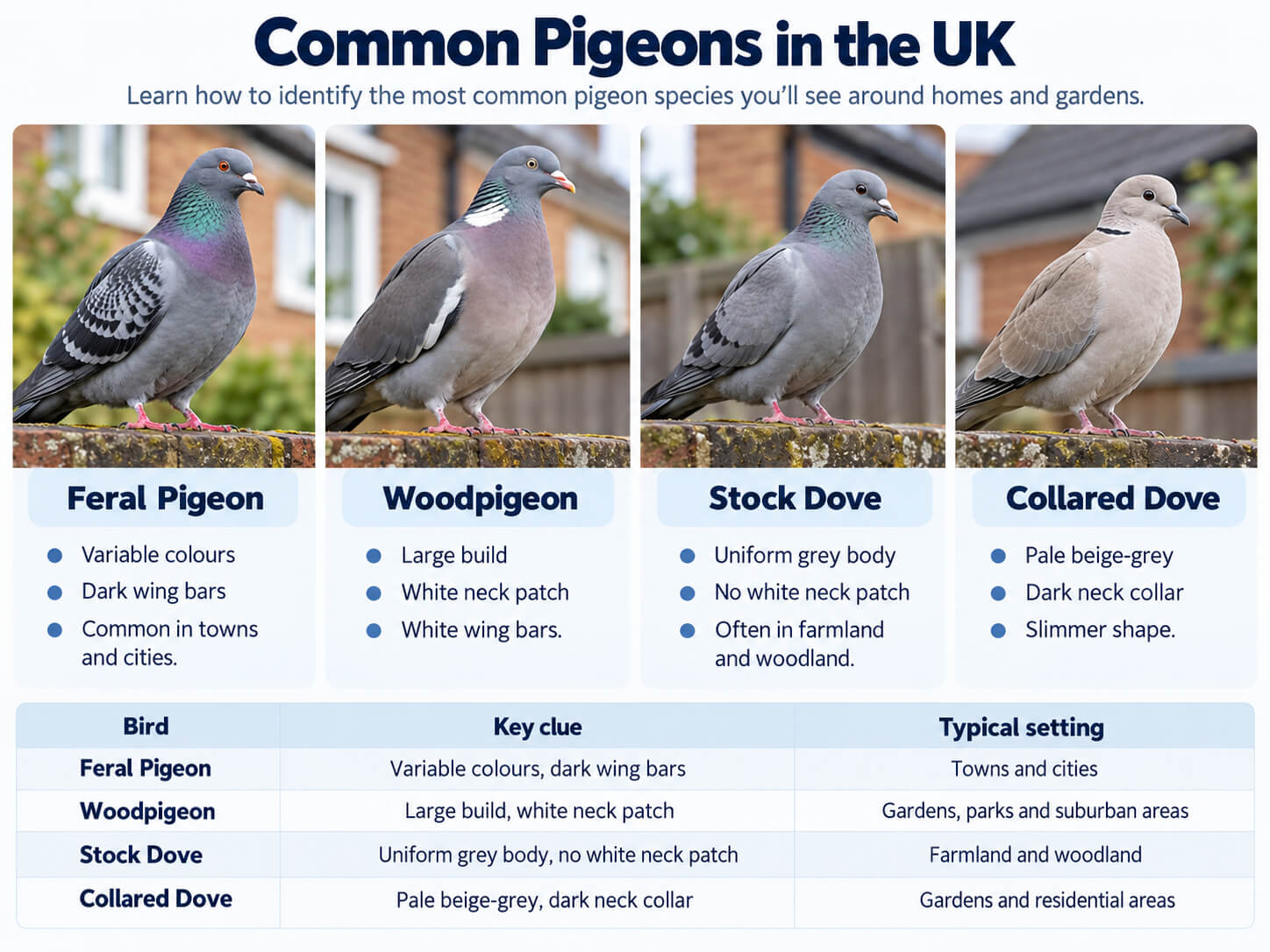
The fastest way to tell common UK pigeons apart is to compare the neck and wing markings before relying on colour. A woodpigeon normally has obvious white markings; a stock dove lacks those white patches; a collared dove is smaller and paler with a dark neck collar; and a feral pigeon is much more variable in colour and pattern.
| Bird | Useful identification clues | Typical setting |
|---|---|---|
| Feral pigeon | Variable colour; often grey with darker wing bars | Towns, cities, roofs, bridges and ledges |
| Woodpigeon | Large build with white neck markings and white wing bars | Gardens, parks, farmland and woodland |
| Stock dove | Grey body without the woodpigeon’s obvious white patches | Woodland, parkland and farmland |
| Collared dove | Pale beige-grey body with a narrow dark neck collar | Gardens, parks and suburban areas |
A common comparison is woodpigeon vs feral pigeon. The woodpigeon is normally larger and shows clear white neck and wing markings, while feral pigeons vary more and often show darker wing bars instead. Another useful comparison is stock dove vs woodpigeon: the missing white neck and wing patches point away from woodpigeon and towards stock dove.
If the bird is already identified and your question is how long it may live, use the pigeon lifespan guide for lifespan and life-expectancy information.
Pigeon Identification by Location and Other Evidence
Location and surrounding evidence can support pigeon identification, but they should be used alongside the bird’s physical features. Where the bird is repeatedly seen, whether nesting material or droppings are present and how it uses the property can help determine which guide is most relevant next.
Where Pigeons Are Commonly Seen Around Homes
Where a pigeon is seen can support identification, but location should never replace visual clues. Feral pigeons are strongly associated with built-up environments and often use roofs, ledges, bridges and other elevated structures. Woodpigeons and collared doves are also common around gardens and suburban areas, while stock doves are more strongly associated with parkland, woodland and farmland.
A pigeon on a roof is therefore not automatically a feral pigeon, just as a pigeon feeding on a lawn is not automatically a woodpigeon. Use location together with neck pattern, wing markings and overall size.
What to Check Next if Pigeons Are Using Your Property
Once you have identified the bird, the next useful step is to match the evidence to the right pigeon guide. Nest material, eggs and repeated activity around one sheltered point can be checked against the pigeon nest guide, while lifespan questions are covered separately.
If accumulated droppings are the main evidence, use the pigeon droppings guide for identification and health-related context.
For pigeon removal, deterrents, proofing, spikes, netting, pricing or booking, see the available pigeon pest control options.
Frequently Asked Questions


Not necessarily. A white pigeon may be a colour variation of a feral pigeon rather than a separate type of dove. Pigeons and doves belong to the same bird family, so colour alone is not enough to identify the bird; body shape, neck markings and wing pattern provide better clues.
Not necessarily. Feral pigeons can vary widely in colour because of their domestic ancestry, so a very pale or white bird should also be checked for its body shape, wing pattern, neck markings and other identification features.
Feral pigeons descend from domesticated rock doves and belong to the same species. Feral populations show much greater variation in colour and pattern than the classic wild rock-dove appearance.
The woodpigeon is the common UK pigeon most easily recognised by conspicuous white neck markings and white bars across the wings. These features help separate it from feral pigeons and stock doves.
A stock dove lacks the obvious white neck patch and white wing markings of a woodpigeon. It is also smaller and has a more uniform grey appearance with a metallic-looking neck patch.