


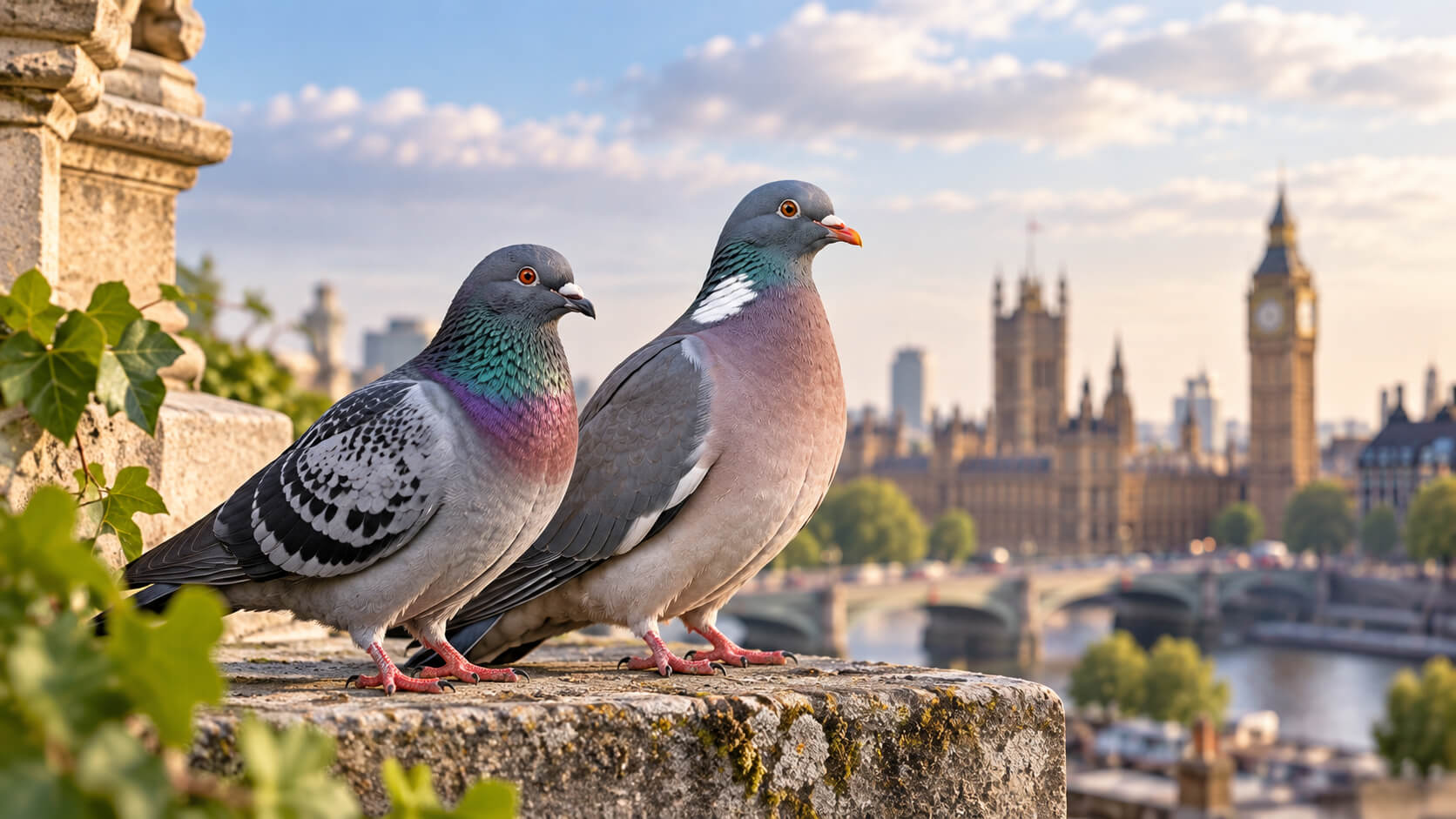
Pigeons in the UK have an average lifespan of around three years, although individual birds can live for much longer. Lifespan varies with species, food availability, disease, predators, accidents and the conditions in which a bird lives.
This guide explains pigeon life expectancy, including feral and wood pigeon lifespan, and why average lifespan is very different from the oldest recorded age.
Recently booked jobs

How Long Do Pigeons Live?
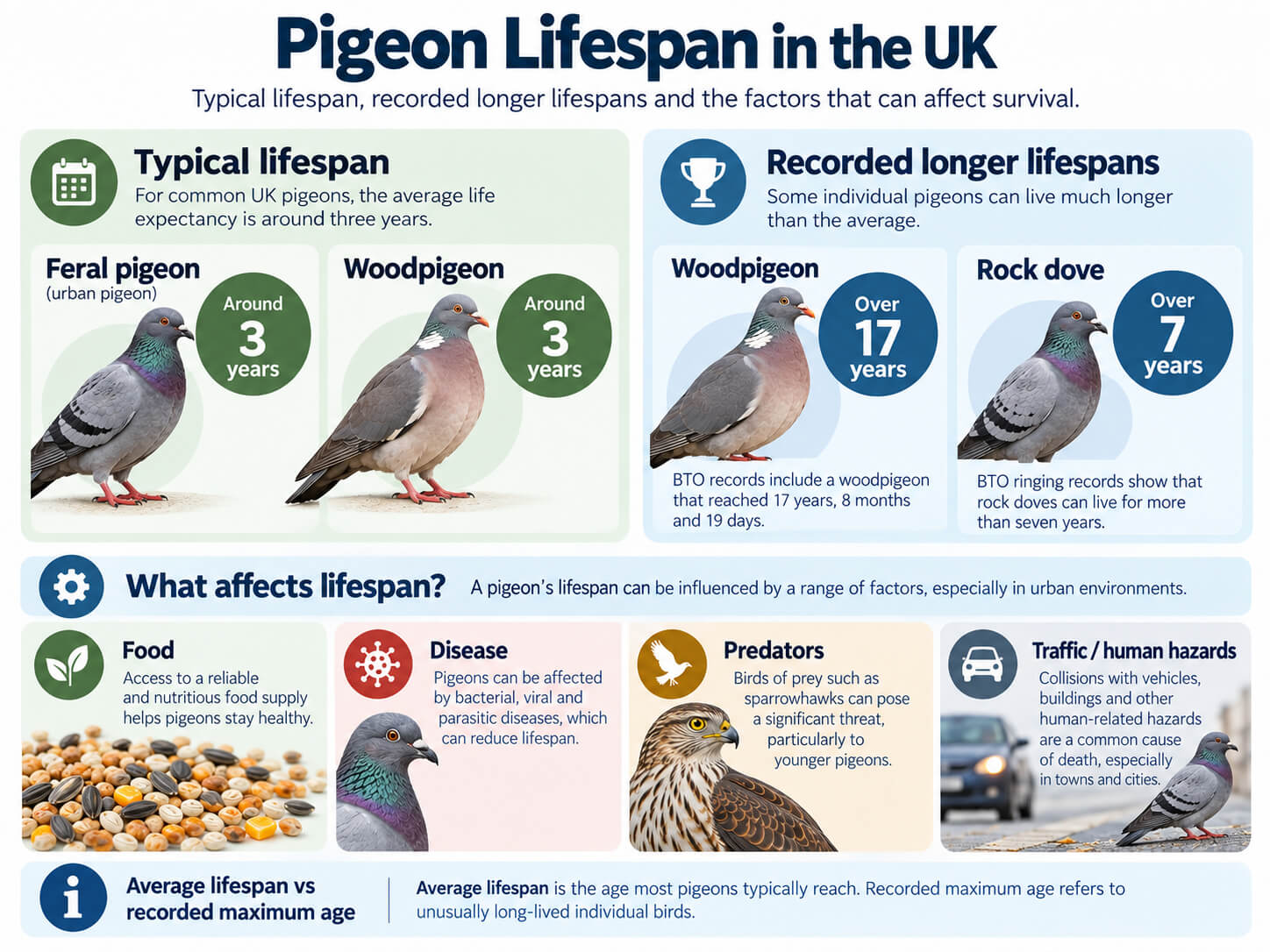
The lifespan of a pigeon varies by species and environment, but common feral and wood pigeons in the UK have an average lifespan of around three years.
An average is not a maximum. Some pigeons survive for many more years than the typical bird, which is why exceptionally old individuals should not be used to describe normal pigeon life expectancy.
For UK pigeons, average lifespan is best understood as a population-level figure rather than a fixed age limit. Feral pigeons and woodpigeons may average only a few years, while individual birds that avoid disease, predators, accidents and other hazards can survive considerably longer. This is why pigeon lifespan figures should distinguish typical life expectancy from exceptional recorded ages.
How Long Do Wood Pigeons Live?
The typical life expectancy of a woodpigeon that reaches breeding age is around three years. BTO ringing data records breeding typically beginning at about one year of age and shows that individual woodpigeons can live much longer than the average.
The BTO’s maximum recorded age for a ringed woodpigeon is 17 years, 8 months and 19 days. This represents an exceptional recorded lifespan rather than the age most woodpigeons reach.
Feral Pigeon Lifespan in the UK
BTO data gives a typical life expectancy of around three years for Feral Pigeons that reach breeding age. These are the pigeons commonly encountered in towns and cities and are domesticated descendants of the wild rock dove.
Urban life can provide regular food and sheltered roosting opportunities, but feral pigeons also face risks from disease, predators, traffic and other human activity. These competing factors mean the lifespan of an individual bird can differ substantially from the average.
Rock Dove Lifespan and Recorded Age
Rock doves, the wild ancestors of feral pigeons, can live for more than seven years according to BTO ringing records. Truly wild rock doves in the UK are mainly associated with remote rocky coasts and islands, while feral pigeons occupy towns, cities and other human environments.
If you are unsure whether the bird is a feral pigeon, woodpigeon or another UK species, use our UK pigeon identification guide.
Why Do Some Pigeons Live Longer Than Others?
Pigeon life expectancy is influenced by access to suitable food and safe habitat as well as exposure to predators, disease and human-related hazards. Food availability, disease, predation and other environmental pressures can all influence pigeon survival.
This explains why two pigeons of the same species may live for very different lengths of time. Recorded maximum ages show what is possible, while average lifespan is a better guide to what is typical across a population.
How Pigeon Lifespan Differs From Development
Pigeon lifespan describes how many years a bird may live, while development describes its progression from egg through chick and fledgling to adulthood. These are related concepts but answer different questions.
This page covers longevity and life expectancy only. Egg development, hatching and young-pigeon stages belong to the separate nesting topic.
Frequently Asked Questions


Yes, some individual pigeons can live far longer than the average. BTO ringing records include a woodpigeon that reached 17 years, 8 months and 19 days, although this is an exceptional recorded age rather than a typical lifespan.
The RSPCA gives an average lifespan of around three years for both feral pigeons and woodpigeons. Individual birds can live for different lengths of time depending on the conditions and risks they encounter.
Average lifespan describes what is typical across a population, while a maximum recorded age comes from an unusually long-lived individual. A record therefore shows what has been observed, not how long most pigeons live.
BTO ringing records include a woodpigeon recorded at 17 years, 8 months and 19 days old. This is far above the species’ typical life expectancy and should be treated as an exceptional longevity record.
Yes. Food availability, disease, predators and human-related hazards can all influence pigeon survival. These factors help explain why birds of the same species do not all reach the same age.