


House Moths: Types & Identification
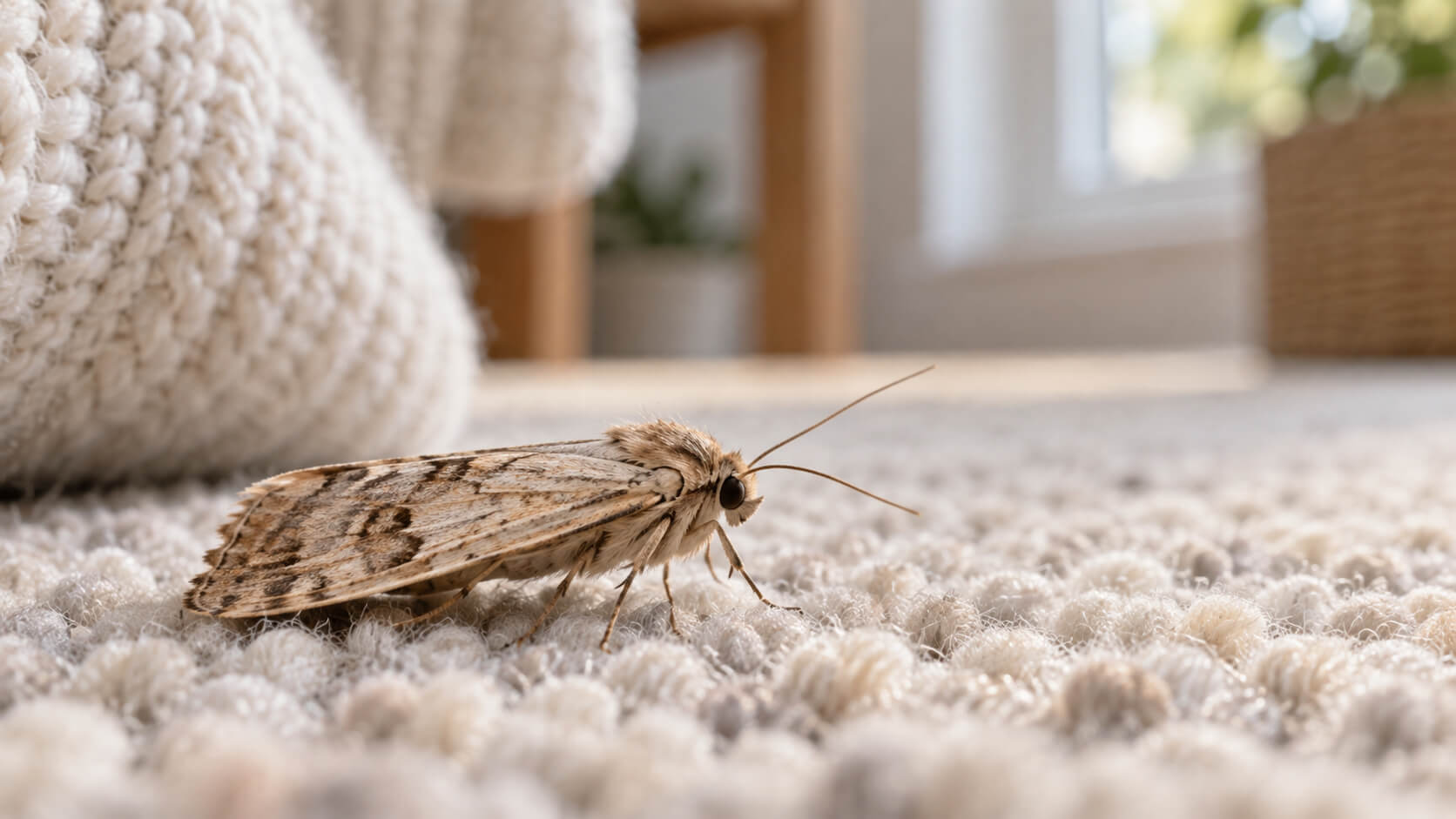
House moths found in UK homes can include clothes moths, brown house moths and white-shouldered house moths, while “carpet moth” is commonly used for moth activity or damage noticed around carpets.
This guide explains how to identify common household moths, compare the main types and follow the relevant guide for more detailed information.
Moth Pest Control
- Same-day bookings available
- Flexible appointment times
- Treatment available for one room or several rooms across the property
- Affected rooms, wardrobes and textiles can be included in the treatment scope
- Pay us by Card, PayPal, Google Pay, Apple Pay or Pay on-site



Who will come to my home?
A certified pest control technician from our vetted network, on the day and time you choose. You get a confirmation by email as soon as you book.
Is the treatment safe for children and pets?
Yes. Technicians use HSE-approved products and methods: tamper-resistant bait stations for rodents, and sprays or gels that are safe for children and pets once dry. You are told before the visit if a room needs to stay clear for a few hours.
What if the pests come back?
Follow-up visits are included where the treatment lists them, so if activity continues after the first visit, the next one is already covered at no extra charge. The price you see is the full price for the whole treatment cycle.
Do I need to prepare anything or be at home?
Someone needs to be at the property to let the technician in. Preparation is minimal and depends on the pest; the technician confirms anything needed by SMS and email after you book.
Do I pay now?
No. You see the price, then pick a date and time. Payment is only confirmed at checkout, and cancellation is free.
Is the £50 inspection fee deducted from the treatment?
Yes. If you are not sure what the pest is, you can book a £50 inspection visit. The technician identifies the pest and quotes the treatment on site, and if you go ahead the £50 is deducted from that treatment price.
Recently booked jobs


How to Identify Moths in the House
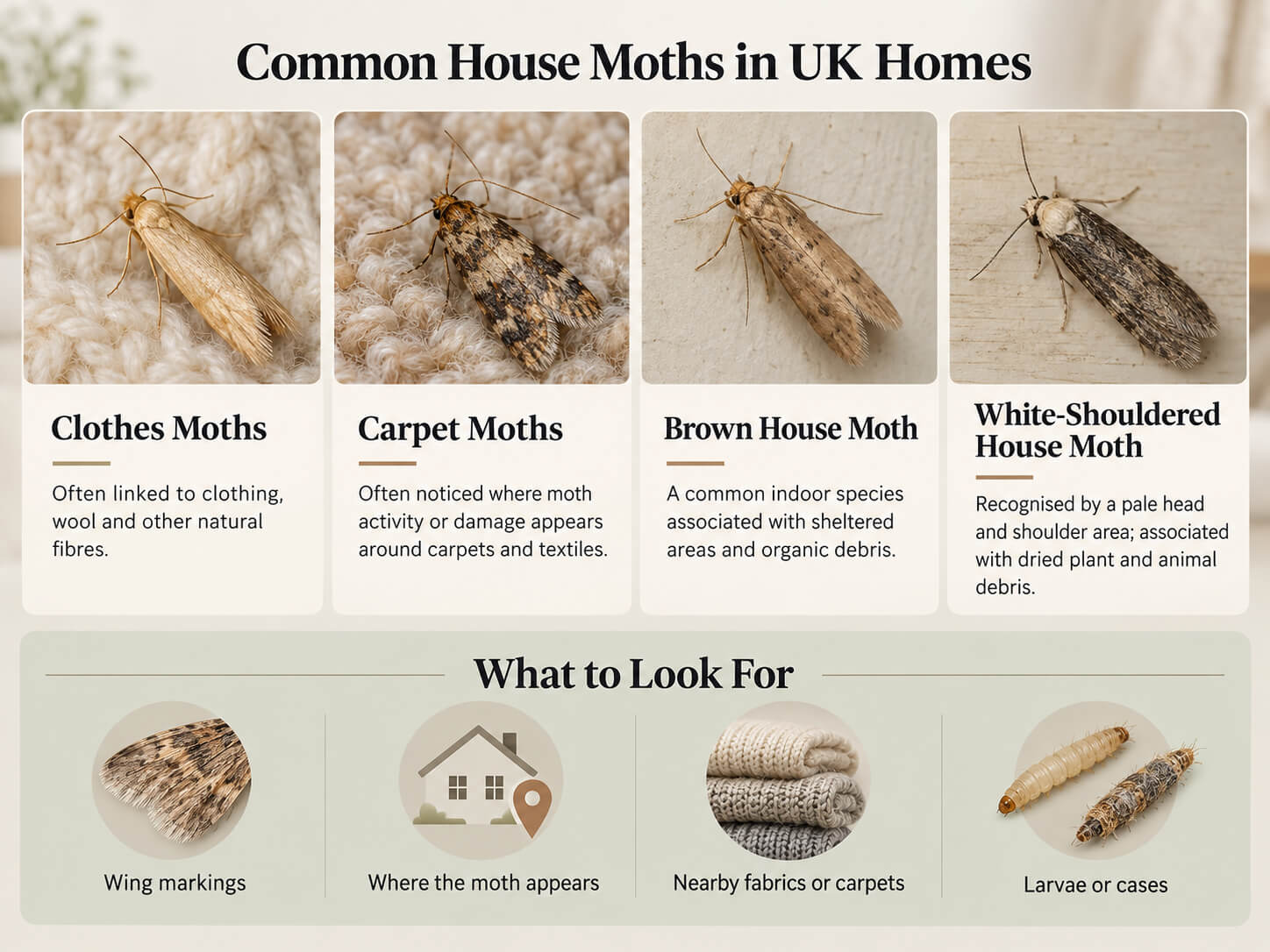
House moth identification is easier when you look at more than colour alone. Look at the moth’s wing shape and markings, where it is being seen, and whether there are signs around clothing, carpets, upholstery or other materials indoors.
Location and Repeated Indoor Sightings
Several moth species can occur inside buildings, so a single brown or pale moth is not always enough for confident identification. If you are trying to identify moths in the house, the location of repeated sightings and the materials nearby can provide useful additional clues.
Adult Moths, Larvae and Textile Clues
It can also help to note whether you are seeing adult moths only or finding larvae, silken cases or visible textile damage nearby. These clues can help separate a general indoor moth sighting from activity linked to a particular household species.
Types of House Moths in UK Homes
The main types of house moths found indoors do not all have the same habits or feeding preferences. UK house moths can include textile-associated clothes moths as well as species such as the brown house moth and white-shouldered house moth.
Clothes Moths
Clothes moths found in UK homes include the common clothes moth and the case-bearing clothes moth. It is their larvae, rather than the adult moths, that can damage natural fibres such as woollen clothing, upholstery and carpets.
If the activity is centred around clothing or other natural-fibre textiles, our clothes moths guide covers identification, larvae, eggs and lifecycle information in more detail.
Carpet Moths
“Carpet moth” is commonly used when moth activity or textile damage is noticed around carpets. Because this term can overlap with textile-feeding moth problems, identification should consider the moth itself as well as the material where signs are being found.
Damage around wool-rich flooring, edges of rooms or other carpeted areas needs more specific identification. The carpet moths guide covers the signs, larvae, eggs and carpet-related clues in more detail.
Brown House Moth
The brown house moth (Hofmannophila pseudospretella) is a household moth found in homes and food-storage areas. Adults are mottled brown and darker than common clothes moths, while the larvae can damage a range of suitable household materials.
Because this species is not limited to clothing or carpets, location and surrounding material matter when identifying it. The brown house moth guide focuses specifically on this species and its identification.
White-Shouldered House Moth
The white-shouldered house moth (Endrosis sarcitrella) also occurs indoors. Its pale head and shoulder area contrast with its darker wings, and the species is associated with dust and debris that can accumulate beneath carpets and in other sheltered areas.
White-shouldered house moths are better identified by combining their pale shoulder area with the location where they are found and the surrounding material. Indoor debris and dried organic material can provide useful context when distinguishing them from textile-associated moths.
Understanding House Moths: Size, Causes and Differences
House moths can differ in size, appearance and the materials or areas with which they are associated. Looking at these differences can help explain why moths are appearing indoors and whether the evidence points towards a general household moth, a clothes moth or carpet-related moth activity.
Small House Moths and Tiny Moths in the House
Small moths in the house can belong to several different household species, so size alone is not enough for identification. Wing colour, markings, where the moth is repeatedly seen and whether larvae, silk, cases or material damage are present can provide more useful clues.
If you are seeing tiny moths in the house, compare the surrounding evidence as well as the adult moth itself. Activity around clothing, carpets or other indoor materials can help narrow down which type of house moth is most likely.
Why Are There Moths in My House?
Moths can appear inside a house for different reasons depending on the species. Some household moth larvae are associated with natural animal fibres, while other species can develop around dried plant or animal material and organic debris found inside buildings.
Repeated sightings in the same area can therefore be more useful than seeing a single adult moth. The location of the activity and any larvae, cases or textile damage can help narrow down the likely type of house moth.
House Moths, Clothes Moths and Carpet Moths: What’s the Difference?
“House moths” is a broad household identification term, while clothes moths refer to particular textile-associated species. “Carpet moth” is commonly used when moth activity or damage is noticed around carpets, so the term can overlap with clothes-moth problems rather than always describing one precise household species.
| Moth type | Main identification context | Coverage |
|---|---|---|
| Clothes moths | Clothing, natural fibres and textiles | Separate detailed guide |
| Carpet moths | Activity or damage around carpets, rugs and flooring | Separate detailed guide |
| Brown house moth | Household moth species identification | Separate detailed guide |
| White-shouldered house moth | Household moth species identification | Covered on this page |
Use the location of the moth, its markings and any nearby larvae, cases or material damage to narrow down the likely type. Once the evidence points towards a particular household moth, the more specific guide can provide the relevant identification details.
When Moth Activity May Need Professional Attention
If repeated moth activity suggests that identification alone is not enough and professional treatment may be needed, you can review the available moth pest control options.
Frequently Asked Questions


There is no single lifespan for house moths because the term covers several different species. Development varies by species, food availability and indoor conditions, so the life cycle of a household moth should be considered only after the likely species has been identified.
What house moth larvae eat depends on the species. Some household moths are associated with animal-based natural fibres, while others can develop in dried plant or animal material and other organic debris found indoors.
No. House moths are not known to bite people. They are mainly nuisance and material-damage pests, with problems linked to textiles, natural fibres or stored products.
Some household moth species can remain active indoors throughout the year. Indoor temperature, available food and the particular species can all affect when activity is noticed, so sightings are not necessarily limited to one season.