


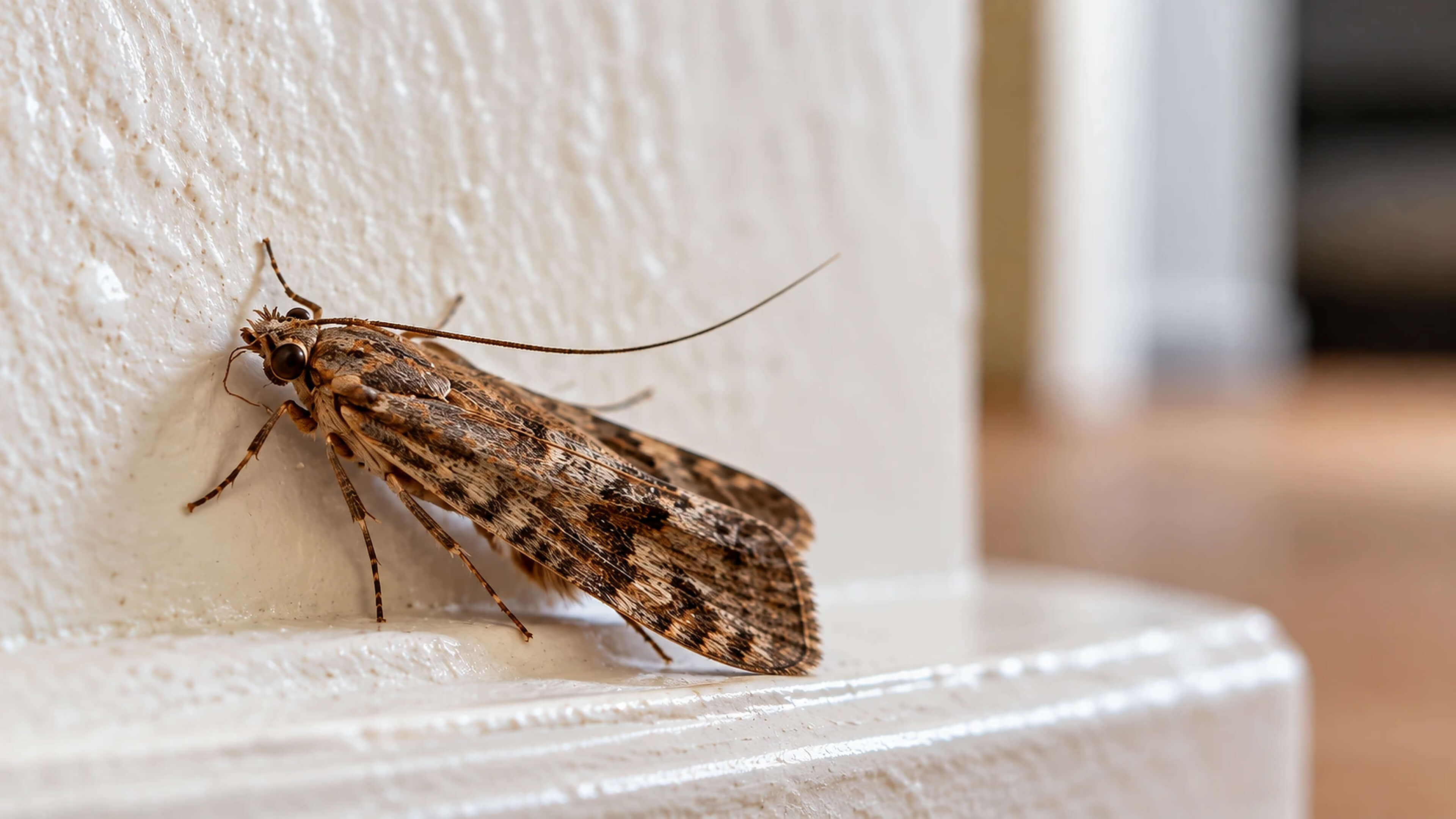
The brown house moth is a species regularly found inside homes across the British Isles. Adults may be noticed resting on walls, while the larvae develop around organic material that accumulates in sheltered indoor areas.
This guide explains the moth’s appearance, where it is commonly found and which clues can help with identification.
Recently booked jobs


Brown House Moth Identification and Appearance
Brown house moth identification is most reliable when colour, wing markings, size and indoor context are considered together. Brown moths found indoors are not automatically brown house moths, so the sections below explain the features that support identification and how to distinguish this species from other small brown moths seen in homes.
Brown Moths in the House: Is It a Brown House Moth?
A brown moth found indoors may be a brown house moth, but colour alone is not enough for reliable identification. The brown house moth (Hofmannophila pseudospretella) is a common inhabitant of houses throughout the British Isles and is frequently noticed resting on indoor walls.
The adult has mottled brown wings rather than the plain golden appearance associated with the common clothes moth. Brown house moths also vary noticeably in size, so location, markings and surrounding material should be considered together rather than relying on size alone.
How to Recognise a Brown House Moth
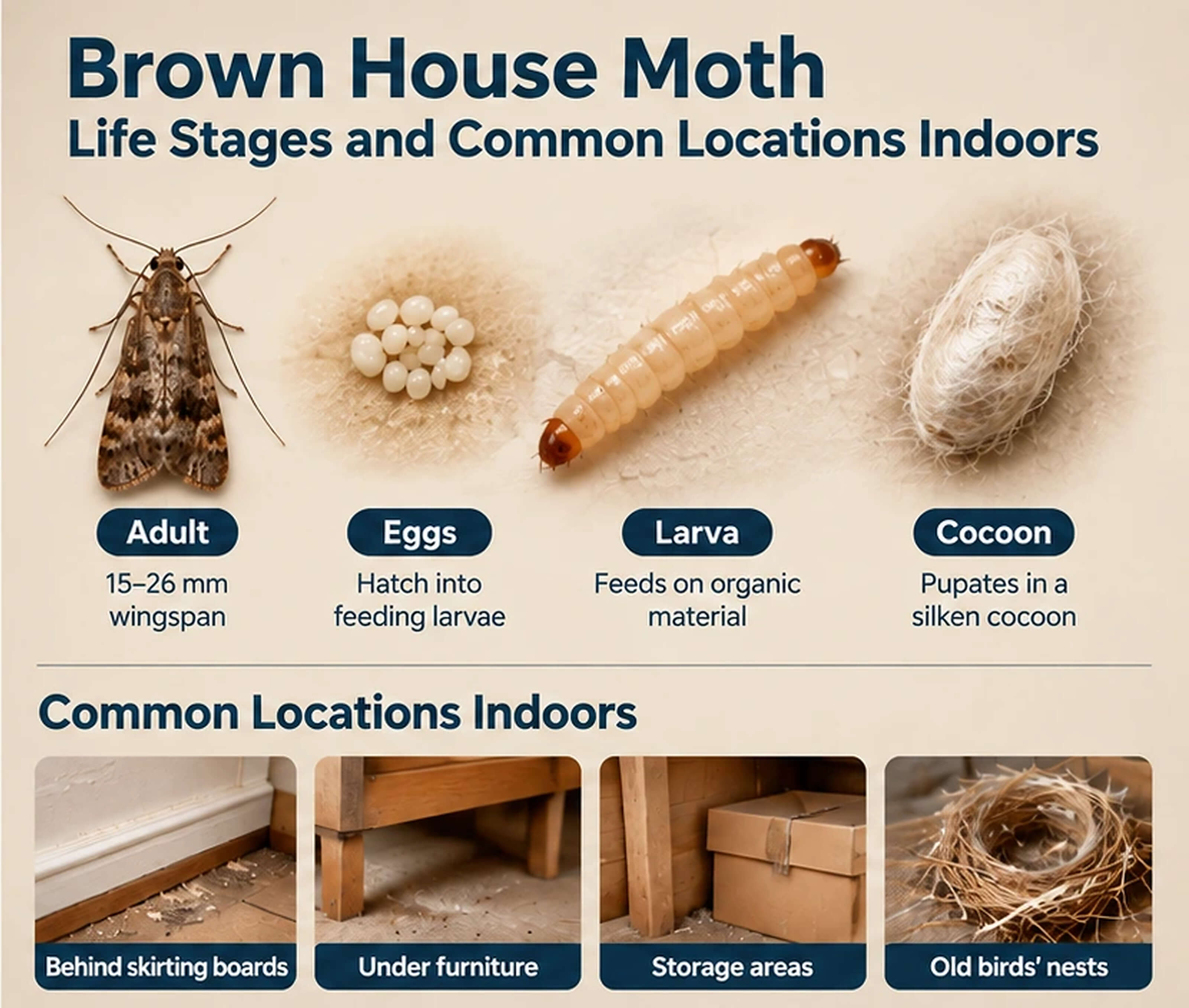
Brown house moth identification depends mainly on its mottled brown appearance and indoor context. UKMoths records adults with a wingspan of roughly 15–26 mm and notes that they are commonly seen indoors, particularly as light levels begin to fall.
If the moth does not fit this species profile, the house moth identification guide compares the main household moth types and can help narrow down what you are seeing.
Small or Tiny Brown Moths in the House
Small or tiny brown moths in the house should not automatically be identified as brown house moths. Several indoor moth species can appear brown, especially when viewed briefly or in poor light.
Look instead for the combination of mottled wings, repeated indoor sightings and evidence from sheltered areas containing organic material. Comparing several features is more reliable than using colour or size on its own.
Brown House Moth Habitat, Larvae and Activity
Brown house moths are associated with sheltered indoor areas where their larvae can find organic material to feed on. Their larvae, development and seasonal activity help explain why the species may be found in dusty or undisturbed parts of buildings rather than being restricted to wardrobes or carpets.
Where Brown House Moths Are Found Indoors
Brown house moth larvae favour sheltered places where organic material can accumulate. UKMoths specifically notes areas behind skirting boards and similar indoor spaces, while the larvae can feed on a broad mixture of animal and plant-derived debris.
This means the species is not restricted to wardrobes or carpets. Dusty, undisturbed spaces containing organic debris can provide suitable material, which helps distinguish the brown house moth from moth problems that are more closely associated with a particular textile.
Brown House Moth Larvae
Brown house moth larvae are pale-bodied larvae with a darker reddish-brown head and can feed on a varied range of organic material. Recorded foods include wool, fur, skin, seeds, dead insects, dried plants and other debris found indoors.
The larvae of several refuse-feeding moth species can look similar, so finding a larva alone may not be enough for confident identification. The adult moth, its location and the surrounding material provide important additional clues.
Brown house moth eggs develop into feeding larvae, which later pupate before emerging as adults. The brown house moth life cycle can take several months, with the larval stage responsible for feeding on suitable organic material.
When Are Brown House Moths Seen?
Brown house moths can be found indoors throughout the year, although records are highest during the warmer months. Indoor conditions allow the species to continue developing beyond the normal outdoor season, so seeing one outside summer does not rule out this species.
Frequently Asked Questions


Brown house moths lay their eggs in or around material that can provide food for the larvae after they hatch. Depending on the location, this can include organic debris, stored material or animal-based fibres such as wool or fur, so there is not one single egg-laying location within a home.
A brown house moth cocoon is the silken structure made by a mature larva before it pupates. The moth develops through its pupal stage inside the cocoon before the adult emerges. The cocoon is therefore part of the developmental stage rather than the feeding stage, which is carried out by the larva.
Yes, brown house moth larvae can occur in old birds’ nests and may later enter buildings. Nest debris can contain feathers, skin, dead insects and other organic material suitable for scavenging larvae, making old nesting material a possible source of indoor sightings.
Brown house moth development can take many months and may extend beyond a year depending on environmental conditions. Development varies with indoor conditions and available food, so there is no single fixed duration for every individual. The species can continue breeding indoors rather than being restricted to one short seasonal period.