


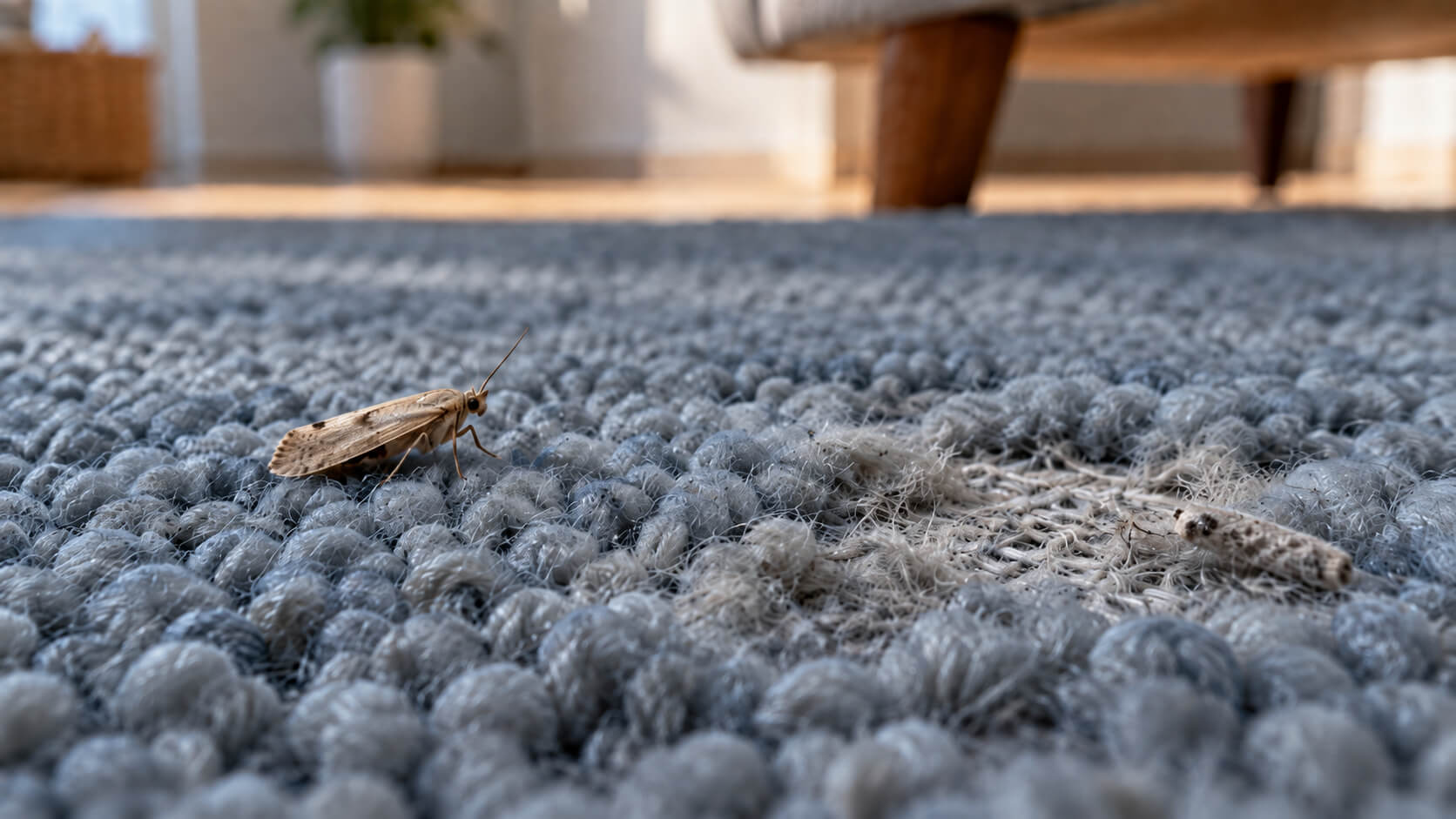
Carpet moth activity often becomes noticeable through changes in wool carpets and rugs rather than through the adult moth itself. Look for thinning pile, irregular bare areas, larvae, silk or portable cases in quieter parts of the room.
This guide explains where these signs tend to appear and how to read them together before deciding which household moth you may be dealing with.
Recently booked jobs


Carpet Moth Signs, Appearance and Damage
Carpet moth activity is usually identified by combining signs in the flooring with visible damage and any larvae, cases or adult moths found nearby. Carpet edges, areas beneath furniture and other less disturbed sections of natural-fibre flooring are particularly useful places to check, while no single adult appearance or worn patch should be relied on by itself.
Where Carpet Moth Signs Show Up
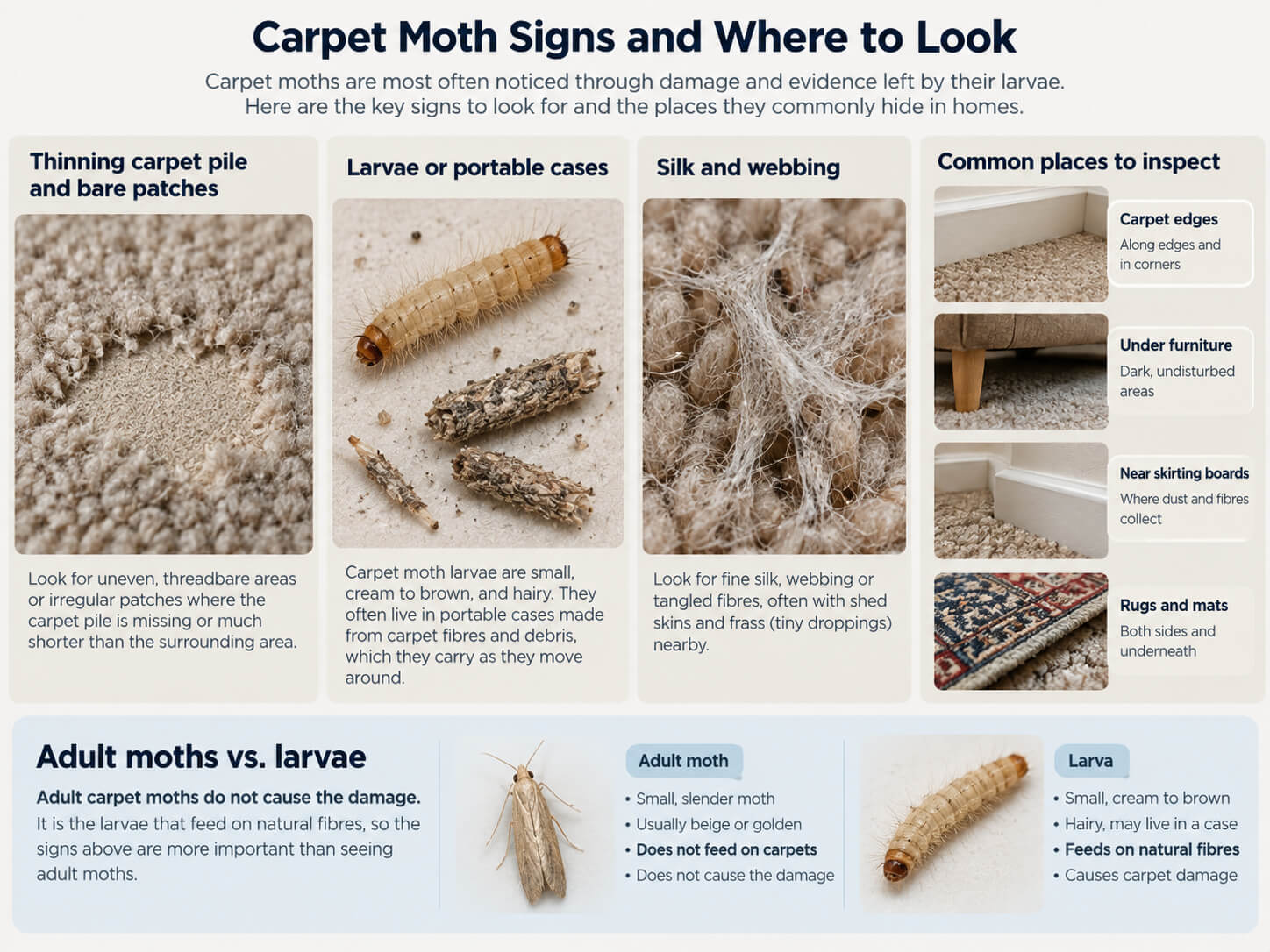
Carpet moth signs are often found where natural-fibre flooring stays relatively quiet and undisturbed. Check carpet edges, areas beneath furniture, the backs of rugs and sections close to skirting boards, particularly where wool-rich fibres are present.
On this page, “carpet moth” refers to textile-feeding moth activity associated with carpets rather than one precise moth species. In UK homes, different textile-feeding moths can affect natural-fibre flooring, so the location of the activity and the evidence found in the carpet are more useful than the label alone.
What Does a Carpet Moth Look Like?
There is no single adult appearance that defines a “carpet moth”, because the term is commonly used for textile-feeding moth activity associated with carpets. In practice, identification is stronger when an adult sighting is considered alongside carpet evidence such as larvae, silk, portable cases or visible changes to the pile.
What Carpet Moth Damage Looks Like
Carpet moth damage can appear as loss of pile, thinning or irregular bare patches that do not match normal wear. Silk webbing, larval cases or larvae close to the damaged area provide stronger identification clues than carpet damage on its own.
If moths are appearing elsewhere in the property or the carpet evidence does not fit, the household moth comparison guide can help compare other household moth types before narrowing the identification further.
A single worn area is not enough to confirm moth activity. Finding several signs together — such as damaged fibres, larvae, silk or cases — provides stronger evidence of a carpet moth infestation.
Carpet Moth Larvae, Eggs and Life Cycle
Carpet moth larvae are the feeding stage associated with damage to suitable animal-based carpet fibres, while eggs and pupal development form the other immature stages of the cycle. Understanding where larvae feed, what conditions support activity and how development progresses helps connect visible carpet damage with the moth’s life cycle.
Carpet Moth Larvae, Cases and Eggs
Carpet moth larvae are the feeding stage responsible for damage to suitable animal-based fibres. Around carpets, larvae may be found close to damaged pile, silk or portable cases, particularly in less disturbed areas such as carpet edges or beneath furniture. Finding these clues together is more useful than relying on larval appearance alone.
Carpet moth eggs are far less obvious than larvae or visible damage. Eggs can be difficult to find within or close to suitable fibres, so practical identification usually depends more on larvae, silk, cases and changes to the carpet pile than on spotting individual eggs.
What Causes Carpet Moth Activity in Carpets?
Carpet moth activity can develop where textile-feeding larvae have access to suitable animal-based fibres. Wool contains keratin, a protein that clothes moth larvae are adapted to digest, which is why wool carpets, rugs and other animal-fibre floor coverings can show feeding damage.
The surrounding location also matters. Carpet edges, areas beneath furniture and other less disturbed sections may allow larval activity to remain unnoticed for longer, particularly where suitable natural fibres are available.
Carpet Moth Life Cycle: From Egg to Adult
The carpet moth life cycle includes egg, larval, pupal and adult stages, but the larval period is the stage linked with feeding damage to suitable carpet fibres. Eggs are laid close to suitable material, after which developing larvae feed before eventually pupating and emerging as adult moths.
For carpet identification, this is why evidence in the flooring itself — particularly larvae, silk, cases and changes to the pile — can be more useful than simply seeing an adult moth in the room.
Frequently Asked Questions


Yes, isolated thinning or worn carpet can have causes other than moth activity. Moth-related damage is more convincing when changes to the pile appear alongside additional evidence such as larvae, silk or portable cases in the same area.
Yes, carpet moth activity can be easier to miss beneath furniture and in other less disturbed areas. These locations should be checked for changes in the carpet pile, larvae, silk or portable cases rather than relying on visible adult moths alone.
Yes, textile-feeding moth larvae can damage wool rugs as well as fitted wool carpets. Look for thinning, irregular loss of fibres, larvae, silk or cases, particularly in quieter areas that are not frequently moved or disturbed.
Yes, carpet edges and areas close to skirting boards can show moth activity. Damage is more meaningful when it appears together with larval evidence such as silk, cases or larvae in the same section of flooring.
No, seeing a single adult moth does not by itself confirm carpet damage. Identification is stronger when the sighting is supported by evidence in the flooring, such as changes to the pile, larvae, silk or portable cases.