


Fire Extinguisher Inspection & Checks

Fire extinguisher inspection checks the visible condition and accessibility of portable extinguishers. A check can identify damage, missing seals, blocked access or other issues requiring attention.
Book fire extinguisher checks through MyConstructor. Enter the number of extinguishers and your postcode to compare available appointments and prices. Inspection does not automatically include annual servicing, refilling or repairs.
Fire Extinguisher Inspection & Checks
- Book checks for portable fire extinguishers
- Identify visible damage, missing seals and access issues
- Checks for water, foam, CO2, powder and wet chemical extinguishers, subject to availability
- Compare available professionals and inspection prices
- Choose an available date and provide the number of extinguishers

Fire extinguisher check


Recently booked jobs



Professional Fire Extinguisher Inspection and Checks
Fire extinguisher inspection checks the visible condition and accessibility of portable extinguishers in workplaces and managed properties. It can identify obvious damage, missing safety components and equipment that is obstructed or difficult to reach. These findings help the person responsible for the premises decide whether further action is needed.
Through MyConstructor, you can compare available professionals, appointment options and prices for a Fire Extinguisher Check. The visit is for checks and inspection within the agreed scope; it is not a substitute for the separate technical maintenance that extinguishers may require.
What does a fire extinguisher inspection include?
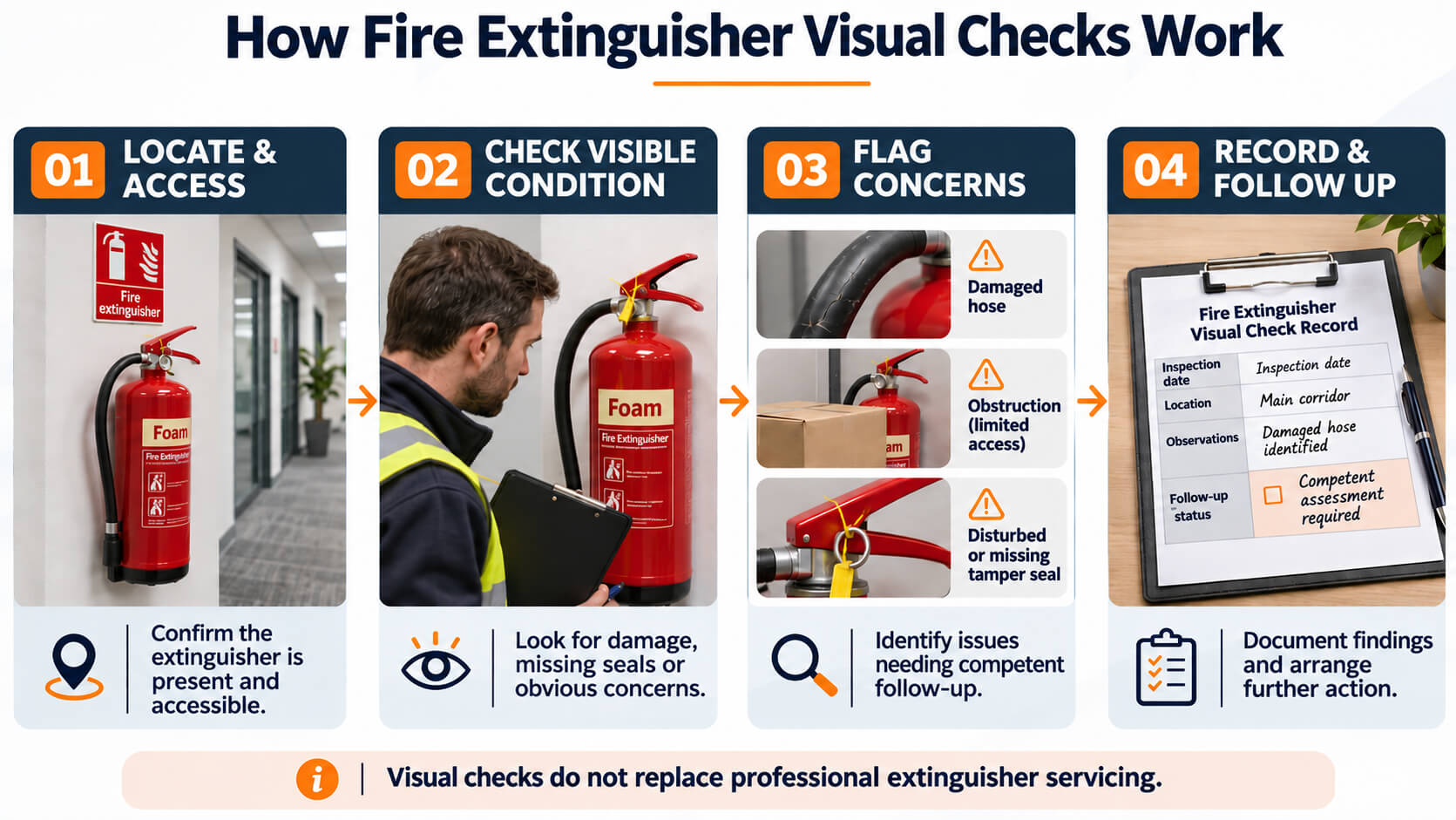
A visual fire extinguisher check focuses on external features that can be observed without dismantling or discharging the equipment. Depending on the model and access arrangements, the check may consider:
- Position and access: whether the extinguisher is present, identifiable and unobstructed.
- Cylinder and fittings: obvious dents, corrosion, leakage or damaged hoses and nozzles.
- Safety components: the pin and tamper indicator, where fitted.
- Pressure indication: whether a gauge is in its indicated operating range, if the model has one.
- Labels and instructions: whether identification and operating directions are readable.
- Signs of use: visible evidence of discharge, interference or damage requiring attention.
Not every extinguisher has a pressure gauge, and the same checks do not apply to every design. An external inspection may highlight a concern but cannot guarantee the internal condition or performance of the equipment during a fire.
How are visual checks different from annual servicing?
Fire extinguisher checks and annual basic servicing are separate activities with different purposes. A visual check identifies readily apparent problems. Annual servicing involves additional work by an appropriately competent person under the relevant maintenance guidance, including BS 5306-3.
The appointment offered on this page covers checks and inspection only. It does not include annual or extended servicing, discharge or pressure testing, refilling, recharging, repairs or replacement. If an issue requires specialist maintenance, the responsible person must arrange that work separately.
Which types of fire extinguishers can be checked?
Fire extinguisher checks may involve water, foam, CO2, dry powder and wet chemical portable extinguishers. Each type has different external features, so inspection points depend on the equipment installed and the booking agreed with the professional.
| Extinguisher type | Typical visible inspection points |
|---|---|
| Water | Position, cylinder condition, safety pin, instructions and gauge where fitted |
| Foam | Access, body and hose condition, labels, seal and gauge where fitted |
| CO2 | Cylinder appearance, horn or hose, safety pin, identification and obvious damage |
| Dry powder | Access, fittings, tamper seal, hose and gauge where fitted |
| Wet chemical | Location, instructions, hose or applicator, seals and external condition |
This table describes examples of observable features, not a fixed checklist guaranteed in every appointment. Tell the provider how many extinguishers you have and, where known, their types and locations.
Fire Extinguisher Inspection Duties, Frequency and Records
Regular fire extinguisher checks form part of a property's wider fire safety arrangements. Under Article 17 of the Regulatory Reform (Fire Safety) Order 2005, relevant equipment in premises covered by that legislation must be maintained in an efficient state, efficient working order and good repair where necessary. The Fire Safety Order applies to England and Wales; other UK nations have their own requirements. A Fire Risk Assessment can help identify whether the premises has suitable firefighting equipment and other fire precautions.
Who is responsible for arranging checks?
The person responsible for fire safety should make appropriate arrangements for routine checks, professional servicing and prompt follow-up of defects. In relevant workplaces and managed premises, this may be an employer, owner, occupier or managing agent, depending on who controls the premises.
A check of existing extinguishers does not determine whether a building has the correct number or selection of firefighting devices. That wider question is informed by the building's risks. Booking an inspection does not transfer the responsible person's statutory duties.
How often should extinguishers receive visual checks?
Guidance associated with BS 5306-3 recommends visual checks at least monthly, with more frequent checks where the premises or equipment require them. These routine inspections can identify problems between separately scheduled annual basic services. The manufacturer's instructions, site conditions and appropriate competent advice also matter. Inspecting an extinguisher after suspected damage, relocation or use may be appropriate rather than waiting for a routine date. An apparently satisfactory visual check does not extend the interval for basic servicing.
For an explanation of who can carry out different checks, the usual intervals and when earlier attention may be needed, read our How Often Should Fire Extinguishers Be Checked? guide. This is a separate informational topic: the service on this page remains checks and inspection only.
What should an inspection record contain?
Fire extinguisher inspection records help show when equipment was checked and which concerns still need action. Depending on your arrangements, a useful entry can record the visit date, extinguisher location or identifier, observations, the person carrying out the check and any recommended follow-up.
A written report, service label or certificate is not automatically included in every booking; confirm the documentation offered before choosing an appointment. If an extinguisher appears damaged, discharged or inaccessible, arrange suitable precautions and seek specialist assessment where required. A successful visual check is not a certificate of whole-building compliance.
Fire Extinguisher Faults, Inspection Costs and Booking
Knowing the number, location and current condition of your extinguishers helps you arrange a check with a suitable scope. Give the provider details of restricted areas, previous defects and any equipment that may need closer attention.
Common faults noticed during visual checks
Visual fire extinguisher inspection can reveal problems that should not be left until the next scheduled visit. Typical observations include:
- Obstructed equipment: an extinguisher is hidden or difficult to reach.
- Damaged cylinder or fittings: dents, corrosion, leakage or a damaged hose or horn.
- Missing safety components: an absent pin or disturbed tamper indicator where one is expected.
- Concerning gauge indication: a pressure gauge appears outside its indicated range, where fitted.
- Unclear identification: unreadable instructions or an unknown equipment location.
- Possible prior discharge: evidence suggesting the unit has been used or interfered with.
Record concerns and bring them to the responsible person's attention. Any needed repair, recharge or replacement is separate from the MyConstructor check-only booking and should be assessed by an appropriately competent provider.
An extinguisher's age alone does not establish whether it has expired. To understand manufacture dates, service labels and equipment lifespan, read our Do Fire Extinguishers Expire? guide.
What affects fire extinguisher inspection prices?
Fire extinguisher inspection cost depends on the number and types of extinguishers, the property location and what the selected appointment covers. Site layout, multiple floors, restricted access, appointment availability and the need for written observations can also affect the scope or price.
Enter your postcode and the quantity of extinguishers into MyConstructor's booking form to compare the available options. Check the appointment details before booking rather than assuming a fixed nationwide price or that specialist servicing, repairs and documentation are included.
How to prepare for and book a fire extinguisher check
Before booking, count the extinguishers and confirm which rooms, floors and shared areas need to be accessible. Where possible, identify their types, locate previous check records and let the professional know about missing labels, damage or access restrictions.
If you manage several inspections or need a consistent record of actions, our Fire Safety Log Book page explains how fire safety checks and follow-up information can be organised. This is separate from the inspection appointment and does not mean a new logbook or formal report is included.
Ready to arrange fire extinguisher checks? Compare available professionals, prices and appointment times using the booking form on this page. Confirm the equipment covered and the agreed inspection scope before you book.
Official sources:
Fire Safety Order 2005 BSI: BS 5306-3:2017 BAFE: Extinguisher Checks & Servicing Frequency
The Fire Safety Order applies to England and Wales. BS 5306-3:2017 is technical guidance, not legislation. Routine visual checks do not replace annual basic servicing. The inspection scope depends on the equipment and booked service.
Frequently Asked Questions


Most CO2 fire extinguishers do not have a conventional pressure gauge, so its absence is not automatically a fault. External checks should reflect the equipment type. Confirming the gas content and internal condition requires separate specialist maintenance procedures.
One booking may cover extinguishers across different rooms or floors, provided all locations are included in the agreed appointment. Enter the total number of extinguishers and tell the professional about separate floors, locked rooms or restricted areas. Confirm the full inspection coverage before booking to avoid an incomplete visit.
No, a MyConstructor fire extinguisher visual check does not involve deliberately discharging or operating the equipment. The appointment focuses on accessible external condition, visible faults and relevant safety indicators. Discharge testing, refilling, repairs and annual servicing are separate activities and are not included. Any concerns identified should be recorded and referred for appropriate follow-up.
The Fire Extinguisher Check covers portable extinguishers, not fire blankets or other fire safety systems. Fire alarms, emergency lighting and additional equipment require their own agreed checks or services. Confirm the scope before booking.