


How Often Should Fire Extinguishers Be Checked?
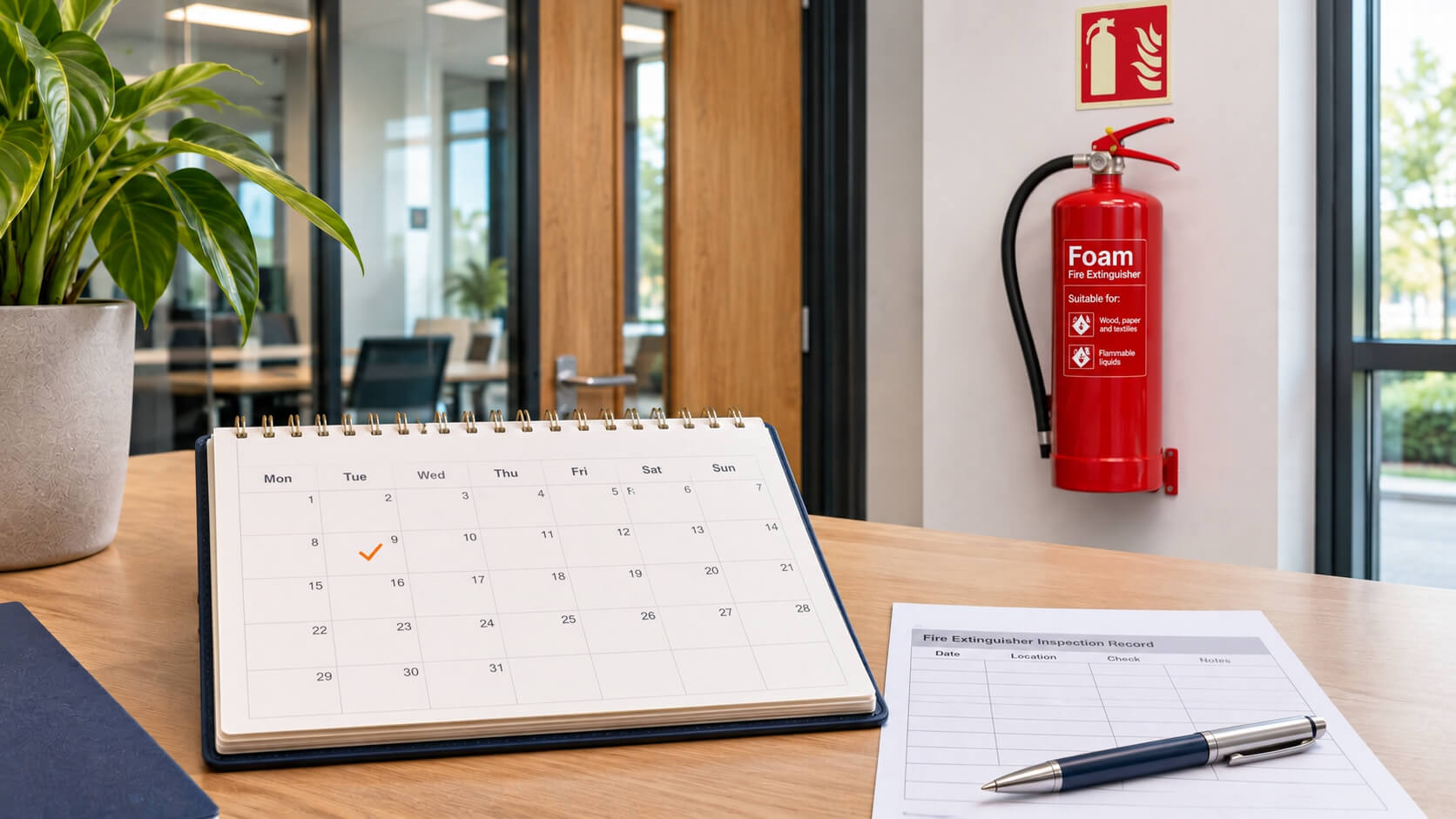
Fire extinguishers should generally receive visual checks at least once a month, with more frequent inspections where necessary. Annual basic servicing is a separate task carried out by an appropriately competent person.
Learn how often fire extinguishers should be checked in UK workplaces and managed properties. Understand the different inspection intervals, who can carry out routine checks, what to record and when further action is needed.
Fire Extinguisher Check Frequency Guide
- Understand monthly visual inspection guidance
- Learn when additional checks may be needed
- Distinguish routine checks from annual servicing
- Find out what to check and record
- Book a separate professional extinguisher check if needed

Fire extinguisher check


Recently booked jobs



Fire Extinguisher Check Frequency in the UK
Fire extinguishers should generally be visually checked at least once a month, with additional inspections where the premises or equipment require them. This recommendation is reflected in UK guidance associated with BS 5306-3. Routine checks help identify damage, obstruction or interference between separately scheduled professional maintenance visits.
The answer to "how often should fire extinguishers be checked?" depends on the type of check and the equipment involved. Routine visual inspections and professional servicing have different purposes and timetables. The appropriate arrangements also depend on the environment, manufacturer instructions and the premises' fire safety requirements. Completing a monthly visual check does not remove the need for a separate annual basic service where applicable.
Monthly visual checks and earlier inspections
Monthly fire extinguisher checks help confirm that portable extinguishers remain present, accessible and free from obvious visible concerns. The Responsible Person should establish an appropriate routine and ensure the people carrying out checks understand how to report problems.
Some premises need more frequent inspections. Busy communal areas, locations exposed to damage or tampering, and workplaces undergoing changes may require additional attention. Equipment should also be checked promptly following suspected discharge, relocation or interference rather than waiting for the next scheduled date.
Monthly visual checks should follow relevant manufacturer instructions and the site's fire safety arrangements. They do not confirm the condition of internal components or guarantee that an extinguisher will operate correctly during a fire.
How monthly checks differ from annual servicing
Routine visual inspections and annual professional servicing have different purposes, methods and competency requirements. A visual check looks for apparent external problems. An annual basic service involves separate technical maintenance by an appropriately competent person, following the requirements relevant to the extinguisher.
| Activity | Typical timing | Purpose |
|---|---|---|
| Routine visual check | At least monthly; more often where appropriate | Identify obvious condition and accessibility issues |
| Additional inspection | Promptly after suspected damage, use or interference | Identify concerns requiring further action |
| Annual basic servicing | Normally every 12 months for conventional portable extinguishers | Separate competent-person technical maintenance |
| Extended service or overhaul | Depends on extinguisher design and applicable guidance | Specialist maintenance at relevant intervals |
Approved specialist or low-maintenance extinguishers may have different arrangements. Follow applicable manufacturer guidance and competent advice instead of assuming every extinguisher has the same service intervals.
Fire Extinguisher Checklists, Records and Responsibilities
A consistent inspection programme should identify what needs checking, who is responsible and how problems are recorded. Routine checks help the dutyholder maintain oversight of portable extinguishers, but they do not replace professional maintenance or a suitable assessment of the building's wider fire risks.
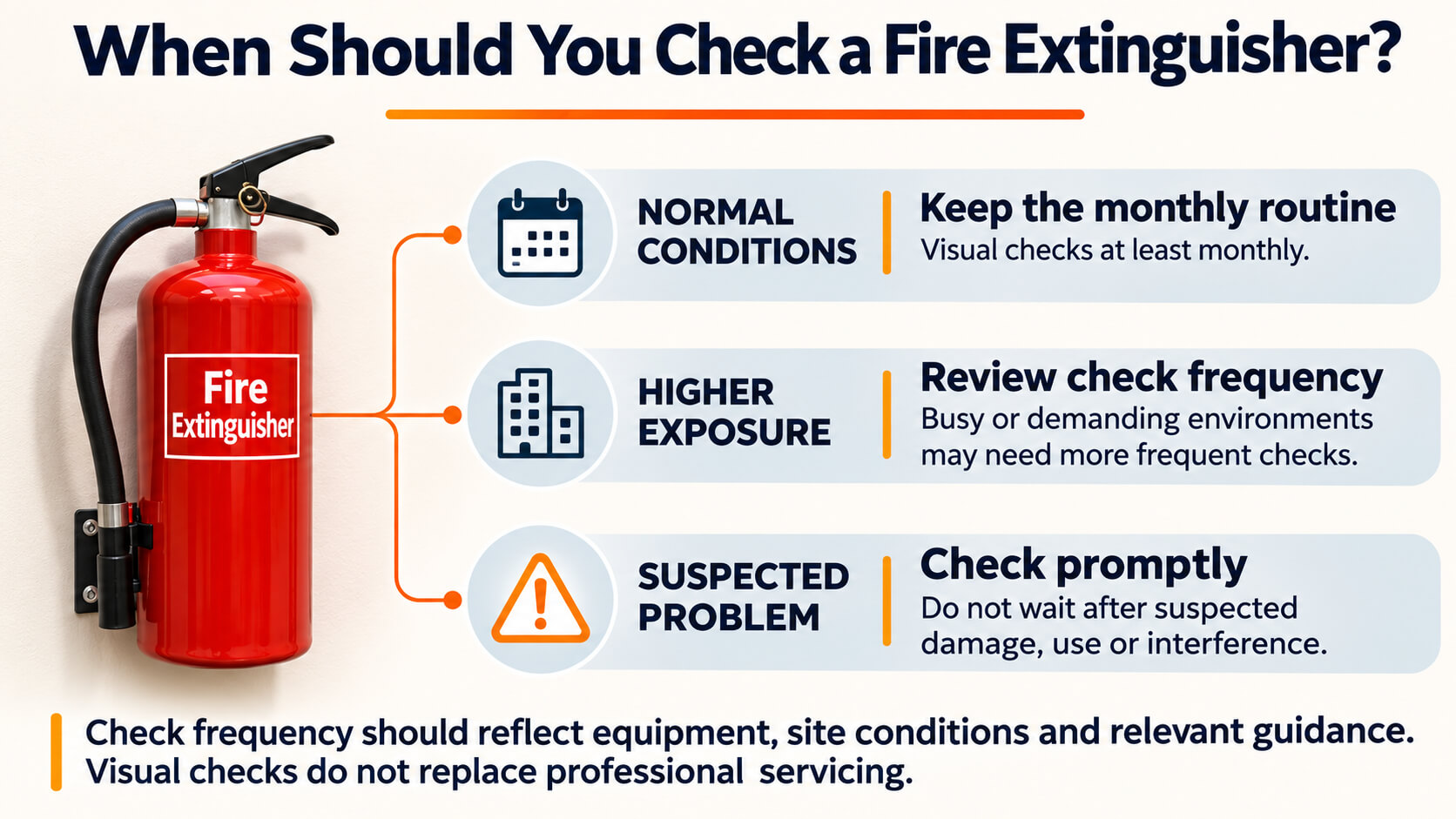
What to check and when to report a problem
A monthly fire extinguisher inspection checklist should focus on visible condition, accessibility and obvious signs of use or damage. The observations depend on the type of equipment and may include:
- Location: the extinguisher is present in its designated position.
- Accessibility: it is visible and unobstructed.
- External condition: no obvious corrosion, leakage, dents or damaged fittings.
- Safety components: pins and tamper indicators appear intact where fitted.
- Pressure indication: a gauge, if fitted, appears within its marked operating range.
- Identification: operating instructions and relevant labels remain readable.
Not every extinguisher has the same components. Conventional CO2 extinguishers, for example, generally do not have a pressure gauge. Routine checks should follow the equipment's actual design.
Damage, signs of discharge, missing safety components or blocked access should be reported promptly. Record the affected extinguisher and arrange appropriate precautions or competent specialist assessment where needed. A routine visual check should not involve dismantling, recharging or deliberately discharging the extinguisher.
Who is responsible and how to record checks
The person responsible for fire safety should ensure that suitable checking and maintenance arrangements are in place. For relevant premises, this may be an employer, owner, occupier or managing agent, depending on who controls the building. Routine checks can be carried out by a suitably instructed individual where the task is within their competence.
In England and Wales, Article 17 of the Regulatory Reform (Fire Safety) Order 2005 addresses maintenance of relevant fire safety equipment. BS 5306-3 provides technical guidance on portable extinguisher checks and servicing. The applicable legal framework differs across UK jurisdictions.
A useful fire extinguisher check record identifies when and where equipment was inspected and what follow-up is required. It may include the date, extinguisher location or identifier, person carrying out the check, visible observations and actions taken. A routine inspection entry is not automatically an annual service record or certificate.
Where an external inspection of existing portable extinguishers would be useful, see MyConstructor's Fire Extinguisher Inspection & Checks service to compare available professionals, appointments and prices.
MyConstructor provides checks and inspection only through this booking. Annual servicing, refilling, repairs, replacement and installation are separate activities and are not included.
Official sources:
BAFE: Check & Service Frequency BSI: BS 5306-3:2017 GOV.UK: Fire Safety Guidance Scottish Government: Fire Safety
Monthly visual checks are recommended in BS 5306-3 guidance and are separate from competent-person servicing. British Standards are technical guidance, not legislation. Applicable legal duties vary by UK jurisdiction and premises.
Frequently Asked Questions


Yes, portable fire extinguishers need suitable routine visual checks even if they have never been used. Equipment can become obstructed, damaged or tampered with while remaining in place. Follow the premises' checking arrangements and relevant manufacturer guidance; an unused extinguisher may still need separate professional servicing.
A professional service label does not automatically demonstrate that routine monthly visual checks have been completed. Servicing and routine inspections are different activities. Keep appropriate records of the checks carried out, visible problems and follow-up actions, alongside any maintenance documentation provided.
No, a routine visual check should not involve removing the safety pin or deliberately discharging a fire extinguisher. Check for visible signs of interference, damage or missing components without operating the equipment. Report any suspected fault and arrange competent assessment where necessary.
If a scheduled monthly visual check was missed, arrange the check as soon as practicable and record the actual date it was completed. Do not backdate the inspection record. Note any visible problems, arrange appropriate follow-up and restore the regular checking schedule. A late visual check does not replace separately required professional servicing.