


When Do Wasps Die Off in the UK?
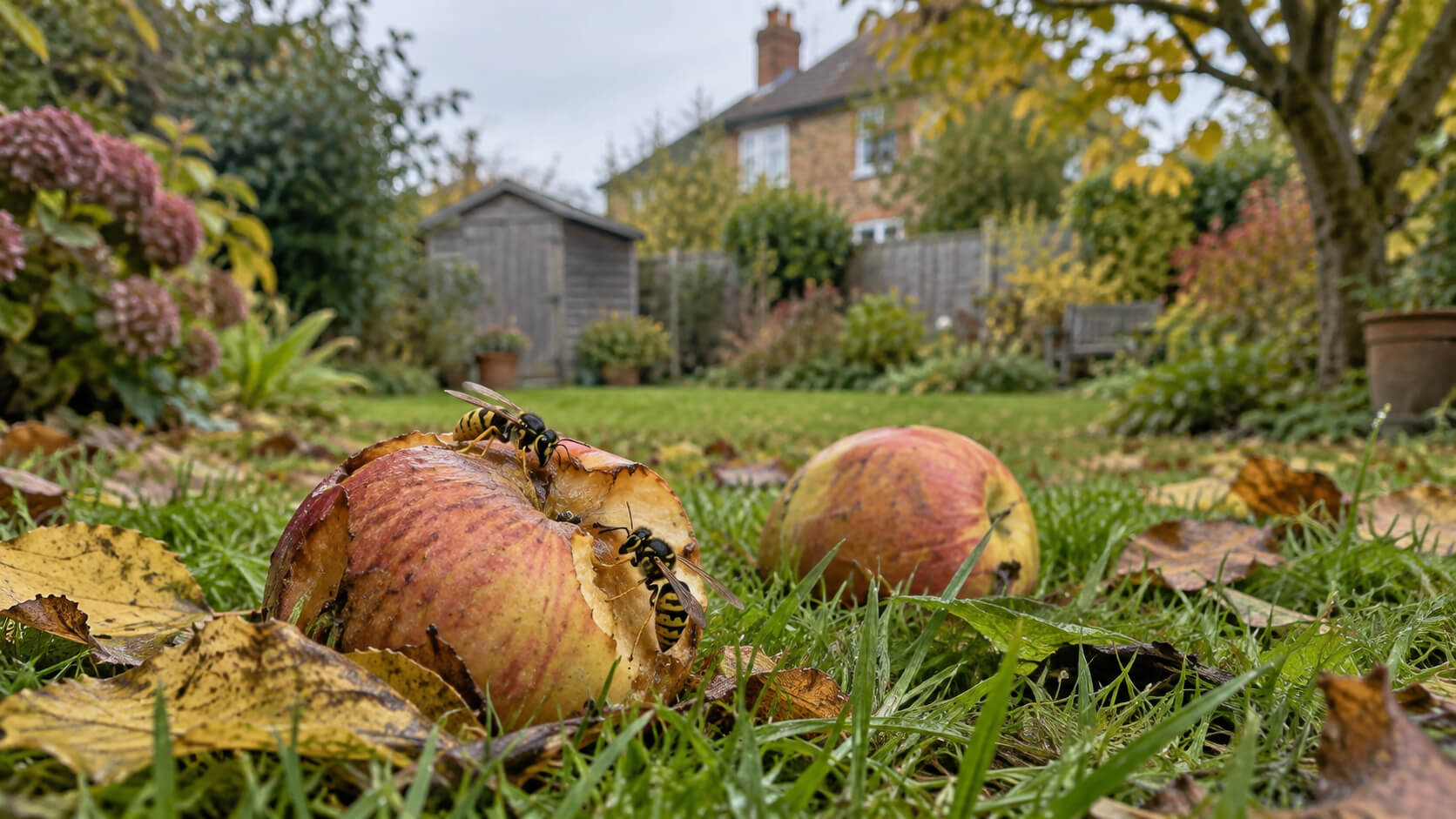
Most wasp colonies in the UK die off during autumn as temperatures fall and food becomes scarcer, although the exact timing can vary with the weather. New fertilised queens leave the nest and find sheltered places to overwinter.
By winter, an old nest is normally inactive and wasps do not usually reuse old nests the following year. Instead, surviving queens emerge in spring and start new nests, beginning the seasonal cycle again.
Wasp Nest Removal
- Same-day bookings available
- Flexible appointment times
- Professional treatment available if the wasp nest is still active
- Treatment options for accessible and high-level wasp nests
- Pay us by Card, PayPal, Google Pay, Apple Pay or Pay on-site



Who will come to my home?
A certified pest control technician from our vetted network, on the day and time you choose. You get a confirmation by email as soon as you book.
Is the treatment safe for children and pets?
Yes. Technicians use HSE-approved products and methods: tamper-resistant bait stations for rodents, and sprays or gels that are safe for children and pets once dry. You are told before the visit if a room needs to stay clear for a few hours.
What if the pests come back?
Follow-up visits are included where the treatment lists them, so if activity continues after the first visit, the next one is already covered at no extra charge. The price you see is the full price for the whole treatment cycle.
Do I need to prepare anything or be at home?
Someone needs to be at the property to let the technician in. Preparation is minimal and depends on the pest; the technician confirms anything needed by SMS and email after you book.
Do I pay now?
No. You see the price, then pick a date and time. Payment is only confirmed at checkout, and cancellation is free.
Is the £50 inspection fee deducted from the treatment?
Yes. If you are not sure what the pest is, you can book a £50 inspection visit. The technician identifies the pest and quotes the treatment on site, and if you go ahead the £50 is deducted from that treatment price.
Recently booked jobs


When Do Wasps Die Off in the UK?
Most wasp colonies in the UK begin to die off during autumn as temperatures fall and food becomes less available. The timing is not identical every year, because warmer or colder weather can affect how long wasps remain active.
Worker wasps and males die as the colony reaches the end of its seasonal cycle. Newly fertilised queens leave the nest and find sheltered places where they can overwinter before emerging again in spring.
When Is Wasp Season in the UK?
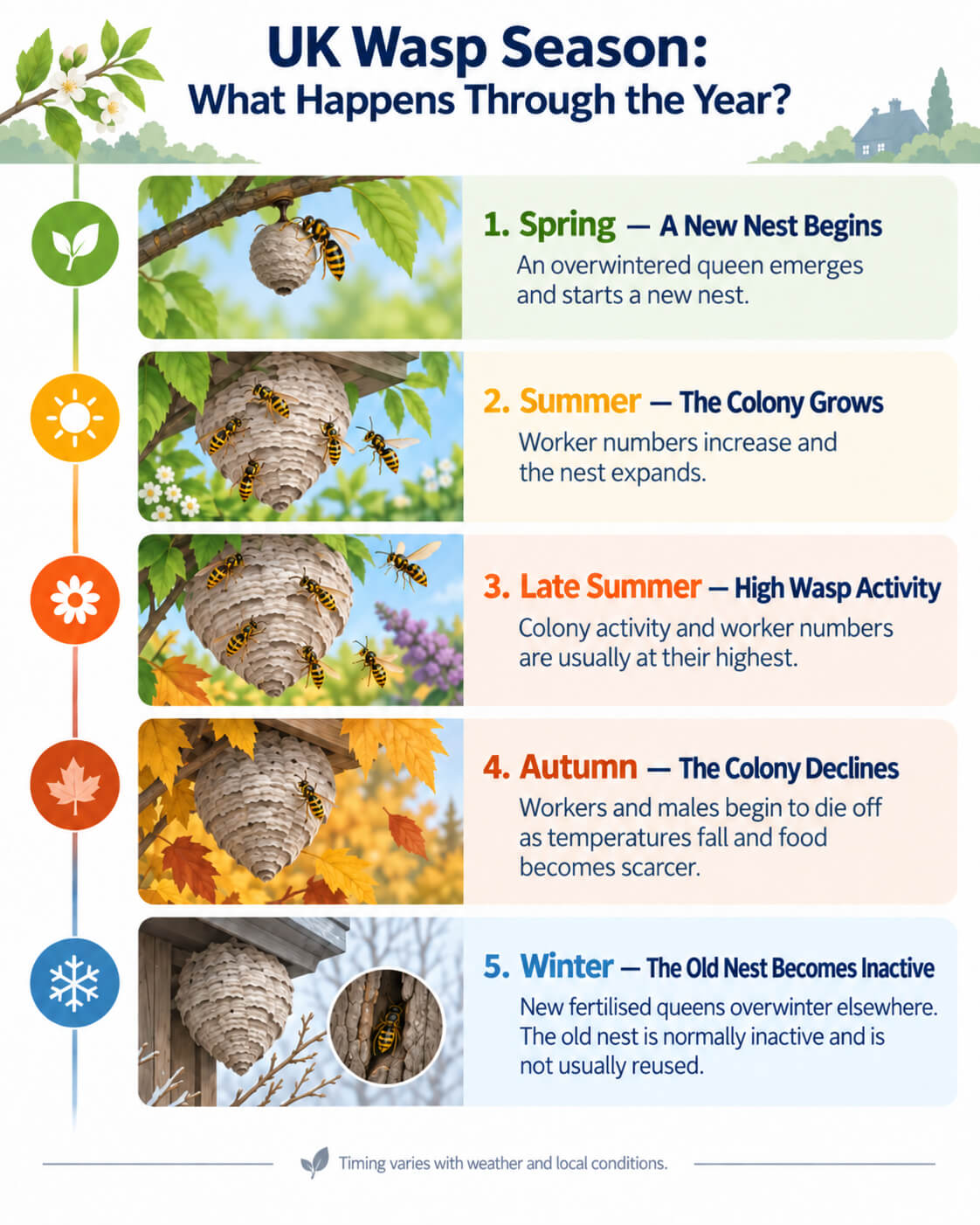
Wasp season in the UK generally runs from spring into autumn. Queens emerge from overwintering in spring and begin new nests, worker numbers increase through summer, and colony activity is usually at its highest later in the summer.
By autumn, the colony begins to decline. BPCA notes that wasp activity can peak around August and September, while colder weather later in the year contributes to the eventual end of the colony.
For people wondering when wasps are most active in the UK, late summer and early autumn are often the most noticeable period. This is also the main part of the wasp nest season when established colonies may contain large numbers of workers.
When Do Wasps Build Nests in the UK?
New wasp nests are normally started in spring by queens that have survived the winter. A queen begins with a small nest and lays the first eggs, with the colony expanding as worker wasps emerge and take over much of the nest-building and food gathering.
To identify the larger reproductive female, see our guide on how to identify a queen wasp in the UK.
Do Wasps Die or Hibernate in Winter?
Most worker wasps and males die as the season ends, but newly fertilised queen wasps can survive winter by overwintering in sheltered places. This distinction is important: the seasonal colony does not normally continue through winter, while individual new queens may remain inactive until conditions become suitable again.
When temperatures rise in spring, surviving queens emerge and begin new nests. They do not normally restart the old colony or return to the previous nest to continue using it.
Wasp Nests in Winter and Old Nest Activity
After the seasonal colony declines, an old wasp nest can remain in place through winter even though it is normally inactive. An abandoned wasp nest may stay visible long after activity has ended, so the main questions are when the nest becomes inactive, whether it will be reused and how to assess an apparently empty nest without disturbing it.
What Happens to a Wasp Nest in Winter?
By winter, a typical seasonal wasp nest is normally inactive because the colony that built it has died off. The new queens that survive do not usually remain in the old nest; they leave and overwinter in sheltered locations elsewhere.
An old nest may remain physically in place for months after the colony has gone. Finding the structure in winter does not mean the same colony is still living inside it.
If you are unsure whether the structure you have found is actually a wasp nest, see our guide to what a wasp nest looks like for the typical shape, material and identification features.
Do Wasps Return to Old Nests?
Wasps do not normally return to and reuse an old nest the following year. After overwintering, surviving queens establish new nests rather than restarting the previous colony inside the old structure.
An old nest may remain visible in a loft, shed or other sheltered location, but its continued presence does not mean that it will be reused by the next generation of wasps.
How Can You Tell If a Wasp Nest Is Empty or Inactive?
An inactive wasp nest should no longer have regular wasp traffic entering and leaving it. Observe only from a safe distance, because activity can vary with temperature and time of day and a quiet period alone does not prove that a nest is empty.
An old or apparently quiet nest should not be disturbed simply to check whether it is empty. If you are uncertain, continue to observe from a safe distance rather than approaching the entrance.
If wasps are still regularly using the nest and it is causing a problem, you can check wasp pest control options, prices and availability through MyConstructor.
Frequently Asked Questions


No, not all wasps die during winter. Worker wasps and males from the old colony die off, while fertilised new queens can survive by overwintering in sheltered places before emerging again in spring.
Yes, mild weather can allow wasp activity to continue later than expected. There is no single date when every UK wasp colony becomes inactive, because temperature, food availability and local conditions can affect the timing.
Fertilised queen wasps usually leave the old nest and overwinter in sheltered places. They remain relatively inactive through the colder period and emerge when conditions become suitable for starting a new nest.
A nest found in winter is often an old seasonal nest, but the time of year alone should not be used as proof that it is empty. Avoid disturbing it and look from a safe distance for repeated wasp activity if you are unsure.
The same wasp nest is not normally reused the following year. Surviving queens emerge from overwintering and establish new nests rather than restarting the previous colony in the old structure.