


How to Identify a Queen Wasp
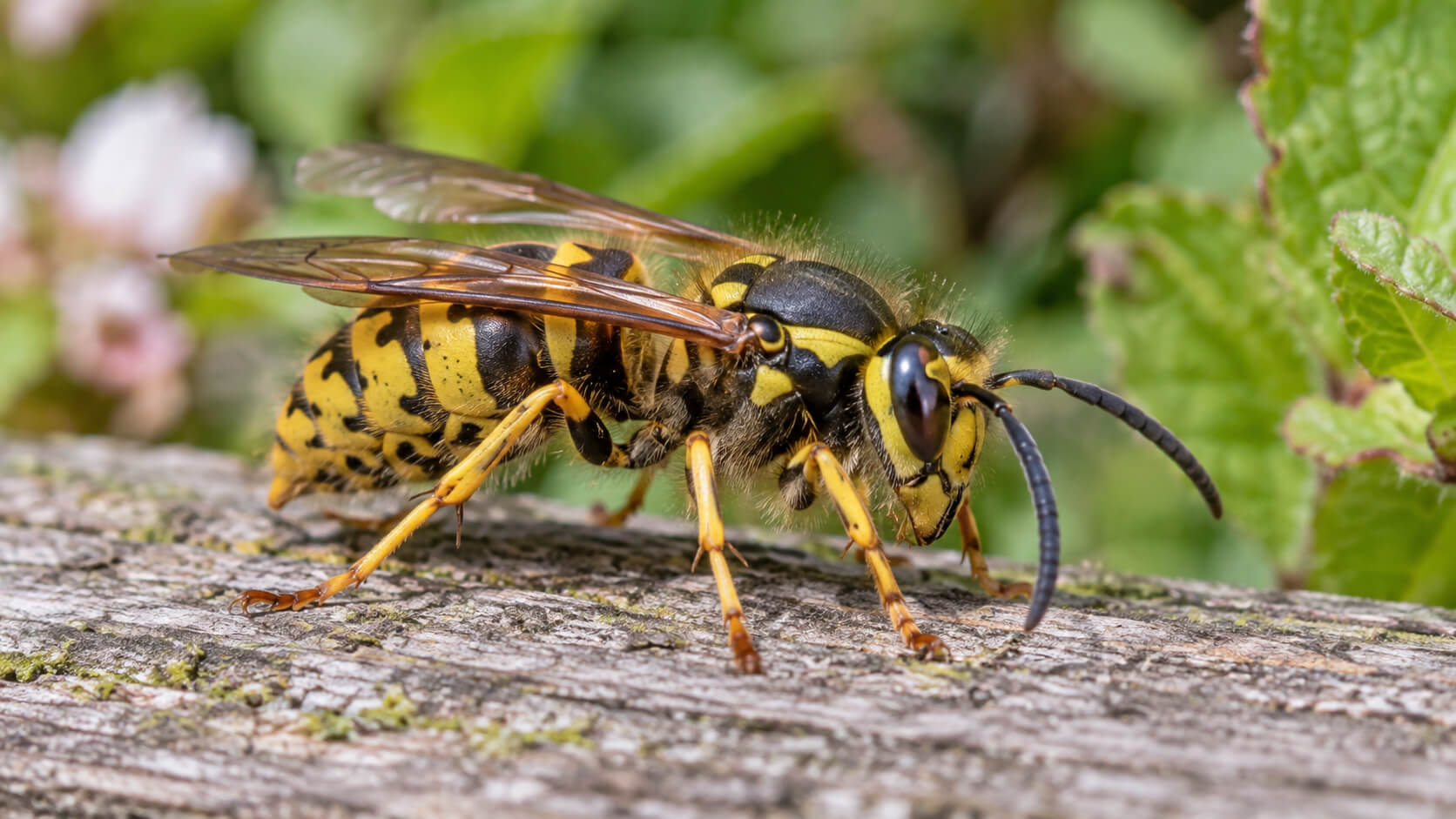
A queen wasp is usually larger than worker wasps and can be identified by its size, yellow-and-black markings and body shape. This UK guide explains what queen wasps look like, how big they are, how they differ from workers and hornets, whether they can sting, and their role in a colony.
Queen Wasp Identification Guide
- Identify a Queen Wasp by Size and Appearance
- Compare Queen Wasps with Worker Wasps
- Understand Queen Wasp Size in the UK
- Tell a Queen Wasp from a Hornet
- Learn Whether Queen Wasps Can Sting



Who will come to my home?
A certified pest control technician from our vetted network, on the day and time you choose. You get a confirmation by email as soon as you book.
Is the treatment safe for children and pets?
Yes. Technicians use HSE-approved products and methods: tamper-resistant bait stations for rodents, and sprays or gels that are safe for children and pets once dry. You are told before the visit if a room needs to stay clear for a few hours.
What if the pests come back?
Follow-up visits are included where the treatment lists them, so if activity continues after the first visit, the next one is already covered at no extra charge. The price you see is the full price for the whole treatment cycle.
Do I need to prepare anything or be at home?
Someone needs to be at the property to let the technician in. Preparation is minimal and depends on the pest; the technician confirms anything needed by SMS and email after you book.
Do I pay now?
No. You see the price, then pick a date and time. Payment is only confirmed at checkout, and cancellation is free.
Is the £50 inspection fee deducted from the treatment?
Yes. If you are not sure what the pest is, you can book a £50 inspection visit. The technician identifies the pest and quotes the treatment on site, and if you go ahead the £50 is deducted from that treatment price.
Recently booked jobs

Queen Wasp Identification in the UK
Queen wasps can usually be identified by combining their size, appearance and body shape rather than relying on one feature alone. They are generally larger than worker wasps, but large size by itself does not rule out a hornet or another wasp species.
What Is a Queen Wasp?
A queen wasp is the reproductive female responsible for establishing and maintaining a social wasp colony. Queens and worker wasps can belong to the same species, but they perform different roles within the colony and queens are generally larger.
At the beginning of a new colony, the queen initially carries out tasks that workers will later take over, including early nest building and gathering food for the first developing brood. Once worker wasps emerge, the queen can focus more heavily on laying eggs.
What Does a Queen Wasp Look Like?
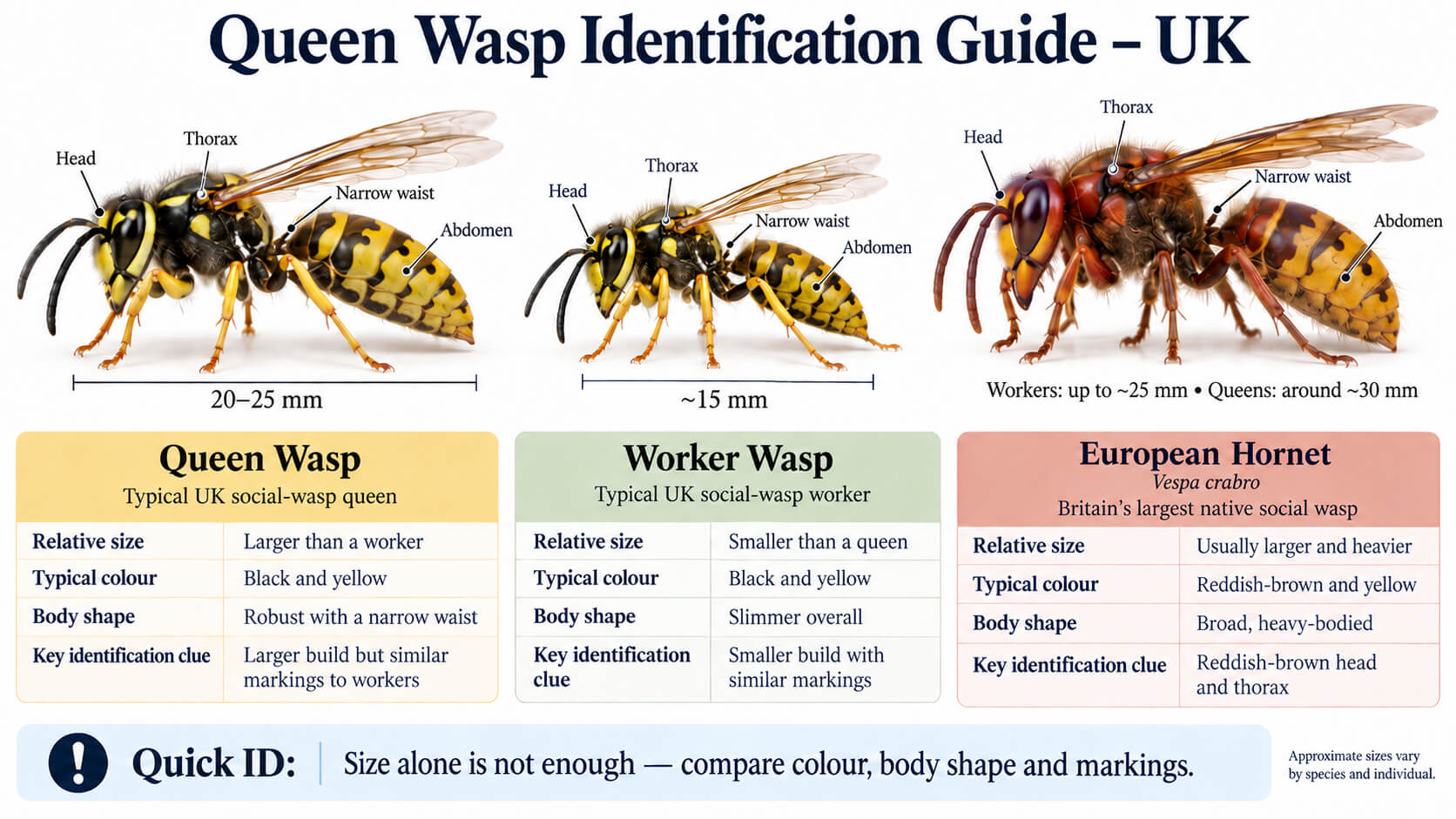
A queen wasp usually looks similar to a worker wasp but has a noticeably larger and more substantial body. Common wasp queens have the familiar yellow-and-black markings, a defined narrow waist and the general body shape associated with social wasps.
Appearance varies between wasp species, so size and colour should be considered together rather than relying on one feature alone. A particularly large yellow-and-black insect is not automatically a queen wasp.
Queen Wasp Size in the UK
Queen wasps of common UK social wasp species are typically around 20–25 mm long. Worker wasps are usually smaller, although their exact size varies between species and individuals.
The size difference can make a queen look unusually large when seen on her own. However, size alone is not enough for reliable identification because other insects, particularly European hornets, can equal or exceed the length of a queen wasp.
Queen Wasp vs Worker Wasp
The most obvious difference between a queen wasp and a worker wasp is usually size, but their roles inside the colony are also different. A queen is a reproductive female, while most worker wasps are non-reproductive females that carry out tasks such as foraging, feeding larvae and expanding the nest.
Queens and workers can otherwise look very similar, with the same general yellow-and-black markings and narrow-waisted body shape. This means identification is easier when size, body proportions and behaviour are considered together.
If you are identifying a structure rather than the insect itself, our wasp nest identification guide explains the typical shape, material and features of a UK wasp nest.
Queen Wasp or Hornet? How to Tell the Difference
A queen wasp can be mistaken for a hornet because both can appear much larger than an ordinary worker wasp. European hornets are generally larger and usually show more reddish-brown colouring alongside yellow markings, rather than the more familiar black-and-yellow appearance of common wasps.
European hornet workers can reach a similar size to some queen wasps, while hornet queens can be larger still. For that reason, an insect should not be identified as a queen wasp simply because it appears unusually large.
Do Queen Wasps Sting?
Yes, queen wasps can sting if they feel threatened. Like female worker wasps, queens possess a sting and should not be handled or deliberately disturbed simply to confirm their identity.
A queen seen away from a nest does not automatically indicate a large active colony nearby. Queen activity also changes through the year, which is covered in our UK wasp season guide.
What Does a Queen Wasp Do in the Colony?
The queen's main role is reproduction, but her responsibilities change as the colony develops. She establishes the first stage of the colony herself before worker wasps emerge and begin taking over many of the practical tasks.
How Does a Queen Wasp Start a Colony?
A queen wasp begins the colony by constructing the first nest cells and laying the first eggs. During this early stage, she also supports the developing larvae and carries out tasks that worker wasps will later take over.
As the first brood develops, the queen continues maintaining the early colony until enough workers are available to take over activities outside the nest.
What Happens When Worker Wasps Emerge?
Once worker wasps emerge, they increasingly take over nest building, food gathering and feeding the developing brood. This allows the queen to remain inside the colony and focus more heavily on laying eggs as worker numbers increase.
This division of roles allows the colony to expand, with workers supporting the nest while the queen continues her reproductive role.

