


What Does a Wasp Nest Look Like?
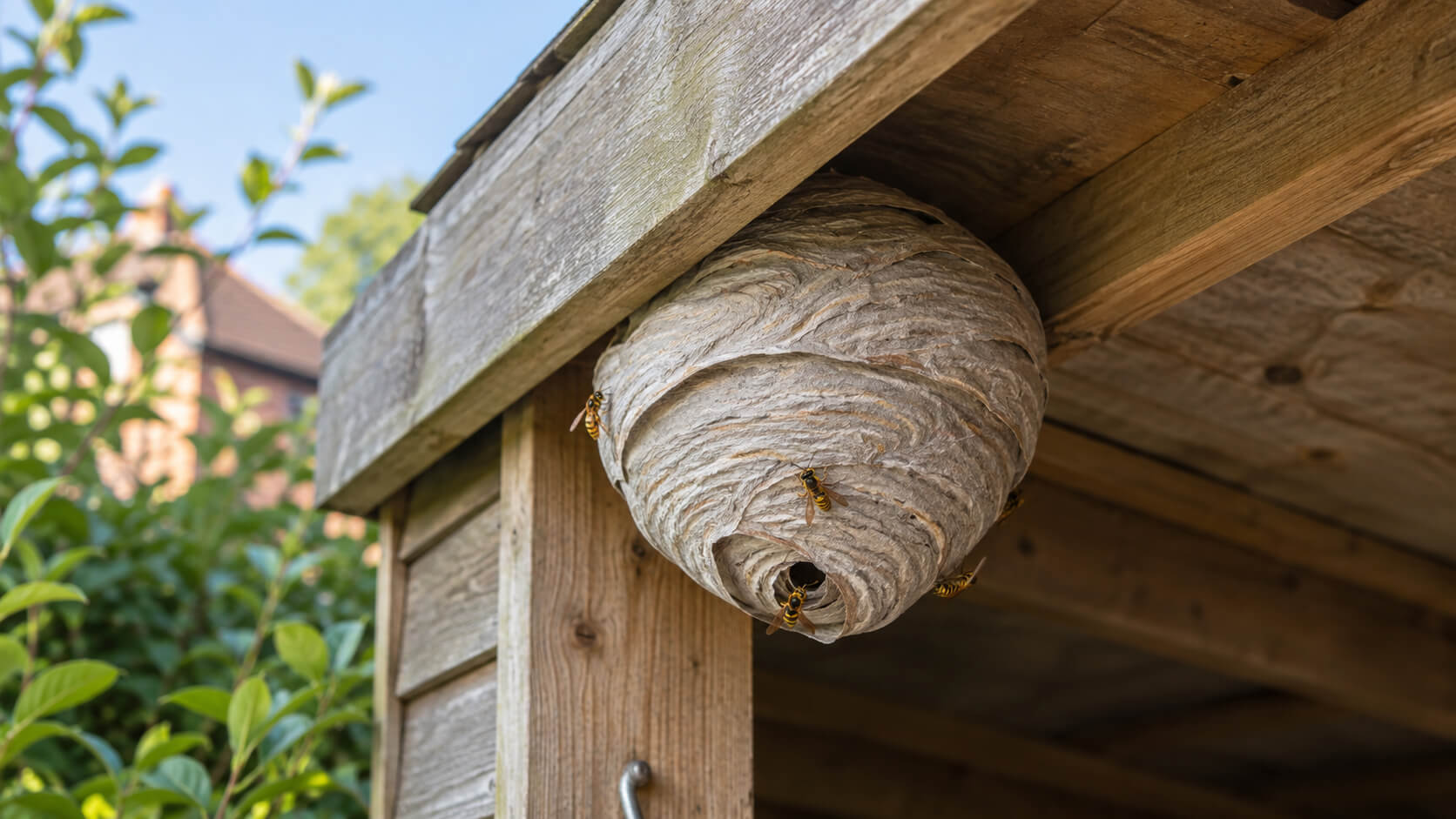
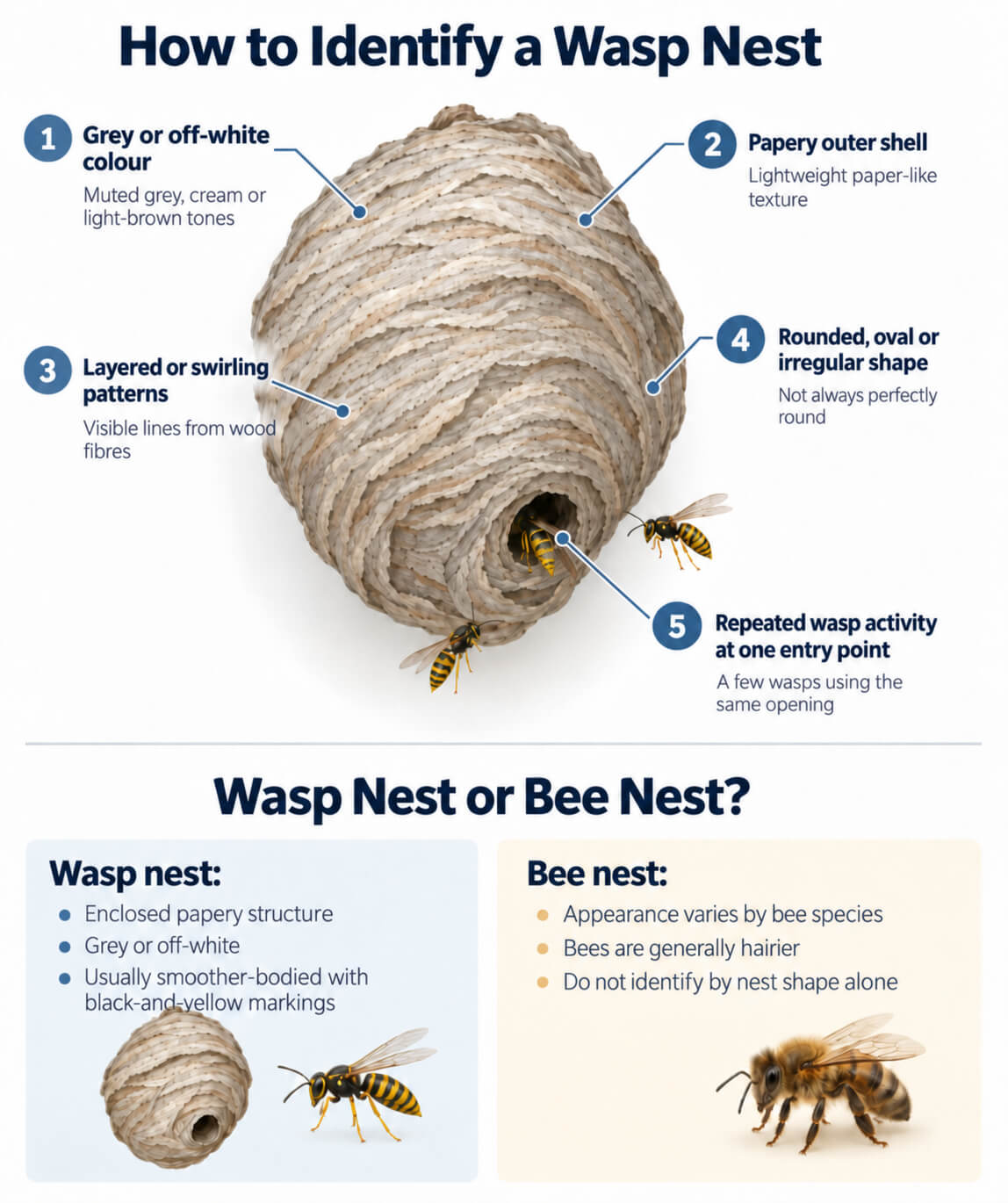
A wasp nest usually looks like a grey or off-white papery structure with layered or swirled patterns across its outer shell. Wasps build the nest from chewed wood fibres, giving it a distinctive lightweight, paper-like appearance.
Nests can be visible or hidden, so look for wasps repeatedly using the same entry point. A papery enclosed structure is typical of social wasps, but identify the insects as well as the nest.
Wasp Nest Removal
- Same-day bookings available
- Flexible appointment times
- Treatment available for accessible and high-level wasp nests
- Suitable for nests in sheds, trees, roofs, chimneys and wall cavities
- Pay us by Card, PayPal, Google Pay, Apple Pay or Pay on-site



Who will come to my home?
A certified pest control technician from our vetted network, on the day and time you choose. You get a confirmation by email as soon as you book.
Is the treatment safe for children and pets?
Yes. Technicians use HSE-approved products and methods: tamper-resistant bait stations for rodents, and sprays or gels that are safe for children and pets once dry. You are told before the visit if a room needs to stay clear for a few hours.
What if the pests come back?
Follow-up visits are included where the treatment lists them, so if activity continues after the first visit, the next one is already covered at no extra charge. The price you see is the full price for the whole treatment cycle.
Do I need to prepare anything or be at home?
Someone needs to be at the property to let the technician in. Preparation is minimal and depends on the pest; the technician confirms anything needed by SMS and email after you book.
Do I pay now?
No. You see the price, then pick a date and time. Payment is only confirmed at checkout, and cancellation is free.
Is the £50 inspection fee deducted from the treatment?
Yes. If you are not sure what the pest is, you can book a £50 inspection visit. The technician identifies the pest and quotes the treatment on site, and if you go ahead the £50 is deducted from that treatment price.
Recently booked jobs


What Does a Wasp Nest Look Like?
A typical wasp nest has a grey or off-white paper-like outer shell, often with visible layered or swirling patterns. The overall shape can be rounded, oval or irregular depending on where the nest has been built and how much space is available around it.
The size can vary considerably. A developing nest may be relatively small, while an established colony can produce a much larger structure. Appearance and size alone should not be used to decide whether a nest is currently active.
For wasp nest identification, consider the shape, papery material, repeated wasp activity and the insects using the structure together rather than relying on one feature alone.
What Are Wasp Nests Made Of?
Wasps build their nests from chewed wood fibres mixed with saliva. This creates a light, paper-like material that forms both the outer shell and the internal structure of the nest.
The resulting surface often looks layered or streaked because different workers collect fibres from different pieces of weathered wood. This papery construction is one of the most recognisable features of a social wasp nest.
How Do Wasps Build Nests?
Wasps build nests by collecting wood fibres and chewing them together with saliva to form a paper-like pulp. The material can then be shaped into cells and the surrounding nest structure. As the colony develops, workers collect more fibres and continue adding material, allowing the nest to expand.
This building process helps explain the layered, streaked or swirled appearance seen on many social wasp nests. Different pieces of wood can also contribute slightly different shades to the finished papery surface.
What Is Inside a Wasp Nest?
Inside a social wasp nest are layers of comb-like cells used as the colony develops. Eggs are laid in individual cells, where the developing young remain while the colony grows. The outer papery envelope surrounds and protects this internal structure.
You do not need to open a nest to identify it. If the structure is enclosed or hidden, its papery outer surface, location and repeated wasp traffic are safer and more useful identification clues than attempting to inspect the inside.
Wasp Nest or Bee Nest? How to Tell the Difference
A grey, enclosed and papery structure is more characteristic of a social wasp nest than a bee nest. However, bees build different types of nests depending on the species, so the nest structure alone is not always enough for reliable identification.
Look at the insects using the nest as well. Common wasps typically have smooth bodies with clear black and yellow markings and a narrow waist, while many bees are hairier and have a stockier appearance.
For a bee nest vs wasp nest comparison, the insects using the structure are as important as the material and overall appearance of the nest itself.
If you find a suspected wasp nest, avoid disturbing it or blocking the entrance. Keep a sensible distance and first make sure that the insects using it are wasps rather than bees.
How to Find or Locate a Wasp Nest
Finding a wasp nest usually involves following repeated wasp activity rather than searching directly for the structure. A nest may be visible, but it can also be hidden inside a sheltered space where only the entrance point and regular movement of wasps can be seen.
How to Find a Wasp Nest
To find a wasp nest, watch from a safe distance for wasps repeatedly travelling towards and away from the same point. A steady stream of wasps entering a gap, opening or sheltered area can indicate that a nest is nearby.
Do not block the entrance or approach it closely to investigate. Instead, observe where the flight path leads and whether several wasps are consistently using the same access point.
Signs of a Wasp Nest
Signs of a wasp nest can include repeated wasp traffic to the same entrance point and regular movement into a sheltered gap or opening. If the outer nest is hidden from view, this repeated flight path may be the clearest visible clue that a nest is nearby.
Where Do Wasps Build Nests?
Wasps usually choose sheltered places that give the colony protection and access to the outside. Nests may be found around buildings, gardens, sheds, garages, trees and other protected spaces.
Sometimes the outer nest itself is visible. In other cases, only the entrance point and regular movement of wasps can be seen because the main nest is hidden inside a sheltered space.
If a nest looks old or you are unsure whether wasps may still be using it, read our guide on when wasps die off in the UK.
If an active nest is causing a problem, you can check professional wasp nest removal options, prices and availability through MyConstructor.
Sources: British Pest Control Association (BPCA) – Wasps, Natural History Museum – Why Do Wasps Build Nests?.
Frequently Asked Questions


Wasp nests are usually grey, off-white or light brown and have a paper-like appearance. Their outer surface can show visible layers or swirling patterns because the nest is built from chewed wood fibres.
Yes, many social wasp nests have a distinctive paper-like outer shell. Wasps collect wood fibres and use them to build the lightweight layered structure of the nest.
No, wasp nests are not always perfectly round. Their shape can be rounded, oval or irregular depending on the species, the stage of development and the space available around the nest.
Yes, a wasp nest can be hidden even when wasp activity is easy to see. In some cases the nest itself is concealed and only the entrance point is visible, with wasps repeatedly travelling into and out of the same location.
The papery material is a strong clue that you may be looking at a social wasp nest. However, the insects using the structure should also be considered because different insects build different types of nests.