

Types of Ants in the UK
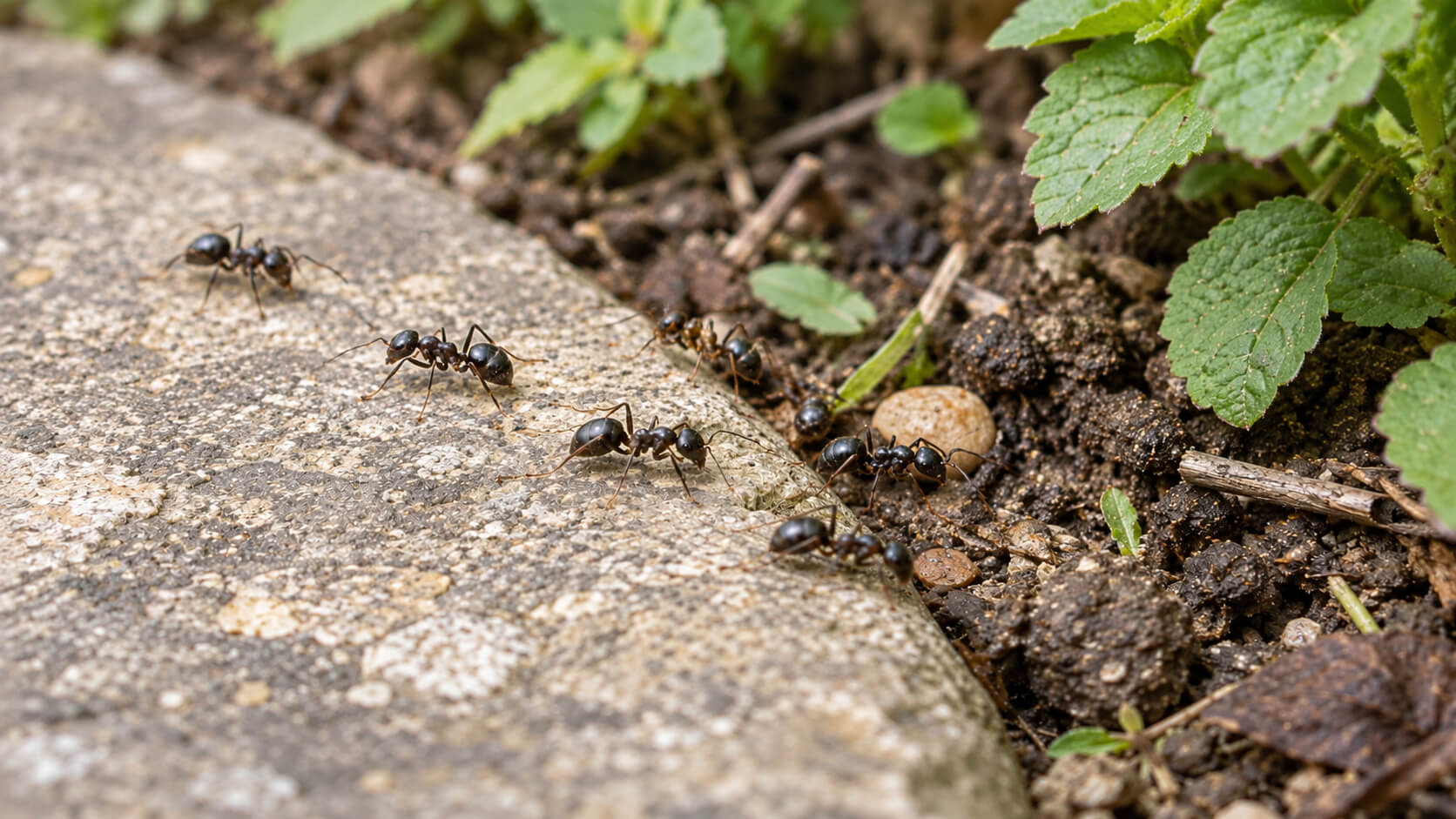
Several types of ants can be found in the UK, ranging from common black garden ants to red ants and indoor species such as pharaoh ants. They differ in colour, size, habitat and behaviour, and not every ant found around a property is the same species. This guide explains some of the main ants found in Britain and the features that can help distinguish them.
Ant Pest Control
- Same-day bookings available
- Flexible appointment times
- Treatment available for ant activity inside the property or in the garden
- Targeted bait and barrier treatment around ant entry points
- Pay us by Card, PayPal, Google Pay, Apple Pay or Pay on-site



Who will come to my home?
A certified pest control technician from our vetted network, on the day and time you choose. You get a confirmation by email as soon as you book.
Is the treatment safe for children and pets?
Yes. Technicians use HSE-approved products and methods: tamper-resistant bait stations for rodents, and sprays or gels that are safe for children and pets once dry. You are told before the visit if a room needs to stay clear for a few hours.
What if the pests come back?
Follow-up visits are included where the treatment lists them, so if activity continues after the first visit, the next one is already covered at no extra charge. The price you see is the full price for the whole treatment cycle.
Do I need to prepare anything or be at home?
Someone needs to be at the property to let the technician in. Preparation is minimal and depends on the pest; the technician confirms anything needed by SMS and email after you book.
Do I pay now?
No. You see the price, then pick a date and time. Payment is only confirmed at checkout, and cancellation is free.
Is the £50 inspection fee deducted from the treatment?
Yes. If you are not sure what the pest is, you can book a £50 inspection visit. The technician identifies the pest and quotes the treatment on site, and if you go ahead the £50 is deducted from that treatment price.
Recently booked jobs


Common Types of Ants in the UK
Britain is home to dozens of ant species, but only a small number are commonly noticed around homes, gardens and buildings. The main types of ants in the UK differ in colour, size, habitat and behaviour, so identifying a UK ant species usually involves looking at several features together. Black garden ants are especially widespread, while red ants are also common outdoors and pharaoh ants are associated with warm indoor environments.
This guide focuses on common ants found around UK properties rather than attempting to catalogue every British species. Different ants can favour very different nesting environments, from soil and paving outdoors to consistently warm areas inside buildings.
Black Garden Ants
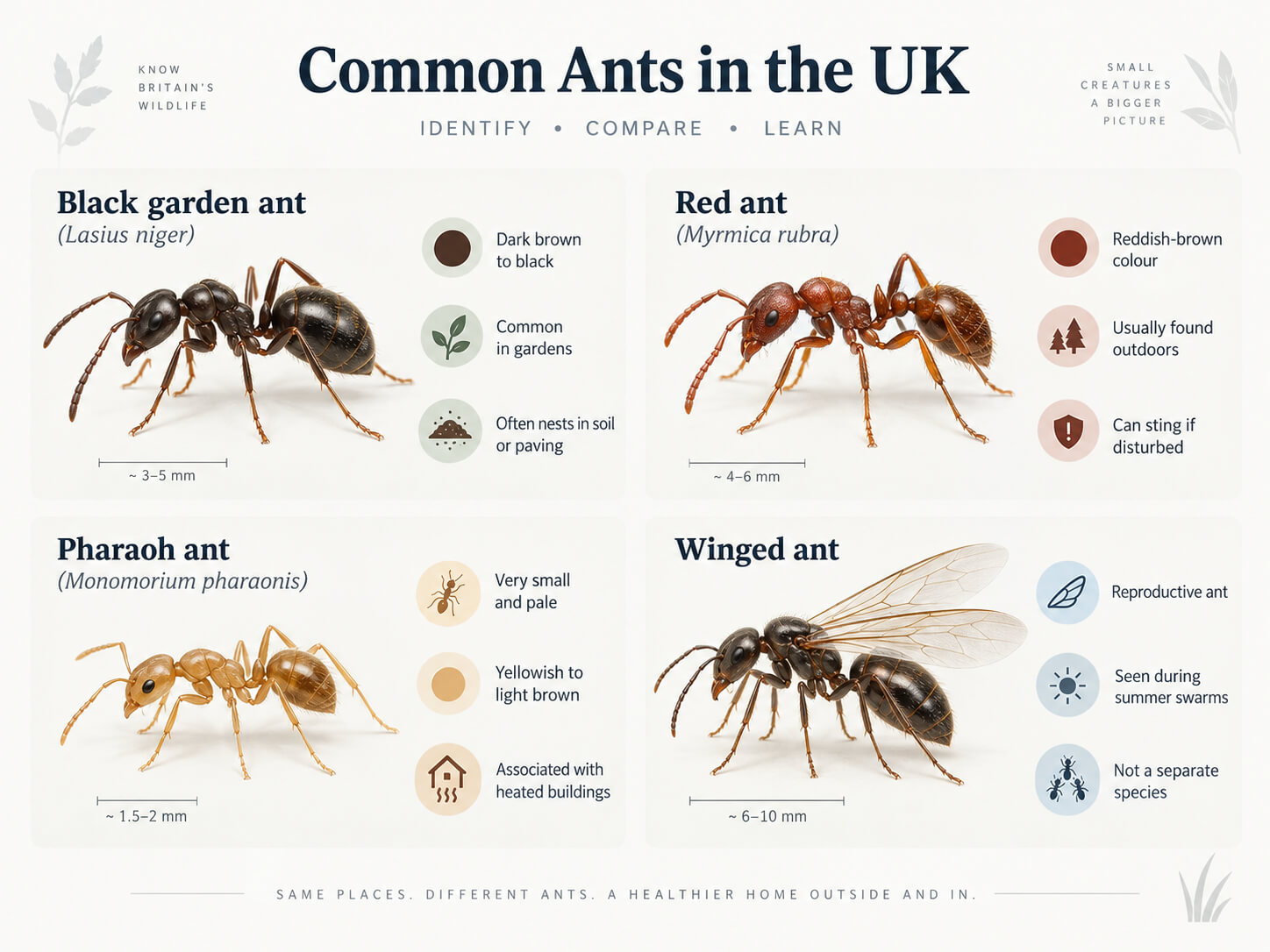
The black garden ant (Lasius niger) is one of the most familiar and widespread ants seen around UK homes and gardens. Workers are small, wingless and usually dark brown to black. Many sightings described simply as black ants in the UK involve this species. Colonies commonly nest in soil, lawns, flower beds, between brickwork and beneath paving stones, and workers may enter buildings while searching for food.
Because they are frequently seen around patios, paths and garden edges, black garden ants are among the most familiar garden ants in the UK. Their outdoor nesting behaviour does not necessarily mean that a colony is located inside the building.
Black garden ant colonies can also produce winged reproductive ants during the warmer months. For information about seasonal swarms and Flying Ant Day, see our flying ants UK guide.
Red Ants in the UK
Red ants in the UK include species such as Myrmica rubra, which is widespread in Britain and usually associated with outdoor habitats. These ants have a reddish-brown body and are generally larger and more visibly red than black garden ant workers. Colonies can be found in soil, lawns and beneath stones, logs or paving.
Red ants can defend their nests if disturbed and workers are capable of stinging. Colour alone should not be used for identification, because different species and life stages can vary in appearance.
Pharaoh Ants in the UK
Pharaoh ants in the UK are small, yellowish to light-brown ants associated mainly with heated buildings. The species, Monomorium pharaonis, is tropical in origin and depends on warm indoor conditions. Pharaoh ants may occur in large centrally heated buildings such as apartment blocks, hospitals, bakeries and other premises where stable warmth is available.
Their small size and pale colour help distinguish them from typical black garden ants. Correct identification is particularly important when ants are being found repeatedly indoors, because not all species have the same biology or nesting behaviour. Looking at where the ants are active can therefore be just as useful as looking at their colour.
How to Tell Different Ant Species Apart
Ant identification is most reliable when several features are considered together rather than colour alone. Look at the ant's overall size, colour, body shape, whether wings are present, the location of the activity and the type of environment around the nest or trail. Black garden ants are usually dark and common around soil and paving, red ants are reddish-brown and mainly outdoor, while pharaoh ants are much smaller and favour heated indoor sites.
Queens, workers and males can also look different even when they belong to the same species. This is one reason a single sighting can be misleading. Where possible, consider several ants and the surrounding habitat rather than trying to identify a species from one individual alone.
Some differences between ants are linked to their stage of development rather than their species. For more detail on eggs, larvae, pupae and adults, see our ant life cycle guide.
If ants are repeatedly appearing inside a property or in an area that may require professional attention, you can view our ant pest control options.
Sources:
Frequently Asked Questions


Yes, wood ants are found in parts of the UK. The southern wood ant (Formica rufa) is a native species associated mainly with woodland and is particularly found in Britain. It is considerably larger than many of the ants commonly seen around gardens.
Yes, the yellow meadow ant (Lasius flavus) is a widespread UK species. It is yellowish-brown and spends much of its life underground, particularly in grassland and undisturbed lawns, where its nests can form noticeable soil mounds.
Ants provide food for a range of British wildlife. Birds can feed on adult ants, while some mammals may take ants, eggs or larvae. Large seasonal swarms can also provide an abundant temporary food source for birds.
Yes, ants can form an important part of a healthy garden ecosystem. They prey on other invertebrates, contribute to food webs and interact with insects such as aphids. Their nesting activity can disturb soil, but most garden ants cause little direct damage to plants.
Ants usually cause little direct damage to garden plants. Nest building can disturb soil around roots or create small soil mounds, and ants may protect aphids in return for honeydew, which can indirectly affect plants when aphid numbers increase.