


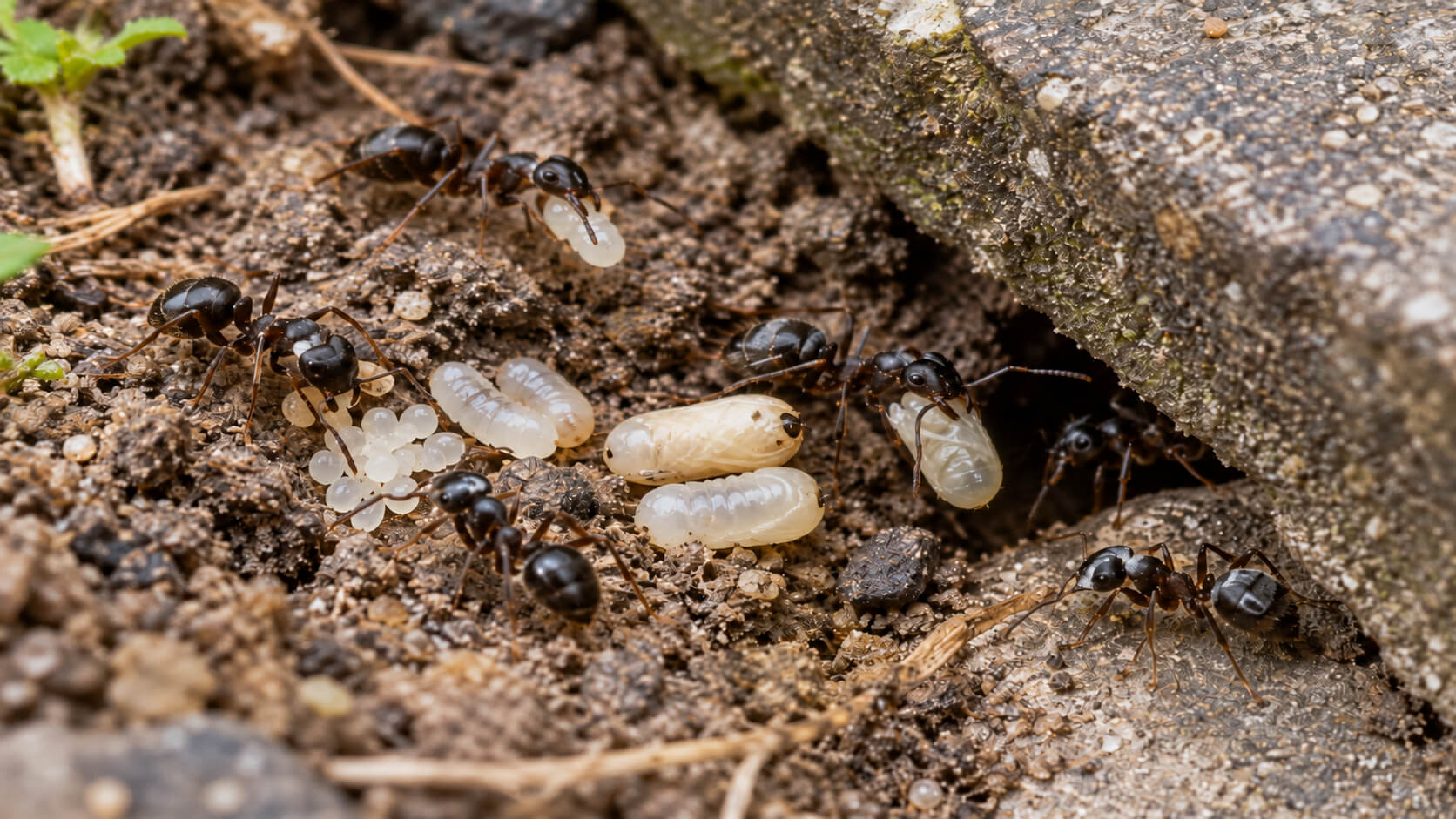
The ant life cycle has four main stages: egg, larva, pupa and adult. Each stage develops within the colony, where workers care for the young until they become adult ants. Development time varies between species and environmental conditions, while adult lifespan can differ greatly between workers, males and queens.
Recently booked jobs


Stages of the Ant Life Cycle
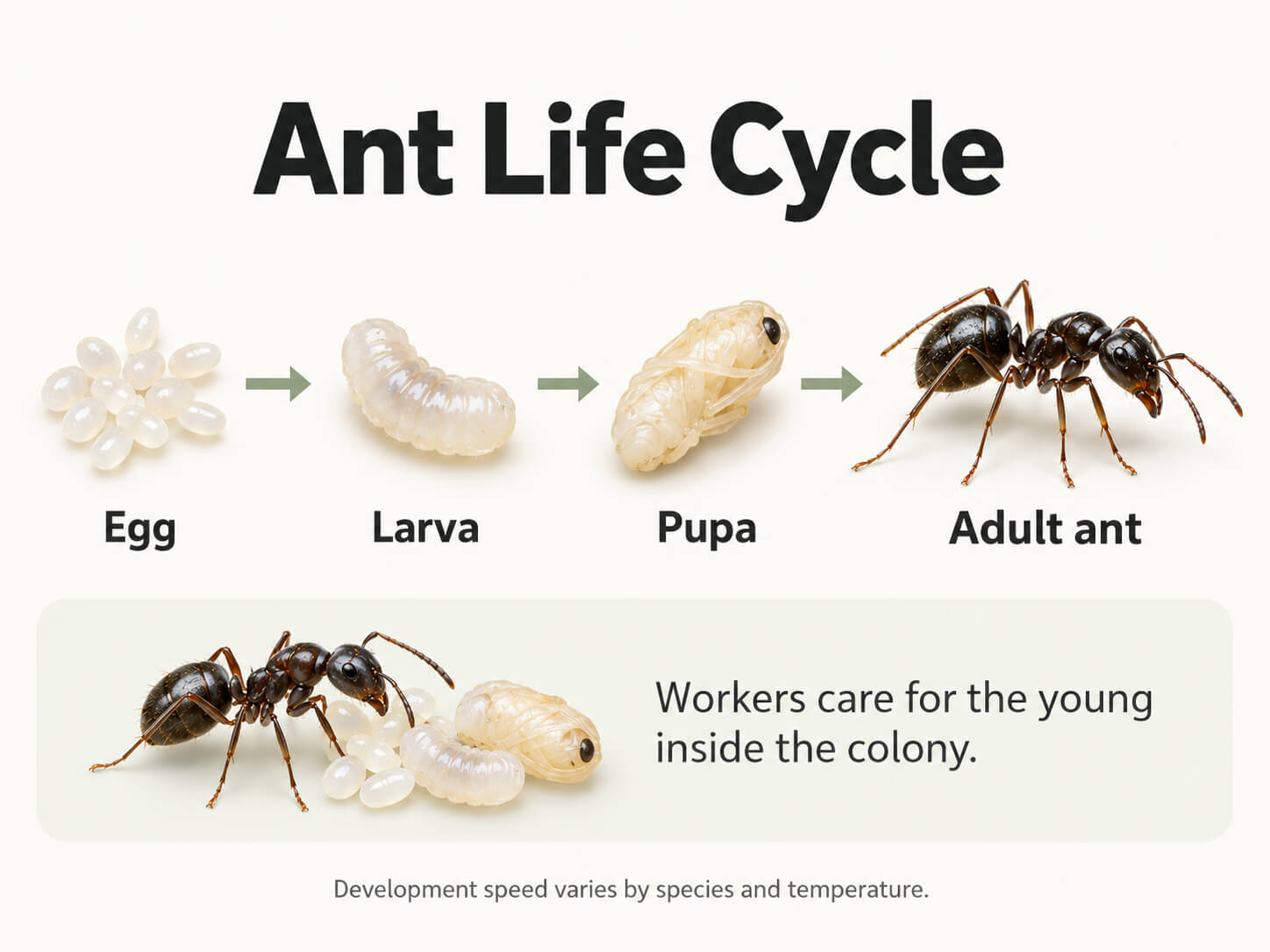
The ant life cycle has four main stages: egg, larva, pupa and adult. Ants undergo complete metamorphosis, which means the immature stages look very different from the adults they eventually become. Development takes place within the colony, where the queen produces eggs and worker ants care for the developing brood.
The length of the complete life cycle varies between ant species and can also be influenced by environmental conditions. The life cycle of an ant follows the same basic four-stage pattern, even though development times differ between species. Colonies contain ants at different stages at the same time, from newly laid eggs to larvae, pupae and adults performing different roles. For examples of species commonly encountered around British properties, see our UK ant species guide.
Ant Eggs
Ant eggs are the first stage of development and are laid by the colony's queen. The true eggs are very small and can be difficult to see with the naked eye. They are kept within protected brood areas of the nest, where worker ants tend the developing young and help maintain suitable conditions.
Eggs are sometimes confused with the larger pale objects visible when an ant nest is disturbed. In some species, these may actually be pupae enclosed in silk cocoons rather than eggs. This distinction is useful when identifying the different stages present inside a colony.
Ant Larvae
After an egg hatches, the ant enters the larval stage. Ant larvae are pale, soft-bodied and maggot-like, with an appearance very different from adult ants. They remain dependent on workers, which feed and care for them while they grow.
Larvae increase in size through their development before eventually progressing to the pupal stage. The amount of time spent as a larva is not identical across all ants, so a single fixed development time should not be applied to every species. Temperature, colony conditions and species biology can all influence the rate of development.
Ant Pupae
The pupal stage is the transition between the ant larva and the fully formed adult. During this period, the insect undergoes major physical changes as the recognisable body of an adult ant develops. Depending on the species, an ant pupa may be exposed or enclosed inside a pale silk cocoon.
These cocoons can sometimes be mistaken for large ant eggs because they are commonly found among the brood when a nest is exposed. Once pupal development is complete, the adult ant emerges with the familiar segmented body, six legs and antennae.
Adult Ants and Colony Roles
Adult ants can have very different roles within the colony. Most ants regularly seen foraging are wingless female workers. Workers gather food, maintain and enlarge the nest, defend the colony and care for the queen, eggs and larvae. The queen ant's main reproductive role is to lay eggs that allow the colony to continue and grow.
Mature colonies can also produce reproductive males and young queens. In many species these adults develop wings and leave the nest for mating flights. This reproductive stage is covered separately in our guide to flying ant swarms, including Flying Ant Day and seasonal UK swarms.
Adult form therefore depends not only on the species but also on the ant's role within the colony. Workers, males and queens can differ considerably in size, appearance and lifespan even though they belong to the same species.
How Long Do Ants Live?
How long an ant lives depends heavily on its species and its role within the colony. Queens generally live much longer than males, while worker lifespan also varies between species and environmental conditions. For this reason, there is no single lifespan that applies to every ant.
Black garden ant (Lasius niger) queens, for example, can live for many years, with the Natural History Museum reporting lifespans of up to around 15 years. Reproductive males have a much shorter adult role and usually die soon after mating. A queen can continue producing new generations of workers over many seasons, allowing an established colony to persist far longer than the lifespan of any individual worker or male.
The life cycle therefore continues repeatedly within an active colony: queens lay eggs, workers care for the brood and new adults eventually take on their roles. The exact timing and longevity depend on the species rather than following one universal schedule.
Sources:
Frequently Asked Questions


Ant brood is the collective term for the immature ants developing inside a colony. It includes eggs, larvae and pupae rather than fully developed adults. Worker ants care for the brood by feeding, moving and protecting the developing stages within the nest.
The time ant eggs take to hatch varies between species and environmental conditions. As one UK example, black garden ant eggs may hatch after around three to four weeks, although this should not be treated as a universal development time for every ant species.
Queen development is determined while an ant is still immature and varies between species. Factors such as genetics, nutrition, temperature and colony conditions can influence whether a female develops queen characteristics rather than becoming a worker.
Yes, some ant species can have several queens in the same colony, while others normally have only one. The number of queens depends on the species and colony structure, so there is no single arrangement that applies to every ant colony.
The effect depends on whether the colony has one queen or several. In a single-queen colony, egg production eventually stops and the colony may decline as existing workers die. In species with multiple queens, the remaining queens may allow the colony to continue.