


Spider Bites in the UK: Symptoms, Appearance and What to Do
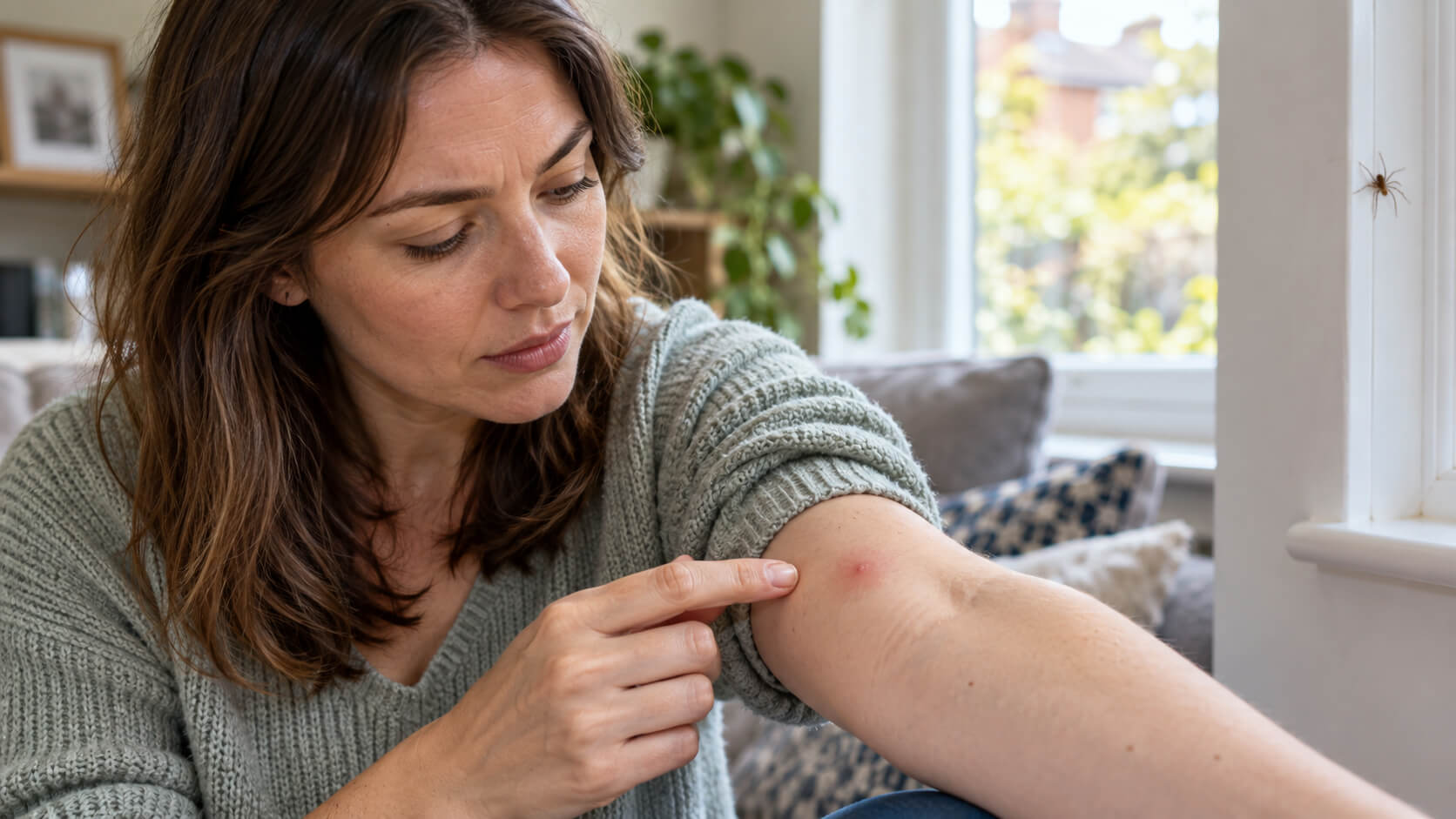
Spider bites in the UK are uncommon and can be difficult to identify from a skin mark alone. Redness, swelling, itching or pain can have many possible causes, so photographs and symptoms by themselves do not reliably confirm that a spider was responsible.
This guide explains what a suspected spider bite may look and feel like, common symptoms, basic self-care and when to seek medical help.
Suspected Spider Bite: Key Points
- Spider bites in the UK are uncommon
- A skin mark alone cannot reliably confirm that a spider caused it
- Mild reactions may include local pain, redness, swelling or itching
- Seek medical advice if symptoms worsen or the area shows signs of infection
- Call 999 for breathing difficulty, fainting, or swelling of the mouth or throat


Who will come to my home?
A certified pest control technician from our vetted network, on the day and time you choose. You get a confirmation by email as soon as you book.
Is the treatment safe for children and pets?
Yes. Technicians use HSE-approved products and methods: tamper-resistant bait stations for rodents, and sprays or gels that are safe for children and pets once dry. You are told before the visit if a room needs to stay clear for a few hours.
What if the pests come back?
Follow-up visits are included where the treatment lists them, so if activity continues after the first visit, the next one is already covered at no extra charge. The price you see is the full price for the whole treatment cycle.
Do I need to prepare anything or be at home?
Someone needs to be at the property to let the technician in. Preparation is minimal and depends on the pest; the technician confirms anything needed by SMS and email after you book.
Do I pay now?
No. You see the price, then pick a date and time. Payment is only confirmed at checkout, and cancellation is free.
Is the £50 inspection fee deducted from the treatment?
Yes. If you are not sure what the pest is, you can book a £50 inspection visit. The technician identifies the pest and quotes the treatment on site, and if you go ahead the £50 is deducted from that treatment price.
Recently booked jobs



What Does a Spider Bite Look Like?
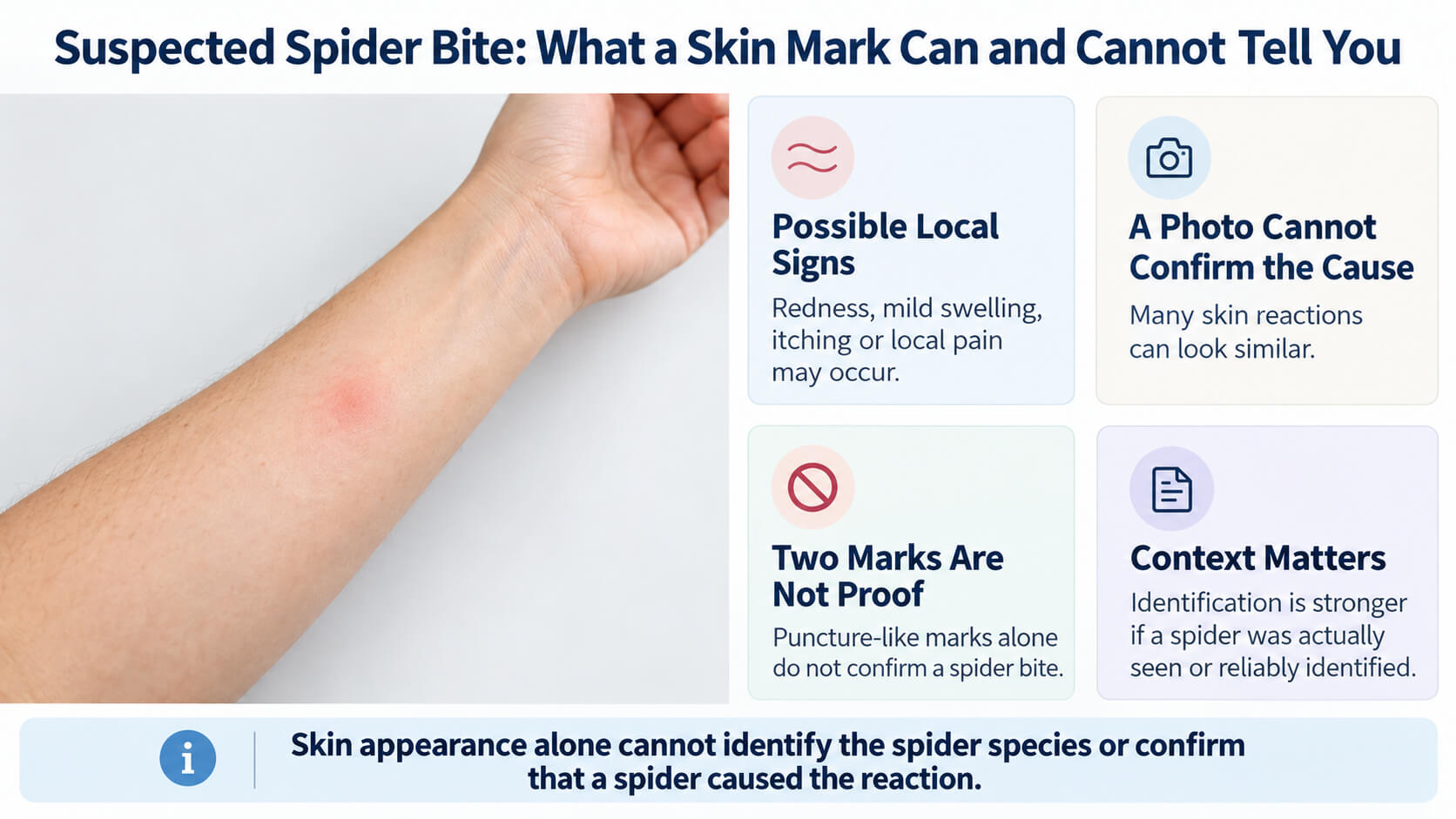
Suspected spider bites can resemble many other minor skin reactions. A small swollen area, redness, itching or local pain may occur, but these features have several possible causes. In the UK, attribution is much stronger when a spider was actually seen than when it is based only on the skin.
Can You Identify a Spider Bite from a Skin Mark?
A skin mark alone cannot reliably identify a spider bite or the species that caused it. The appearance of a reaction can vary, so visible marks are not diagnostic. If no spider was seen, it is safer to describe the area as a suspected bite rather than assume that a spider was responsible.
Spider Bite Pictures: Why Photos Cannot Confirm the Cause
Spider bite pictures can show how skin reactions vary, but they cannot confirm the cause from appearance alone. Lighting, skin tone, scratching, infection and the time since a reaction began can all change how a mark appears. A photograph of the skin therefore cannot establish which spider, if any, caused the reaction.
Spider Bite Symptoms in the UK
Most reported UK spider-bite reactions are local rather than severe. Where a spider has genuinely bitten, symptoms may include pain or irritation around the site, with swelling, redness or itching. These symptoms are not unique to spiders and should not be used to identify a species.
Mild Symptoms After a Suspected Spider Bite
A mild reaction may remain limited to the area around the suspected bite. Discomfort, a small swollen area or itching may settle over the following days. Avoid repeatedly touching or scratching the area, because broken skin can increase the chance of a secondary infection.
Signs of Infection or a More Serious Reaction
Get medical advice if the area is becoming increasingly hot, painful or swollen, if pus or fluid appears, or if symptoms are getting worse rather than improving. A high temperature, swollen glands or feeling generally unwell can also be reasons to seek advice. Sudden swelling of the lips, mouth, throat or tongue, difficulty breathing or collapse requires emergency help.
What to Do After a Suspected Spider Bite
For a minor suspected bite, basic skin care and symptom monitoring are usually the first steps. The aim is to keep the area clean, reduce swelling and avoid scratching while watching for changes that may need medical assessment.
How to Treat a Minor Bite at Home
Wash the area with soap and water and use a cold pack wrapped in a cloth if it is swollen. Keep the affected area raised where practical and avoid scratching it. A pharmacist can advise on suitable options for pain, itching or swelling. If you are unsure whether the mark could be associated with one of the common UK house spiders, remember that the skin reaction alone cannot identify the spider.
When to Get Medical Help
Seek medical advice when symptoms are worsening, infection is suspected or the reaction is more than mild and local. NHS 111 can advise when urgent assessment is needed. Call 999 for signs of a severe allergic reaction, including serious breathing difficulty, sudden mouth or throat swelling or collapse.
For a Minor Suspected Bite
- Wash the area with soap and water
- Use a wrapped cold pack if it is swollen
- Raise the affected area where practical
- Avoid scratching the skin
- Ask a pharmacist about symptom relief if needed
Get Medical Help If
- Symptoms worsen or do not improve
- The area becomes hot, more painful or increasingly swollen
- Pus or fluid appears
- You develop a high temperature, swollen glands or feel generally unwell
- Breathing difficulty, sudden mouth or throat swelling or collapse occurs — call 999
Remember: if no spider was seen, keep the cause of the skin reaction open and monitor how the area changes. Seek medical advice if symptoms worsen or you are concerned.
Do House Spiders Bite in the UK?
Yes, some spiders found in UK homes can bite, but bites are uncommon. The British Arachnological Society notes that only a small number of British species can puncture human skin. When bites occur, they are usually defensive or accidental, such as when a spider is trapped against the skin or handled.
Which UK Spiders Can Bite?
Only a small number of British spiders are known to bite people and cause noticeable symptoms. The British Arachnological Society lists species including the noble false widow, water spider and woodlouse spider among those capable of puncturing skin. For species-specific false widow identification and bite information, use the dedicated guide rather than identifying the species from a skin mark.
Frequently Asked Questions


A suspected spider bite or another bite-like skin reaction can sometimes develop a blister, but a blister does not confirm that a spider was responsible. Many skin reactions can look similar, so the appearance of the mark should be considered alongside other symptoms rather than used to identify the cause on its own.
A mild suspected spider bite may improve over several days, although the exact healing time depends on the reaction and its cause. A mark that is becoming increasingly painful, swollen or otherwise worse rather than gradually improving should not automatically be assumed to be a normal spider bite.
Bruising or darker discolouration can sometimes occur around a bite-like skin reaction, but it is not specific to spider bites. Bruising alone therefore cannot show that a spider caused the mark, particularly when no spider was seen biting.
Most minor suspected spider bites should not be assumed to cause permanent scarring, although damaged or repeatedly irritated skin can sometimes leave a lasting mark. A wound that is not healing normally or is becoming more inflamed should be assessed rather than being identified as a spider bite from appearance alone.
No, two small puncture-like marks do not prove that a spider caused a skin reaction. Many bites, minor injuries and other skin conditions can produce marks that look similar, so the cause cannot be confirmed from two dots or punctures alone.