


Silverfish in the House: What to Look For
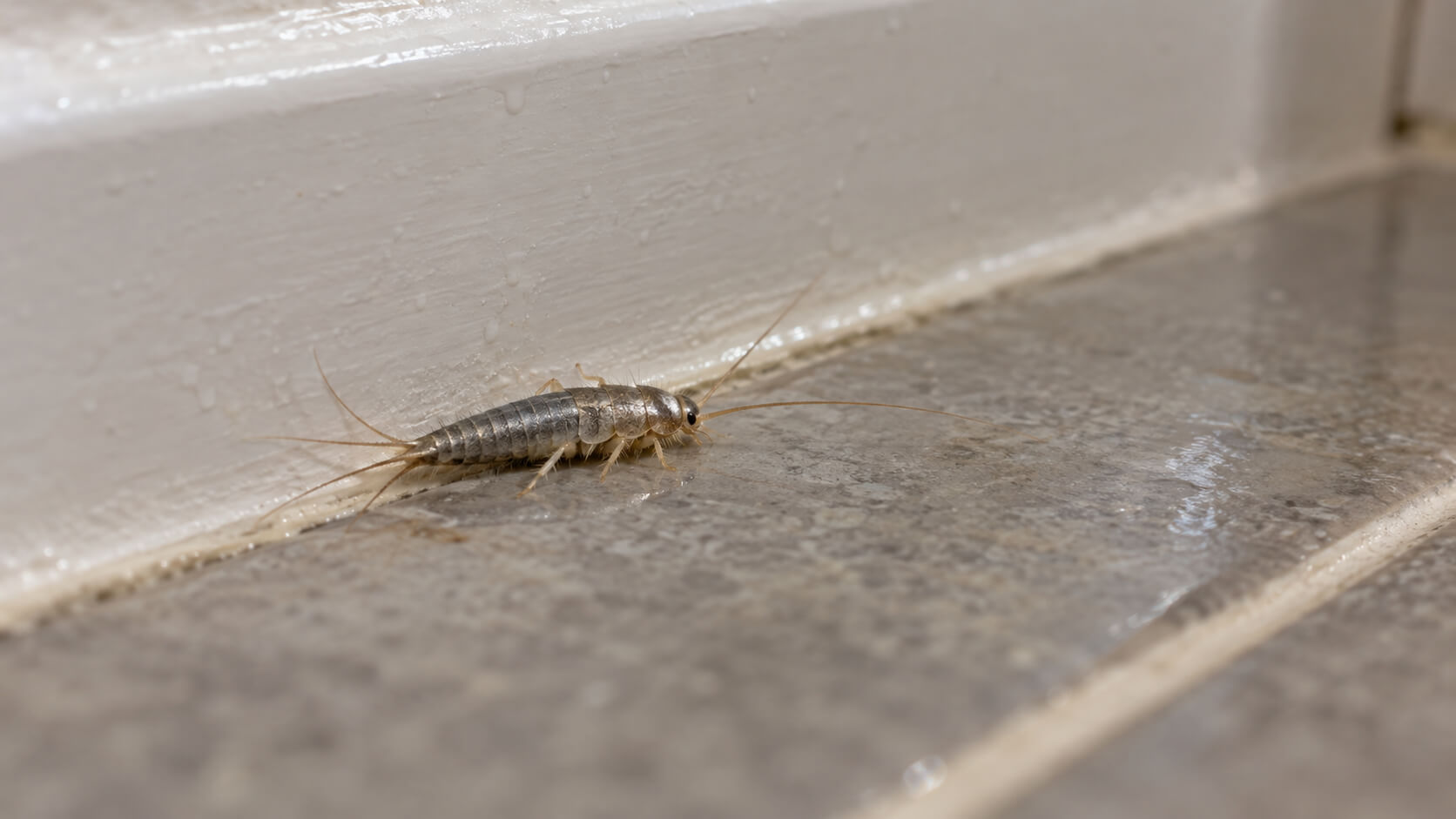
Silverfish in the house are often found in damp, sheltered areas, especially bathrooms and kitchens. These small, wingless insects are usually active at night and hide in cracks, gaps and other protected indoor spaces.
This guide explains how to identify silverfish, why they appear indoors, signs of activity and how common silverfish differ from grey or long-tailed silverfish, firebrats and other lookalikes.
Silverfish Identification & Pest Control Support
- Tell Us Where You Have Seen Silverfish or Similar Insects
- Describe repeated sightings or signs of activity around your property
- Book an inspection if you are unsure what pest is present
- Choose from available appointment times in your area
- The £50 inspection fee is deducted if you proceed with the quoted treatment
- Pay us by Card, PayPal, Google Pay, Apple Pay or Pay on-site



Who will come to my home?
A certified pest control technician from our vetted network, on the day and time you choose. You get a confirmation by email as soon as you book.
Is the treatment safe for children and pets?
Yes. Technicians use HSE-approved products and methods: tamper-resistant bait stations for rodents, and sprays or gels that are safe for children and pets once dry. You are told before the visit if a room needs to stay clear for a few hours.
What if the pests come back?
Follow-up visits are included where the treatment lists them, so if activity continues after the first visit, the next one is already covered at no extra charge. The price you see is the full price for the whole treatment cycle.
Do I need to prepare anything or be at home?
Someone needs to be at the property to let the technician in. Preparation is minimal and depends on the pest; the technician confirms anything needed by SMS and email after you book.
Do I pay now?
No. You see the price, then pick a date and time. Payment is only confirmed at checkout, and cancellation is free.
Is the £50 inspection fee deducted from the treatment?
Yes. If you are not sure what the pest is, you can book a £50 inspection visit. The technician identifies the pest and quotes the treatment on site, and if you go ahead the £50 is deducted from that treatment price.
Recently booked jobs


What Are Silverfish and How Can You Identify Them?
Silverfish are small, wingless insects with a tapered body, a silvery-grey sheen and three tail-like filaments. The term silverfish bug refers to the same household insect. They move quickly and are often noticed when a light is switched on or a hiding place is disturbed. In UK homes, the common silverfish is Lepisma saccharina.
They are common household insects, but a brief sighting is not always enough for confident identification. The most useful approach is to combine body shape, colour, movement and the type of indoor area where the insect was found, especially when similar-looking species are possible.
What Does a Silverfish Look Like?
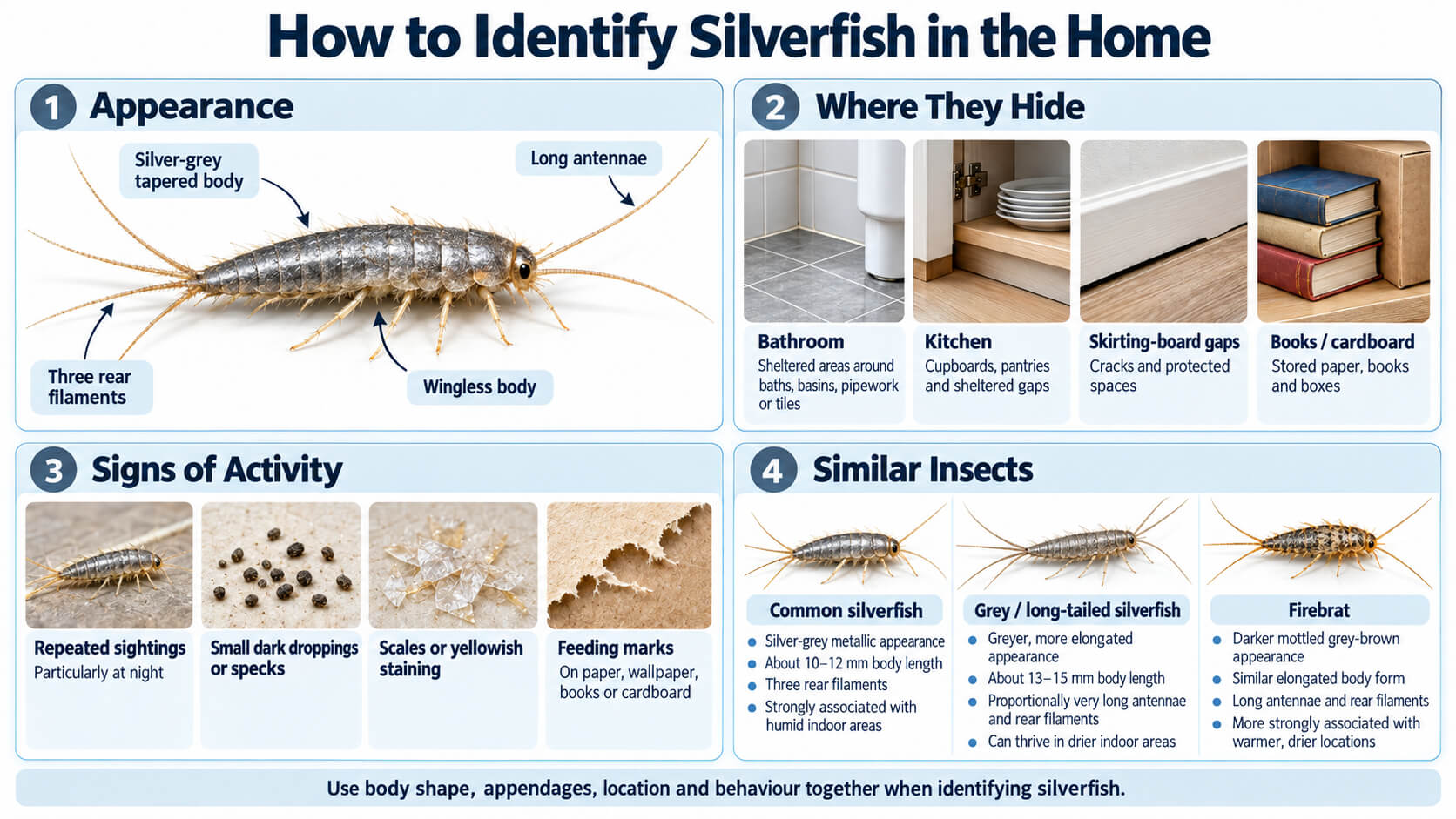
Common silverfish have a flattened, tapered body with a metallic silver-grey appearance. Adults are usually about 10–12 mm long, excluding their long antennae and rear filaments, and the body narrows towards the back to create the characteristic fish-like outline.
- Wingless, elongated and tapered body
- Silvery or metallic-grey appearance
- Two long antennae at the front
- Three long filaments at the rear
- Rapid, darting movement when disturbed
Identification should use several clues together. Body proportions, surface appearance, tail length and where the insect was found help separate common silverfish from grey silverfish, firebrats and unrelated household insects.
Silverfish Size, Movement and Behaviour
Common silverfish are nocturnal and move rapidly when disturbed. During the day they may hide behind skirting boards, loose wallpaper, cupboards or other sheltered gaps. They have no wings and do not fly.
Why Are Silverfish in the House?
Silverfish in the house are usually associated with shelter, moisture and accessible food materials. Bathrooms and kitchens are frequent locations, but activity can also occur around paper, books, cupboards and hidden gaps elsewhere indoors.
A single sighting does not necessarily reveal where the insect has been hiding. Silverfish can remain concealed during the day and become visible only when they move at night or are disturbed, so the surrounding room conditions matter more than the exact spot where one insect was seen.
Where Do Silverfish Come From?
Silverfish in homes can come from concealed cracks, crevices and other indoor harbourages, while some may also be brought in with stored materials. Cardboard boxes, books and papers can carry insects or immature stages into a property. Once indoors, suitable humidity, shelter and food can support continued activity.
Finding them repeatedly in the same area can point to nearby harbourage rather than a distant source. Their early development also happens in concealed spaces; our guide to silverfish eggs and the life cycle explains the immature stages and how silverfish develop.
Why Are Silverfish Common in Bathrooms?
Bathrooms suit common silverfish because they often provide moisture, darkness and protected hiding places. They may be noticed around baths, basins, pipework, skirting boards or gaps where damp conditions persist. Repeated bathroom sightings can therefore be a useful clue to condensation, leaks or other persistent moisture.
Silverfish are sometimes trapped in smooth-sided baths or basins because they do not climb those surfaces well. Nearby cracks, fittings and sheltered areas are more useful clues to the source.
Where Else Do Silverfish Hide Indoors?
Silverfish can hide in many sheltered areas beyond the bathroom when conditions suit them. Common indoor locations include:
- Bathrooms and areas around pipework
- Kitchens, pantries and cupboards
- Basements and damp storage spaces
- Behind skirting boards and loose wallpaper
- Near books, papers, cardboard and other stored materials
A silverfish may also be noticed on a bed or other surface while moving through a room. That does not by itself identify the bed as its harbourage; nearby gaps, stored materials and room conditions provide more useful context for understanding why it was there.
What Attracts Silverfish and What Do They Eat?
Silverfish favour sheltered areas with moisture and suitable food sources. They feed on small food particles and starchy or carbohydrate-based materials such as wallpaper paste and bookbinding gums. They may also feed on dead-insect fragments and some textiles.
This helps explain why activity can occur around old wallpaper, books, cardboard, cupboards and other stored materials. Moisture is particularly relevant to common silverfish, while the grey or long-tailed silverfish can tolerate drier indoor conditions and may appear in a wider range of rooms.
Keeping persistent moisture under control, repairing leaks and improving ventilation can make damp areas less favourable to common silverfish.
Signs of Silverfish Activity and Infestation
Repeated live sightings are the clearest sign of ongoing silverfish activity, especially at night. Other evidence can include:
✓ Repeated sightings — especially at night or when lights are switched on.
✓ Small dark droppings — tiny specks may appear around sheltered areas.
✓ Scales or staining — shed scales or yellowish marks may be visible.
✓ Feeding marks — damage can appear on paper, books, wallpaper or cardboard.
✓ Repeat bathroom or sink sightings — especially where moisture persists.
One sighting does not show the scale of an infestation. Frequency, location and recurring evidence give better context, while feeding marks can support identification of activity without showing how many insects are present.
Questions about bites, health risk and the wider harm silverfish may cause belong in our guide to whether silverfish bite or are harmful, so this page keeps that topic separate from household identification and signs.
Silverfish Lookalikes and Similar Insects
Not every fast-moving grey insect indoors is a common silverfish. Grey or long-tailed silverfish and firebrats are close lookalikes, while other household insects may be confused with them after a brief sighting.
Common bugs that look similar to silverfish can often be separated by their body shape, rear appendages and the conditions where they are found. Grey or long-tailed silverfish have noticeably longer appendages, firebrats tend to look darker and more mottled, while earwigs have distinctive rear forceps rather than three tail filaments.
Common Silverfish vs Grey or Long-Tailed Silverfish
Grey or long-tailed silverfish can be distinguished from common silverfish by a combination of size, colour, longer appendages and habitat. The common silverfish, Lepisma saccharina, is strongly associated with humid locations. The grey silverfish, Ctenolepisma longicaudata, is generally larger, greyer and has proportionally longer antennae and tail filaments. It can also persist in drier indoor conditions.
| Feature | Common Silverfish | Grey / Long-Tailed Silverfish | Firebrat |
|---|---|---|---|
| Appearance | Silvery and metallic-looking | Grey and often hairier-looking | Darker and mottled or speckled |
| Body length | About 10–12 mm | About 13–15 mm | Size alone is not a reliable identifying clue |
| Rear filaments | Long | Proportionally much longer | Long |
| Typical setting | Humid rooms and sheltered gaps | Can also occur in drier indoor spaces | Usually warmer, drier locations |
Use several clues together when comparing similar insects. Common silverfish favour humid areas, grey or long-tailed silverfish can persist in drier rooms, and firebrats are more strongly associated with warmer locations.
Firebrat vs Silverfish
Firebrats are related to silverfish but usually look darker and more mottled rather than metallic silver. They are more strongly associated with warm, dry locations, so both appearance and setting help with identification. A brief sighting in poor light can still be misleading, which is why several features should be compared together.
Silverfish vs Earwigs and Other Lookalikes
Earwigs are easy to separate from silverfish when the rear of the insect is visible. Earwigs have obvious forceps or pincers instead of three long tail filaments. For other small household insects, checking body shape, antennae, rear appendages and habitat is more reliable than colour alone. If those key features are not visible, the identification should remain cautious.
If you are seeing silverfish repeatedly, finding signs in several rooms or are unsure which pest is present, you can check the available pest inspection and control options for your property.
Sources: Oxford City Council - Silverfish; British Pest Control Association - Silverfish; British Pest Control Association - Silverfish and Grey Silverfish; Oldham Council - Silverfish Signs; Royal Horticultural Society - Earwigs.
Frequently Asked Questions


Yes, silverfish can occasionally be found on or around beds, although beds are not their preferred habitat. They may wander from nearby cracks, skirting-board gaps or other sheltered areas, especially where humidity is relatively high. Finding one on a bed does not necessarily mean it is living inside the mattress.
Yes, silverfish can climb many rough or textured walls and other vertical surfaces. They can move across materials such as plaster, wallpaper and timber, while very smooth surfaces are more difficult for them to grip.
No, silverfish cannot fly because they are wingless insects. They move by running quickly across floors, walls and other surfaces and usually retreat into cracks or sheltered gaps when disturbed.
Silverfish droppings are usually very small, dark specks that can resemble tiny pepper-like particles. Droppings alone are not enough to confirm silverfish activity, so they should be considered alongside sightings, feeding marks, staining or other signs in the same area.
Silverfish are mainly nocturnal, so they are more active when rooms are dark and relatively undisturbed. During the day they usually remain hidden in cracks, gaps and other sheltered spaces, which is why they are often noticed after lights are switched on at night.
Silverfish can be associated with damp or humid conditions, particularly when they are repeatedly found in bathrooms, kitchens or other moisture-prone areas. Their presence does not prove that a property has a serious damp problem, but repeated sightings can be a useful reason to check for condensation, leaks or persistently high humidity.