


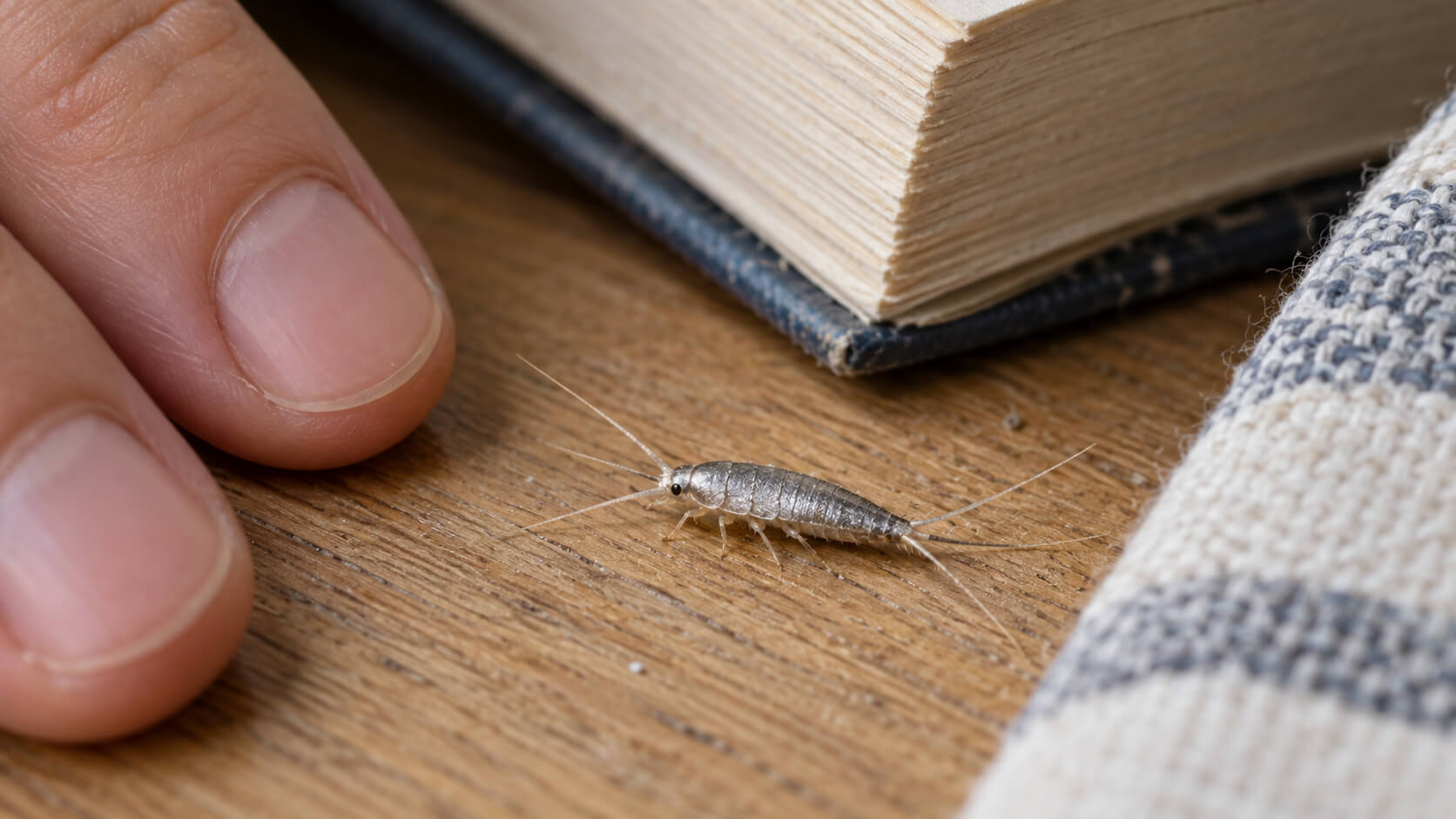
Silverfish do not bite people and are not considered a significant risk to human health. They are not known for spreading disease, but their presence can still cause concern and they may damage paper, wallpaper, books and other starchy household materials.
This guide explains whether silverfish are harmful or dangerous, what people sometimes mistake for a silverfish bite, whether pets are at risk, and the types of property damage associated with silverfish activity.
Recently booked jobs


Do Silverfish Bite Humans?
No, silverfish are not known to bite humans. They have mouthparts adapted for feeding on materials containing starches and other food residues rather than for feeding on people, and UK pest guidance describes them as harmless in this respect.
Seeing a silverfish on a bed, bathroom floor or clothing can still be alarming, but proximity to a person does not mean the insect has bitten them. Silverfish usually try to escape into cracks or sheltered gaps when disturbed.
What Can Be Mistaken for a Silverfish Bite?
A mark on the skin should not be assumed to be a silverfish bite. Because silverfish are not known to bite people, an unexplained red mark, itch or irritation may have another cause, including another biting insect or a non-insect skin irritation.
The appearance of a skin mark alone is not enough to identify its cause. If you are also seeing insects indoors, confirming which pest is present is more reliable than linking a mark to silverfish simply because one was found nearby.
Are Silverfish Harmful or Dangerous?
Silverfish are not considered dangerous to people and are not regarded as a significant public-health risk. They are mainly nuisance pests, with the more meaningful harm linked to damp conditions and damage to household materials rather than bites or venom.
The question “are silverfish harmful?” can refer to several different concerns. The answer is generally no for direct human health risk, but silverfish can still cause damage to paper, wallpaper, books, cardboard and some fabrics.
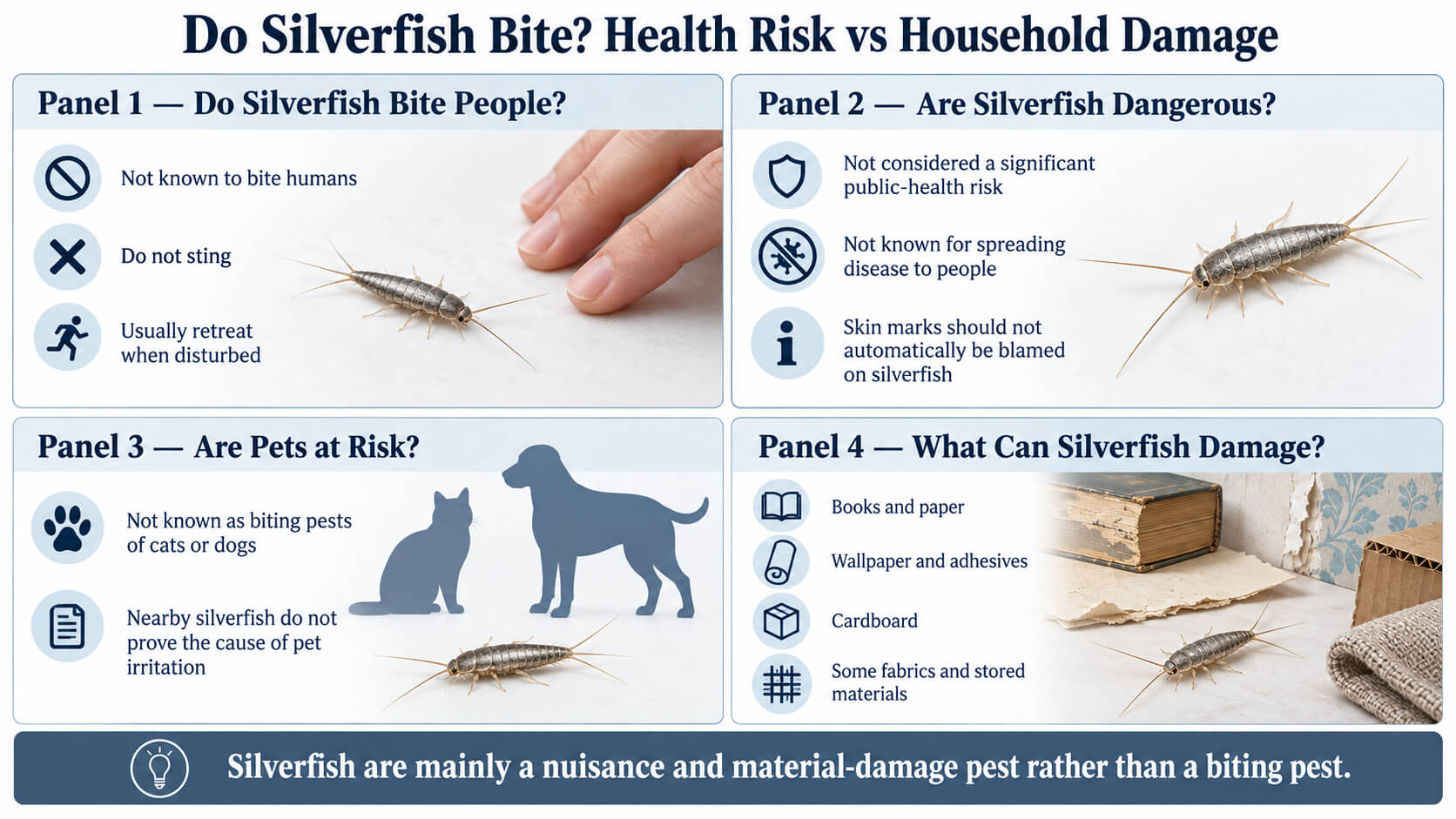
Are Silverfish Harmful to Humans?
Silverfish are not considered harmful to humans in the usual public-health sense. Their presence indoors is primarily a nuisance and property concern rather than evidence of a pest that attacks people or poses a significant direct health risk.
If the insect itself has not been identified confidently, our guide to identifying silverfish in the home explains the appearance and common lookalikes. This is especially useful when a fast-moving grey insect has been seen only briefly.
Can Silverfish Spread Disease?
Silverfish are not known to spread disease to people. This is one reason UK councils and pest guidance generally describe them as nuisance or property pests rather than a significant threat to public health.
That does not mean their presence should be ignored entirely. Repeated sightings can point to damp or humid conditions, while feeding activity can affect stored materials; those issues are separate from disease transmission.
Are Silverfish Harmful to Pets?
Silverfish are not generally considered harmful to pets and are not known as biting pests of cats or dogs. They are mainly a nuisance because of the materials they feed on rather than because they attack people or animals.
A pet showing irritation, swelling or other symptoms should not automatically be assumed to have reacted to silverfish simply because the insects are present. The presence of silverfish does not establish the cause of a pet’s symptoms.
What Damage Can Silverfish Cause?
Silverfish can damage household materials that contain starches, adhesives or suitable fibres. UK guidance specifically notes damage to wallpaper, books, paper, cardboard and some textiles, with small feeding marks or yellow staining sometimes associated with activity.
This type of damage is different from structural damage caused by pests that chew timber or wiring. Silverfish are more likely to affect vulnerable stored or paper-based belongings, especially where suitable food and moisture are available.
- Books, documents and other paper products
- Wallpaper and starch-based adhesives
- Cardboard boxes and stored papers
- Some cotton, linen and other fabrics
- Stored materials containing suitable starches or residues
Can Silverfish Damage Books, Paper and Wallpaper?
Yes, silverfish can damage books, paper and wallpaper. They feed on starchy substances such as wallpaper paste, bookbinding gums and other carbohydrate-rich residues, which can leave irregular feeding marks on affected materials.
Books, documents, cardboard boxes and wallpaper can therefore show surface damage or staining when silverfish activity persists. The presence of damage alone is not enough to identify the insect, so it should be considered alongside sightings and other signs.
Can Silverfish Damage Clothes or Fabrics?
Yes, silverfish can damage some clothes and fabrics, particularly materials or finishes that provide a suitable food source. UK guidance notes that silverfish may feed on textiles such as cotton and linen as well as paper-based materials and adhesives.
Damage to clothing is not unique to silverfish, so holes or marks in fabric should not be used as the only identification clue. Direct sightings and the surrounding conditions provide stronger evidence of which household pest is responsible.
Sources: British Pest Control Association - Silverfish, Health Risk and Damp | Oxford City Council - Silverfish | Oldham Council - Silverfish Damage and Signs | Orkin - Silverfish, Humans and Pets.
Frequently Asked Questions


Silverfish can feed on some clothing and fabrics when suitable starches, residues or natural fibres are present. Damage is more likely where materials remain stored and undisturbed, although holes in clothing are not unique to silverfish and should not be used as the only identification clue.
Silverfish are not considered poisonous to people or pets. Their main significance indoors is as nuisance and material-damage pests rather than as a toxic or venomous insect.
Silverfish are not known to bite people, so they are not expected to leave true bite marks. A red, itchy or irritated mark on the skin may have another cause, even when silverfish have been seen nearby.
There is no recognised silverfish bite appearance because silverfish are not known to bite humans. Skin marks should therefore not be identified as silverfish bites based on appearance alone.