

Signs of Squirrels in Your Loft or Attic
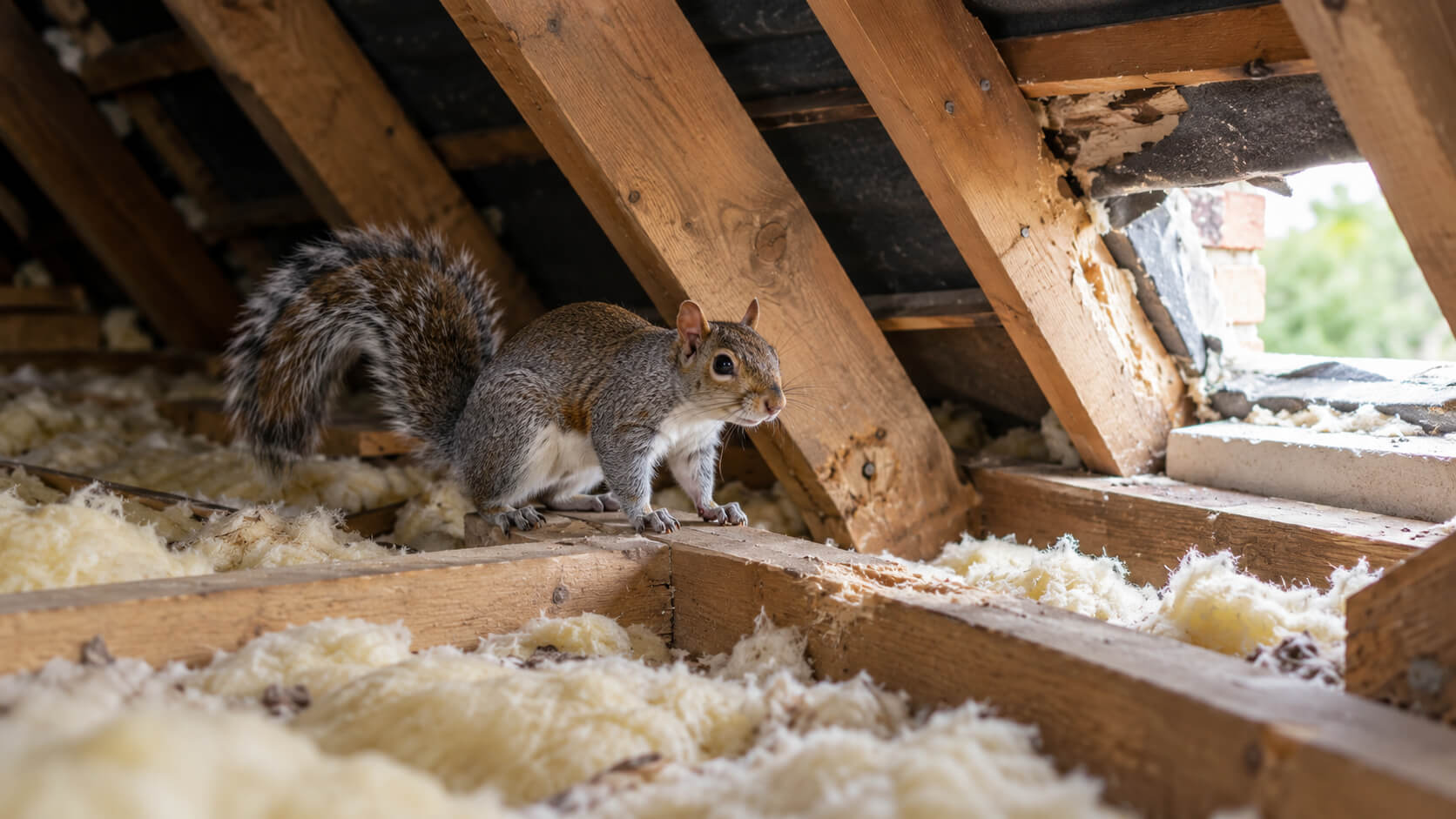
Signs of squirrels in a loft or attic can include scratching or movement noises, nesting material, gnaw marks and damage around roof spaces. Looking at several clues together can help distinguish squirrel activity from other animals using the same part of a property.
This guide covers the main signs to check, including noises, nests, roof-space activity, possible entry points and clues that may help you tell squirrels from rats.
Squirrel Pest Control
- Same-day bookings available
- Flexible appointment times
- Humane trapping and removal for squirrels in lofts and attics
- Pay us by Card, PayPal, Google Pay, Apple Pay or Pay on-site



Who will come to my home?
A certified pest control technician from our vetted network, on the day and time you choose. You get a confirmation by email as soon as you book.
Is the treatment safe for children and pets?
Yes. Technicians use HSE-approved products and methods: tamper-resistant bait stations for rodents, and sprays or gels that are safe for children and pets once dry. You are told before the visit if a room needs to stay clear for a few hours.
What if the pests come back?
Follow-up visits are included where the treatment lists them, so if activity continues after the first visit, the next one is already covered at no extra charge. The price you see is the full price for the whole treatment cycle.
Do I need to prepare anything or be at home?
Someone needs to be at the property to let the technician in. Preparation is minimal and depends on the pest; the technician confirms anything needed by SMS and email after you book.
Do I pay now?
No. You see the price, then pick a date and time. Payment is only confirmed at checkout, and cancellation is free.
Is the £50 inspection fee deducted from the treatment?
Yes. If you are not sure what the pest is, you can book a £50 inspection visit. The technician identifies the pest and quotes the treatment on site, and if you go ahead the £50 is deducted from that treatment price.
Recently booked jobs



Signs of Squirrels in the Loft or Attic
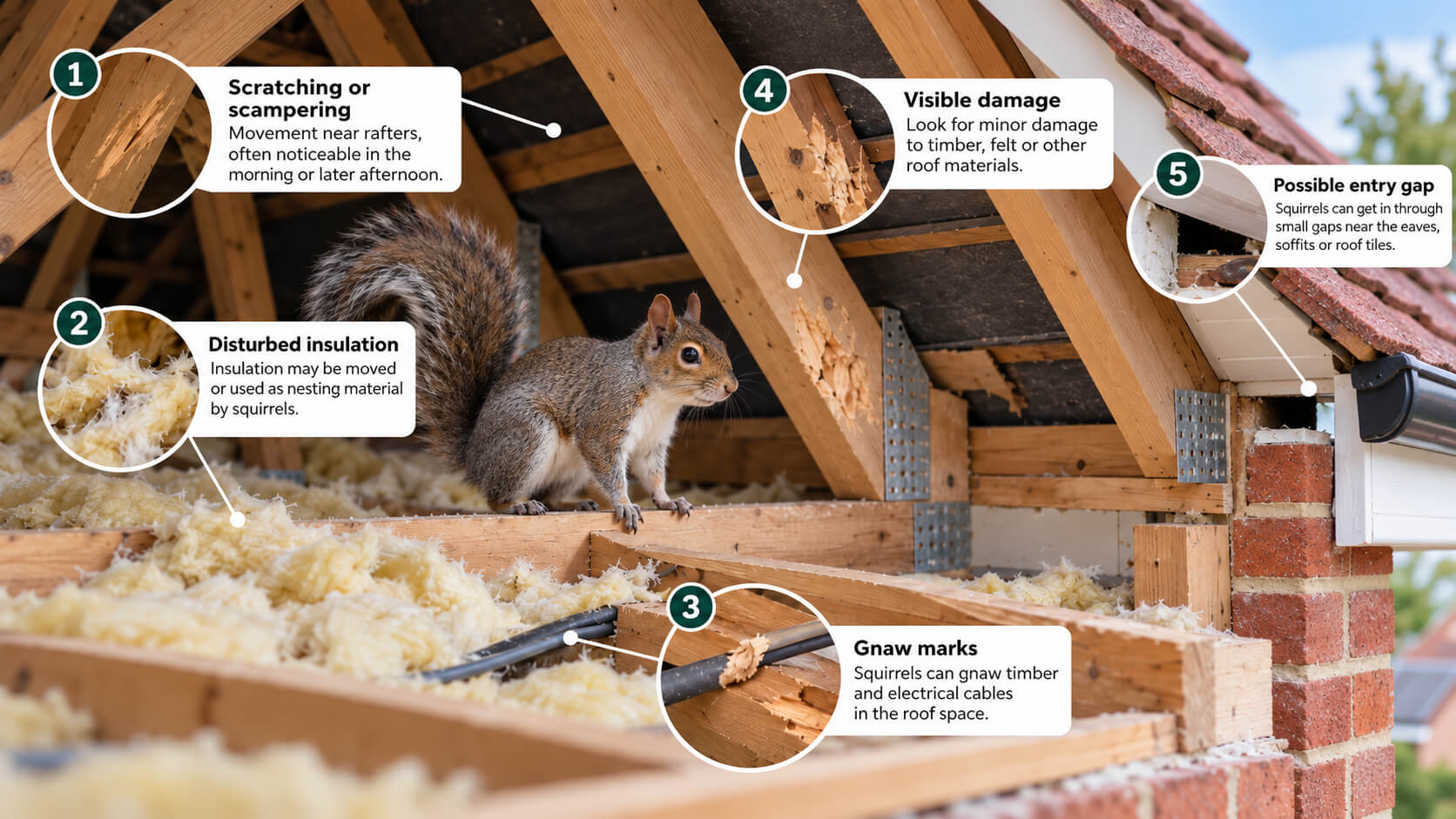
Common signs of squirrels in a loft or attic include scratching or scampering noises, nesting material, gnaw marks and damage around the roof space. One sign on its own may not confirm squirrels, so the location, timing and type of evidence should be considered together.
In UK properties, signs of squirrels in an attic or loft are strongest when several clues appear in the same area. A squirrel in an attic may disturb insulation or stored materials, while a squirrel in a loft may leave fresh gnawing, nesting evidence or repeated sounds near the roofline. Squirrels in roof spaces can also use the same route repeatedly, making recent activity around possible entry points particularly useful.
What Do Squirrels in the Attic Sound Like?
Squirrels in an attic can make scratching, rustling, gnawing and fast scampering sounds. Their movement may sound heavier or more forceful than that of smaller rodents, especially when an animal moves quickly across joists, insulation or other roof-space materials. Attic noises alone, however, are not enough to identify the animal with certainty.
Timing provides another clue. Squirrel noises in a loft may be noticeable during daylight hours, particularly in the early morning or later afternoon, and repeated bursts of movement can occur as animals enter or leave the roof space. If scratching or other attic noise happens mainly overnight, rats or mice should also be considered rather than assuming squirrels are responsible.
Squirrel Nests in Lofts and Attics
A squirrel nest in a loft or attic may be made around soft, disturbed or sheltered material. Torn or moved insulation, disturbed stored material and repeated activity in one part of the roof space can therefore be relevant signs. A squirrel nest in an attic is most useful as evidence when the material appears fresh or is repeatedly disturbed.
Nesting material is not proof on its own because other animals can also use roof spaces, so compare it with noises, gnawing, entry damage and sightings around the same area. If the animal itself has been seen but the species is uncertain, see our guide to red squirrel vs grey squirrel differences in the UK.
Gnaw Marks and Property Damage
Squirrel gnaw marks and damage around a loft are important signs of possible activity. Grey squirrels can damage woodwork and insulation and may gnaw electrical wiring or cables after entering a roof space. Damage caused by squirrels in an attic may therefore include chewed materials, disturbed insulation or fresh marks around roof timbers and likely access areas.
Fresh gnaw marks are more useful when they appear alongside repeated movement, sounds or other recent signs. The pattern and location of the damage can help show whether it is part of wider squirrel activity in the same section of the loft rather than isolated wear or older damage.
Squirrels in Roof Spaces and Entry Points
Squirrels in roof spaces can reach lofts and attics through openings around the roof and may enlarge existing gaps once they find a suitable route inside. A squirrel in a roof space may use gaps around eaves, vents or the roofline, so these vulnerable areas are useful to examine when activity is suspected. External evidence is strongest when it lines up with fresh signs inside the same part of the property.
Where Do Squirrels Enter a Loft?
Squirrels may enter a loft through damaged or enlarged gaps around the roofline, eaves, vents or other openings into the roof space. Repeated movement around the same external point, visible wear around an opening or disturbed material inside the corresponding area can help connect a possible entry route with activity indoors.
Do not treat an opening as confirmed evidence on its own, because a gap may be unused or may be used by another animal. Assess the route alongside noises, nesting material, gnawing and droppings; if pellets are present, our squirrel droppings guide covers identification, size and comparison with rat droppings. A suspected access point should not be sealed until it is clear what animal is using it and whether it is still inside.
Squirrels in the Loft at Night
Hearing squirrels in the loft at night is possible, but night-time movement does not automatically mean squirrels are responsible. Squirrels can be heard in roof spaces, yet their activity is often more noticeable during daylight periods, including early morning and later afternoon. A single late noise is weaker evidence than a repeated pattern that matches other squirrel signs.
Persistent scratching mainly overnight may also point to rats or mice. Noise from squirrels in a loft should therefore be judged together with the timing, strength and pattern of movement, visible damage, nesting material and other physical evidence rather than used as a single identification test.
Rat or Squirrel in the Attic?
It can be difficult to distinguish a rat from a squirrel in the attic from noises alone. Both can scratch, move through roof spaces and gnaw materials, so identification is stronger when several clues agree. The time of activity, type of movement, droppings and location of damage can all provide useful context.
Squirrels may produce louder scampering and are often noticed more during daylight, while rats and mice are commonly active at night. Droppings, damage and entry evidence should still be considered together because no single clue is conclusive. If the evidence points to squirrels and you need professional control rather than identification guidance, check our squirrel pest control options and availability.
Frequently Asked Questions


Squirrels are generally more active during the day, so noises at night do not automatically mean squirrels are present. Activity may also be noticed around dawn or dusk, but persistent overnight scratching can have other causes. Use the timing together with sounds, nesting material, gnawing and other physical evidence.
Squirrels in an attic may make scratching, rustling, gnawing or fast scampering sounds. The movement can sometimes sound heavier than that of smaller rodents, but noises alone cannot confirm squirrels. Look for other signs around the same part of the loft or roof space.
Yes, grey squirrels can use lofts and roof spaces for nesting. They may gather or disturb insulation and other soft materials to create a sheltered nesting area. Piled or moved insulation can therefore be one clue when it appears alongside other signs of squirrel activity.
Yes, squirrels can gnaw electrical wiring when they enter a loft or roof space. They may also damage timber, insulation and stored materials. Chewed cables or fresh gnaw marks should therefore be treated as relevant property evidence rather than relying on noises alone.
Yes, squirrels can cause damage inside an attic or roof space. UK guidance identifies gnawed wiring, damaged woodwork, disturbed insulation and damage around roof areas as possible problems. The type and location of the damage can also help when assessing whether squirrels are responsible.