


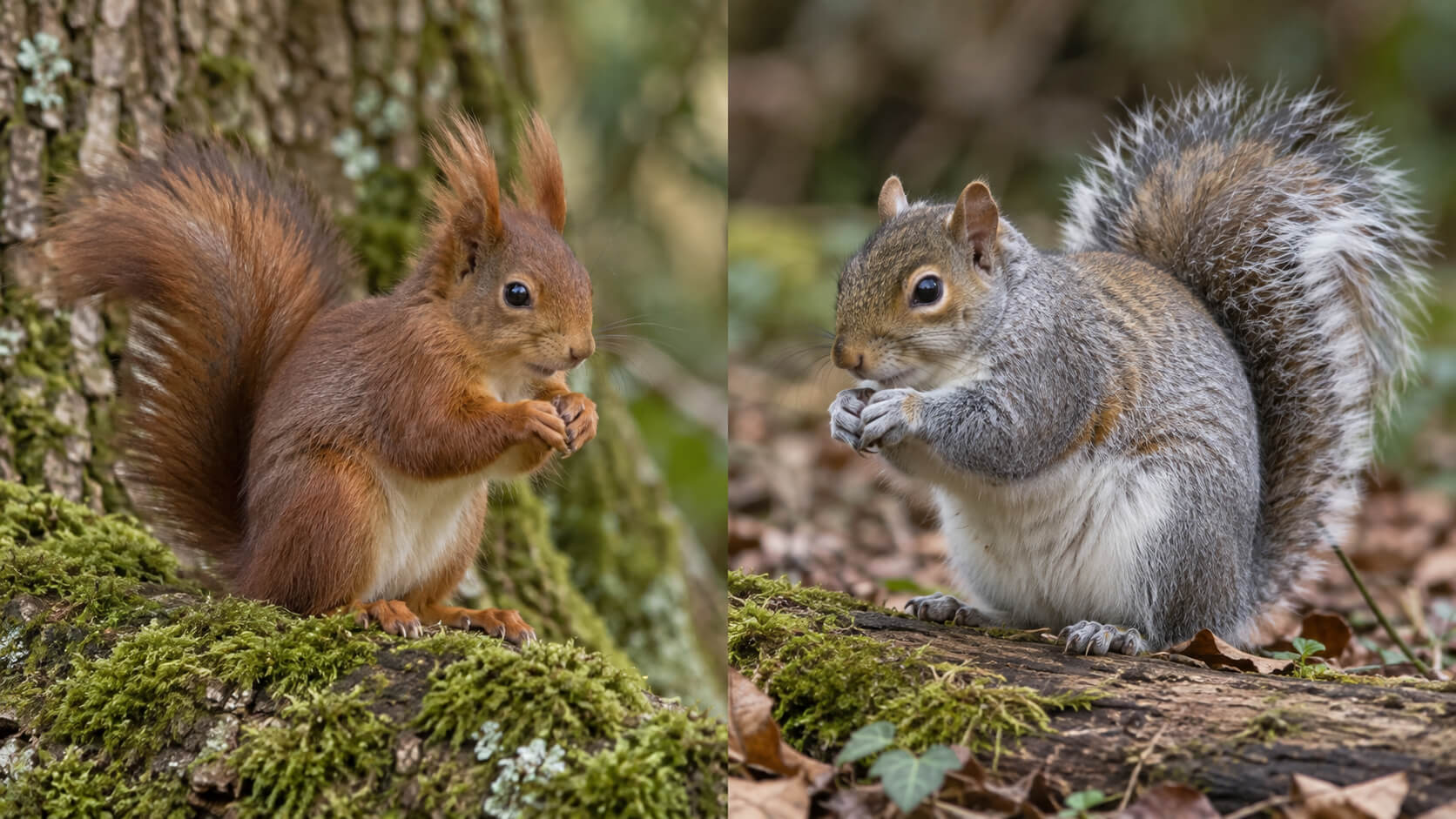
Red and grey squirrels can be told apart by looking at several features together, including body size, coat colour, ear tufts and tail appearance. Colour alone is not always reliable because both species can show some variation.
This guide explains the main differences between red and grey squirrels in the UK and the identification clues that are most useful when trying to tell them apart.
Recently booked jobs



Red Squirrel vs Grey Squirrel: Key Differences
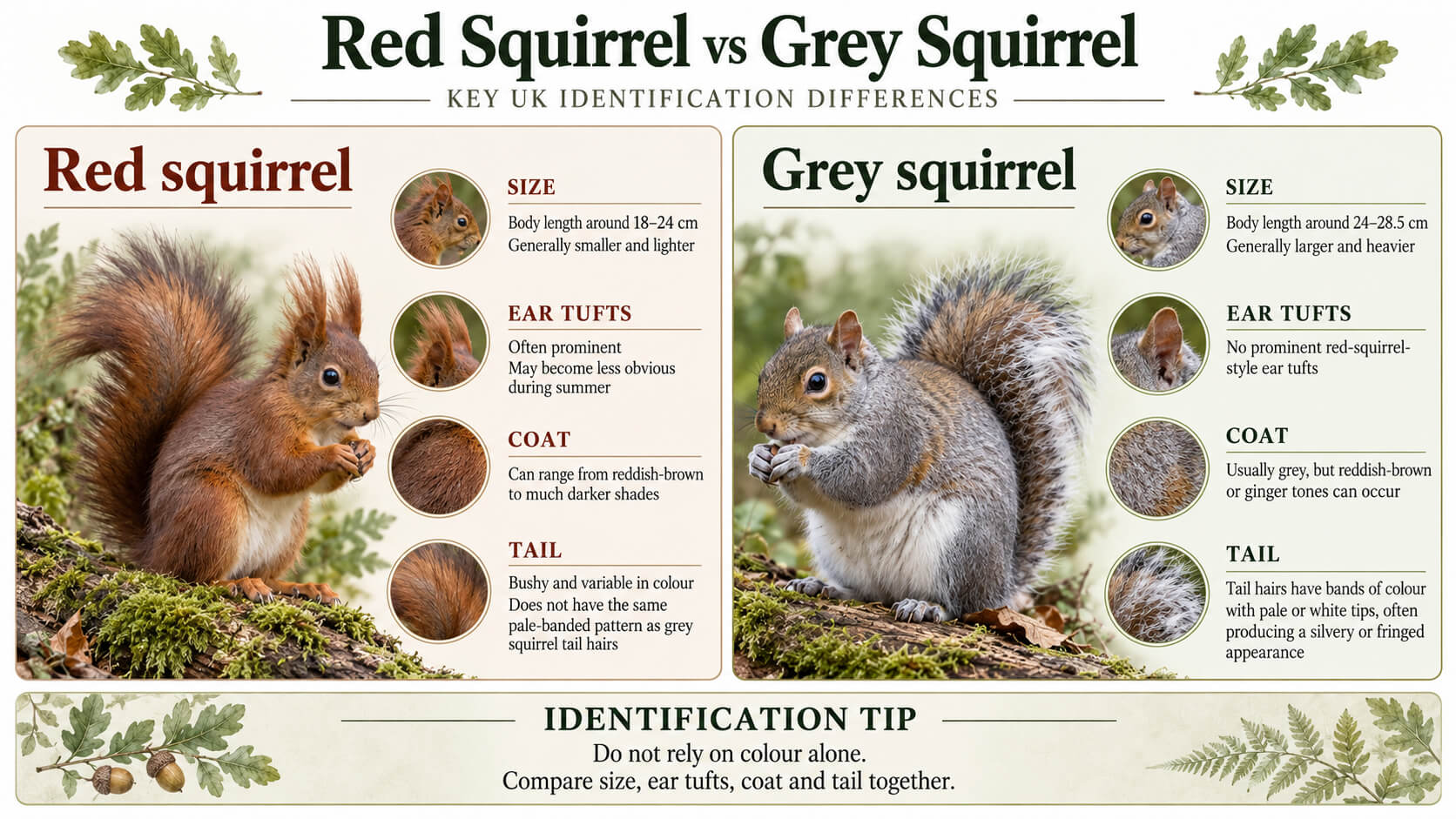
The difference between red and grey squirrels is best judged by comparing size, coat colour, ear tufts and tail appearance together. No single feature is completely reliable on its own, particularly because coat colour can vary, so identification is stronger when several characteristics are considered together.
Red squirrels are generally smaller than grey squirrels and are well known for their ear tufts, while grey squirrels are usually larger and lack prominent ear tufts. Tail pattern and overall body proportions can provide additional clues when colour is unclear.
Red Squirrel vs Grey Squirrel Size
Red squirrels are generally smaller and lighter than grey squirrels. The Wildlife Trusts gives red squirrels a body length of around 18–24 cm, compared with approximately 24–28.5 cm for grey squirrels. Grey squirrels are also typically heavier.
Size can be a useful clue, but it should not be used alone. A young grey squirrel may be similar in size to an adult red squirrel, so body size should be considered together with the ears, tail and coat.
Coat Colour and Colour Variation
Coat colour can help distinguish a red squirrel from a grey squirrel, but colour alone is not always reliable. Red squirrels can range from the familiar rusty or reddish-brown colour to much darker shades, while grey squirrels can sometimes show reddish or ginger tones.
This variation means that a squirrel with some red or brown fur is not automatically a red squirrel. Likewise, a darker-looking red squirrel should not be ruled out simply because its coat does not appear bright red.
Ear Tufts
Prominent ear tufts are one of the most useful features associated with red squirrels. Grey squirrels do not normally have the distinctive tufts seen on reds. However, red squirrels can lose or reduce their ear tufts during the summer moult, so their absence at certain times of year does not automatically indicate a grey squirrel.
For that reason, ear tufts work best as part of a wider identification check rather than as a single deciding feature.
Tail Appearance
The tail can provide another useful difference between red and grey squirrels. Grey squirrel tail hairs have bands of colour with pale or white tips, which can create a silvery or fringed appearance. Red squirrel tails can vary in colour but do not show the same banded hair pattern.
Viewed together with body size and the ears, this can be particularly helpful when coat colour is ambiguous.
Species identification is separate from confirming whether squirrels are using a property. If you have seen activity around the roof or found evidence indoors, check our guide to identifying squirrel activity in a loft or attic.
Grey Squirrel vs Red Squirrel: How to Tell Them Apart in the UK
For a grey squirrel vs red squirrel comparison in the UK, the most reliable approach is to use several visible features together rather than relying on coat colour alone. Compare overall size, ear tufts and tail appearance first, then use coat colour as supporting evidence rather than as the deciding feature.
A red-looking squirrel is not necessarily a red squirrel because grey squirrels can have reddish-brown areas in their coat. Red squirrels can also vary from rusty or reddish shades to darker brown, greyish or almost black colouring, while lighting, distance and seasonal changes can affect how these features appear.
Use Several Identification Features Together
Identification is strongest when several characteristics point towards the same species. A smaller squirrel with characteristic ear tufts and a tail without the grey squirrel's pale-banded appearance is more consistent with a red squirrel, while a larger animal without prominent ear tufts and with a silver-grey, pale-fringed tail is more consistent with a grey squirrel.
Be cautious when only one characteristic is visible. Young animals, seasonal moulting and natural coat variation can make individual squirrels less typical than expected, so one feature should not be treated as definitive on its own.
Frequently Asked Questions


Yes, grey squirrels can sometimes show reddish-brown or ginger tones in their coat. This is why colour alone is not a reliable way to distinguish a grey squirrel from a red squirrel. Size, ear tufts and tail appearance should also be considered.
Yes, red squirrel coat colour can vary considerably. Some individuals may appear dark brown, greyish or almost black rather than bright red, so identification should not depend only on the colour of the fur.
No, prominent ear tufts are not always visible throughout the year. Red squirrels can lose or reduce their ear tufts during seasonal moulting, which means their absence does not automatically indicate that the animal is a grey squirrel.
Red squirrels are generally smaller and lighter than grey squirrels. UK wildlife guidance gives red squirrels a shorter body length overall, although young grey squirrels can sometimes make size alone less reliable for identification.
The most reliable approach is to compare several features together. Look at body size, ear tufts, tail pattern and coat variation rather than relying on one feature. A brief glimpse or colour alone can easily lead to misidentification.