


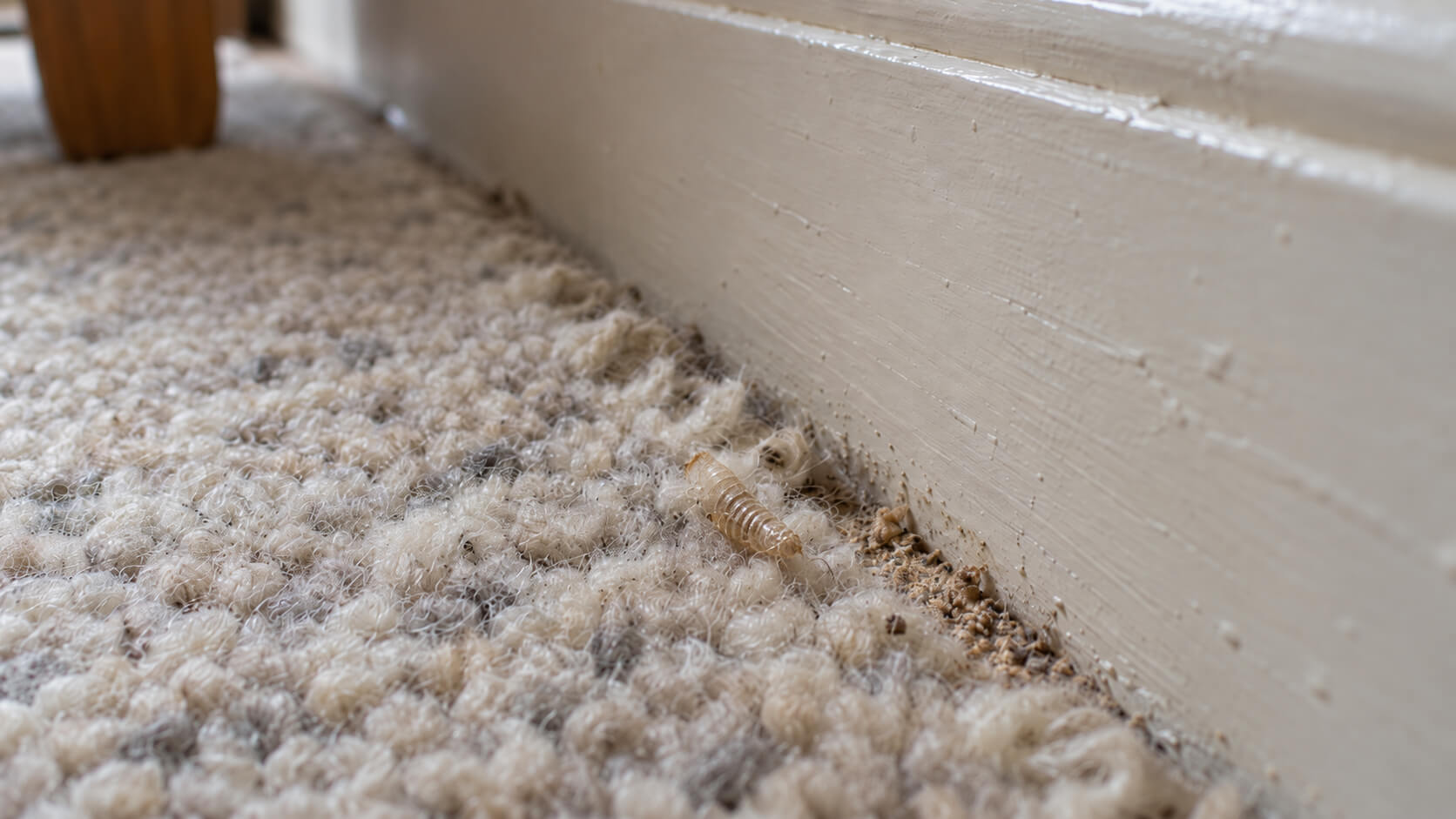
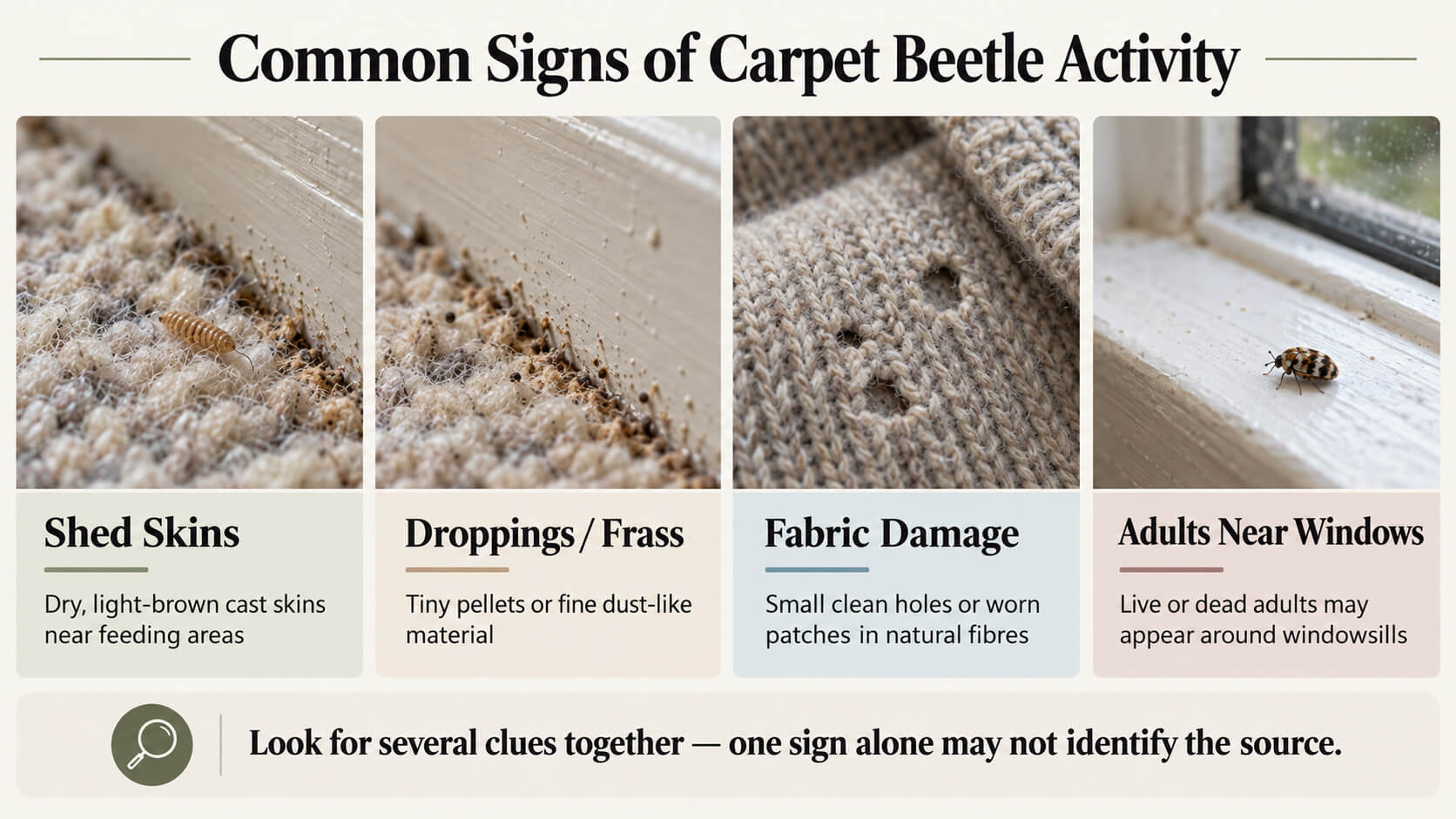
Signs of carpet beetles may include shed skins, powdery droppings or frass, damage to natural-fibre materials and repeated adult sightings near windows.
Looking at several clues together is more useful than relying on a single sighting. This guide explains the evidence to look for, where it may appear indoors and when repeated signs may suggest ongoing activity.
Recently booked jobs


Recognising Signs of Carpet Beetles
Signs of carpet beetles are most reliable when several types of evidence appear together. Shed skins, droppings or frass, damage to natural-fibre materials and repeated adult sightings can all point to activity, but one clue on its own may not show where the source is.
Early evidence is often easier to find in quiet, less-disturbed areas than in the middle of a room. Checking the type of evidence and where it appears helps separate a chance adult sighting from signs of developing activity indoors.
Early Signs of Carpet Beetles
Early signs of carpet beetles may include a shed skin, a small patch of fabric damage or repeated adults appearing near a window. The first clue is not always the beetle itself, because the damaging stage can remain hidden close to suitable food material.
A single clue should be treated as a reason to look for supporting evidence rather than as proof on its own. Repeated signs in the same part of a property are more informative than one isolated observation.
Carpet Beetle Shed Skins and Casings
Shed skins are a useful sign because developing carpet beetles moult as they grow. The empty skins can look dry, light brown or translucent and may be described as casings or small shell-like remains.
They are usually found close to places where the immature stage has been active rather than where an adult beetle happens to land. For detailed identification of the immature stage itself, see our guide to carpet beetle larvae.
Carpet Beetle Droppings and Frass
Carpet beetle droppings, also called frass, can appear around feeding areas as tiny pellets or powdery, dust-like material. What people describe as carpet beetle poop is therefore more useful when it is found alongside shed skins or material damage.
Frass should not be used as a species identifier by itself. Its position in relation to affected fabrics or other organic material provides more useful context than colour or texture alone.
Carpet Beetle Damage and Where to Look
Carpet beetle damage is caused by the immature stage feeding on suitable animal-based materials. Evidence may appear on wool, fur, feathers, silk, skins and other natural materials, especially where items remain undisturbed.
The visible damage can help locate activity, but it should be assessed with nearby skins, droppings and adult sightings rather than treated as a standalone identification clue.
Damage to Clothes, Carpets and Fabrics
Damage may appear as small clean holes, thinning or bare patches in natural-fibre clothing, carpets, rugs or upholstery. The pattern can vary with the material and where feeding has taken place.
Check seams, edges, folds and less-disturbed sections as well as the most obvious damaged area. Finding cast skins or frass close to the damage makes the evidence more useful.
Adult Carpet Beetles on Windowsills
Adult carpet beetles are often noticed on or near windows because they are attracted to light and may be trying to move outside. Live or dead adults around a windowsill can therefore be one clue, but the breeding source may be elsewhere in the property.
If you need to confirm the adult appearance, common species or general household context, use our guide to carpet beetles in UK homes.
Where Signs May Appear Indoors
Signs can occur in quiet areas where suitable material and organic debris collect. Carpet edges, spaces behind skirting boards, gaps between floorboards, wardrobes, upholstered furniture and other undisturbed areas can all be relevant places to check.
Evidence in several nearby locations may indicate a wider source area, while one adult at a window does not necessarily identify the place where feeding has occurred.
When Signs Suggest a Carpet Beetle Infestation
A carpet beetle infestation is better judged from repeated or combined evidence than from a single beetle count. Damage, cast skins, frass and recurring adults together provide a stronger picture of ongoing activity.
The aim is to establish whether the evidence is isolated or whether it keeps appearing in places where suitable materials are present.
How Many Carpet Beetles Is an Infestation?
There is no reliable fixed number of carpet beetles that automatically defines an infestation. One adult may have entered from outdoors, while repeated adults together with skins, droppings or damage provide more meaningful evidence.
Instead of relying on a number alone, compare how often beetles appear, whether fresh evidence is being found and whether signs are concentrated around suitable materials.
Signs That Activity May Be Ongoing
Fresh damage, newly found shed skins, recurring frass or repeated adult sightings can suggest that activity is continuing. Evidence that appears again after an earlier check is more significant than an old isolated skin or damaged item with no further signs.
Recording where each clue is found can help show whether the evidence is concentrated in one area or appearing across several parts of the home.
Frequently Asked Questions


Look for more than one type of evidence rather than relying on a single beetle. Shed skins, droppings or frass, damage to natural-fibre materials and repeated adult sightings can together provide a stronger indication of carpet beetle activity, especially when several clues occur in the same area.
No, finding one adult carpet beetle does not by itself confirm an infestation. An adult may have entered from outdoors or moved from another part of the property. Repeated sightings together with fresh damage, shed skins or frass provide more meaningful evidence of ongoing activity.
Carpet beetle damage can appear as small, clean holes or worn patches in suitable natural-fibre materials. Unlike clothes-moth damage, the holes are not normally accompanied by silk webbing. Nearby cast skins or powdery droppings can provide additional evidence that carpet beetles are involved.
Adult carpet beetles are often found on windowsills because they are attracted to light and may be trying to move outside. Their presence at a window does not necessarily mean the source is nearby, so other areas of the home should be considered when looking for supporting evidence.