


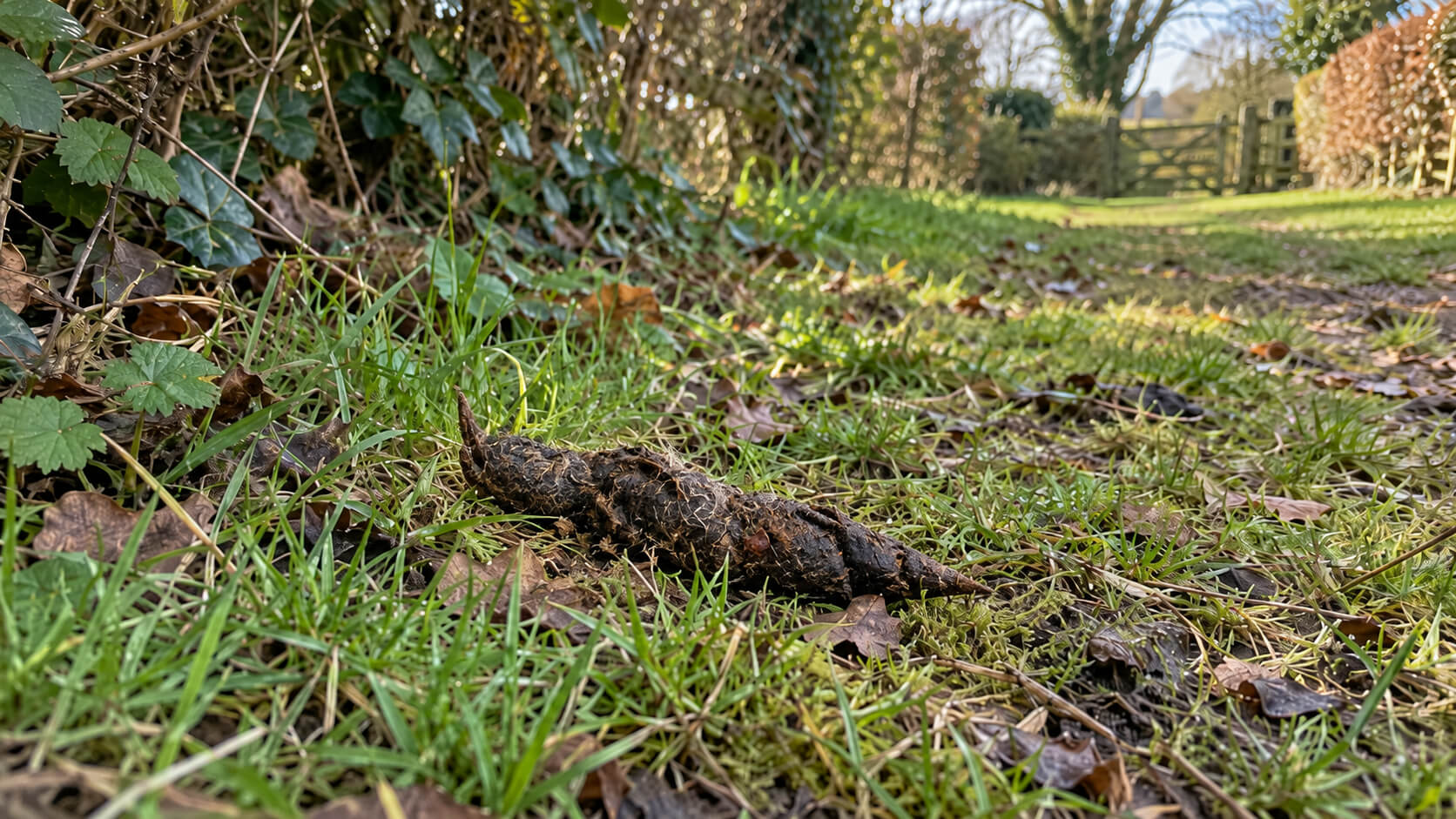
Fox poo is usually dark, twisted and tapered at one end, with a strong musky smell and visible remains from the fox's diet. Typical droppings may contain fur, small bone fragments, fruit pips, seeds or insect remains, although appearance varies with what the animal has eaten.
This guide explains how to identify fox droppings in the UK, including size, colour, smell, garden sightings and comparison with dog and cat poo.
Recently booked jobs


What Does Fox Poo Look Like?
Fox poo in the UK is usually elongated, twisted and tapered at one end. Fresh droppings are often dark brown, black or grey and may contain visible food remains.
Fox Poo Pictures: What Size and Shape Is Typical?
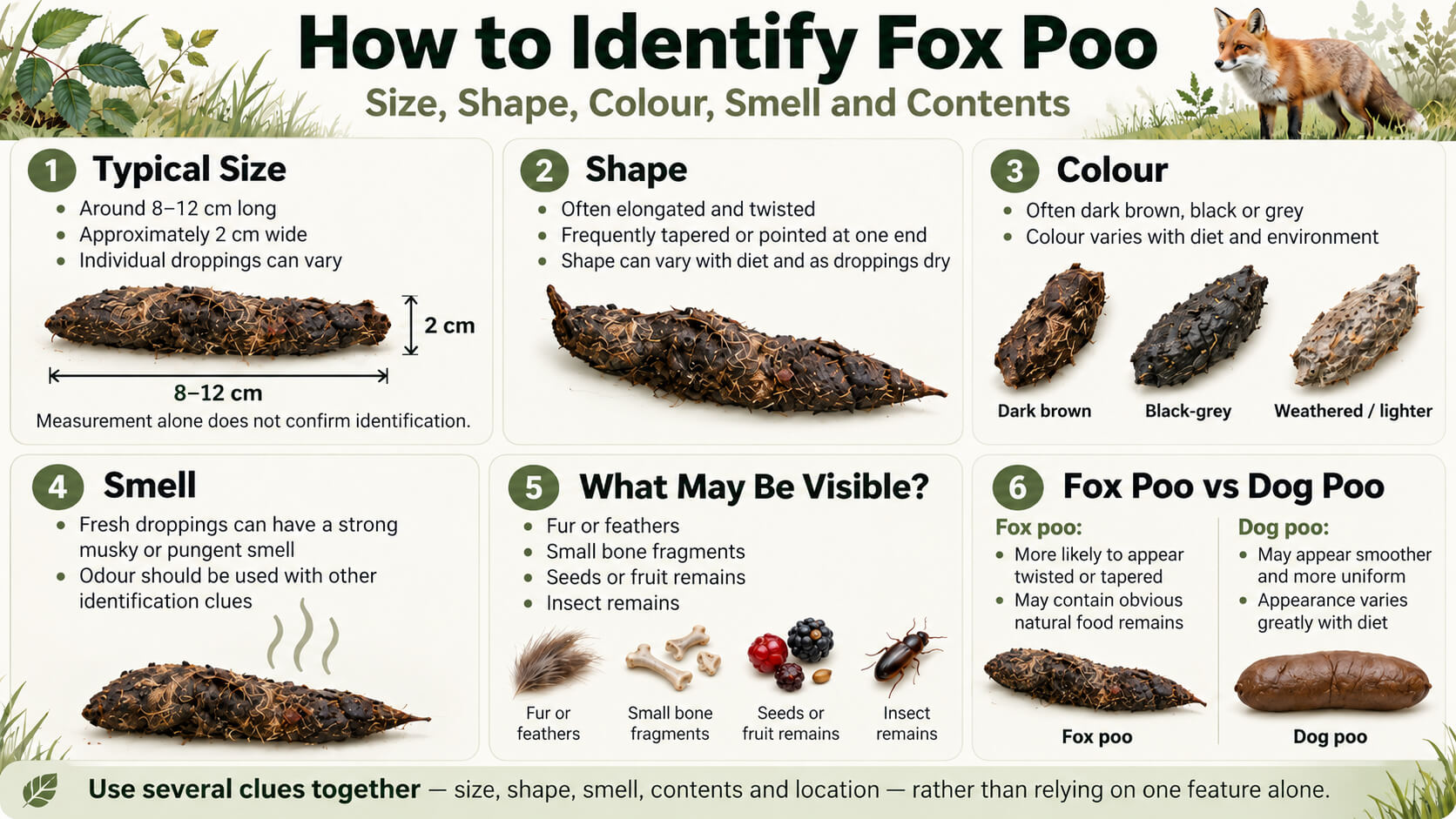
Typical fox droppings measure around 8–12 cm long and about 2 cm wide. Size varies between animals and deposits, so measurements should be treated as identification clues rather than an exact test.
The twisted shape and tapering end are useful features. Fox poo pictures and other fox poo images can help with comparison, but pictures of fox poo should be checked against size, smell, contents and location. UK fox poo images are useful when several clues agree.
What Colour Is Fox Poo?
Fox poo can be brown, black or grey, and the colour may change depending on diet and environment. Droppings may contain fur, feathers, small bone fragments, fruit pips, seeds or insect remains.
Fox poo can be black, but colour alone is not diagnostic. Diet affects appearance, so urban and rural droppings may differ. Our guide to fox feeding and diet explains how prey, fruit, invertebrates and scavenged food shape the red fox diet.
What Does Fox Poo Smell Like?
Fresh fox poo has a strong, distinctive musky or pungent smell. Fox poo smell can help identification when combined with shape and contents, but odour alone should not identify the animal.
As droppings dry, smell becomes less useful for identification, so it should be considered alongside other features.
Fox Poo in the Garden
Fox poo in a garden shows that a fox has used the area. Droppings may appear on lawns, paths or near vegetation.
Where Fox Droppings May Be Found
Fox droppings may be found in gardens, parks and urban spaces. A single dropping shows a visit but does not mean the fox lives or dens there.
Tracks or repeated sightings can strengthen identification.
Using Fox Droppings as an Identification Clue
Fox poo identification is strongest when several characteristics point to the same animal. Look at size, shape, colour, smell and visible food remains rather than relying on one feature.
For fox droppings identification, combine the dropping with nearby tracks, repeated sightings and location. These signs can help distinguish fox poo from dog or cat faeces.
Is Fox Poo Dangerous?
Fox poo should be treated as animal waste and avoided with bare hands. Toxocariasis is rare, but basic hygiene around animal faeces and contaminated soil is sensible.
Is Fox Poo Dangerous to Humans?
Direct contact with fox poo is best avoided. The NHS notes that some fox faeces can contain Toxocara worm eggs, although toxocariasis is usually acquired from contaminated soil or sand rather than fresh poo.
Inspect droppings visually and wash hands after contact with potentially contaminated soil. Children should not handle wildlife faeces.
Is Fox Poo Dangerous to Dogs?
Dogs should be discouraged from eating fox poo or other animal faeces.
If a dog eats fox poo and becomes unwell, contact a vet for advice rather than trying to diagnose the cause yourself.
Fox Poo vs Other Animal Droppings
Fox poo can resemble droppings from other animals, particularly dogs, so comparison should use several features. A twisted shape, tapered end, smell and food remains are useful fox identification clues. For broader context on habitat and urban behaviour, see our guide to fox activity in the UK.
Fox Poo vs Dog Poo
Fox and dog droppings can look similar, but fox poo is often more twisted and tapered and may contain fur, bone, seeds or insect remains. Dog poo varies with diet, so no single feature provides absolute identification.
If you are deciding between fox poo or dog poo, location provides useful context. Fox poo can look like dog poo, so tracks and repeated sightings may support identification more strongly than appearance alone.
Cat Poo vs Fox Poo
Fox poo is usually more twisted and more variable in content than healthy domestic cat poo. Domestic cat poo is typically smoother and more segmented, while fox droppings may show a tapered end and visible remains of prey, fruit or insects.
For a cat or fox poo comparison, surrounding evidence matters. Tracks, repeated fox sightings and location can help distinguish wildlife signs from those left by domestic animals.
Frequently Asked Questions


Fox poo can be brown, black or grey, and colour varies with diet and location. Rural and urban foxes may eat different foods, so colour alone is not reliable for identification. Shape, smell, size and visible contents should also be considered.
Fox poo is typically around 8–12 cm long and approximately 2 cm wide. Individual droppings can be smaller or larger, so size should be combined with features such as a twisted shape, tapered end and characteristic smell.
Fresh fox poo usually has a strong musky or pungent smell. The odour can help distinguish fox droppings from some other animal faeces, but smell should always be considered alongside shape, size and contents.
Fox poo is often more twisted and tapered than dog poo and may contain fur, bone fragments, fruit pips, seeds or insect remains. Because both can vary with diet, several features should be compared rather than relying on appearance alone.
Animal droppings should not be handled directly simply for identification. Examine features such as size, shape, colour and contents without bare-hand contact, and wash hands after contact with potentially contaminated soil.