


Water Hammer and Banging Pipes Explained
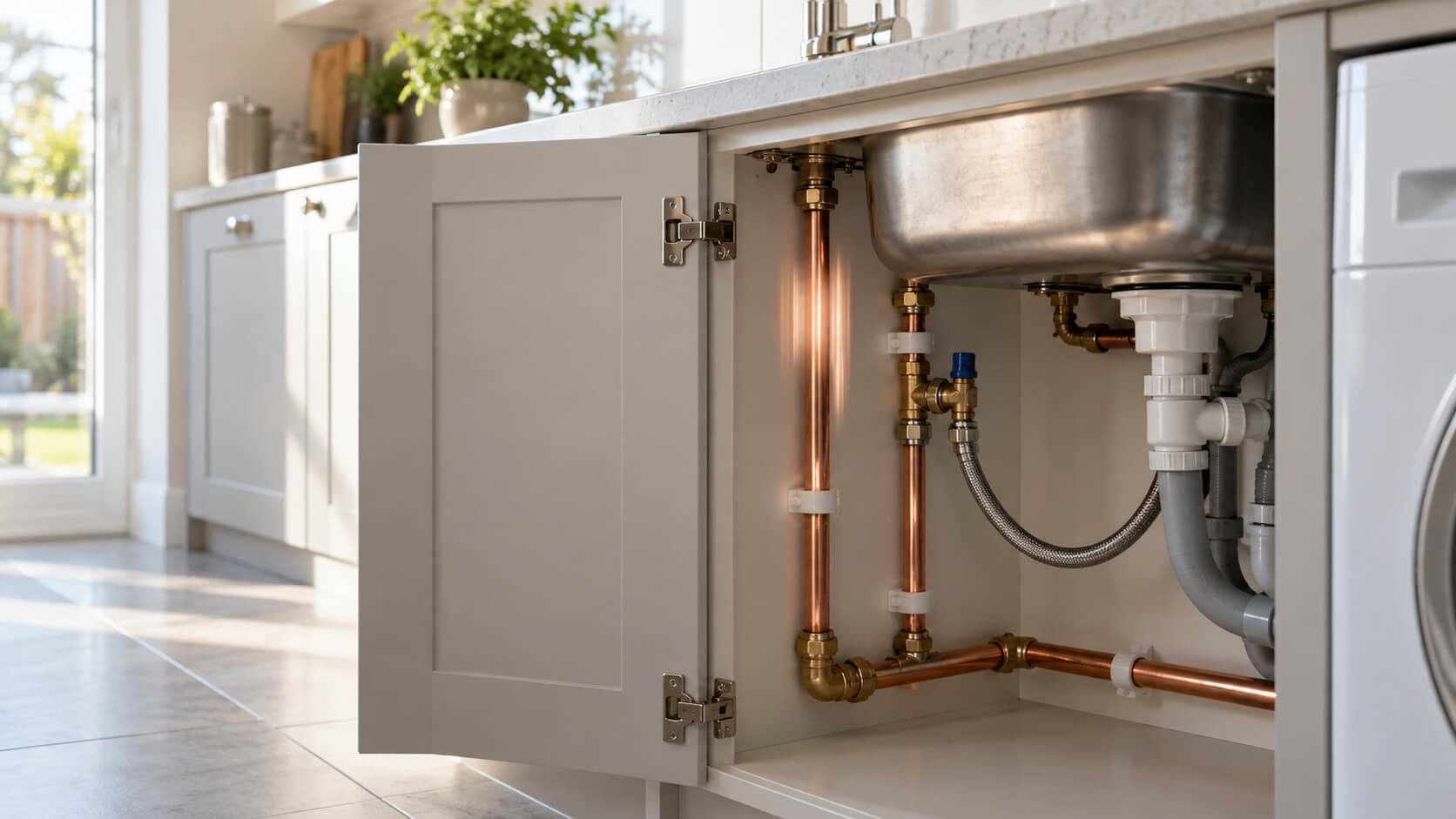
Water hammer and banging pipes are usually caused by a sudden change in water flow that creates a pressure shock inside the pipework. The noise often happens when a tap, valve or appliance stops the flow quickly, although loose pipework can make the banging sound more noticeable.
This guide explains what water hammer sounds like, the common causes in household plumbing and the safe checks that can help identify what is triggering the noise before further repair is considered.
Water Hammer and Banging Pipe Checks
- Notice whether the banging happens when a tap, valve or appliance stops the water flow
- Check whether the noise comes from one fixture or can be heard through several parts of the pipework
- Look for pipe movement or vibration where accessible without removing panels or forcing fittings
- Note whether washing machines, toilets or fast-closing taps appear to trigger the banging
- Use the booking form to describe when the noise happens and which fixture seems to trigger it


Who will come to my home?
A certified local plumber from our vetted network, on the day and time you choose. You get a confirmation by email as soon as you book.
Are the parts included?
Small parts like washers, seals, valves and flush mechanisms are always included: the plumber brings the right one. For things you choose, like taps, toilets or radiators, you can supply your own or the plumber brings a standard one, as shown on your quote.
What if the plumber finds something else?
The fixed price covers the work on your quote. If the plumber finds something different on site, they explain it and quote it before starting, and you decide whether to go ahead.
What does the call-out fee cover?
When a fault needs to be found first, the plumber diagnoses it at your property and repairs what they can on the spot, with up to 1 hour of work included.
Do I pay now?
No. You see the price, then pick a date and time. Payment is only confirmed at checkout, and cancellation is free.

Recently booked jobs


What Is Water Hammer and Why Do Pipes Bang?
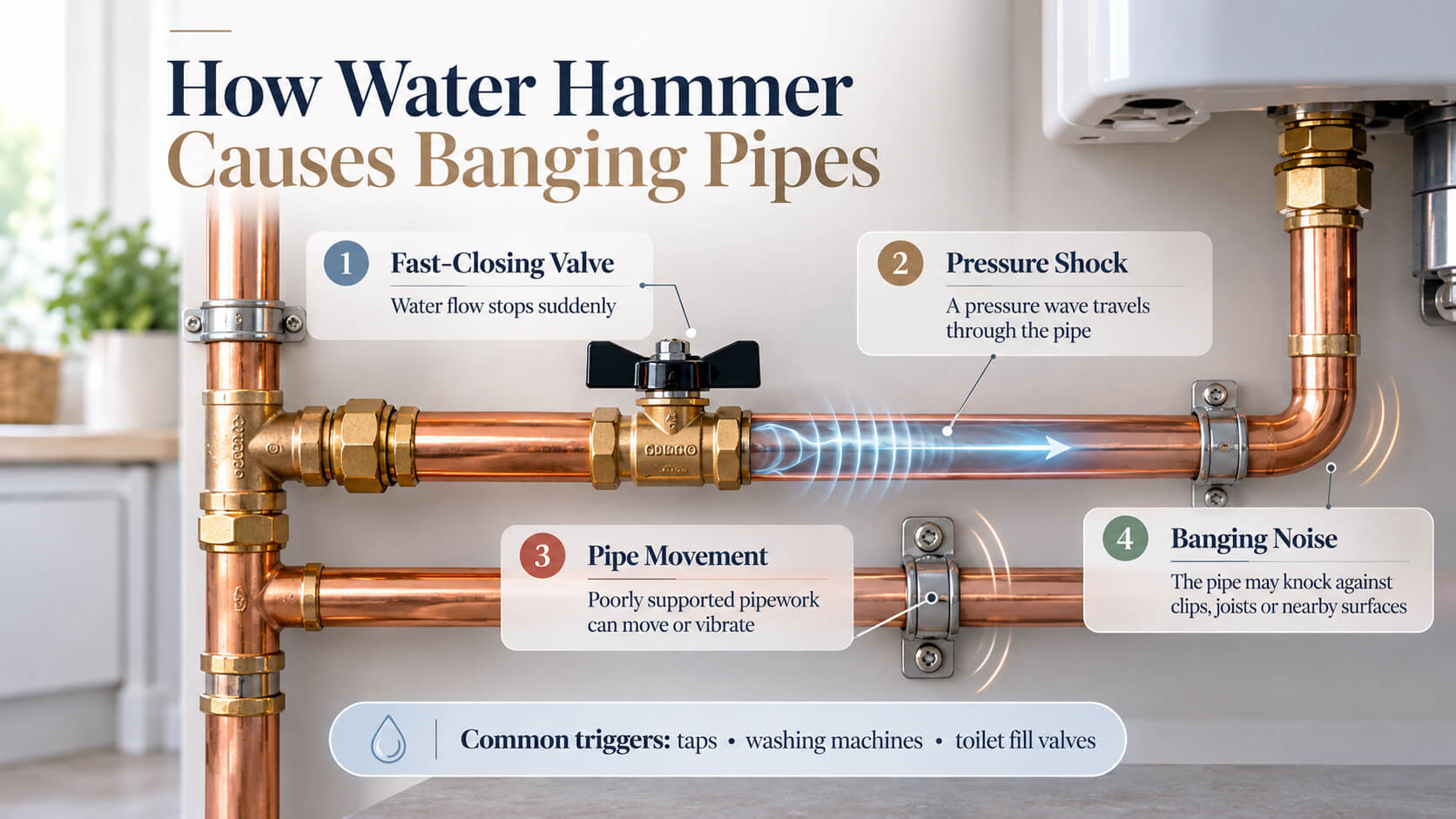
Water hammer is a pressure shock that can occur when moving water is forced to stop or change direction suddenly inside the pipework. The change in pressure can make pipes vibrate or move against clips, joists or nearby surfaces, creating the characteristic banging or knocking noise.
The sound is commonly noticed when a tap is closed quickly or when a valve inside an appliance or toilet shuts off the flow. Not every noise from plumbing pipes is water hammer, so the timing of the bang and what triggers it are important parts of identifying the cause.
What Does Water Hammer Sound Like?
Water hammer usually sounds like a sudden bang, knock or thud in the pipework immediately after the water flow changes. In some homes there may be one sharp impact, while in others the pipework can shake or produce several knocks as the pressure movement travels through the system.
A continuous ticking, gurgling or noise linked to a heating system may have a different cause. Genuine water hammer is more closely associated with a rapid change in water flow, particularly when a tap, fill valve or appliance valve opens or closes.
Why Do Pipes Bang When Water Is Turned Off?
Pipes often bang when water is turned off because the moving water is stopped quickly and its momentum creates a pressure wave inside the pipe. The faster the change in flow, the more noticeable the resulting shock can become in some plumbing systems.
The noise may seem to come from a different place from the tap or valve that triggered it because the pressure wave can travel through connected pipework. Identifying exactly which fixture causes the bang is therefore more useful than relying only on where the sound appears loudest.
What Causes Water Hammer in House Pipes?
Common causes of water hammer include fast-closing valves, sudden changes in water flow and pipework that is able to move when the pressure changes. Washing machines, toilet fill valves, quarter-turn taps and other fittings that interrupt the flow quickly can all reveal or worsen an existing water-hammer problem.
The cause should be diagnosed before parts are replaced. A banging noise triggered consistently by one fixture suggests a different starting point from noise affecting several fixtures, while pipe movement can make a relatively small hydraulic shock sound much more severe.
Taps, Valves and Appliances That Stop Water Flow Quickly
A fast-closing tap, valve or appliance can trigger water hammer by stopping the flow more abruptly than the pipework can absorb comfortably. Solenoid valves inside washing machines are a common example because they can close very quickly at different points during a cycle.
Toilet fill valves and some modern taps can produce a similar effect when they shut off. If the banging repeatedly happens at the same moment that one fixture stops taking water, that timing is a useful clue when tracing the source.
Can Loose Pipework Make the Banging Sound Worse?
Pipework that is poorly supported can make water hammer sound louder because the pressure shock allows the pipe to move against nearby surfaces. The hydraulic pressure change and the physical movement are separate issues, but they can occur together and make the noise more noticeable.
Where pipework is safely visible, movement may sometimes be seen or felt when the triggering fixture is operated. Do not remove fixed panels, flooring or other building materials simply to search for a moving pipe unless there is a clear reason to investigate further.
| When the Banging Happens | Useful Starting Point |
|---|---|
| Immediately after a tap is turned off | A sudden stop in water flow may be creating a pressure shock |
| When a washing machine changes cycle | A fast-closing appliance valve may be triggering the water hammer |
| As a toilet cistern finishes filling | The fill valve may be closing quickly and creating a pressure change |
| When water is first turned on | Check whether pipe movement or a sudden flow change is contributing to the noise |
| At several fixtures around the property | The cause may need to be traced through the wider cold-water pipework |
How to Stop Water Hammer Safely
To stop water hammer, first identify which fixture or valve triggers the pressure shock before changing or replacing any plumbing components. Operating the suspected fixture several times can help confirm whether the noise occurs consistently when the water starts or stops.
Accessible pipework can also be checked for obvious movement or inadequate support, but fittings should not be tightened, dismantled or altered while the system is under pressure unless the water has been isolated correctly and the work can be carried out safely.
Safe Checks Before Trying to Fix Water Hammer
Start by noting when the banging happens, which fixture is being used and whether the noise occurs as the water starts or stops. Compare different taps and appliances rather than assuming the loudest part of the pipework is where the fault originates.
If a plumbing component needs to be opened or adjusted, the relevant water supply should be isolated first. Where the main incoming supply must be shut off, our guide to finding and using your stopcock explains how the internal stop tap is identified and operated.
When Can a Water Hammer Arrestor Help?
A water hammer arrestor can help absorb a sudden pressure change when the cause is a fast-closing valve or appliance. It is normally positioned close to the source of the hydraulic shock so that the pressure pulse can be cushioned before it travels further through the pipework.
An arrestor is not a universal fix for every banging pipe. If the actual problem is loose pipework, an unsuitable valve, excessive movement or a noise unrelated to water hammer, fitting an arrestor without identifying the cause may not solve the problem.
When Does Water Hammer Need Professional Attention?
Water hammer may need professional attention when the banging is severe, affects several parts of the property or continues after the triggering fixture has been identified and basic checks have been made. Investigation may also be appropriate if pipework is moving noticeably or the source cannot be accessed safely.
Repeated banging should not automatically be treated as water hammer if it happens independently of taps, valves or appliances. Noise associated with central heating, radiators, boilers or drainage can have a different cause and should be diagnosed within the relevant system rather than treated as a hydraulic-shock problem.
- The banging is strong enough to make accessible pipes move visibly
- Several taps or appliances appear to trigger the same problem
- The source of the pressure shock cannot be identified confidently
- The suspected valve or fitting cannot be accessed safely
- The noise continues after obvious loose pipework has been checked
- You are unsure whether the noise is actually water hammer
Frequently Asked Questions About Water Hammer


Water hammer is not usually an immediate danger to people, but repeated strong pressure shocks should not be ignored. Persistent banging can place unnecessary stress on pipework, joints, valves and fittings, especially when the movement is severe or the pipes are poorly supported.
Repeated or severe water hammer can contribute to wear and stress in pipes, joints and plumbing fittings over time. The risk depends on the strength and frequency of the pressure shock, the condition of the pipework and how securely the pipes are supported.
Water hammer may become less noticeable at times, but the underlying trigger does not necessarily disappear on its own. If a fast-closing valve, moving pipe or another plumbing component is causing the pressure shock, the banging can return whenever the same conditions occur.
If banging occurs when no tap is being used, first check whether a toilet, washing machine or another valve-controlled fixture has recently started or stopped taking water. If there is no clear change in water flow, the noise may have another cause and should not automatically be assumed to be water hammer.