


What Is a Stopcock? A UK Homeowner Guide
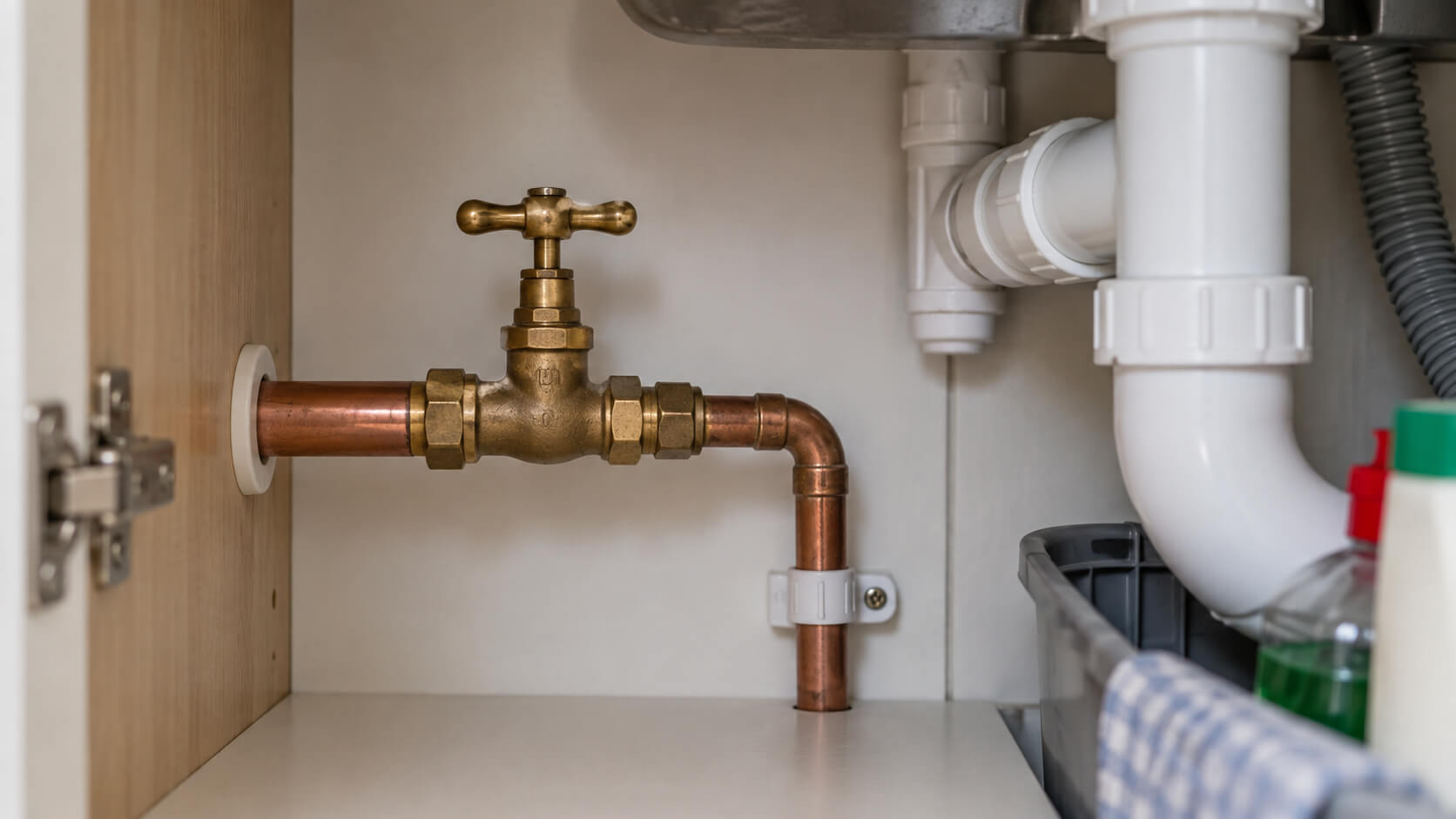
A stopcock is the main internal valve used to control the mains water supply entering a property. Knowing where it is and how it operates lets you isolate the incoming supply before plumbing work or when water needs to be shut off quickly.
This guide explains how to identify a stopcock, where it is commonly found in UK houses and flats, and how to close and reopen it safely.
Before You Need to Use Your Stopcock
- Find the internal stopcock before you need to isolate the water supply
- Keep the area around the valve clear and accessible
- Confirm you have identified the main property valve rather than a local isolation valve
- Operate the valve slowly and avoid using excessive force
- Check a cold tap after closing the valve to confirm the incoming supply has been isolated


Who will come to my home?
A certified local plumber from our vetted network, on the day and time you choose. You get a confirmation by email as soon as you book.
Are the parts included?
Small parts like washers, seals, valves and flush mechanisms are always included: the plumber brings the right one. For things you choose, like taps, toilets or radiators, you can supply your own or the plumber brings a standard one, as shown on your quote.
What if the plumber finds something else?
The fixed price covers the work on your quote. If the plumber finds something different on site, they explain it and quote it before starting, and you decide whether to go ahead.
What does the call-out fee cover?
When a fault needs to be found first, the plumber diagnoses it at your property and repairs what they can on the spot, with up to 1 hour of work included.
Do I pay now?
No. You see the price, then pick a date and time. Payment is only confirmed at checkout, and cancellation is free.

Recently booked jobs


What Is a Stopcock and What Does It Do?
A stopcock is a valve that controls the incoming mains water supply to a property. Closing it isolates the incoming supply so water entering the home's internal plumbing can be stopped when necessary.
The main internal stopcock is normally fitted on the incoming cold-water supply pipe. It is different from smaller isolation valves used to control an individual tap, toilet, appliance or short section of pipework.
Is a Stopcock the Same as a Stop Tap or Stop Valve?
Stopcock and stop tap are commonly used for the same type of household water-control valve. UK water companies may also use terms such as inside stop valve or internal stop tap when referring to the valve controlling the incoming supply inside a property.
The term stop valve can have a broader meaning because valves are used in different parts of a plumbing system. The position of the valve and the pipe it controls are therefore more useful for identification than the name alone.
What Does a Stopcock Look Like?
A traditional stopcock is usually a manually operated valve fitted directly into a water pipe. It commonly has a metal valve body with a handle or head that can be turned by hand, although its exact shape and appearance can vary with the age and type of installation.
Do not assume that every valve under a sink is the property's main stopcock. Smaller valves can serve individual fixtures or appliances, while the main internal stopcock is associated with the incoming water supply to the property.
Where Is My Stopcock?
The internal stopcock is usually positioned close to the point where the mains water pipe enters the property. In many UK homes, the first place to check is under the kitchen sink, although the exact position depends on the building and how the incoming supply has been routed.
Finding the stopcock before it is urgently needed also allows you to keep the valve accessible. Avoid permanently blocking access with stored items, fixed panels or furniture.
Common Stopcock Locations in Houses and Flats
Under the kitchen sink is a common location, but an internal stop tap can be installed elsewhere. Other likely positions are areas close to the incoming water pipe or existing ground-floor plumbing.
Flats can differ because the supply may pass through a shared service area or riser before entering the individual property. The internal valve you identify should control the supply serving your own property rather than a shared supply for neighbouring homes.
- Under the kitchen sink
- Inside a kitchen or utility cupboard
- Under the stairs
- In a downstairs bathroom or toilet area
- In an airing or service cupboard
- In a garage or cellar near the incoming supply
What Should You Check If You Cannot Find the Internal Stopcock?
If the stopcock is not in an obvious position, trace the incoming cold-water supply where it is safely accessible. Check cupboards and service areas close to the kitchen, front of the building or other places where the mains pipe may enter the property.
An external stop valve may also exist outside the property, but it should not automatically be treated as the same thing as your internal stopcock. External valves can serve a different part of the supply and may involve water-company or shared-supply arrangements.
How to Turn a Stopcock Off and Back On
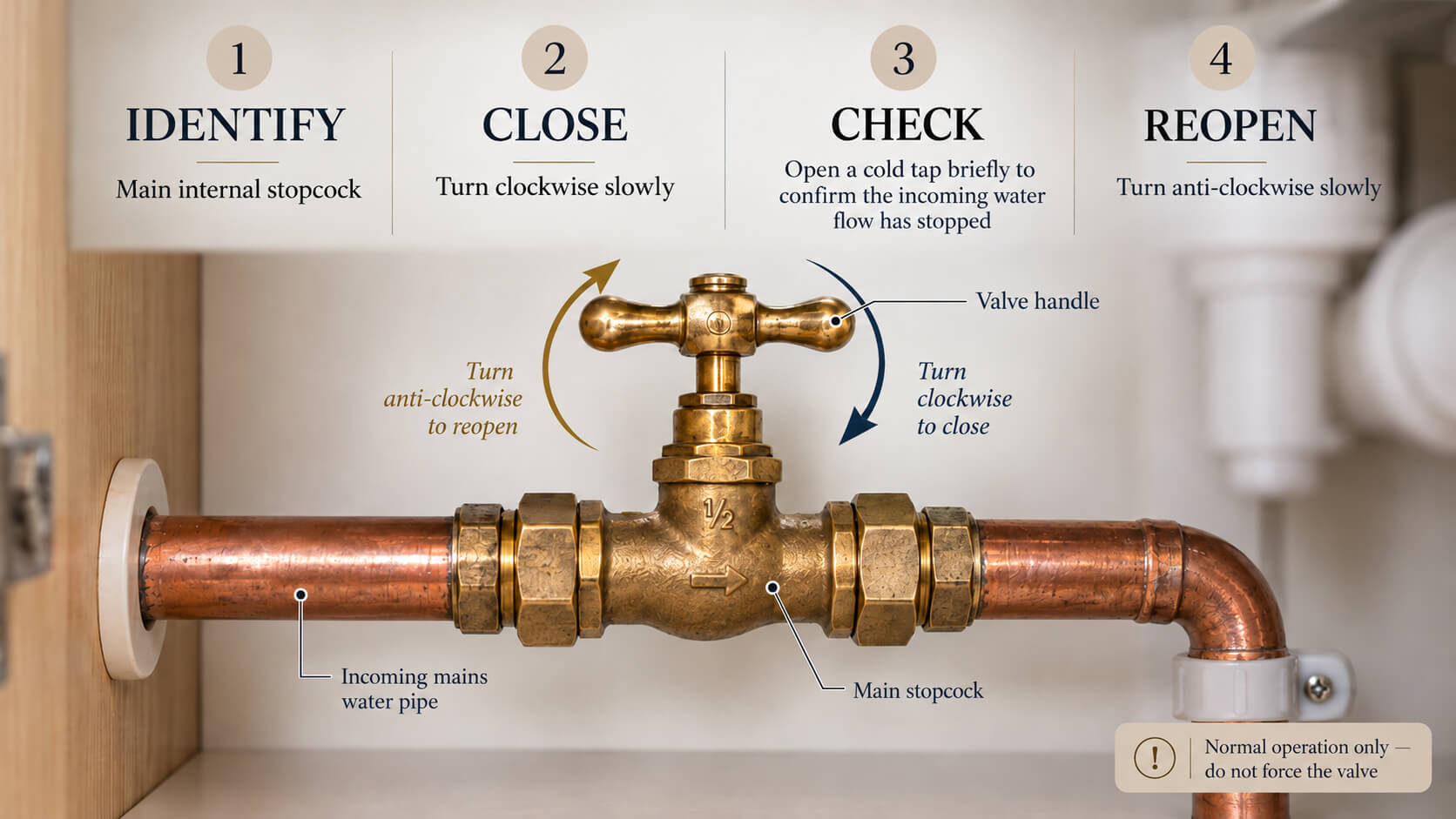
Before operating a stopcock, make sure you have identified the main internal valve for the property. Clear access around it and use steady hand pressure rather than tools or excessive force.
After closing the valve, briefly open a cold tap to check whether the incoming supply has stopped as expected. Once the work or check is complete, the supply can be restored gradually.
Which Way Do You Turn a Stopcock?
Turn a normally operating stopcock clockwise to close it and anti-clockwise to open it again. Move the valve slowly so you can feel when it reaches the end of its normal travel.
Do not continue applying force once the valve has reached its natural stopping point. Excessive force can damage an older or difficult-to-operate valve.
How Far Should You Turn a Stopcock?
There is no universal number of turns because stopcock designs and installations vary. When closing the valve, turn it until it reaches its normal closed position without overtightening or forcing the handle.
To restore the supply, turn the valve anti-clockwise gradually and check that water flow returns normally. Opening it slowly avoids an unnecessarily sudden change in flow through the pipework.
If the stopcock leaks, is seized or will not turn normally, that is a separate fault rather than part of normal operation. Do not force the valve.
Frequently Asked Questions


The internal stopcock shuts off the incoming mains water supply, but water already stored within the plumbing system may still be available for a short time. The exact effect can depend on how the property's hot and cold water systems are configured.
Turning off the stopcock stops the incoming mains supply, but it does not necessarily empty stored hot water immediately. Homes with a hot-water cylinder or other stored-water system can still contain water after the incoming supply has been isolated.
Yes. A property can have an internal stop tap and a separate external stop valve. The internal valve controls the supply within the property, while the outside valve is located further upstream on the incoming supply and may also be affected by shared-supply or water-company arrangements.
It is sensible to check periodically that you know where the stopcock is, that it remains accessible and that it can be operated normally. There is no need to invent a fixed schedule; the purpose is to avoid discovering that the valve cannot be accessed when the water needs to be isolated.