


Outside Tap Leaking: Causes and Safe Checks
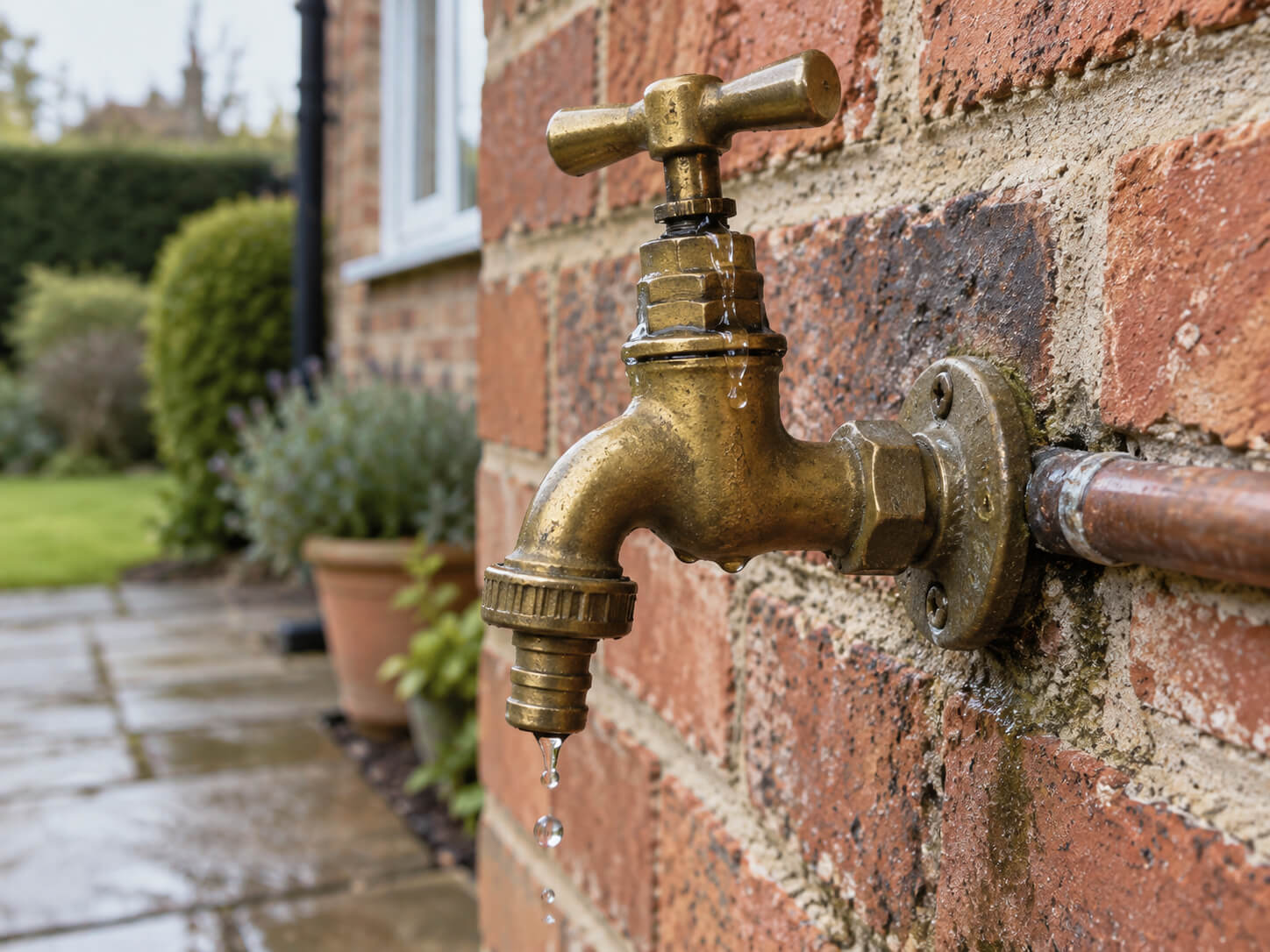
An outside tap leaking from the handle, spout, spindle or connector usually means a seal, valve part or nearby joint is no longer controlling the water properly. The tap may also drip when closed, fail to shut off completely or stop producing water even though other outlets in the property still work.
This guide explains how to identify where an outside tap fault is starting, what different leak and no-flow symptoms can indicate, and which checks can be made safely before moving into repair or replacement.
Checks for an Outside Tap Fault
- Dry the tap and nearby connections so you can see where fresh water first appears
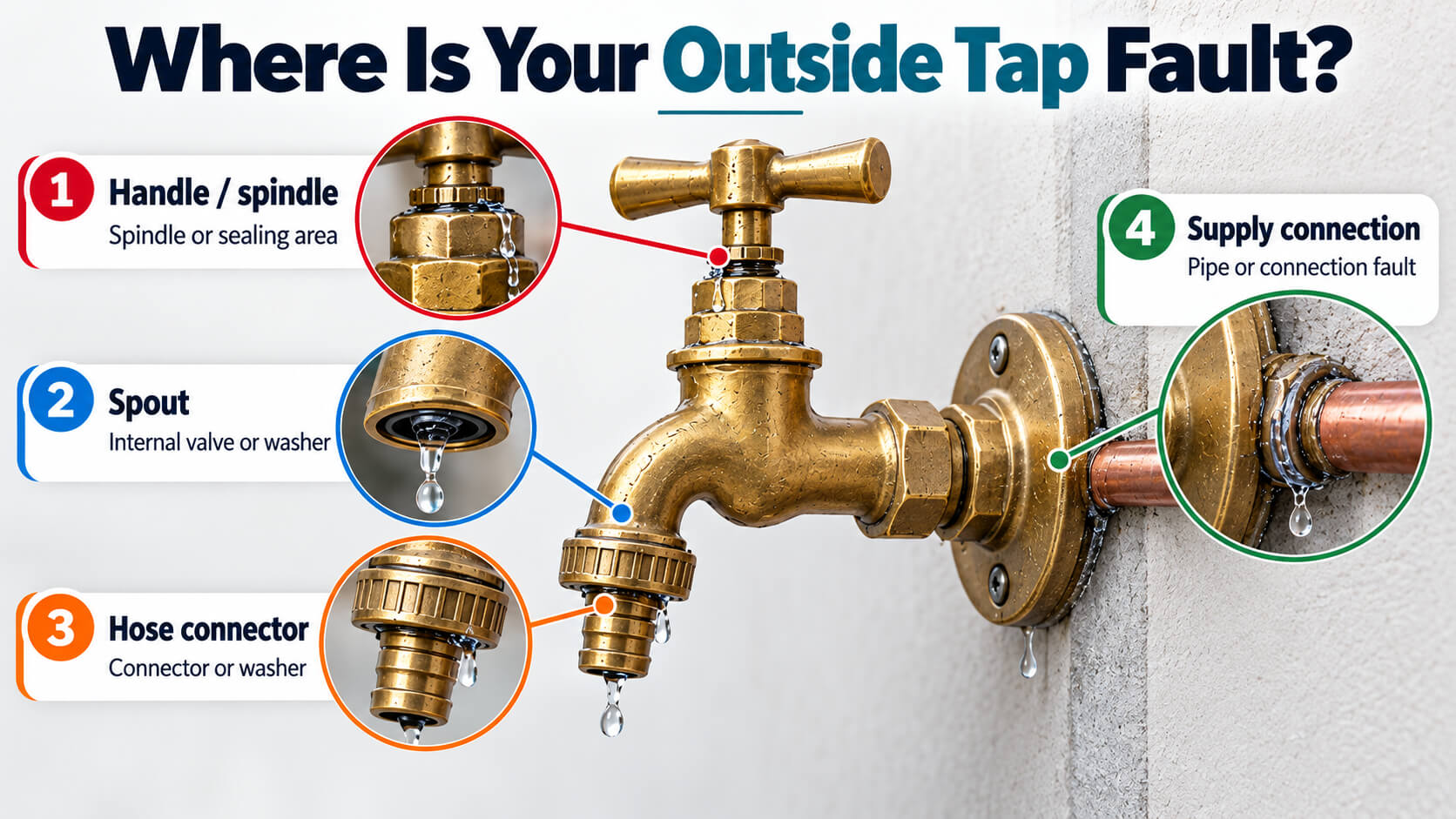
- Check whether the leak comes from the handle, spindle, spout, hose connector or pipe connection
- Remove the hose and compare the tap with and without the connector attached
- Note whether the tap leaks while open, while closed or only when it is being turned
- Check whether the fault affects only the outside tap before assuming there is a wider water-supply problem


Who will come to my home?
A certified local plumber from our vetted network, on the day and time you choose. You get a confirmation by email as soon as you book.
Are the parts included?
Small parts like washers, seals, valves and flush mechanisms are always included: the plumber brings the right one. For things you choose, like taps, toilets or radiators, you can supply your own or the plumber brings a standard one, as shown on your quote.
What if the plumber finds something else?
The fixed price covers the work on your quote. If the plumber finds something different on site, they explain it and quote it before starting, and you decide whether to go ahead.
What does the call-out fee cover?
When a fault needs to be found first, the plumber diagnoses it at your property and repairs what they can on the spot, with up to 1 hour of work included.
Do I pay now?
No. You see the price, then pick a date and time. Payment is only confirmed at checkout, and cancellation is free.

Recently booked jobs


Why Is My Outside Tap Leaking?
An outside tap leaking usually means water is escaping from the valve mechanism, spindle area, outlet or one of the connections immediately beside the tap. Drying the tap and nearby pipework before checking it can make it much easier to see where fresh water first appears.
The first wet point matters more than where the water eventually drips. Water can travel along the tap body, wall plate or pipe before falling, so a puddle beneath the tap does not always show where the fault has started.
| Outside tap symptom | What it may indicate |
|---|---|
| Water around the handle or spindle | Wear around the spindle, gland or internal sealing area |
| Dripping from the spout when closed | A worn washer or internal valve that is not sealing fully |
| Leak only when a hose is attached | A connector, washer or hose-joint problem rather than the tap itself |
| Water appearing behind the tap or wall plate | A connection or supply-pipe leak that may sit behind the fitting |
| No water from the outside tap only | Local isolation, restriction or a fault within the outdoor tap supply |
| Tap turns but will not shut off | An internal valve or washer that is no longer closing properly |
Water Leaking From the Handle or Spindle
If water appears around the handle or spindle while the outside tap is open or being turned, the sealing area around the spindle is a likely source. Wear around the gland or internal seal can allow water to escape past the moving part of the tap rather than through the outlet.
A small spindle leak may only show while the tap is being operated. Dry the area, turn the tap using normal hand pressure and watch where moisture first returns. Avoid repeatedly forcing a stiff handle, especially if the fitting looks old or corroded.
Outside Tap Dripping When Turned Off
If water continues dripping from the spout after the tap has been closed, the internal valve may no longer be sealing fully. A worn washer or valve component can allow a small amount of water to pass even though the handle has reached its normal closed position.
Do not keep tightening the handle harder in an attempt to stop the drip. Excessive force can damage the spindle or internal mechanism. Close the tap normally and note whether the flow stops, slows to an occasional drip or continues steadily.
Water Leaking From the Connector or Hose Joint
If the leak only appears when a hose or connector is attached, the connector, washer or hose joint may be the source rather than the tap itself. Removing the hose and testing the tap on its own helps separate a tap fault from an accessory or connection problem.
Also check the threaded outlet and any visible connection immediately behind the tap. If fresh water starts farther back along the pipe or appears from inside the wall, the fault may be in the supply pipe rather than in the outside tap.
Why Is My Outside Tap Not Working Properly?
An outside tap can fail even when there is no visible leak. Local isolation, a restricted valve, an internal tap fault or cold-weather damage can all affect how much water reaches the outlet or whether the tap shuts off properly.
No Water From Only the Outside Tap
If other taps in the property work normally but the outside tap produces little or no water, the problem is likely to be local to the outside-tap supply or fitting. Check whether there is an internal isolating valve serving the outdoor tap and whether it has been left closed.
If the tap has normal movement but there is still no flow, the restriction may be within the tap, a check valve or the short supply serving it. A wider loss of pressure or no water at several outlets belongs to a broader water-supply diagnosis rather than to the outside tap itself.
Outside Tap Won't Turn Off Completely
If the handle turns but water continues flowing, the internal valve may not be closing properly. Wear inside the tap, a damaged washer or a faulty valve mechanism can prevent the outlet from sealing even though the handle appears to be in the closed position.
Use normal hand pressure only. If the tap will not shut off, do not keep forcing the handle. Identify whether there is a local isolating valve or whether the incoming water supply can be controlled before attempting any further work.
Outside Tap Stopped Working After Cold Weather
An outside tap that stops flowing after freezing weather may have a frozen supply rather than a mechanical tap fault. Outdoor pipework and fittings are particularly exposed to low temperatures, and ice can restrict or completely block the flow of water.
If frost or freezing is the likely cause, do not dismantle the tap or apply a flame or intense heat. Follow the separate frozen pipes guidance for safe thawing and post-thaw checks, because a frozen pipe can also reveal damage once the ice begins to melt.
How Can You Check an Outside Tap Safely?
Safe diagnosis is mainly about separating a fault in the tap from a problem in the hose connection or supply pipe. Most of the useful checks can be made by observing where water appears and how the tap behaves without dismantling a pressurised fitting.
Is the Fault in the Tap, Connector or Supply Pipe?
Start with the hose removed and dry the tap, wall plate and visible pipework. Turn the tap on briefly and watch for the first fresh moisture. A leak at the handle points towards the spindle area, a drip from the outlet points towards the internal valve, and water at the hose connection may be limited to the connector or washer.
If the first fresh water appears behind the tap, from the pipe connection or from inside the wall, treat it as a possible supply-pipe leak rather than assuming the outside tap itself is responsible.
When Should You Isolate the Water Supply?
Isolate the water if the leak is more than a minor drip, the tap will not shut off or the fitting appears damaged. A local internal isolating valve may control the outside tap, but not every installation has one.
Do not confuse the garden tap with the external stop tap used to control the incoming water supply. They are different fittings with different functions, and an external boundary stop tap may fall under the water supplier's responsibility.
When Should You Stop DIY Checks?
Stop if the outside tap or connected pipework cannot be checked without forcing, dismantling or working on a pressurised fitting. Some symptoms point beyond a simple outdoor tap fault and need a safer repair route.
- The tap body or nearby pipework is cracked, badly corroded or visibly damaged
- Water appears from inside the wall or from pipework behind the tap
- The tap will not shut off and the water supply cannot be isolated safely
- The handle or spindle is seized and would require excessive force to move
- The tap or supply pipe appears frozen after cold weather
- A leak becomes stronger when the water supply is restored or the tap is opened
If the fault is clearly in the supply pipe rather than the outside tap, it should be treated as a pipework problem. If the tap itself is leaking, will not shut off or remains unusable after the basic checks, repair or replacement may be the more reliable next step.
Frequently Asked Questions


An outside tap washer can usually be replaced only after the water supply to the tap has been isolated and the fitting is no longer under pressure. A worn washer can cause dripping from the spout, but not every outside tap uses the same internal mechanism. If the tap is seized, badly corroded or cannot be isolated safely, avoid forcing it apart.
The isolation valve for an outside tap is usually fitted on the supply pipe inside the property, although not every installation has a separate local valve. It may be found beneath a sink, in a utility area or near the point where the pipe passes through the external wall. Do not confuse it with the external stop tap that controls the incoming mains supply.
Low pressure at only the outside tap can point to a partly closed isolation valve, a restriction in the tap or supply pipe, or a problem with a check valve. If several outlets in the property also have weak flow, the fault is more likely to belong to the wider water-supply or low-pressure system rather than the outside tap itself.
A check valve helps prevent water from flowing backwards from the outside-tap connection into the drinking-water supply. Depending on the installation, backflow protection may be built into the fitting or provided separately. A damaged or restricted valve can also affect flow, so it should not be forced or removed simply to restore pressure.