


Frozen Pipes: Signs, Safe Thawing and Prevention
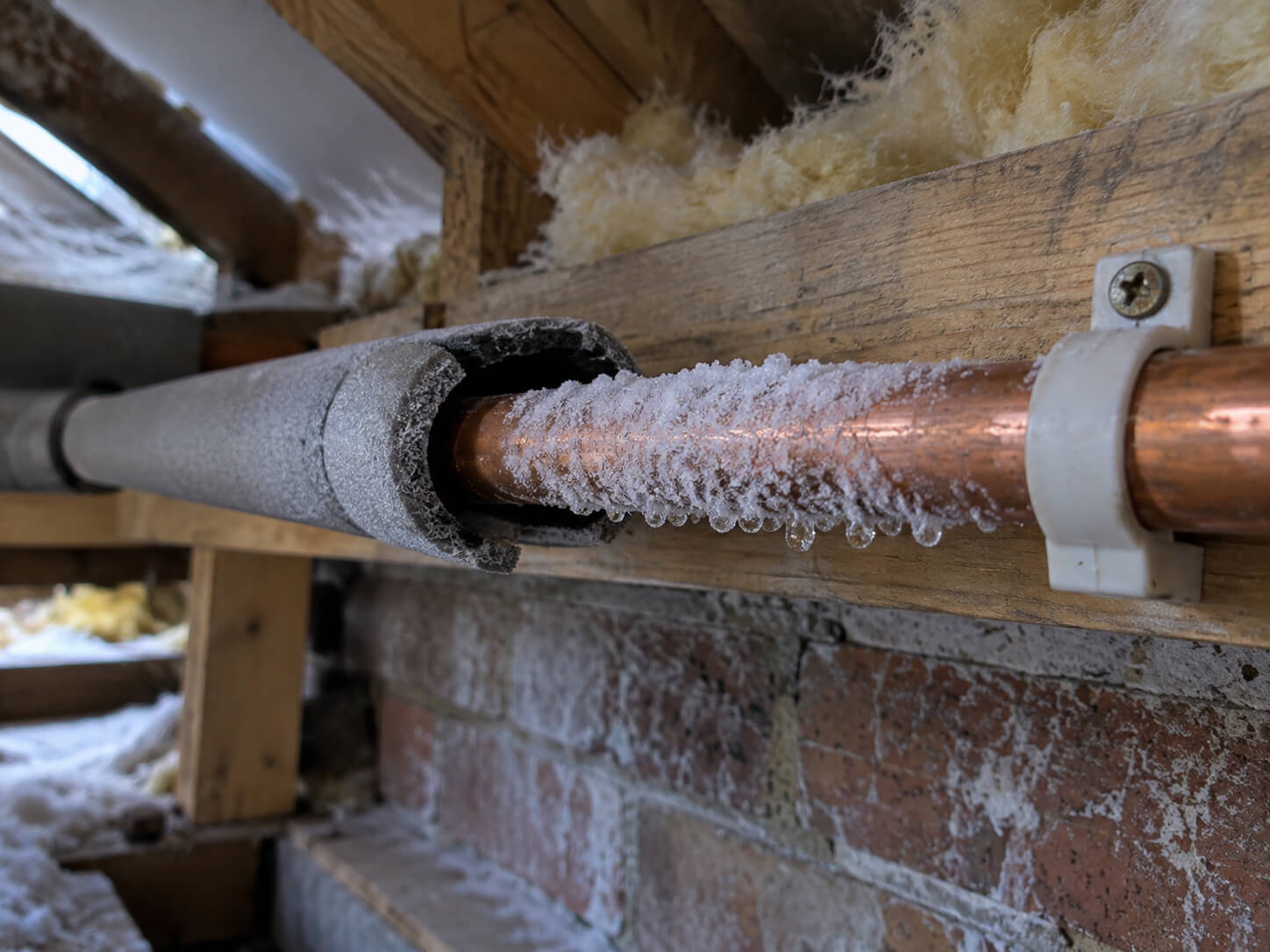
Frozen pipes can restrict or completely stop the flow of water and may be damaged as the ice expands or begins to thaw. Pipes in lofts, garages, outbuildings and other cold or poorly insulated areas are usually at greater risk during freezing weather.
This guide explains the common signs of a frozen pipe, the safest ways to thaw accessible pipework gradually, what to check once the water starts flowing again, and practical steps that can reduce the risk of pipes freezing in future cold weather.
Checks for Frozen Pipes
- Check whether the problem started during freezing weather and affects pipework in a cold or exposed area
- Test the affected tap to see whether the water flow is reduced or has stopped completely
- Look for frost, ice, unusual swelling or visible damage along accessible pipework
- Locate the main stopcock before thawing so the water supply can be controlled if a leak appears
- Never use a naked flame, blowtorch or intense direct heat to thaw a frozen pipe


Who will come to my home?
A certified local plumber from our vetted network, on the day and time you choose. You get a confirmation by email as soon as you book.
Are the parts included?
Small parts like washers, seals, valves and flush mechanisms are always included: the plumber brings the right one. For things you choose, like taps, toilets or radiators, you can supply your own or the plumber brings a standard one, as shown on your quote.
What if the plumber finds something else?
The fixed price covers the work on your quote. If the plumber finds something different on site, they explain it and quote it before starting, and you decide whether to go ahead.
What does the call-out fee cover?
When a fault needs to be found first, the plumber diagnoses it at your property and repairs what they can on the spot, with up to 1 hour of work included.
Do I pay now?
No. You see the price, then pick a date and time. Payment is only confirmed at checkout, and cancellation is free.

Recently booked jobs


How Do You Know if Your Pipes Are Frozen?
A frozen pipe often causes the water from one or more taps to slow to a trickle or stop completely during freezing weather. The problem is more likely where pipework passes through cold areas such as lofts, garages, cupboards against external walls or unheated outbuildings.
No water by itself does not prove that a pipe is frozen. If the whole property has lost its supply, or there has been no recent freezing weather, the cause may be elsewhere. Look at when the problem started, which taps are affected and whether the pipework runs through a particularly cold or exposed part of the property.
What Are the Common Signs of a Frozen Pipe?
Visible frost or ice on accessible pipework can be an obvious clue, but the frozen section is not always exposed. A sudden loss of flow from a particular tap during a cold spell, especially when other outlets still work normally, can also point towards a localised freeze.
Do not keep opening and closing valves or applying force to fittings while trying to locate the blockage. If a pipe has already been damaged by freezing, movement or pressure changes may reveal a leak as the ice starts to thaw.
What Should You Do if a Pipe Freezes?
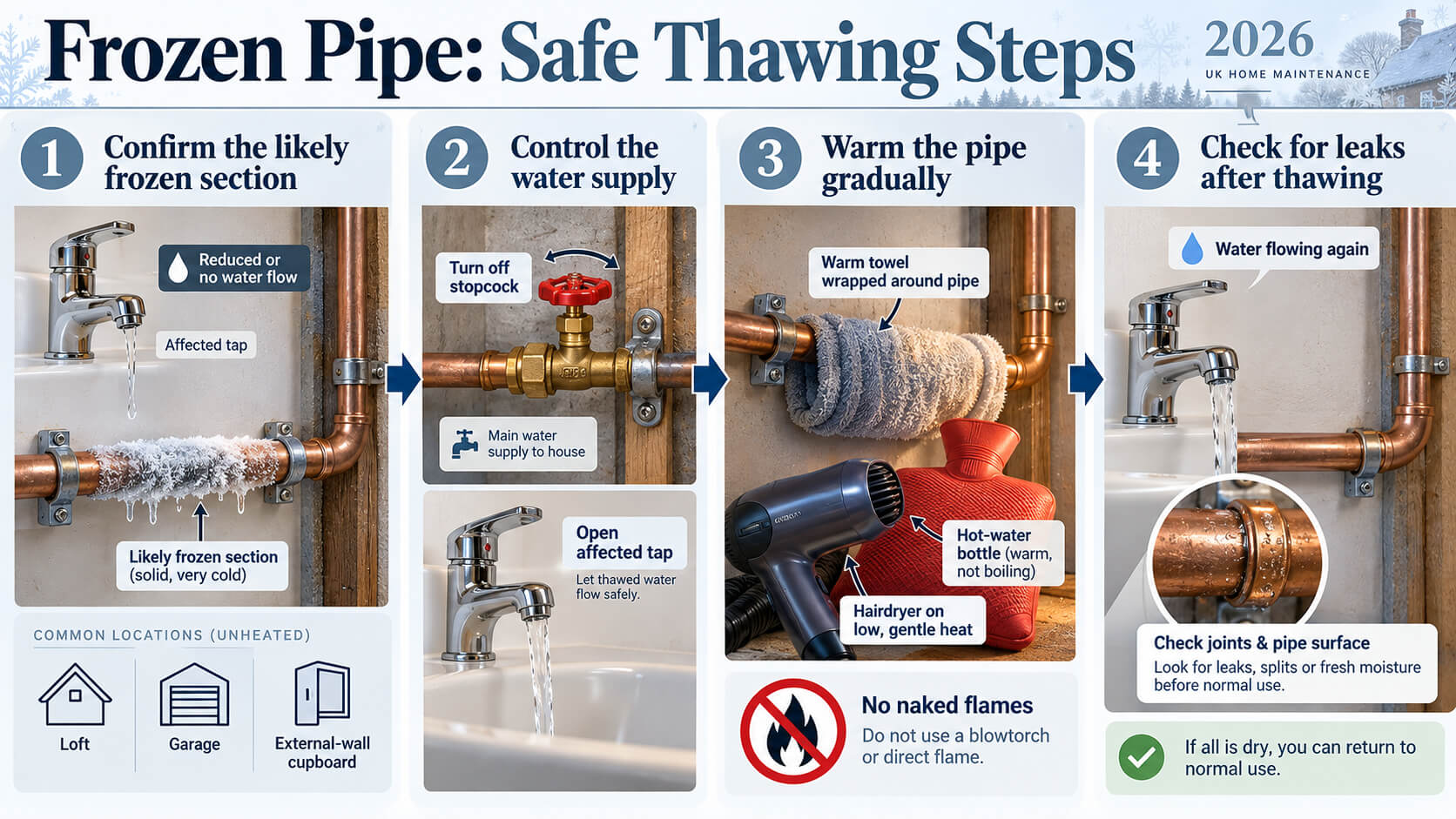
If you suspect a frozen water pipe, first make sure you know where the main stopcock is and that the water supply can be controlled if a leak appears. Open the affected tap so that water has somewhere to flow as the frozen section begins to thaw.
Before warming the pipe, check any accessible section for visible splitting, damaged joints or obvious leakage. If water is already escaping, control the supply rather than continuing to thaw the pipe as though it were only a blockage.
How to Thaw Frozen Pipes Safely
Accessible frozen pipework should be warmed gradually rather than exposed to sudden or intense heat. A warm cloth, hot-water bottle or a hairdryer on a gentle setting can be used carefully where the pipe is dry and safely accessible.
Never use a blowtorch, naked flame or other intense heat source. Apart from the fire risk, rapid heating can damage surrounding materials and may make an already weakened section of pipe fail more suddenly.
Continue to watch the pipe and nearby joints while it warms. When water starts flowing again, do not assume the problem is finished until the pipework has been checked for fresh moisture or damage.
What if You Cannot Reach the Frozen Pipe?
If the suspected frozen section is inside a wall, beneath flooring or otherwise inaccessible, avoid cutting into the building fabric or applying uncontrolled heat. The location of the blockage may not be obvious, and hidden pipework can be damaged without producing an immediate visible leak.
If you cannot thaw the pipe safely from an accessible section, or if the pipe appears damaged, the safer next step is to stop DIY attempts and have the pipework assessed.
What Should You Check After the Pipe Thaws?
Once the water starts flowing again, check the thawed pipe and its joints carefully for leakage. Freezing can place stress on the pipework, and damage may only become visible when normal water pressure returns.
Dry the accessible pipework and look again after the supply has been restored. Pay particular attention to joints, bends and areas where the pipe may have expanded or moved. A small fresh bead of water can be easier to identify on a dry surface than on pipework already covered with condensation or melted frost.
If a pipe has split or begins leaking after thawing, the problem has moved beyond a frozen-pipe blockage. Keep the water supply controlled and treat the damaged section as a pipe leak rather than continuing to warm it.
How Can You Prevent Frozen Pipes?
The best prevention is to reduce the exposure of vulnerable pipework to prolonged cold. Pipes in lofts, garages, outbuildings and other unheated areas are more likely to freeze when they are poorly insulated or exposed to draughts.
- Insulate exposed pipework
- Use suitable pipe lagging on water pipes that pass through cold or poorly heated areas.
- Check vulnerable spaces
- Pay particular attention to lofts, garages, cupboards against external walls and unheated outbuildings.
- Keep some background heat
- Avoid allowing the property to become unnecessarily cold during prolonged freezing weather.
- Know where the stopcock is
- Make sure the main stopcock can be found quickly before a frozen or damaged pipe becomes an urgent problem.
- Prepare before leaving the property
- Check exposed pipework and heating arrangements before leaving a home empty during a cold spell.
- Replace damaged insulation
- Repair missing, loose or deteriorated lagging before temperatures fall further.
Outside taps and their supply pipes can also freeze, but a mechanical fault or leak at the outdoor tap itself belongs to a different troubleshooting path. Likewise, a frozen boiler condensate pipe is a heating or boiler issue rather than the domestic water-pipe fault covered here.
Frequently Asked Questions


Water freezes at 0°C, but household pipes do not necessarily freeze as soon as the outdoor temperature reaches freezing point. The risk depends on how long temperatures stay below freezing, how exposed the pipe is and whether it is properly insulated. Pipework in lofts, garages, outbuildings and other unheated spaces is generally more vulnerable.
Yes, a frozen pipe can thaw naturally when the surrounding temperature rises, but simply waiting is not always the safest approach. A pipe may have been weakened or split while frozen, and a leak can appear as the ice melts and normal water pressure returns. Make sure the stopcock can be reached and check the pipework carefully as it thaws.
No, a frozen pipe does not always burst. Some pipes thaw without visible damage, but expanding ice can place pressure on the pipe and its joints. Damage may only become obvious after thawing, so check accessible pipework for fresh moisture, splits or leaking connections once the water starts flowing again.
A frozen pipe is not always an immediate emergency, but it can become urgent if the pipe has split or water starts escaping as it thaws. If a leak develops, the water supply cannot be controlled or the affected pipework appears damaged, stop further thawing attempts and deal with the water supply first.
There is no fixed amount of time for a frozen pipe to thaw. It depends on the length and location of the frozen section, the surrounding temperature, the pipe material and whether the pipe can be reached safely. The aim should be gradual thawing rather than trying to speed the process up with intense heat.