


Low Water Pressure in Your House: Causes and Safe Checks
Low water pressure can affect one outlet, several taps or the whole property, and the pattern can help narrow down where the problem is coming from. Causes can include an internal stop tap that is not fully open, a leak within the property, or a problem affecting the incoming water supply.
This guide explains how to compare the affected outlets, carry out safe first checks, recognise when the issue may be outside the property, and decide whether the next step belongs with the water company or the internal plumbing.
Checks for Low Water Pressure
- Check whether the low pressure affects one outlet, several taps or the whole property
- Compare the flow from a few cold-water outlets to see whether the problem is widespread
- Check that the internal stop tap is fully open without forcing it
- Look for an obvious leak or unexpected water around accessible pipework
- Note whether the pressure dropped suddenly or followed a recent water supply interruption


Who will come to my home?
A certified local plumber from our vetted network, on the day and time you choose. You get a confirmation by email as soon as you book.
Are the parts included?
Small parts like washers, seals, valves and flush mechanisms are always included: the plumber brings the right one. For things you choose, like taps, toilets or radiators, you can supply your own or the plumber brings a standard one, as shown on your quote.
What if the plumber finds something else?
The fixed price covers the work on your quote. If the plumber finds something different on site, they explain it and quote it before starting, and you decide whether to go ahead.
What does the call-out fee cover?
When a fault needs to be found first, the plumber diagnoses it at your property and repairs what they can on the spot, with up to 1 hour of work included.
Do I pay now?
No. You see the price, then pick a date and time. Payment is only confirmed at checkout, and cancellation is free.

Recently booked jobs



What Causes Low Water Pressure in a House?
Low water pressure in a house usually comes down to either a local outlet problem, something restricting the internal plumbing or an issue with the incoming water supply. The pattern matters because a problem affecting one outlet is different from reduced pressure affecting several taps or the whole property.
Water pressure can also vary with demand and the height of the property. Pressure may be lower when more customers are using water, while supply-side problems such as leakage, equipment failures or blocked service pipes can also reduce pressure reaching a property.
Low Water Pressure at One Outlet or Across the House
If only one outlet has weak flow while the others are normal, the problem is more likely to be local to that part of the plumbing. When several outlets are affected, especially in different rooms or on different floors, the cause may involve a shared part of the internal supply or the incoming water supply.
Comparing outlets is therefore one of the simplest ways to narrow down the fault before anything is dismantled. Note whether the problem is limited to one tap, affects several outlets or can be noticed throughout the property.
A Partially Closed Stop Tap or Internal Leak
A stop tap that is not fully open can restrict flow, while an internal leak may also contribute to poor water pressure. Ofwat recommends checking for these types of internal plumbing problems before assuming that the water company is responsible.
Check that the internal stop tap is in its normal open position, but do not force a stiff or seized valve. Also look for visible signs of escaping water around accessible pipework, under sinks and near known plumbing connections. If a leak is found, the leak itself needs to be diagnosed rather than treating low pressure as the only problem.
Sudden Low Water Pressure From the Mains Supply
A sudden drop in pressure across several outlets can be caused by a problem affecting the mains supply rather than the plumbing inside the home. Ofwat lists leakage, equipment failures and blocked service pipes among the supply-side causes that can reduce pressure from the water main.
If the change happened suddenly, check whether there is a known local supply problem before altering internal plumbing. Demand can also affect pressure, so it is useful to note whether the problem is constant or becomes more noticeable at busy times of day.
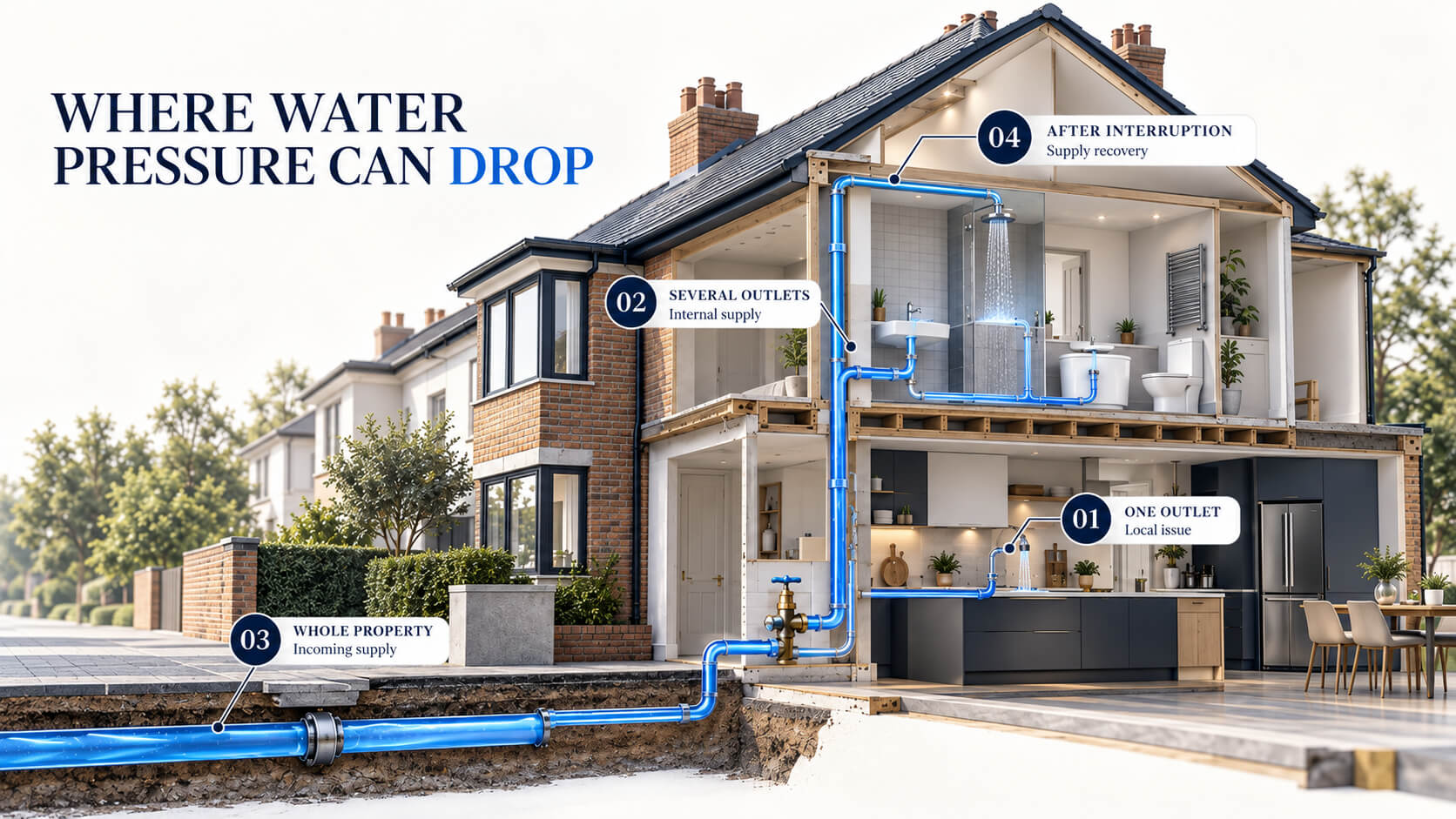
01 Low pressure at one outlet One tap or outlet appears weaker than the others
Check first: Compare the affected outlet with other nearby taps.
What it suggests: Treat it as a localised symptom until wider pressure loss is confirmed.
02 Low pressure at several outlets More than one part of the property is affected
Check first: Check the internal stop tap and look for visible leaks.
What it suggests: The problem may involve a shared part of the internal water supply.
03 Low pressure across the whole property Several rooms or floors have reduced water pressure
Check first: Check for a known local water-supply issue and complete the basic internal checks.
What it suggests: If no internal problem is apparent, the water company may need to investigate the incoming supply.
04 Low pressure after a supply interruption The problem started after water was turned off and restored
Check first: Confirm whether normal pressure has returned throughout the property.
What it suggests: Separate an ongoing network problem from an internal symptom that may need the Airlock diagnostic route.
Safe Checks for Low Water Pressure
The quickest safe way to narrow down low water pressure is to compare several outlets, check the internal stop tap and look for obvious signs of a leak. These checks can reveal whether the problem is local or widespread without dismantling taps, valves or supply connections.
If the pressure dropped suddenly, think about what changed immediately beforehand. A water-supply interruption, repair or burst main can affect pressure, while symptoms that remain after the supply has returned may need a different diagnostic route.
Compare the Water Flow at Several Outlets
Checking several outlets can quickly show whether weak flow is confined to one location or affects a larger part of the property. Compare taps in different rooms and, where relevant, on different floors to see whether the reduction is similar.
You do not need to measure the pressure professionally at this stage. Simply note which outlets are affected, whether the problem occurs on more than one floor and whether the flow stays weak throughout the day or changes at certain times.
Check the Internal Stop Tap and Look for Visible Leaks
When several outlets are affected, the internal stop tap and accessible pipework are sensible places to check next. A stop tap that is not fully open can restrict the water supply, while a visible leak may point to a separate internal plumbing fault.
Do not use excessive force on a stiff valve and do not start tightening unrelated fittings simply because they are nearby. If the stop tap appears damaged, seized or leaking, treat that as a separate valve fault rather than forcing it further.
Low Water Pressure After a Supply Interruption
Pressure may remain temporarily low after a supply interruption while normal service is being restored. If the problem started after the water was turned off and then returned, note that timing before making changes to the plumbing.
In some homes, reduced flow can continue after a disruption because air remains within part of the system. That belongs to a separate Airlock diagnostic route rather than turning this parent Low Water Pressure page into a full airlock-repair guide.
When Low Water Pressure Needs Further Action
Persistent low pressure needs further investigation when it affects much of the property, cannot be explained by a temporary supply issue or appears alongside another plumbing fault. The next step depends on whether the evidence points towards the water company's network or the plumbing within the property.
If no problem with the internal stop tap or visible pipework can be found, Ofwat advises contacting the water company. It can take pressure and flow measurements and help establish whether the issue lies within its network or the property's pipes.
The Official Minimum Water Pressure Standard
The statutory minimum standard is seven metres static head in the communication pipe serving the premises. This is a network pressure standard, so it should not be interpreted as a guarantee that every individual outlet in the property will deliver identical flow.
Flow at a tap can still be influenced by the plumbing arrangement, demand and the height of the property. The official standard is therefore useful when investigating persistent supply-pressure problems, but it does not replace diagnosis of where the pressure loss is occurring.
When to Contact Your Water Company
If several outlets or the whole property have persistently low pressure and the basic internal checks reveal no obvious fault, the water company is the appropriate next contact. It is also worth checking with the company when pressure falls suddenly and there may be a known issue affecting the local network.
The water company can check pressure and flow and determine whether the issue is associated with its pipes or the supply serving the property. If nearby properties have experienced the same sudden change, mention that when reporting the problem.
Signs the Problem Is Within the Internal Plumbing
If the incoming supply is satisfactory but weak flow remains limited to part of the property, the cause is more likely to sit within the internal plumbing. A partially closed stop tap, leak or another restriction within the pipework may need a different repair route from a network pressure problem.
Do not dismantle concealed pipework or force valves simply to continue the diagnosis. If the pressure remains poor after the accessible checks, or you find a damaged fitting, leak or another plumbing fault, you can use the plumber booking route for the next step.
Frequently Asked Questions


To increase water pressure in your house, first identify why the pressure is low before considering any boosting solution. Check whether the problem affects one outlet or the whole property, make sure the internal stop tap is fully open and look for obvious leaks. If the incoming supply is satisfactory but pressure remains poor inside the property, the internal plumbing may need further investigation.
You can check whether low water pressure is affecting your area by looking for reported supply problems from your water company. If several outlets suddenly have low pressure and nearby properties are experiencing the same problem, the cause may be outside your home rather than within the internal plumbing.
Report persistent low water pressure to your water company when several outlets or the whole property are affected and basic internal checks have not identified a cause. Explain when the pressure dropped, whether the change was sudden, which parts of the property are affected and whether the problem followed a supply interruption.
Low water pressure in a flat can be related to the building's supply, the height of the property or an issue within the internal plumbing. Check whether the problem affects only your flat or other properties in the building, and compare several outlets before deciding whether the issue is local to your plumbing or part of the incoming supply.
Yes, very low incoming water flow can affect how quickly a washing machine fills with water. If other cold-water outlets are also weak, investigate the wider water-pressure problem first. If the problem is limited to the washing-machine supply, the connection or appliance should be checked separately.