


Airlock in Water Pipes: Symptoms and Safe Clearing Steps
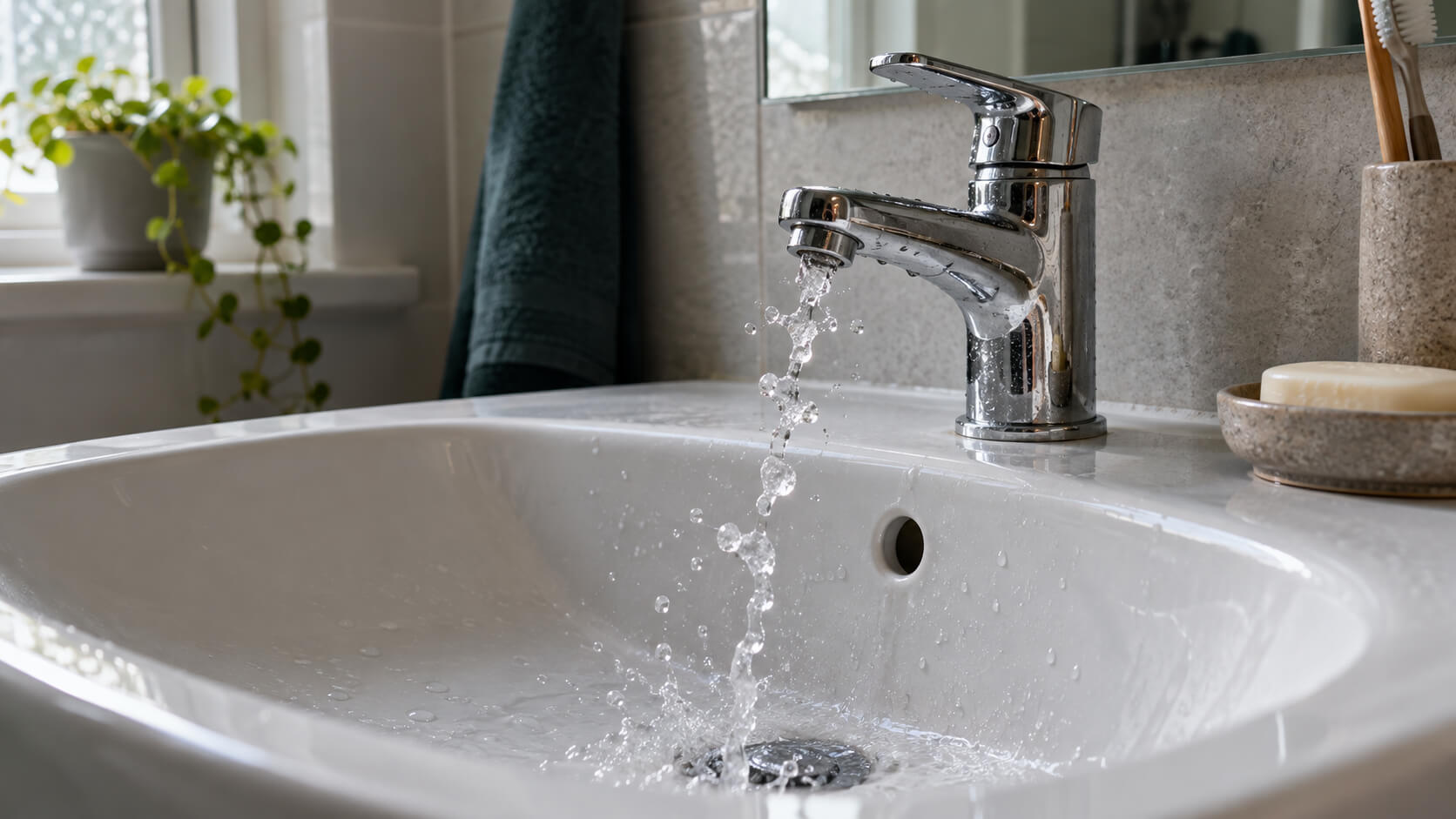
An airlock in water pipes happens when trapped air interrupts or restricts normal water flow through part of the domestic plumbing system. It may appear after the water supply has been interrupted and can affect one or more outlets, although similar symptoms can also come from low pressure or another plumbing fault.
This guide explains how to recognise likely airlock symptoms, carry out safe checks, understand common clearing methods and decide when the problem may instead be caused by low water pressure or another plumbing issue.
Checks for an Airlock in Water Pipes
- Check which taps or outlets have weak or no water flow
- Compare hot and cold outlets to see which part of the water supply is affected
- Note whether the problem started after the water supply was turned off and restored
- Check whether other taps in the property are flowing normally
- Stop if further checks would require forcing valves or dismantling pipework


Who will come to my home?
A certified local plumber from our vetted network, on the day and time you choose. You get a confirmation by email as soon as you book.
Are the parts included?
Small parts like washers, seals, valves and flush mechanisms are always included: the plumber brings the right one. For things you choose, like taps, toilets or radiators, you can supply your own or the plumber brings a standard one, as shown on your quote.
What if the plumber finds something else?
The fixed price covers the work on your quote. If the plumber finds something different on site, they explain it and quote it before starting, and you decide whether to go ahead.
What does the call-out fee cover?
When a fault needs to be found first, the plumber diagnoses it at your property and repairs what they can on the spot, with up to 1 hour of work included.
Do I pay now?
No. You see the price, then pick a date and time. Payment is only confirmed at checkout, and cancellation is free.

Recently booked jobs



Airlock in Water Pipes: Symptoms and Causes
An airlock forms when trapped air interrupts the normal movement of water through part of the pipework. The result may be weak, irregular or completely stopped flow at one or more outlets, particularly after the water supply or part of the plumbing system has been interrupted.
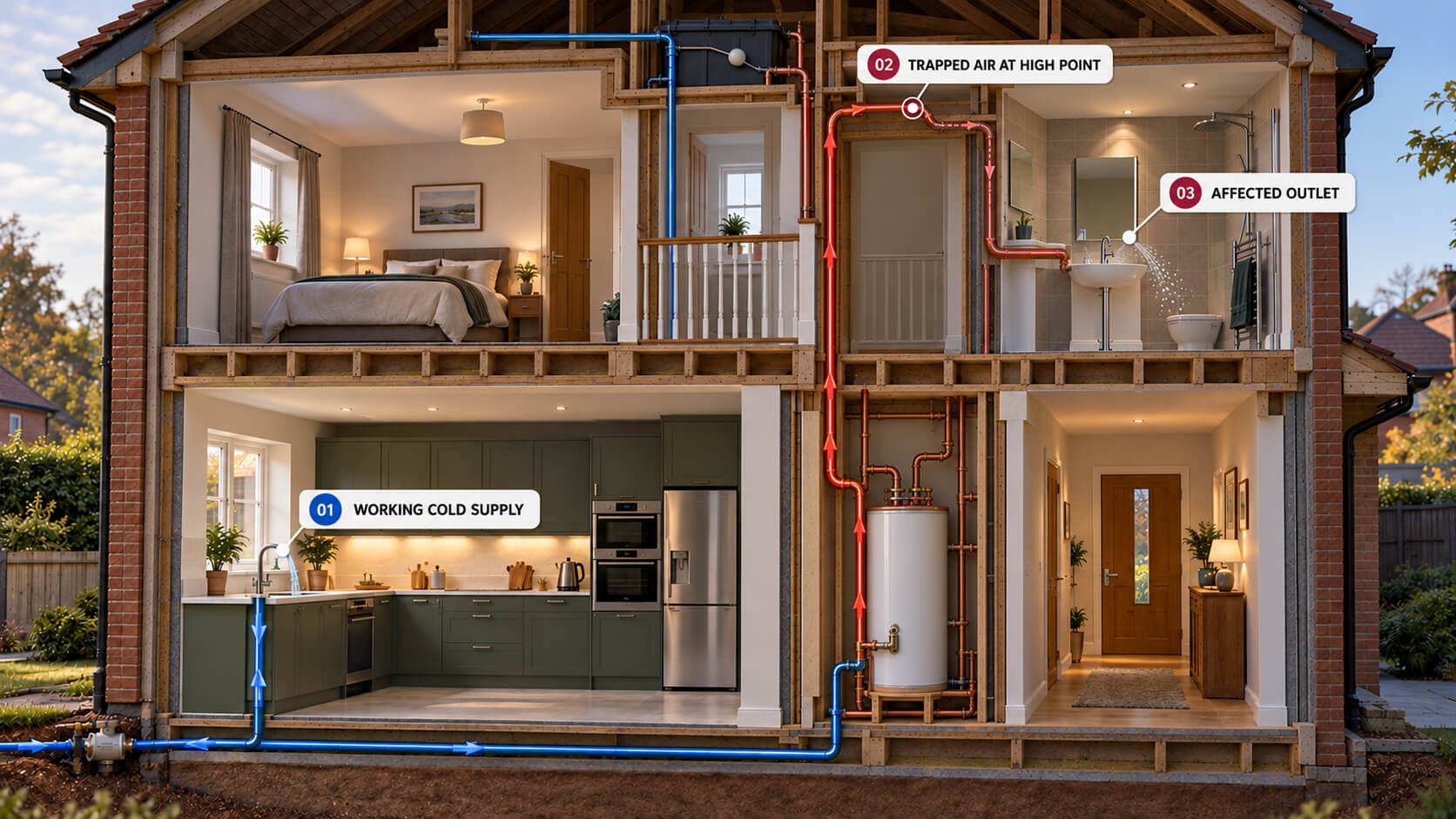
The pattern of the problem matters. An airlock is more plausible when some outlets continue to work normally while a particular part of the system has lost flow. If reduced flow affects much of the property in the same way, the cause may instead sit with the incoming water supply or another shared part of the plumbing.
Which part of the problem do you need to check?
Signs of an Airlock in Water Pipes
Weak or stopped flow at a particular tap, spluttering water and irregular flow can all be consistent with trapped air in the pipework. The symptoms may appear suddenly rather than developing gradually, especially if the water supply has recently been turned off, drained or restored.
These signs do not prove that an airlock is present. A restriction, valve problem or wider pressure issue can produce similar symptoms, so compare several outlets before trying to clear anything. Noise on its own is also not enough to identify an airlock.
Airlocks After a Water Supply Interruption
An airlock can occur after a water-supply interruption when air becomes trapped as the pipework empties and refills. One clue is that normal flow returns at some outlets while another tap or part of the system continues to deliver little or no water.
Allow time for the supply itself to recover before treating the remaining symptom as an internal airlock. If nearby properties are also experiencing poor flow or several parts of your home remain affected, check the wider supply situation before making changes to the plumbing.
Airlock or Low Water Pressure?
An airlock is usually a more localised trapped-air problem, while low water pressure can affect several outlets or the whole property. If only one part of the system behaves differently after a supply interruption, trapped air may be a reasonable possibility. If weak flow is widespread, the diagnosis should remain broader.
If several taps, rooms or floors have consistently reduced flow, use the Low Water Pressure guide to check the wider supply and internal plumbing before assuming that an airlock is responsible.
How to Clear an Airlock in Water Pipes
Start by confirming which outlets are affected and whether water is still reaching the rest of the property normally. A suspected airlock should be approached as a local flow problem rather than by dismantling pipework or forcing unrelated valves.
Some trapped air may clear as water is allowed to flow normally through the affected part of the system. If the problem persists, the next step depends on the type of hot and cold water system, the affected pipework and how the outlets are supplied.
Check Which Taps and Outlets Are Affected
Before attempting to clear an airlock, compare the affected outlet with other hot and cold taps in the property. Note whether one tap has stopped completely, whether several outlets on the same supply are affected, and whether another cold-water outlet still has a normal steady flow.
This check helps avoid treating a wider water-pressure or supply problem as trapped air. If the incoming cold supply is also weak or absent, an airlock-clearing method is unlikely to address the real cause and the supply issue should be investigated first.
Allow Trapped Air to Clear Through the Outlet
If water still reaches the affected outlet, allow it to run normally for a short period and watch whether spluttering gives way to a steady flow. Air introduced during a temporary interruption can sometimes work its way through without any dismantling or additional pressure being applied.
Do not loosen pipe joints, remove concealed fittings or repeatedly force stiff valves in an attempt to release air. If the flow remains absent or highly restricted, establish the type of water system and which pipe is affected before moving to a more active clearing method.
When a Suspected Airlock Needs a Different Clearing Method
If normal flow does not return through simple outlet checks, do not create an improvised connection between different water supplies to force the air through. The correct way to clear a persistent airlock depends on the type of hot and cold water system, the affected pipework and how the outlets are supplied.
A method that forces water backwards through the plumbing can introduce backflow or cross-connection concerns if the system and protection arrangements are not understood. If the airlock remains after the basic checks, stop before dismantling fittings or applying additional pressure and have the affected part of the system identified first.
When an Airlock Does Not Clear
If normal flow does not return after reasonable checks, the problem should not automatically continue to be treated as trapped air. A restriction, valve fault, leak, supply problem or another part of the internal plumbing may be responsible for the same weak-flow symptom.
Repeated attempts to force water through an unidentified fault can create a different problem without resolving the original cause. Once simple checks have failed, the next step is to reassess the symptom and determine whether the fault is still local to one pipe or part of a wider water-supply issue.
Airlocks That Keep Coming Back
An airlock that repeatedly returns needs more investigation than a one-off loss of flow after a supply interruption. Recurrent symptoms may indicate that air is repeatedly entering or collecting within part of the plumbing rather than simply remaining from a single interruption.
Record when the loss of flow occurs and which outlets are affected each time. A consistent pattern can help separate a recurring problem within one section of pipework from changing pressure or another fault affecting the property more widely.
No Water Still Reaches the Affected Outlet
If the affected outlet remains completely without flow, stop assuming that trapped air is the only possible cause. Check that the relevant supply is available elsewhere and that no accessible isolation valve has been left closed or partly closed.
If those checks do not explain the problem, avoid dismantling concealed pipework or forcing valves to continue the diagnosis. The restriction or fault may need to be identified directly before any further attempt is made to restore flow.
When the Problem Is Wider Than an Airlock
Widespread weak flow, repeated pressure loss or symptoms affecting several unrelated outlets point beyond a simple local airlock. In that situation, the incoming supply, internal stop tap, visible leaks and shared pipework become more important than continuing to clear trapped air from one outlet.
If the evidence points to a broader pressure problem rather than trapped air, stop repeating airlock-clearing attempts and reassess the wider water supply and internal plumbing.