


Legionella Shower Head Cleaning and Descaling
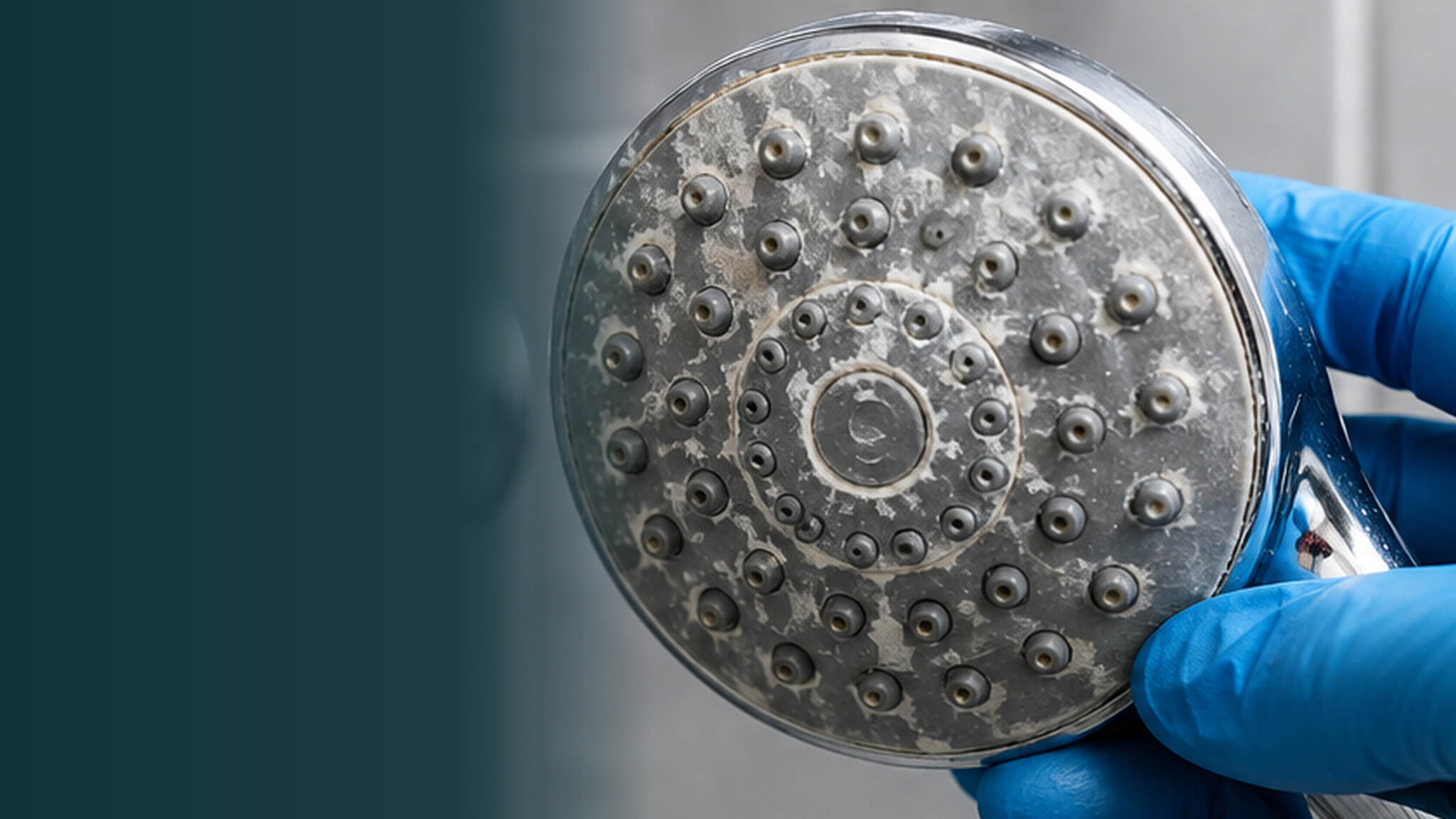
Legionella shower head cleaning addresses scale and deposits on removable showerheads and hoses. These fittings need suitable inspection and maintenance because residue can build up around spray outlets and internal surfaces.
Learn when UK HSE recommends cleaning and descaling, what a safe maintenance procedure should cover and when replacement may be appropriate. Cleaning does not prove that a water system is Legionella-free.
Showerhead Cleaning, Scale and Descaling Guidance
- Identify scale around shower spray holes
- Understand why shower hoses also need attention
- Review quarterly HSE cleaning guidance
- Check material compatibility before descaling
- Recognise when fittings need replacement
- Keep showerhead inspection and maintenance records

What type of property needs the Legionella Risk Assessment?


Recently booked jobs

Why Showerheads and Hoses Need Cleaning
Legionella shower head cleaning focuses on scale, residue and deposits that can collect on removable shower fittings. Spray plates, nozzles and hose connections are exposed to repeated wetting and drying. Keeping these surfaces clean is part of good water-system maintenance, particularly in premises with a formal Legionella control programme.
Showerheads also produce fine droplets during use, making the condition of their fittings relevant to exposure control. Visible cleanliness alone cannot establish whether Legionella is present, and cleaning a shower fitting does not correct problems elsewhere in the water system.
Where Limescale and Deposits Accumulate
Limescale often builds up around spray holes, inside removable showerheads and at hose connectors. Mineral deposits can restrict individual jets, change the spray pattern and make surfaces harder to clean. Flexible hoses, washers and threaded connections can retain deposits even when the outside of the showerhead looks clean.
Inspect accessible components for blocked nozzles, visible scale, residue, damaged seals and signs of deterioration. Biofilm may be present on wetted surfaces, but its presence or absence cannot be established reliably from appearance alone. Do not assume that an ordinary wipe of the outside reaches internal surfaces.
How Often Should Showerheads Be Cleaned?
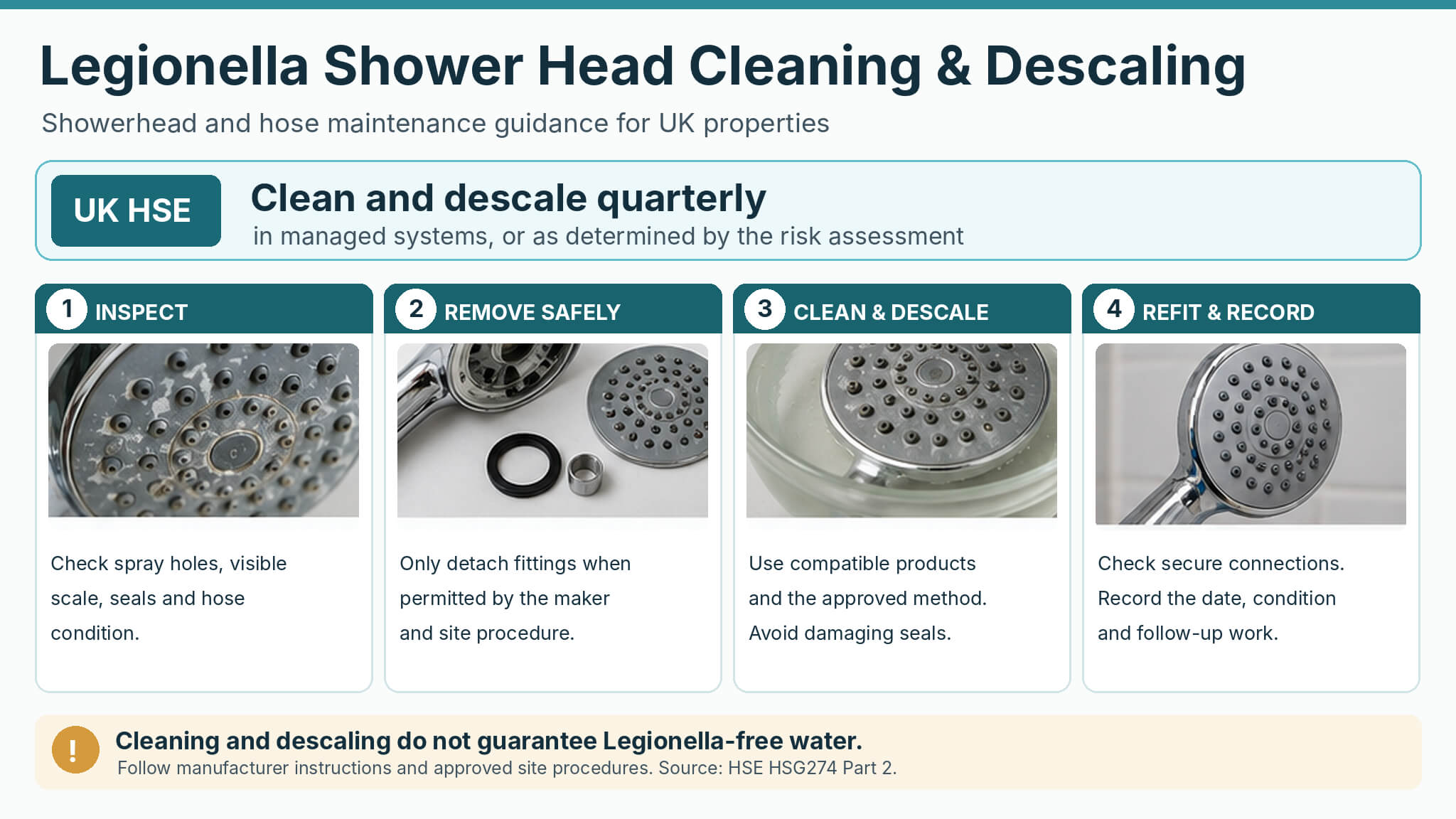
UK HSE guidance describes dismantling, cleaning and descaling showerheads and associated hoses quarterly, or as determined by the risk assessment. The interval may need reviewing where fouling builds up more quickly, equipment differs or the premises serves particularly vulnerable people. This technical benchmark is not a universal legal cleaning schedule for every private household.
A maintenance plan should identify which fittings are covered and who is responsible. Landlords can also advise tenants to keep showerheads clean and report defects. Cleaning frequency should reflect the condition of the fittings, their manufacturer's instructions and the property's risk-based maintenance arrangements.
How to Clean and Descale Showerheads Safely
Safe showerhead maintenance starts with the manufacturer's instructions and the property's approved water-safety procedure. Some fittings have detachable spray plates or hoses; others contain coatings, seals or components that can be damaged by unsuitable products. Confirm what can be removed and who is authorised to undertake the work before starting.
In managed premises, the responsible person should specify suitable cleaning products, protective measures and the method for handling contaminated fittings. Avoid uncontrolled spraying or splashing, and follow chemical labels rather than inventing a descaling concentration or soaking time.
Preparing, Descaling and Refitting Removable Parts
Cleaning should remove accessible deposits without damaging the showerhead, hose or seals. The exact procedure depends on the fixture and site arrangements, but a maintenance checklist can cover the following stages:
- Inspect: Note blocked spray holes, scale, damaged threads or deteriorated hose surfaces.
- Remove where permitted: Follow the fitting instructions and avoid forcing fixed components.
- Clean and descale: Use compatible products and the approved method, including the hose where applicable.
- Refit and check: Confirm secure connections and report leaks, damage or unresolved fouling.
Rinsing, any disinfection stage and return-to-use precautions must follow the relevant procedure and product instructions. Descaling is not the same as validated Legionella disinfection, and neither should be described as proof that a wider water system is safe.
Persistent Deposits, Replacement and Maintenance Records
A showerhead or hose that remains blocked, damaged or heavily fouled after appropriate maintenance may need replacing. Repeated deposits, splitting hoses, damaged seals or persistent leaks should be reported rather than disguised by another quick clean. Where the cause is unclear, arrange a suitable maintenance review instead of changing plumbing or protective controls without authorisation.
For managed buildings, record the fitting location, date, person completing the work, condition found, actions taken and any replacement or follow-up required. A short record makes recurring faults easier to identify and helps the dutyholder review whether the chosen cleaning interval remains appropriate.
Cleaning removable parts cannot resolve poor circulation, pipework faults or other whole-system hazards. Flushing is a separate control that helps renew water at little-used outlets rather than removing scale from fittings. Our Legionella flushing guide explains that distinction. Persistent system concerns may require a competent risk assessment; MyConstructor's assessment service does not include cleaning, descaling, disinfection or remedial work.
Official sources:
Legionella Showerhead Cleaning FAQs


UK HSE guidance describes quarterly cleaning and descaling of showerheads and hoses, or as determined by the risk assessment. Some fittings may need more frequent attention where scale builds up quickly or the premises has higher-risk occupants. This is guidance for suitable water-system controls, not a blanket legal requirement for every domestic shower. Follow the approved maintenance arrangements for the property.
Descaling removes mineral deposits but does not guarantee that Legionella bacteria have been eliminated. Cleaning can improve the condition of shower fittings, but it is different from a validated disinfection procedure. A showerhead may appear clean while wider water-system risks remain. Follow the manufacturer's instructions and the property's water-safety procedure rather than assuming descaling alone proves the water is safe.
Yes, associated shower hoses should be included in an appropriate cleaning and descaling programme. Deposits can accumulate inside hoses and around their connectors, even when the showerhead looks clean externally. HSE guidance addresses showerheads and associated hoses together. Removable components should be maintained according to the manufacturer's instructions and the risk assessment, with damaged or unsuitable fittings reported for replacement.
Replacement may be appropriate when a showerhead or hose remains heavily fouled, blocked or damaged despite suitable maintenance. Persistent scale, deteriorating seals, leaks and damaged connections can indicate that cleaning alone is insufficient. In managed premises, report the condition and follow the approved replacement procedure. If problems repeatedly return, the responsible person should also consider whether a wider investigation is needed.