


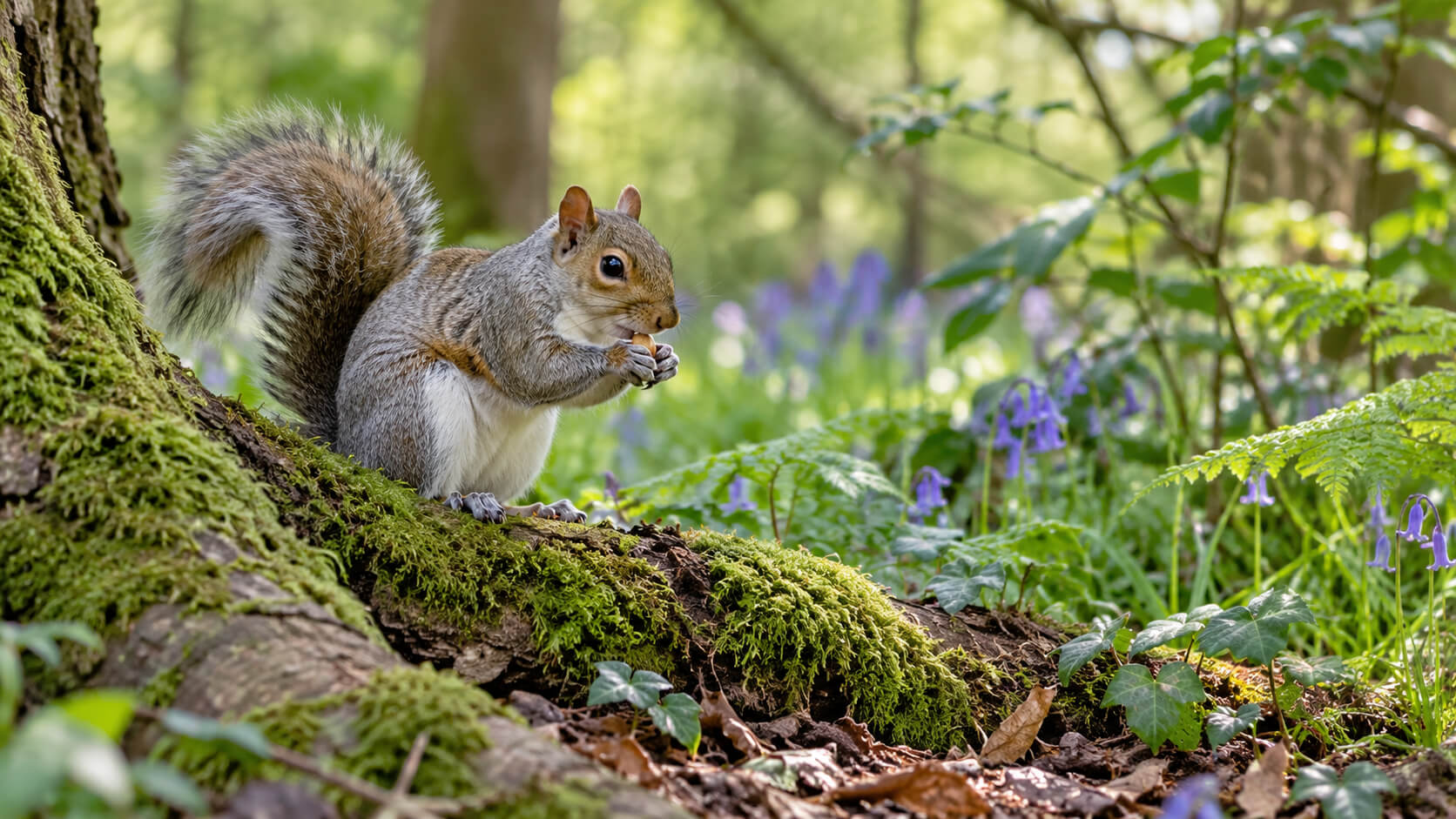
How long squirrels live depends on the species and the figure being used, but grey squirrels in the UK typically live around 2–5 years, while red squirrels can live up to around 6 years in the wild.
This guide explains average squirrel lifespan, grey and red squirrel longevity, lifespan in the wild and why published figures can differ.
Recently booked jobs



How Long Do Squirrels Live?
How long squirrels live varies by species, but grey squirrels in the UK have an average lifespan of around 2–5 years, while red squirrels can live for up to around 6 years in the wild. These figures should be read carefully because some wildlife sources report an average squirrel lifespan, while others describe how long individuals can potentially live.
Squirrel lifespan can therefore look different depending on the species and the type of figure being quoted. When comparing UK squirrel lifespan estimates, it is useful to distinguish between an average lifespan and an upper age that some squirrels may reach.
Average Squirrel Lifespan in the UK
There is no single answer to how long a squirrel lives because lifespan varies by species, sex and the type of lifespan figure being reported. In the UK, grey and red squirrels have different published lifespan estimates, and even squirrels of the same species do not necessarily survive for the same number of years.
The Wildlife Trusts gives an average grey squirrel lifespan of 2–5 years. For red squirrels, UK sources use different wording: some publish an average figure, while the Mammal Society describes red squirrels as capable of living up to around 6 years in the wild.
How Long Do Squirrels Live in the Wild?
Squirrels can live for several years in the wild, although many individuals will not reach the upper lifespan reported for their species. Wild lifespan figures describe populations living under natural conditions rather than guaranteeing how long an individual squirrel will survive.
For users asking how long squirrels live in the UK, the most useful approach is therefore to look at the species first and then check whether the quoted number represents an average or an upper lifespan.
Grey Squirrel Lifespan
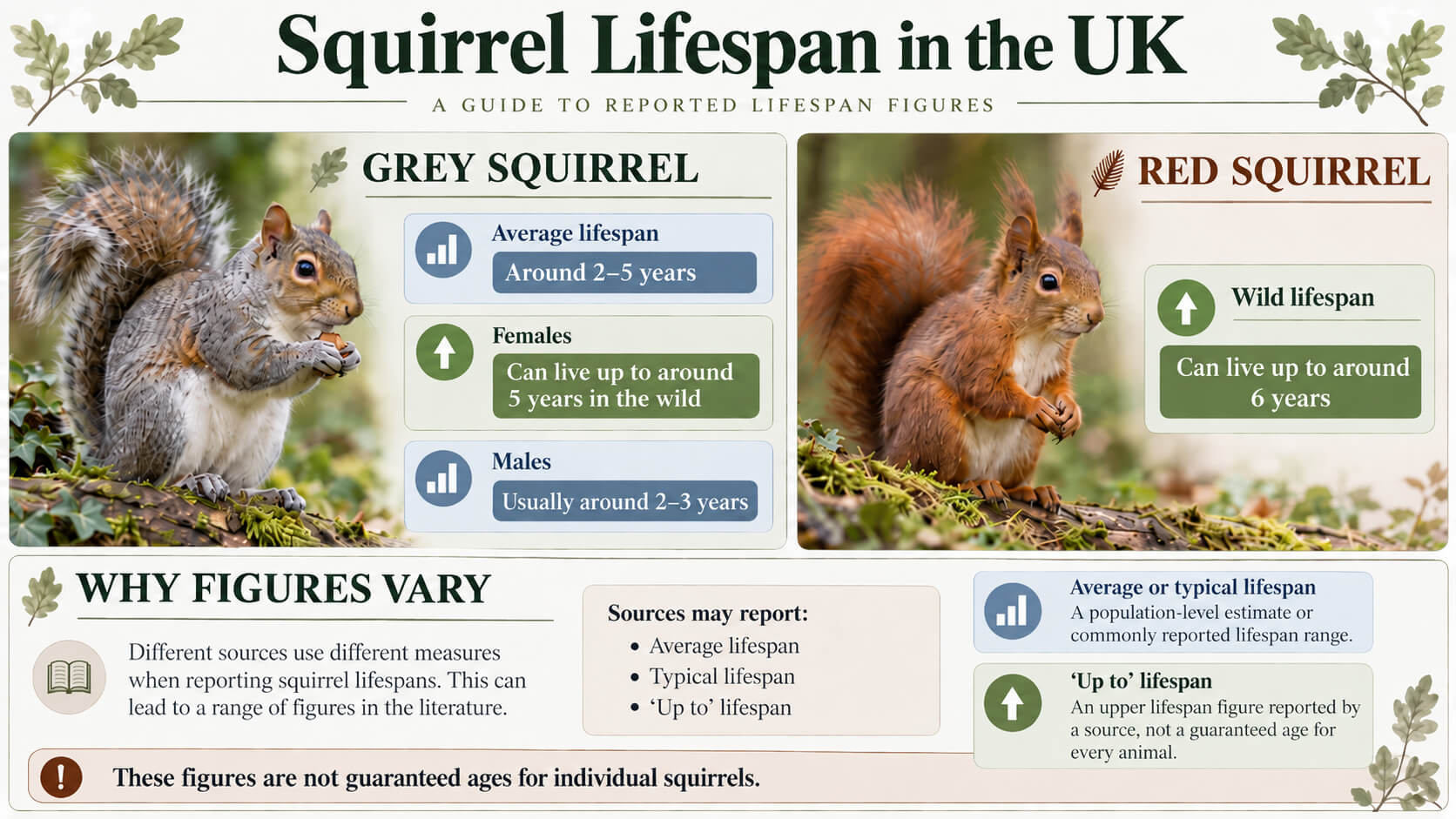
Grey squirrel lifespan in the UK is typically given as around 2–5 years. The Wildlife Trusts lists an average lifespan of 2–5 years for grey squirrels, while the Mammal Society provides additional information showing that lifespan can differ between males and females.
So, when asking how long do grey squirrels live, a single fixed age is not the best answer. Some individuals may survive for several years, but the available UK wildlife guidance shows that longevity varies within the species.
Male and Female Grey Squirrel Lifespan
Female grey squirrels can live longer than males according to Mammal Society guidance. Female grey squirrels can live up to around 5 years in the wild, while males usually live for around 2–3 years.
This distinction also explains why different grey squirrel lifespan figures can appear across wildlife resources. A general average may describe the species as a whole, while another source may give separate lifespan information for males and females.
Red Squirrel Lifespan
Red squirrels can live for up to around 6 years in the wild. The Mammal Society uses this upper-lifespan wording, while The Wildlife Trusts lists 6 years as an average lifespan, so the published figures need to be interpreted according to how each source defines them.
For that reason, the question of how long do red squirrels live does not have to be reduced to one absolute number. A red squirrel lifespan of up to around 6 years is supported by UK wildlife guidance, but this does not mean that every red squirrel will survive for six years.
These lifespan differences should not be used to identify whether a squirrel is red or grey. Species identification depends on separate characteristics and context, rather than the expected age of an individual animal.
Why Do Squirrel Lifespan Estimates Vary?
Squirrel lifespan estimates vary partly because wildlife sources may report different measures, such as an average lifespan or the age that some individuals can reach. Species and sex can also matter, as shown by the separate male and female lifespan figures published for grey squirrels.
This means that figures such as 2–5 years for grey squirrels and up to around 6 years for red squirrels should not be treated as guaranteed ages for an individual animal. They are useful species-level lifespan guides rather than a way to determine the age of a squirrel seen around a property.
A squirrel's lifespan does not indicate how long an individual animal has been using a property. For evidence of current activity, check the common signs of squirrels in roof spaces.
Frequently Asked Questions


Yes, some squirrels can live longer than the average lifespan reported for their species. An average describes a population rather than a fixed limit for every animal, so individual squirrels may die younger or survive for longer depending on their circumstances.
UK sources describe the six-year figure differently. The Wildlife Trusts lists an average lifespan of six years for red squirrels, while the Mammal Society describes them as living up to around six years in the wild. This is why the type of lifespan figure being quoted matters.
Female grey squirrels can live longer than males according to Mammal Society guidance. Females may live up to around five years in the wild, while males usually live for around two to three years.
No, seeing an adult squirrel does not tell you its exact age. Lifespan figures describe typical or possible longevity for a species and cannot be used to determine how many years an individual squirrel has lived simply from a sighting.
Different figures may describe different things, such as an average lifespan, a typical range or an upper age. Sources may also be discussing different squirrel species or sexes, so figures should be compared using the same definition rather than treated as directly interchangeable.