


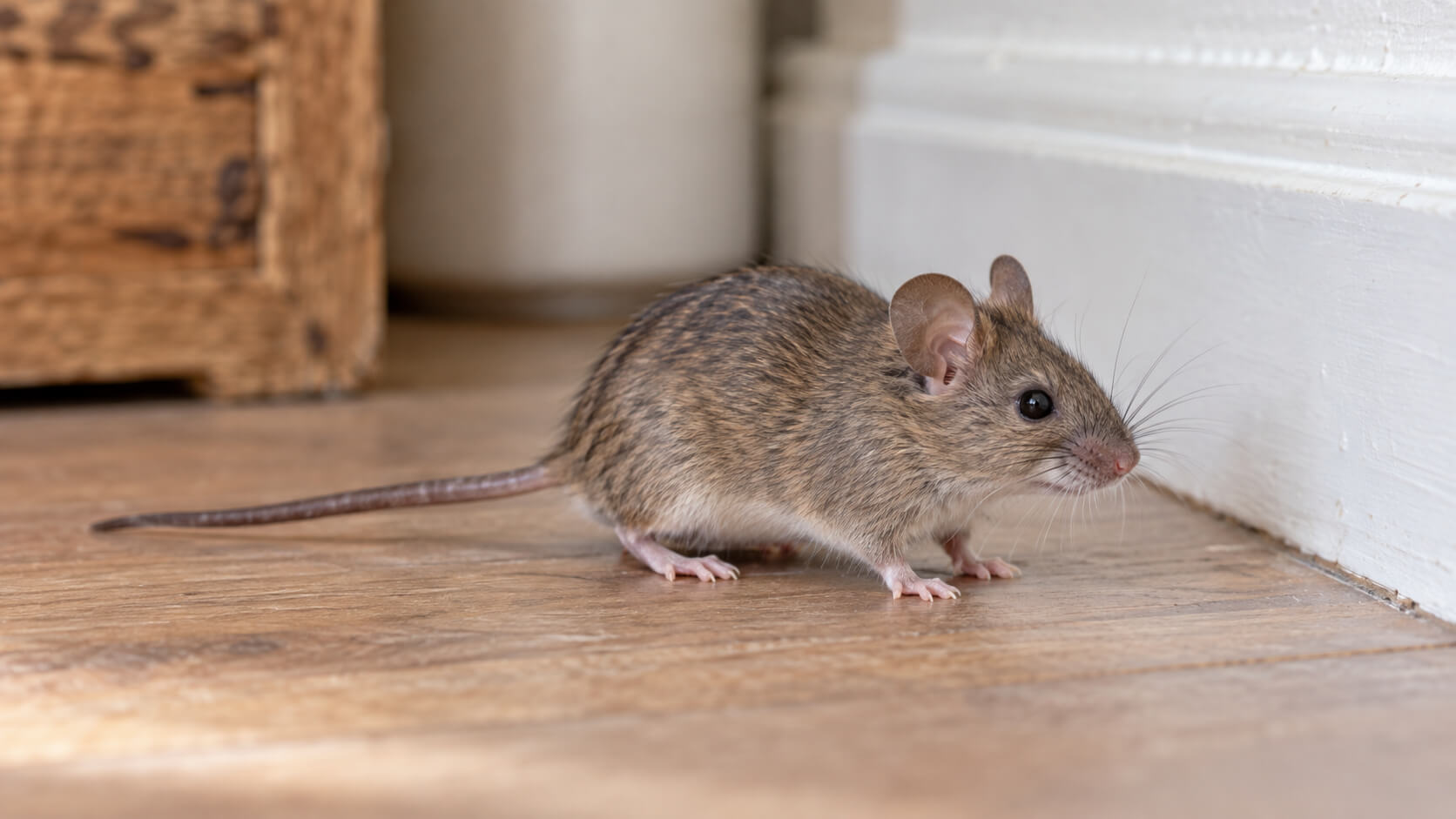
The house mouse (Mus musculus) is a small grey-brown rodent found throughout much of the UK, particularly around buildings and other sheltered environments. It has a pointed snout, prominent ears and a long, scaly tail.
This guide covers the house mouse’s size, physical characteristics, habitat, behaviour and lifespan in Britain.
Recently booked jobs


What Is a House Mouse?
The house mouse (Mus musculus) is a small grey-brown rodent that is widespread in Britain and closely associated with human environments. It is especially successful around buildings, farms and other places that provide reliable shelter and food. House mice are members of the family Muridae and have adapted to living alongside people for a very long time, spreading widely through human settlement and trade.
Although the name suggests that they live only inside houses, the species can also occur in farm buildings, storage areas, sheds, garages and arable land. House mice are recorded throughout most of Great Britain and Northern Ireland, including many islands. Their local numbers can change considerably depending on food, shelter and seasonal conditions.
House Mouse Size and Appearance
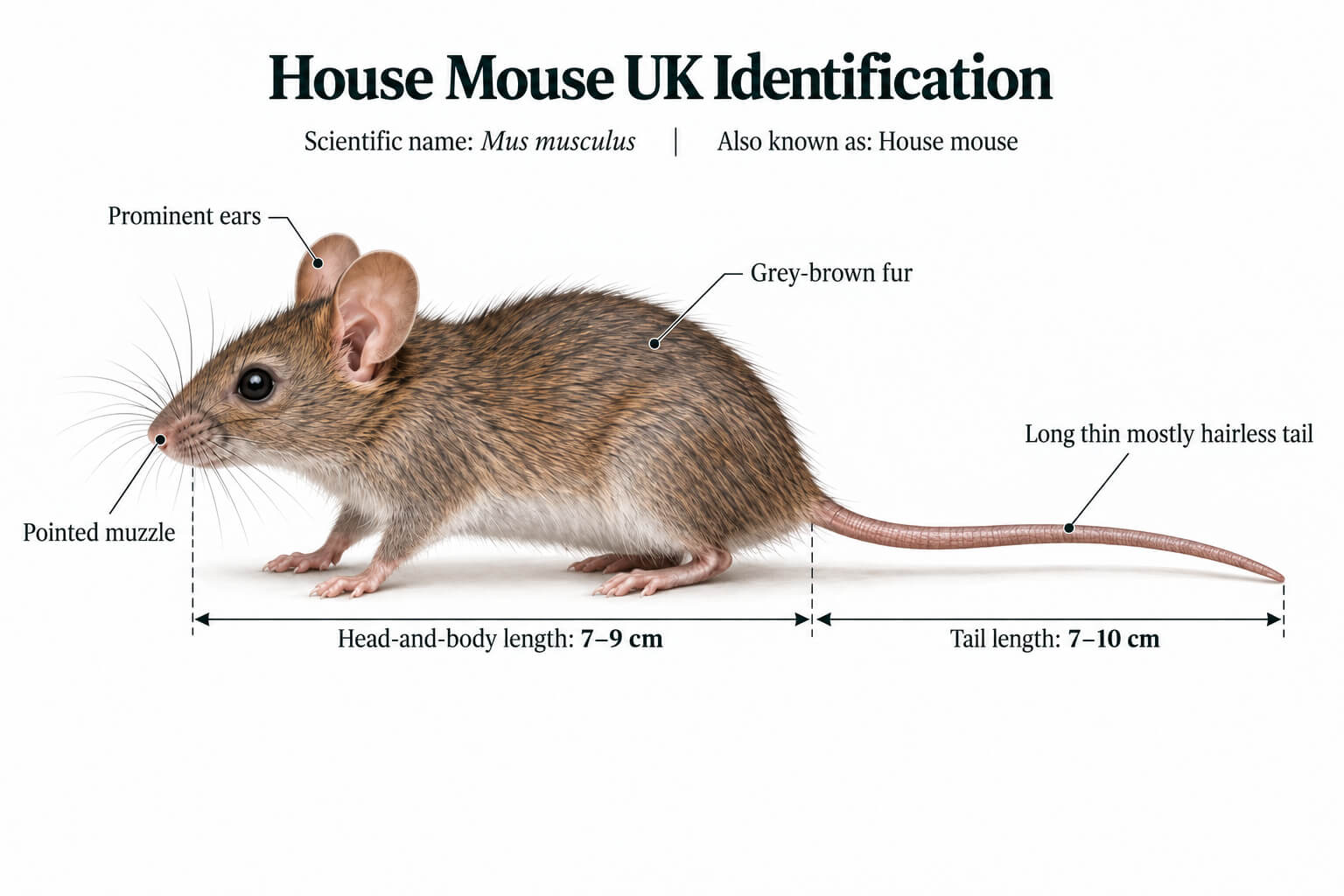
Adult house mice are small rodents with light brown to grey fur, a pointed snout, prominent ears and a long tail. Westminster City Council gives a typical body length of around 60–90 mm, with the tail adding up to about 100 mm. Their small body and relatively large ears help distinguish them from young rats.
Coat shade and body condition can vary between individuals. The tail is lightly haired rather than densely furry, while the ears and eyes are clearly visible. Several physical characteristics should therefore be considered together when describing a house mouse rather than relying on colour alone.
House Mouse Habitat in the UK
House mice are most strongly associated with buildings and other sheltered places where food is readily available. In Britain they are frequently recorded around farm buildings, warehouses, food stores, sheds, garages and similar structures, while populations can also occur on arable land.
A suitable house mouse habitat provides cover, nesting space and access to food. Inside or around buildings, mice can use small cavities and protected spaces; outdoors, they may occupy areas where vegetation, stored materials or agricultural structures provide shelter. Their ability to live close to people is an important part of the species’ ecology in the UK.
House Mouse Lifespan and Development
House mouse lifespan and development can vary with environmental conditions, access to resources and whether mice are living inside or outside buildings. Lifespan is generally short in wild populations, while young mice develop rapidly after birth.
House Mouse Lifespan
House mouse lifespan in the wild is usually short, although individual survival varies considerably with conditions. The Wildlife Trusts gives an average lifespan of around one year, while other UK wildlife sources note that many wild individuals survive for a much shorter period.
House Mouse Development
House mice develop and reproduce quickly when food and shelter remain available. Breeding may continue throughout the year, particularly in favourable indoor conditions, and females can produce several litters over that period.
House Mouse Behaviour and Diet
House mouse behaviour is strongly influenced by access to food, shelter and suitable nesting areas. Their movement patterns, social behaviour and flexible diet all help the species live successfully in both built and agricultural environments.
How House Mice Move and Behave
House mice are mainly nocturnal, with much of their feeding and movement taking place during the night. Their activity is strongly shaped by the location of food and shelter, and individuals may use a relatively small area when suitable resources are concentrated nearby.
House mice are territorial and can live in social groups where access to space and breeding opportunities differs between individuals. Females belonging to the same breeding group may use communal nests and nurse young within the group. House mice can also use sheltered routes and tunnel systems around the areas in which they live.
What Do House Mice Eat?
House mice are omnivores, although grains and other cereal foods form an important part of their diet. They can also eat seeds, fruit, roots, fungi, insects and other invertebrates, with food choice changing according to what is locally available. Insects can form a substantial part of the diet for animals living away from farmland.
In agricultural and built environments, stored food and animal feed can provide dependable food sources. In less food-rich surroundings, house mice may forage more widely and make greater use of naturally available plant and animal material. Food choice depends strongly on what is available nearby, and this dietary flexibility helps the species persist in many human-associated habitats.
If you are unsure whether the animal you saw was a mouse or a rat, our rat vs mouse identification guide explains the main differences.
Sources:
Frequently Asked Questions


House mice are agile and can jump well for their small size. Their movement abilities help them navigate cluttered environments, furniture and other obstacles. A precise jump height is not included here because the UK wildlife sources used for this page do not provide a consistent verified measurement.
No, house mice are considered an introduced species in Britain. They are thought to have arrived thousands of years ago and are now established throughout much of Great Britain and Northern Ireland.
A house mouse litter commonly contains around five to eight young. When food, shelter and temperature are favourable, breeding can continue regularly, particularly in protected environments such as buildings.
House mice are preyed on by several animals, including domestic cats, rats and barn owls. Predation is one of the natural factors that can influence local house mouse populations.
No, house mice do not hibernate. They remain active throughout the year and continue to feed, although their activity and visibility can change with temperature, food availability and seasonal conditions.