


HMO Fire Risk Assessment
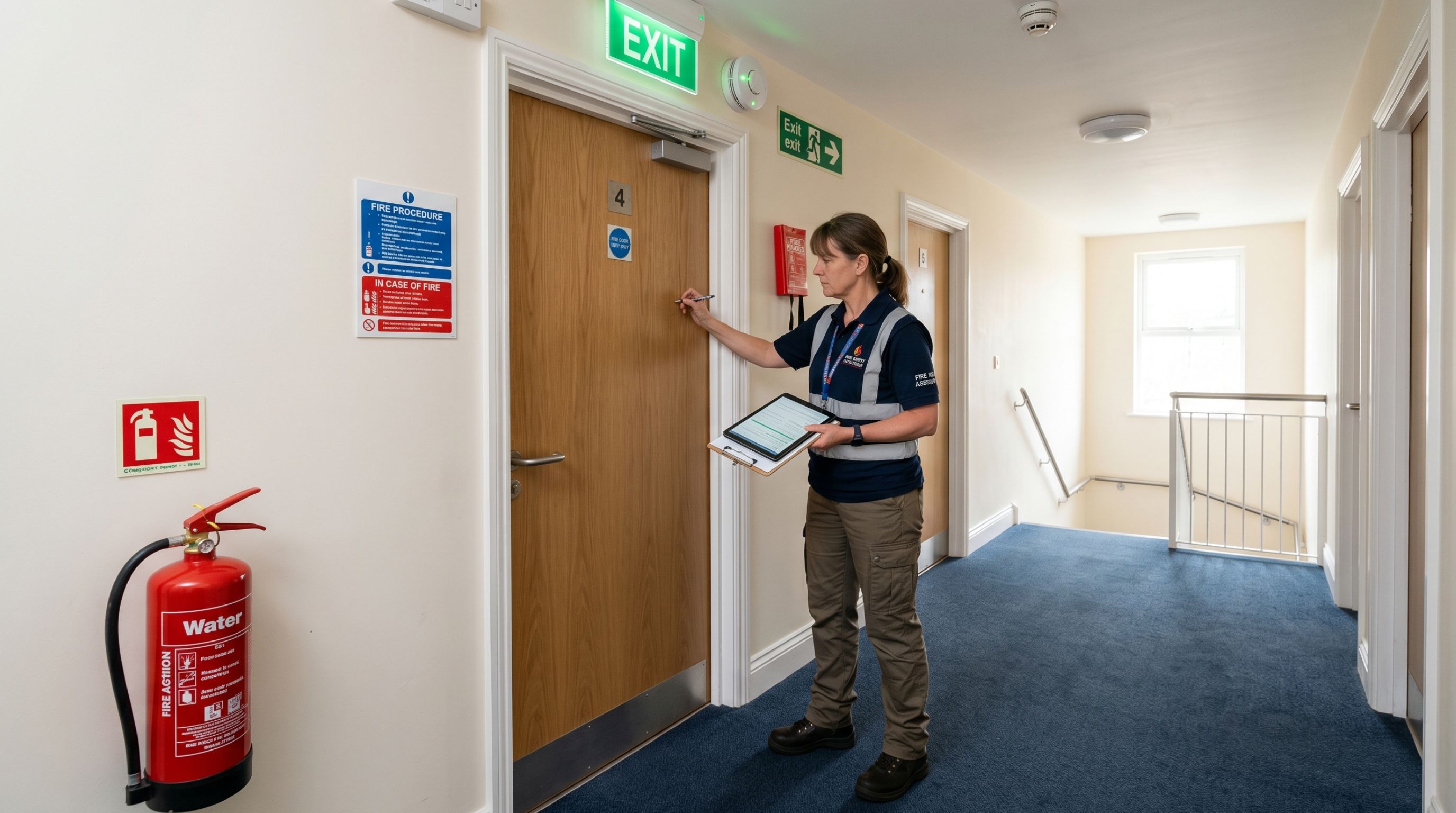
Need a fire risk assessment for your HMO?
Protect your tenants and shared HMO property with a professional HMO fire risk assessment. Book a vetted assessor to review shared areas, escape routes, fire doors, alarms and other key fire safety risks.
Compare prices, availability and reviews online, then choose the appointment that best suits your property and schedule.
Get Instant Prices!
Fire Safety for Shared Houses and Multiple-Occupancy Properties
- Compare HMO fire risk assessors, prices and customer reviews
- Assessment options for shared houses and multiple-occupancy properties
- Scope can include shared kitchens, communal escape routes and bedrooms where relevant
- Provide the number of floors, bedrooms and shared facilities to view relevant prices
- Suitable for landlords, letting agents and HMO property managers
- Coordinate access around tenants and occupied bedrooms
- Same-day appointments may be available

What type of property requires a Fire Risk Assessment?



Recently booked jobs


HMO fire risk assessment checks
An HMO fire risk assessment focuses on the fire safety risks created by shared occupation within a house in multiple occupation (HMO). Residents may live independently while relying on the same kitchens, hallways, stairways and final exits.
A fire risk assessment for an HMO should therefore reflect the actual layout, number of occupants, shared facilities, escape routes and use of individual rooms. It should consider how a fire in one part of the HMO could affect people living elsewhere in the property.
Shared escape routes
HMO occupants may depend on the same corridors, stairways, landings and final exits to leave the property safely.
The assessor may consider whether these routes are reasonably clear, whether furniture or stored items could obstruct movement and whether occupants from different rooms and floors can reach a suitable exit.
The importance of a shared escape route will depend on the layout of the HMO. For example, a single staircase serving several floors may require greater consideration than a route used by only a small part of the property.
The assessment should consider how occupants would actually leave the building, including how fire or smoke in one area could affect the shared route available to people elsewhere in the HMO.
Fire doors and compartmentation in HMOs
Fire doors and other forms of fire separation can help slow the spread of fire and smoke between bedrooms, shared facilities and communal escape routes.
Where included within the agreed scope, the assessor may consider the visible condition and position of relevant fire doors, the separation between different parts of the property and the relationship between higher-risk areas and shared escape routes.
Particular attention may be required where kitchens, storage areas or individual rooms open directly onto an important corridor or stairway used by several occupants.
The assessment should consider whether the available protection is suitable for the layout, occupancy and normal use of the HMO, rather than simply recording the number of doors or fire safety features present.
Fire alarms and emergency lighting in HMOs
Effective fire warning arrangements are particularly important in HMOs because a fire may begin in one room while other occupants are sleeping or spending time elsewhere in the property.
Where relevant to the agreed scope, the assessor may review the visible fire detection and alarm arrangements and consider whether occupants in different rooms and on different floors are likely to be alerted.
Emergency lighting and fire safety signage may also be considered where shared corridors, stairways and exits need to remain identifiable and usable if the normal lighting fails.
The findings should reflect the actual layout, occupancy and shared escape routes of the HMO, rather than rely on standard assumptions taken from another property.
Shared kitchens and ignition risks
Shared kitchens can be an important part of an HMO fire risk assessment because several residents may use the same cooking facilities at different times and with different levels of supervision.
The assessor may consider cooking appliances, nearby combustible materials, housekeeping, storage and the position of the kitchen in relation to shared corridors, stairways and escape routes.
Other potential ignition sources may include heating equipment, electrical appliances, extension leads, charging devices and equipment used within individual rooms.
A fire risk assessment does not replace specialist electrical testing or inspection. It may, however, identify visible hazards and patterns of use that could increase the likelihood or consequences of a fire.
Occupancy and people at risk in HMOs
The people living in an HMO are an important part of the fire risk assessment. Residents may have different routines, levels of familiarity with the property and abilities to respond during an emergency.
Occupancy can also change more frequently than in a single-household home. New tenants and visitors may be less familiar with the shared escape routes, alarm arrangements and final exits.
The assessor may therefore consider who normally uses the building, whether any occupants may require additional consideration and whether the existing arrangements remain suitable for the current occupancy and use of the HMO.
HMO fire risk assessment report and review
After the inspection, the assessor will normally provide a written HMO fire risk assessment report covering the areas included within the agreed scope.
In addition to the general findings, an HMO report may record:
- issues affecting shared corridors, stairways and final exits
- concerns relating to shared kitchens and communal facilities
- observations about relevant fire doors and separation
- occupancy or access issues affecting independently used rooms
- recommended actions and priorities
- areas that could not be inspected
The findings should reflect the specific layout, occupancy and living arrangements of the HMO rather than rely on recommendations prepared for another shared property.
A review may be appropriate following significant alterations, changes to shared escape routes, major refurbishment or substantial changes in the number of occupants or use of the rooms.
For general information about assessment services, prices and booking options for other property types, visit our main fire risk assessment service page.
HMO Fire Risk Assessment Requirements
Fire safety requirements for an HMO can depend on where the property is located, how it is occupied, whether it requires a licence and who has control or management responsibility for the premises.
An HMO licence and a fire risk assessment serve different purposes. Where licensing requirements apply, landlords and property managers should make sure that the fire safety arrangements and assessment remain appropriate for the way the HMO is actually occupied and managed.
In England, houses in multiple occupation can be subject to both housing and fire safety requirements. The appropriate fire risk assessment should reflect the actual layout, occupancy, shared facilities and common escape routes of the property.
Requirements can also vary between local authorities and across different parts of the UK. Landlords, licence holders and managing agents should therefore check the rules and licensing conditions that apply to the specific HMO.
HMO fire risk assessment cost
The cost of an HMO fire risk assessment will depend on the layout of the shared property, the areas included within the inspection and the amount of work required.
There is no single fixed price for every HMO. Properties with independently occupied bedrooms, several shared facilities or more complex escape arrangements may require additional inspection time.
What affects the cost of an HMO assessment?
Relevant factors may include:
- the number of floors and bedrooms
- the arrangement of individual and shared rooms
- shared kitchens, living spaces and other communal facilities
- the number and complexity of shared escape routes
- whether bedrooms or other private areas are included
- restricted spaces or access difficulties
- the location of the property and assessor availability
Two HMOs with a similar number of rooms may require different levels of work. A property spread across several floors, with multiple shared facilities or a more complicated escape arrangement, may require a more detailed inspection.
Arranging access in an occupied HMO
Access arrangements can be particularly important in an HMO because bedrooms and other private spaces may be occupied independently by different tenants.
Depending on the agreed assessment scope, access may be required to:
- shared kitchens and living areas
- hallways, stairways and landings
- entrances, final exits and external escape areas
- relevant cupboards, storage spaces or service areas
- visible fire safety equipment
- bedrooms or private rooms included within the inspection
Landlords, letting agents and property managers should confirm access with occupants before the appointment. Where an important area cannot be inspected, the assessor may record this as a limitation within the report.
Choosing an HMO Fire Risk Assessor
An HMO fire risk assessor should have experience appropriate to the size, layout and occupancy of the shared property.
Relevant considerations may include experience with:
- shared residential accommodation
- multi-storey HMOs
- communal kitchens and living facilities
- shared corridors, stairways and final exits
- properties where access must be coordinated with several tenants
Before booking, provide accurate information about the number of floors, bedrooms, shared facilities and any areas that may be difficult to access. This helps the assessor understand the likely scope of the visit and provide a more relevant price.
Through MyConstructor, landlords, letting agents and property managers can compare available HMO fire risk assessors, customer reviews, prices and appointment times before completing a booking.
HMO fire risk assessment FAQs


An HMO fire risk assessment is a review of the fire hazards, people at risk and existing fire safety arrangements within a house in multiple occupation. It considers how the property is occupied and may cover shared kitchens, communal circulation areas, escape routes, relevant fire doors, warning arrangements and other areas included within the agreed scope.
The requirements will depend on the property, how it is occupied, who controls or manages it and the rules that apply to the premises. Because HMOs can contain multiple households, shared facilities and communal escape routes, landlords and other responsible parties may need to arrange a property-specific fire risk assessment.
An HMO fire risk assessment focuses on the risks created when multiple households live within the same property and share facilities or escape routes. An assessment for another type of rental property may instead focus on flats, blocks of flats or shared common areas. The appropriate assessment will depend on how the property is occupied, arranged and managed.
Depending on the agreed scope, the assessor may need access to shared kitchens, communal rooms, corridors, stairways, landings, entrances, final exits and relevant fire safety equipment. Bedrooms, cupboards, storage areas or other private spaces may also need to be accessed where they are included within the inspection.
Shared kitchens are commonly relevant because cooking, appliance use, storage and housekeeping can affect the fire risk within an HMO. Bedrooms or other private rooms may also be included where required by the agreed assessment scope. The areas to be inspected should be confirmed before the appointment.
The cost of an HMO fire risk assessment may depend on the number of floors and bedrooms, the arrangement of shared kitchens and communal areas, the complexity of the escape routes, access requirements and the overall inspection scope. Enter the postcode and accurate property details to compare available HMO assessment prices.
A review may be appropriate following significant changes to the layout, occupancy, use of rooms, shared escape routes or fire safety arrangements. It may also be needed after major refurbishment or a significant fire safety incident. The assessment should continue to reflect how the HMO is actually occupied and used.
The assessor will normally provide written findings or an HMO fire risk assessment report covering the agreed inspection scope. It may record identified hazards, people who may be at risk, issues affecting shared areas or escape routes, relevant existing measures, recommended actions and any areas that could not be inspected.