


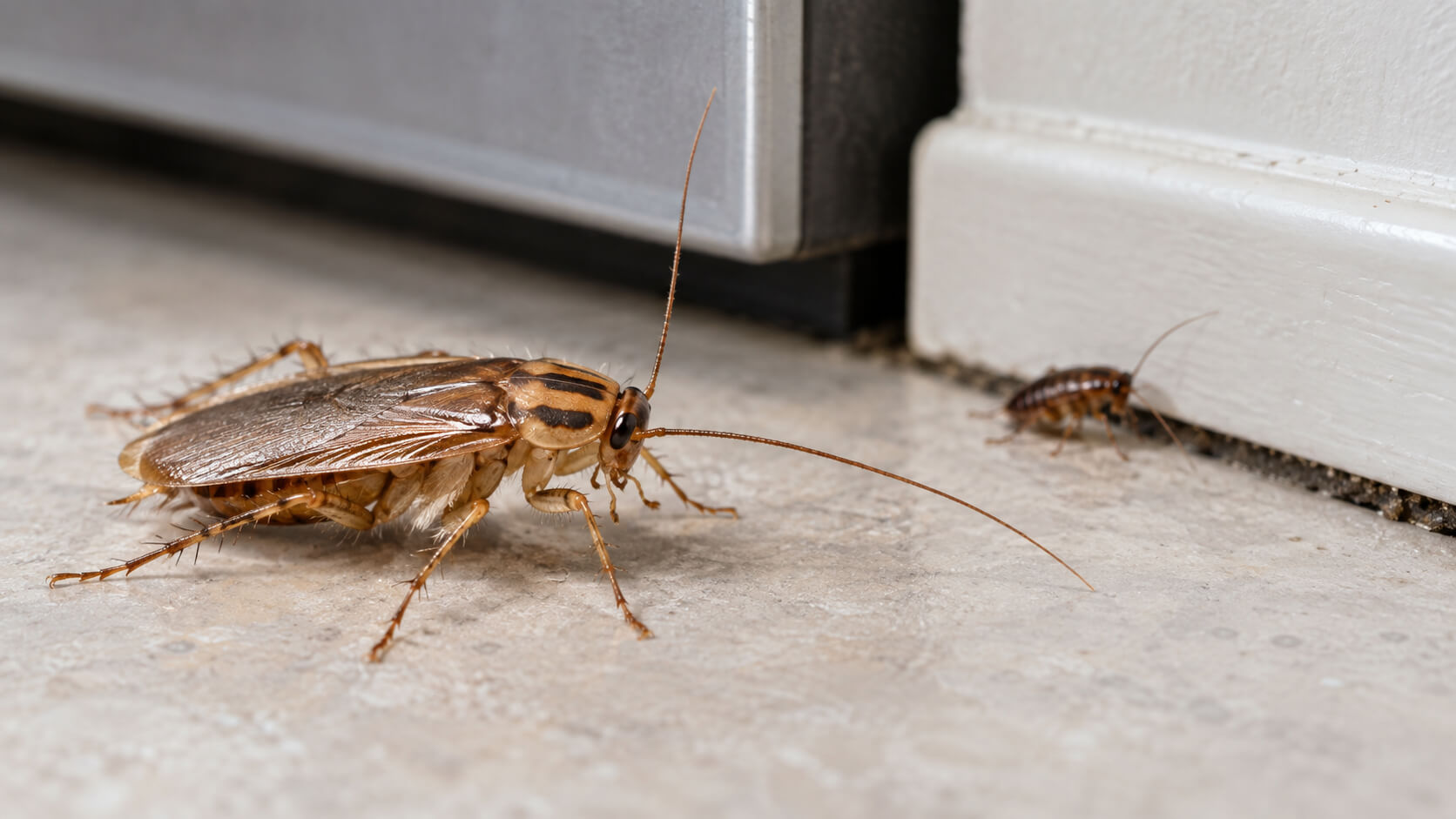
The German cockroach is a small, light-brown cockroach recognised by two dark parallel stripes behind the head. It is one of the cockroach species associated with warm indoor environments in the UK and can be identified by its size, markings and body shape.
This guide covers German cockroach appearance, nymphs, size, life cycle and other insects that may look similar.
Recently booked jobs


German Cockroach Identification in the UK
German cockroach identification is most reliable when appearance, size, markings, life stage and indoor context are considered together. In the UK, this species is mainly associated with warm indoor environments, while adults and nymphs can differ noticeably in colour, size and wing development.
What Does a German Cockroach Look Like?
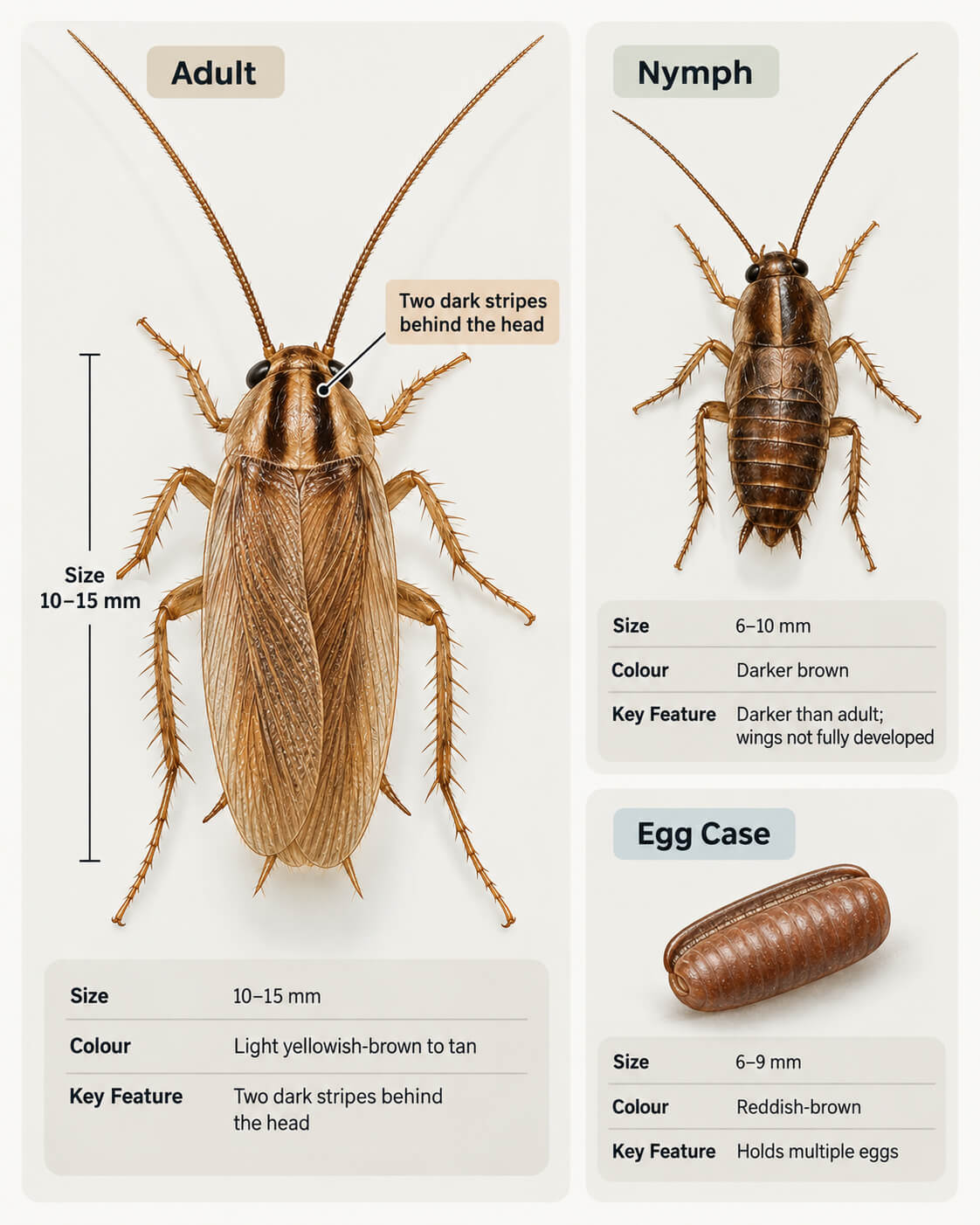
A German cockroach is a small, light yellowish-brown to tan cockroach, typically around 10–15 mm long, with two dark parallel stripes behind its head. It has a flattened oval body, very long antennae and six legs, while adults have developed wings.
The two dark stripes behind the head are one of the most useful identification features. Colour can vary slightly between individuals, so size, body shape, antennae and markings should be considered together rather than relying on colour alone.
Adult German cockroaches are relatively small compared with some other cockroach species. Nymphs are smaller still, which means measurements are most useful when combined with the insect's markings and overall body shape.
German Cockroaches in the UK
German cockroaches are one of the main pest cockroach species encountered in the UK. They are strongly associated with warm indoor environments where food, moisture and sheltered spaces are available.
They may be found around kitchens, food-handling areas, heated appliances, pipework and other protected indoor spaces. Their preference for warmth means they are primarily associated with buildings in Britain rather than exposed outdoor environments.
The British Pest Control Association identifies German and Oriental cockroaches as two of the most common cockroach pests found in the UK. For additional species information, see the British Pest Control Association cockroach guide .
German Cockroach Nymph Identification
A German cockroach nymph is a smaller, immature form of the adult and does not yet have fully developed wings. Nymphs are generally darker than adults and their appearance changes as they grow through successive stages.
Young nymphs can be harder to identify because their proportions, colour and markings differ from those of a mature cockroach. Long antennae, the flattened body shape and characteristic German cockroach markings become useful clues when several features are considered together.
To compare the German cockroach with other species that may be found in Britain, see our UK cockroach species guide.
Bugs That Look Like German Cockroaches
Some small brown insects can initially be mistaken for a German cockroach, particularly when they are seen briefly or in poor light. A reliable identification should therefore use several visible features rather than colour alone.
Look for the flattened oval body, very long antennae, relatively small size and the two dark parallel stripes behind the head. These markings are especially useful when distinguishing an adult German cockroach from another small brown insect.
If the insect does not have the characteristic stripes or typical cockroach body shape, another cockroach species or a different type of insect may be involved. Clear photographs showing the insect from above are usually more useful for identification than a brief sighting.
German Cockroach Life Cycle
The German cockroach life cycle has three stages: egg, nymph and adult. This is known as incomplete metamorphosis because there is no pupal stage between the immature and adult forms.
German Cockroach Egg Cases
Females produce an egg case known as an ootheca. After hatching, the young cockroaches pass through several nymph stages, shedding their outer skin as they grow before eventually reaching adulthood.
German Cockroach Nymph Development
Under suitable warm conditions, development can be relatively rapid. BPCA guidance states that German cockroach nymphs typically take around six to twelve weeks to reach maturity, although environmental conditions can affect development time.
For detailed identification of the capsule itself, see our cockroach egg case identification guide
Sources: British Pest Control Association - Cockroaches; London Borough of Redbridge - Cockroaches.

