


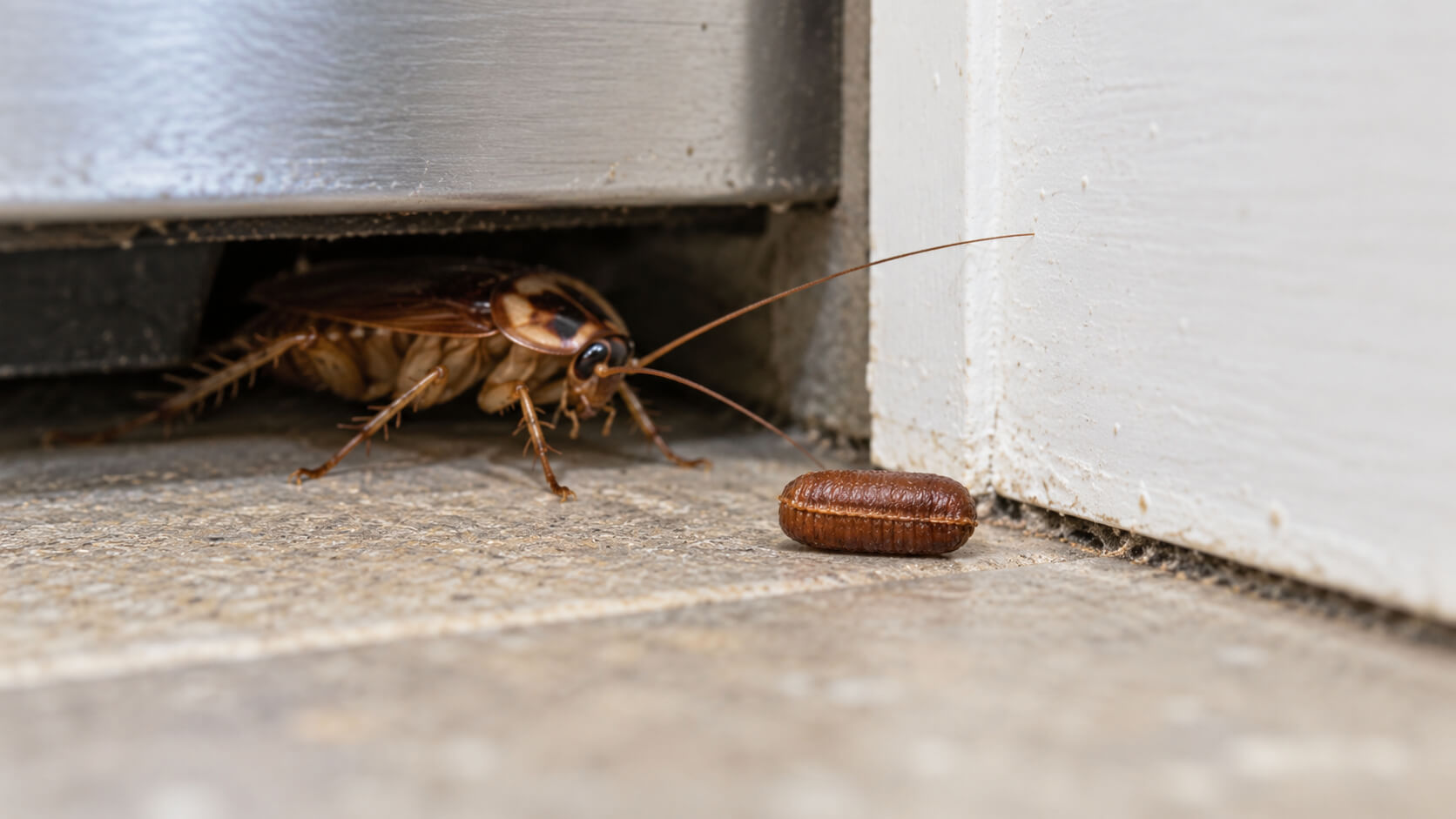
Cockroach eggs develop inside a protective capsule known as an ootheca rather than appearing as loose individual eggs. The appearance of the egg case varies by species, but it is typically small, firm and brownish in colour.
This guide explains what cockroach egg cases look like, how to recognise an ootheca, German cockroach eggs and what an empty egg case may look like.
Recently booked jobs


Cockroach Eggs: Appearance, Egg Cases and Identification
Cockroach eggs are usually identified through the egg case, or ootheca, that contains them rather than by seeing individual eggs. The appearance of these cases varies between species, so shape, colour, structure, location and species-specific features should be considered together.
What Do Cockroach Eggs Look Like?
Cockroach eggs are usually enclosed inside a protective egg case rather than seen individually. This capsule is called an ootheca and its shape, colour and size vary according to the cockroach species.
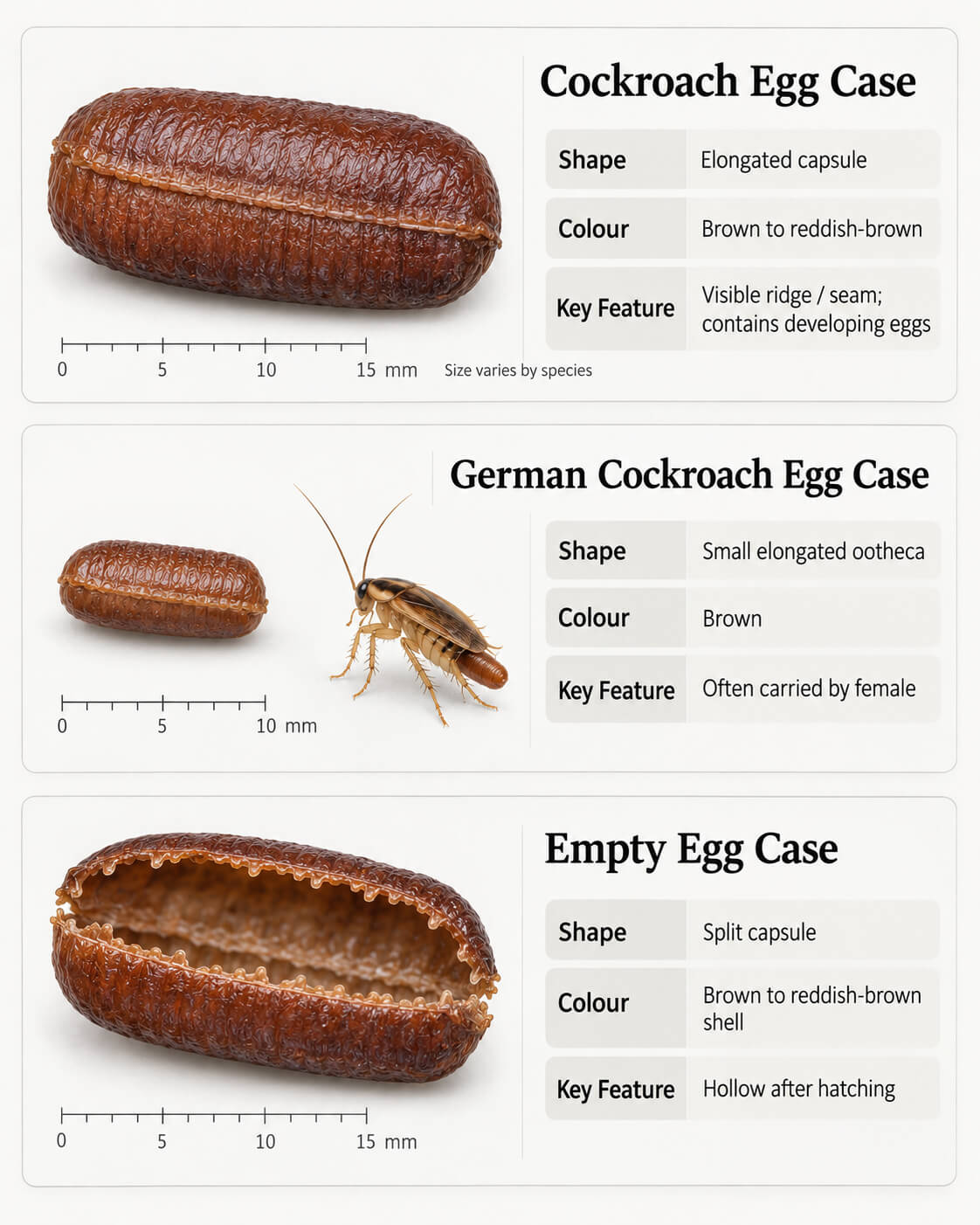
A cockroach egg case is generally small, firm and brown to reddish-brown. Many have a capsule-like or elongated shape with a visible ridge or seam along one edge. Fresh and older cases can differ slightly in colour, so shape and structure are often more useful than colour alone.
Cockroach Egg Cases and Oothecae
A cockroach ootheca is the protective capsule that contains multiple developing eggs. The casing helps protect the eggs while they develop before the young cockroaches emerge.
Egg cases vary between species. Some are carried by the female for part of their development, while others may be deposited in sheltered locations. Because of these differences, identifying the cockroach species from an egg case alone is not always straightforward.
German Cockroach Eggs
German cockroach eggs develop inside a relatively small brown egg case carried by the female for much of its development. The case is elongated and contains a number of developing eggs rather than one visible egg.
German cockroaches retain the ootheca longer than many other cockroach species, generally carrying it until close to the time the young emerge. Once hatched, the young cockroaches begin life as nymphs rather than miniature winged adults.
For adult markings, nymph appearance and species-specific information, see our German cockroach identification guide.
Where Can Cockroach Egg Cases Be Found?
Cockroach egg cases are generally associated with sheltered areas where they are less likely to be disturbed. Depending on the species, this may include cracks, gaps, spaces behind furniture or appliances and other protected indoor locations.
An egg case found indoors should be assessed together with its size, colour, shape and surrounding context. Seed husks, insect remains and other small household debris can sometimes resemble an ootheca at first glance.
To place cockroach egg cases in context with the species that produce them, see our cockroach identification guide for the UK.
Cockroach Egg Hatching and Empty Egg Cases
Cockroach egg development ends when young nymphs emerge from the ootheca, but the timing varies between species and environmental conditions. After hatching, the empty egg case may remain behind and can provide additional identification evidence.
How Long Do Cockroach Eggs Take to Hatch?
The time taken for cockroach eggs to hatch varies by species and environmental conditions. Temperature is particularly important, so a single hatching time should not be applied to every cockroach species or every indoor environment.
After the eggs develop, young cockroaches emerge as nymphs. They then grow through a series of moults before reaching adulthood, rather than passing through a pupal stage.
What Does an Empty Cockroach Egg Case Look Like?
An empty cockroach egg case may look similar to an intact ootheca but can appear split, opened or hollow after the young have emerged. Its outer shell may remain in place even though the developing cockroaches are no longer inside.
An old or damaged case can be more difficult to identify because colour and shape may change over time. For that reason, several physical features should be considered together rather than relying on one characteristic alone.

