


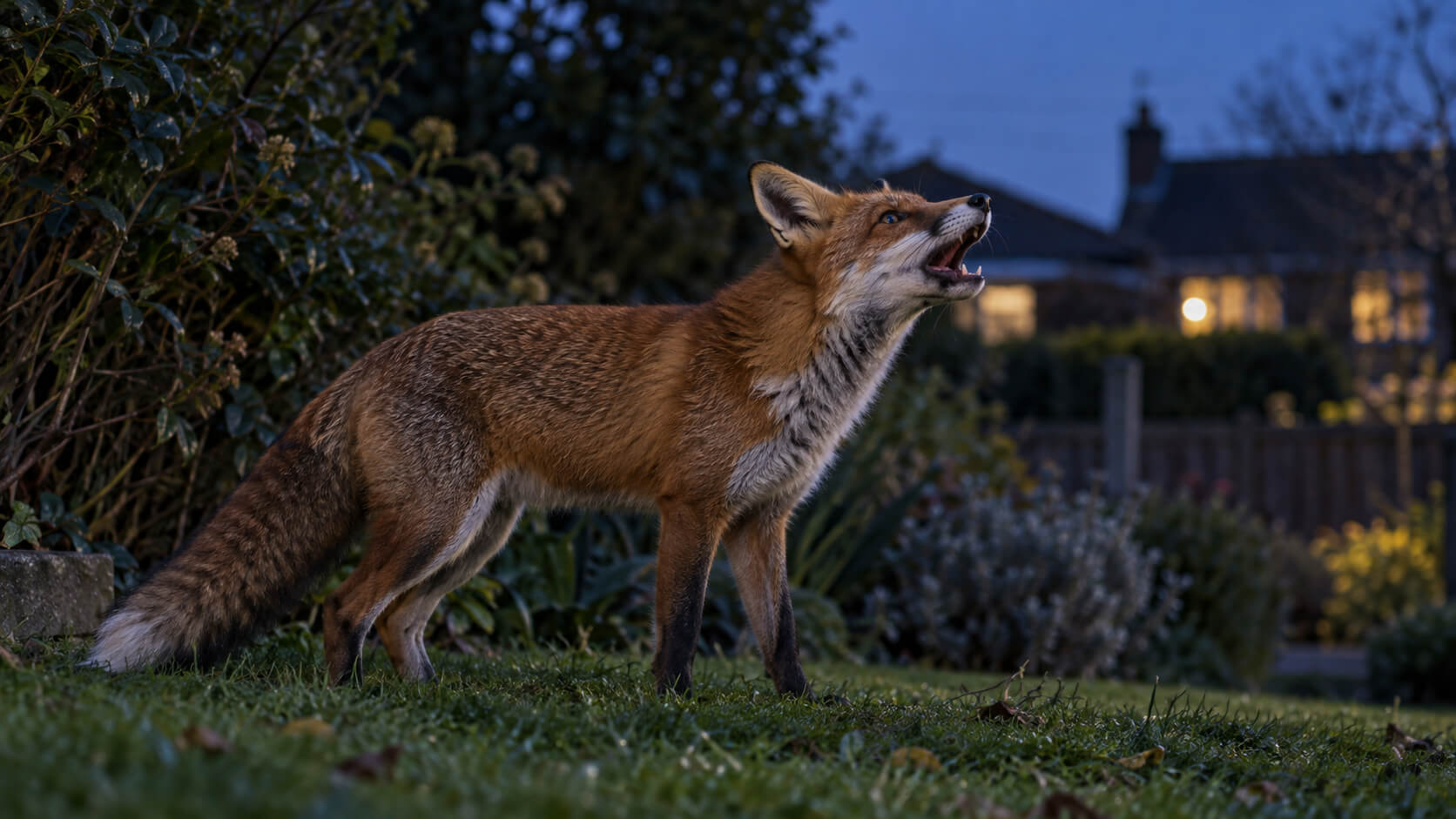
Fox sounds include screams, barks and other calls used by red foxes in different situations. In the UK, foxes may be heard at night communicating, warning other foxes or calling during the breeding season.
This guide explains what foxes sound like, why they scream, whether they bark and what different fox vocalisations can mean.
Recently booked jobs


What Sound Do Foxes Make?
Foxes make a wide range of sounds, including screams, barks, whines and throaty calls. Red foxes use vocalisations to communicate with other foxes, maintain contact, warn of danger, defend territory and interact during the breeding season. UK wildlife guidance describes foxes as highly vocal animals with many distinct calls.
What Do Foxes Sound Like?
Foxes can sound surprisingly varied, from sharp barks and short yaps to high-pitched screams, whines and rougher throaty noises. Some calls may sound dog-like, while others can be mistaken for a person or another animal because of their pitch and intensity.
The sound alone does not always reveal exactly what a fox is doing. The meaning depends on context, including whether the animal is alone, near other foxes, defending territory, caring for young or looking for a mate.
Fox Sounds at Night
Fox sounds are often noticed at night because red foxes are mainly active from dusk through the night and around dawn. Screams, barks and contact calls may therefore seem more frequent after dark even though foxes can vocalise at other times.
Night-time calling can be especially noticeable in winter, when territorial and breeding activity increases. For broader context on activity patterns, habitat and how behaviour changes around people, our guide to red fox activity and behaviour explains when foxes are active in the UK.
Fox Sounds Meaning
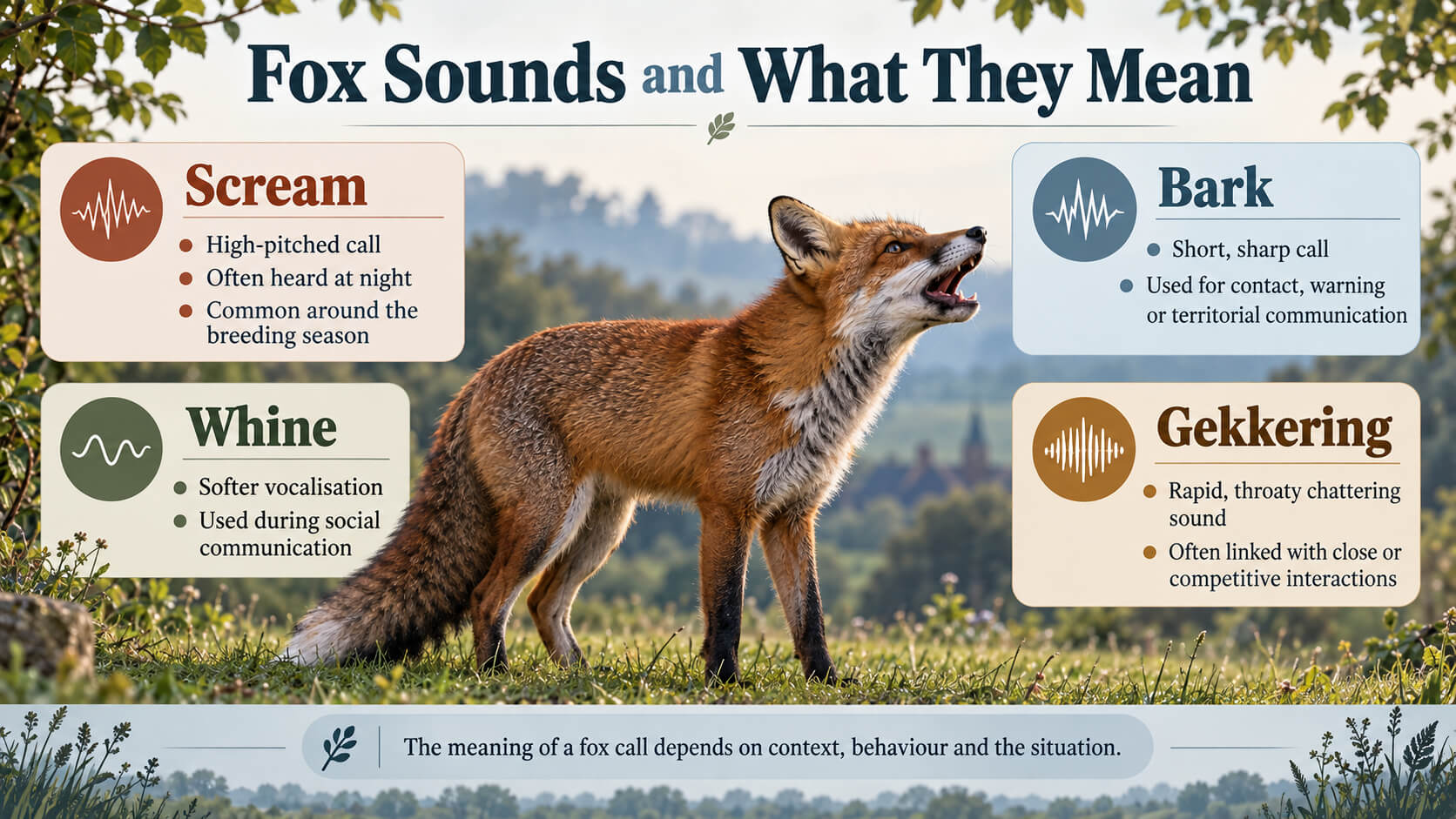
Different fox sounds can serve different communication purposes, but a call should not be interpreted in isolation. Barks may be used for contact, warning or territorial communication, while whines and other softer sounds can occur in social interactions. Rougher calls such as gekkering are associated with close social or aggressive encounters.
Body language, distance between animals and the situation all affect what a sound is likely to mean, so the same general type of call may carry different information in different circumstances.
Why Do Foxes Scream?
Foxes scream mainly to communicate with other foxes, particularly during the breeding season. Screaming can help attract a mate, advertise presence, warn rivals or communicate during territorial and social encounters. The sound can be startling because it is high-pitched and may resemble a human cry.
Why Do Foxes Scream in the Night?
Foxes often scream at night because this is when they are most active and most likely to encounter or call to other foxes. In the UK, screaming becomes especially noticeable in winter around the mating season, with January commonly associated with increased vocal activity.
Night-time screaming does not by itself mean that a fox is injured or in distress. It is usually a normal part of fox communication, although the exact purpose depends on the situation.
Why Do Foxes Scream When Mating?
Screaming around the mating season is mainly a form of communication rather than a sign that mating is causing pain. Female foxes are well known for high-pitched calls during the breeding period, while both sexes may also call to attract mates or deter rivals.
UK fox mating activity takes place in winter, so increased screaming at this time fits the wider pattern of fox breeding and mating season behaviour. The calls can occur before, during or around mating interactions rather than being evidence of injury.
Do Foxes Bark?
Yes, foxes bark as well as scream. Red foxes use barking for contact, warning and territorial communication, and some calls are described as sharp “wow” or “woo” sounds. Their barking is only one part of a much wider vocal repertoire.
Why Do Foxes Bark at Night?
Foxes may bark at night to keep contact with other foxes, advertise territory or respond to nearby activity. Because foxes are often active after dark, these calls are more likely to be heard at night, especially when animals are moving through territories or interacting with neighbours.
Do Foxes Bark Like Dogs?
Foxes can make calls that sound dog-like, but their barks are not identical to the familiar barking of a domestic dog. Red foxes also produce screams, whines, yaps and throaty sounds, so their overall vocal repertoire is much broader than a simple dog-like bark.
Frequently Asked Questions


Red foxes can make a surprisingly wide range of sounds. UK wildlife guidance describes up to 28 different vocalisations, including screams, barks, whines and other calls. Foxes use these sounds for communication between family members, attracting mates, warning rivals and responding to different social situations.
Gekkering is a rapid, throaty or chattering sound made by foxes during close interactions. It is particularly associated with aggressive or competitive encounters between foxes and can sound very different from the more familiar scream or bark. It forms part of the wider red fox vocal repertoire.
A fox scream can sound surprisingly human because it is high-pitched, loud and drawn out. The call is especially noticeable at night when surrounding noise is lower. Although it can sound alarming, this type of vocalisation is a normal part of red fox communication and is commonly heard during the breeding season.
Fox vocal activity can become more noticeable during the winter breeding season. Both male and female foxes may scream to attract a mate or deter rival foxes, which is one reason loud calls are frequently reported at this time of year. Foxes can still make a variety of sounds throughout the year.
Fox screams are not generally described as calls specifically directed at cats. UK wildlife sources mainly associate screaming with communication between foxes, particularly attracting mates and warning rivals. If a fox screams while a cat is nearby, the timing alone does not necessarily mean that the call is aimed at the cat.