


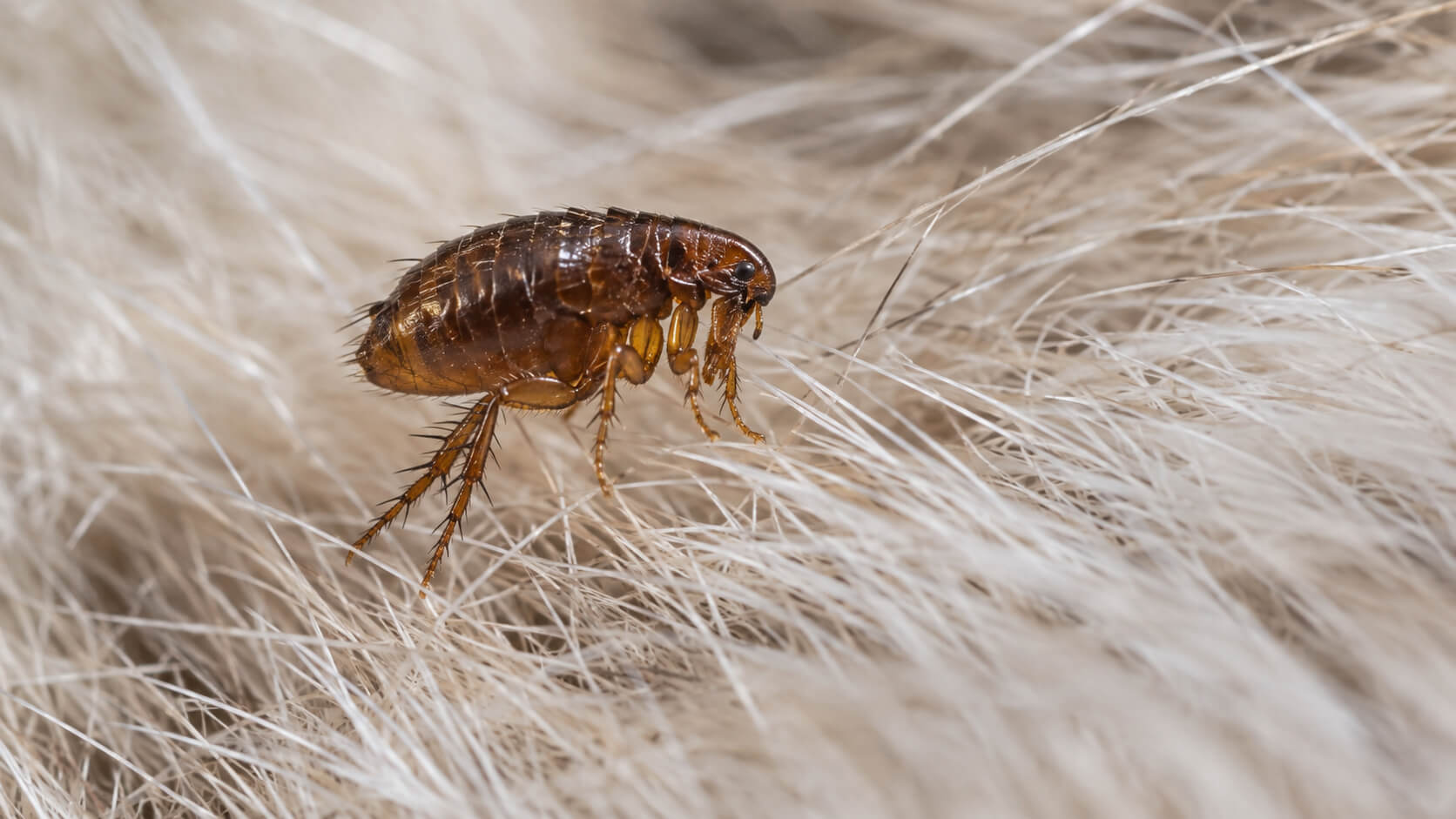
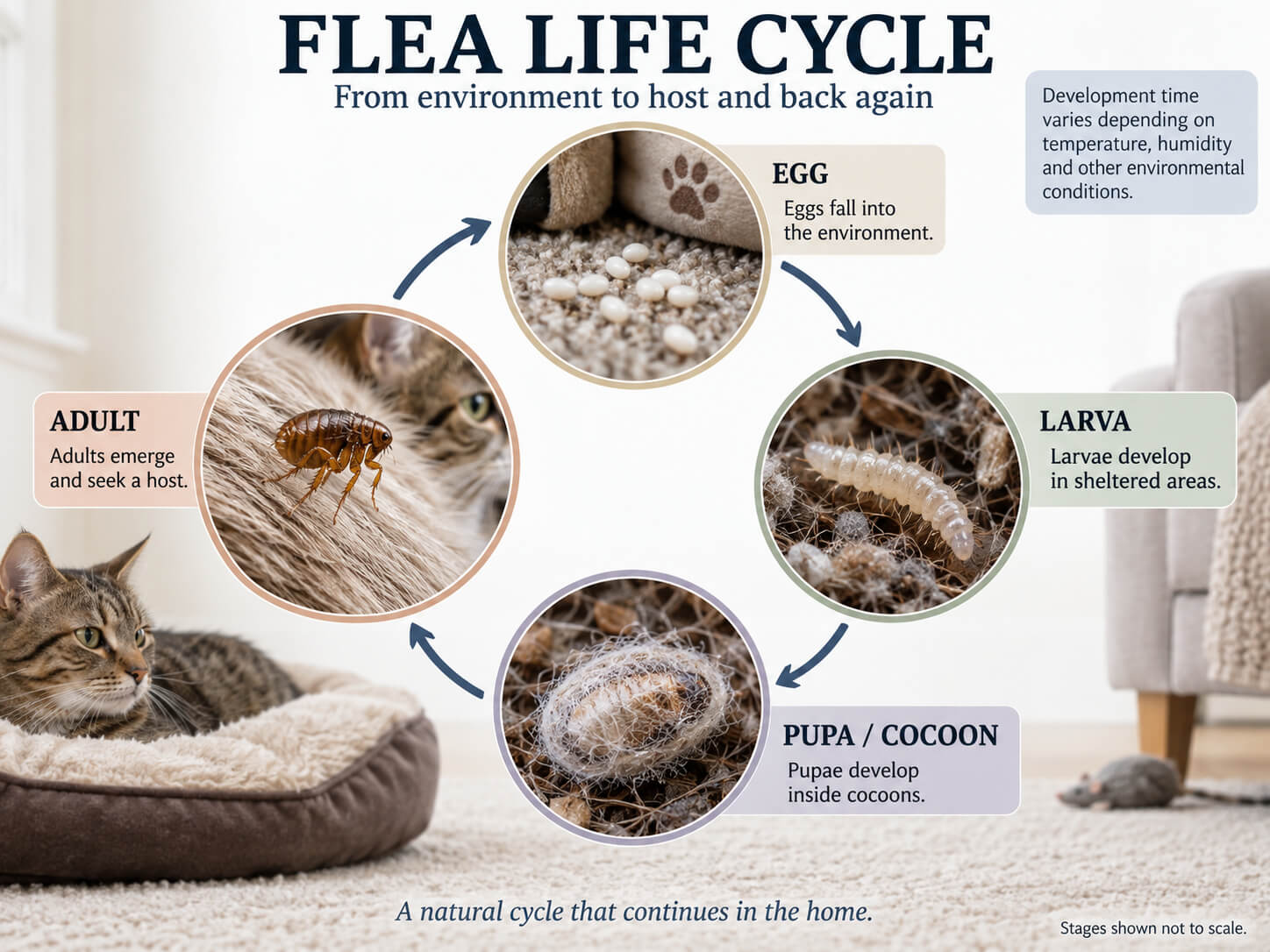
The flea life cycle has four main stages: egg, larva, pupa and adult. Adult fleas usually live on a suitable animal host, while the immature stages develop mainly in the surrounding environment. In homes, eggs, larvae and pupae can be associated with pet bedding, carpets, soft furnishings and sheltered floor-level areas. This guide explains each stage and why development time can vary.
Recently booked jobs


What Is the Flea Life Cycle?
The flea life cycle has four main stages: egg, larva, pupa and adult. These stages do not all occur in the same place. Adult fleas usually live and feed on a suitable animal host, while eggs, larvae and pupae develop mainly in the surrounding environment. In homes, these environmental stages are often associated with places where pets spend time, such as bedding, carpets, soft furnishings and sheltered floor-level areas.
The cat flea (Ctenocephalides felis) is the flea most commonly associated with cats and dogs in the UK. Its development is strongly influenced by temperature and humidity, so the time taken to move from egg to adult can vary considerably rather than following one fixed timetable.
Flea Eggs: What They Look Like and When They Hatch
Flea eggs are laid by adult female fleas after feeding and commonly fall from the host into the surrounding environment. They are small, oval and pale in colour. Because the eggs can drop into carpets, bedding and other resting areas, the early part of the life cycle can continue away from the animal itself.
Under suitable conditions, flea eggs usually hatch within 1–10 days, depending on temperature and humidity. The larvae then continue developing in the surrounding environment rather than on the animal itself. This is why a large part of the flea life cycle can be taking place in the home without being immediately visible.
Flea Larvae and Where They Develop
Flea larvae are free-living environmental stages that prefer sheltered, relatively dark areas. They do not look like adult fleas and do not live on the host in the same way. Larvae feed on organic material in their surroundings, including debris and material derived from adult flea faeces.
In domestic settings, larvae may develop within carpets, pet bedding, floor-level crevices and other protected areas where suitable food and moisture are available. As they grow, they pass through several larval stages before becoming mature enough to form a cocoon.
The Flea Pupal Stage
At the pupal stage, the developing flea is enclosed within a cocoon in the environment. The mature larva spins this cocoon before changing into an adult. Fine particles and debris can adhere to the outside, helping the cocoon blend into its surroundings.
The amount of time spent in this stage is highly variable. A newly developed adult does not always emerge immediately. Under less favourable conditions it can remain within the cocoon for an extended period, while environmental cues associated with a nearby host can encourage emergence. This variability is one reason a flea life cycle should not be described with a single universal number of days.
Adult Fleas and the Start of a New Cycle
Once an adult flea emerges, it seeks a suitable host, feeds and can begin the reproductive cycle again. Adult cat fleas generally remain on the host after establishing themselves there. Females can begin producing eggs soon after taking blood meals, and those eggs then fall into the environment, restarting the sequence.
This creates a clear division within the cycle: the adult stage is primarily associated with the host, while most immature development takes place away from it. If you are trying to work out whether fleas may currently be present in a property, see our signs of fleas in the house guide.
How Long Does the Flea Life Cycle Take?
There is no single fixed duration for the flea life cycle because development depends heavily on environmental conditions. Warmth and suitable humidity can speed development, while cooler or less favourable conditions can lengthen it considerably. ESCCAP UK notes that flea development can be completed very quickly under favourable conditions but may also extend for many months.
How Long Can Fleas Live Without a Host?
There is no single answer because survival without a host depends on the flea's life stage. A developing flea can remain protected within its cocoon for an extended period, with heat, vibration and carbon dioxide among the cues that can encourage adult emergence when a host is nearby.
Once emerged, an adult flea seeks a suitable host and feeds, while most immature development takes place away from the animal.
Sources:
Frequently Asked Questions


Yes, fleas can continue developing indoors during winter when conditions remain suitable. Heated homes can provide temperatures that allow environmental stages to continue developing even when outdoor conditions are colder.
Adult fleas can remain within their cocoons until environmental cues encourage them to emerge. Vibrations, warmth and carbon dioxide associated with a nearby host can help trigger emergence, which is why fleas may appear after people or animals return to a previously quiet area.
Yes, the cat flea (Ctenocephalides felis) is commonly found on both cats and dogs. Despite its name, it is the flea species most commonly associated with domestic cats and dogs in the UK.
Flea larvae are not the blood-feeding stage normally found biting people or pets. They develop in the environment and feed on organic material, including debris and material from adult flea faeces.
No, most immature flea stages develop away from the animal. Adult fleas are primarily associated with the host, while eggs, larvae and pupae are mainly found in the surrounding environment.