


Commercial Fire Risk Assessment
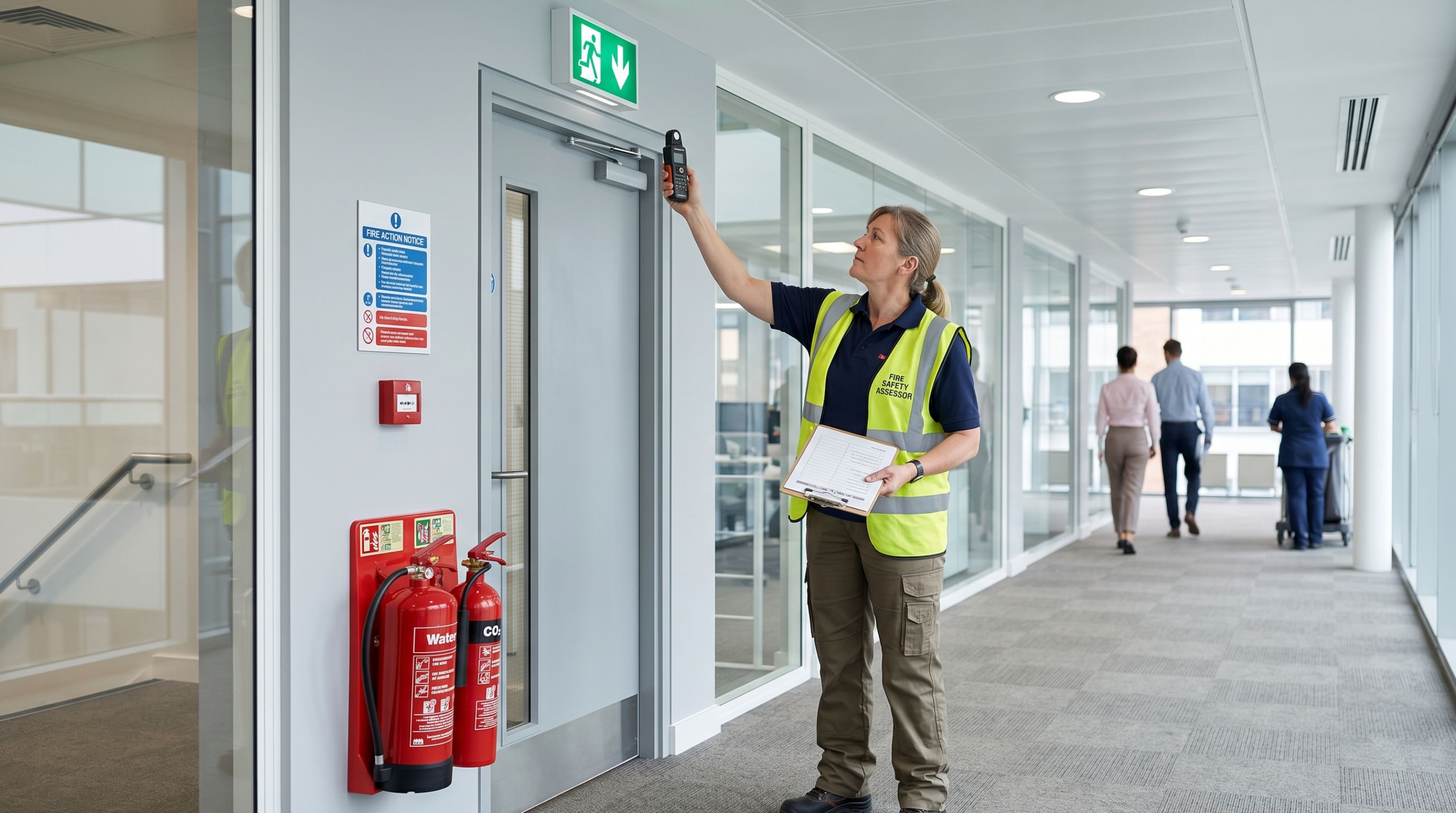
Need a fire risk assessment for your business premises?
Book a professional commercial fire risk assessment for offices, shops, warehouses, workplaces and other non-domestic premises. Compare vetted UK assessors, prices, reviews and appointment times online.
Whether you manage a small office, retail unit, storage space or multi-use workplace, you can choose a suitable assessor and arrange an appointment at a time that works for your business.
Get Instant Prices!
Fire Risk Assessments for Active Business Premises
- Assessment options for offices, shops, warehouses and workplaces
- Provide your business type, floor area and operating details to view relevant prices
- Suitable for premises used by employees, customers, visitors and contractors
- Scope can reflect stock, equipment, storage and public access
- Choose an appointment around your normal operating schedule
- Same-day appointments may be available
- Pay by card, PayPal, Google Pay, Apple Pay or on site

What type of property requires a Fire Risk Assessment?



Recently booked jobs

Commercial fire risk assessments for business premises and workplaces
A commercial fire risk assessment should reflect both the physical premises and the way the business operates within them.
A workplace or business fire risk assessment should also take account of the activities carried out on site, normal occupancy, equipment, stock and the way employees, customers and visitors use the premises.
Offices, shops, warehouses and other workplaces may contain employees, customers, contractors, equipment, stock and deliveries at the same time. These activities can affect where hazards arise, how routes are used and who may need to leave the premises during an emergency.
The assessment should therefore consider the actual working environment, operating activities and people present, rather than rely on a standard approach used for every commercial property.
How business operations affect the assessment
The condition and use of business premises can change throughout the working day.
Deliveries may temporarily occupy loading areas, equipment may be moved, customer numbers may increase and contractors may need access to restricted parts of the building.
Relevant operational considerations may include:
- normal opening and working hours
- the number of employees, visitors or customers present
- deliveries, collections and loading activity
- machinery, electrical equipment or heat-producing processes
- temporary displays, stock or work equipment
- contractors working in restricted areas
- changes between normal, busy and reduced-staff periods
The assessment should consider how the premises operate when they are actively being used, not only how they appear when the workplace is quiet or closed.
Offices, shared workspaces and changing layouts
An office fire risk assessment may need to reflect workstations, meeting rooms, reception areas, staff facilities and shared circulation routes.
Desk arrangements, partitions, meeting spaces and room use can change over time. Hybrid working may also mean that occupancy varies considerably between different days or parts of the week.
The assessor may consider how:
- employees and visitors move through the office
- reception and meeting areas are used
- electrical equipment and charging devices are positioned
- paperwork, furniture and stored materials are managed
- temporary desk or room layouts affect circulation
- people unfamiliar with the building would reach an exit
The findings should reflect the current workplace arrangement, including any regularly changing or multi-use spaces.
Shops, customers and changing retail displays
A shop fire risk assessment needs to account for employees and members of the public using the premises at the same time.
Customers may be unfamiliar with the layout or alternative exits, while displays, seasonal stock and promotional materials may alter movement through the sales area.
Relevant areas and activities may include:
- customer entrances, exits and sales-floor routes
- temporary displays and promotional stands
- stock rooms and back-of-house spaces
- staff-only areas
- deliveries and stock replenishment
- queues, busy periods and increased customer numbers
- areas not normally accessible to the public
The assessment should reflect how the shop functions while open, including the effect of customers, staff, stock and changing displays.
Warehouses, storage and loading operations
A warehouse fire risk assessment may involve large operating areas, significant quantities of stock and regular movement of vehicles, equipment and personnel.
The arrangement of stored materials can affect both the potential consequences of a fire and the routes available to people working within the premises.
Relevant operational details may include:
- the type, quantity and arrangement of stored materials
- high-level, dense or frequently changing storage
- aisles and internal movement routes
- loading bays and delivery areas
- machinery and operational equipment
- battery charging or vehicle-related areas where relevant
- driver, contractor and visitor access
- separate work zones or restricted operating areas
The assessment should reflect the warehouse as an active workplace where stock levels, equipment and working practices can change.
Staff, contractors and working patterns
Different groups may use commercial premises at different times and with different levels of familiarity.
Employees may know the normal layout, while customers, temporary workers, delivery drivers and contractors may be less familiar with available exits or workplace procedures.
The assessment may therefore consider:
- employees working during normal business hours
- shift workers or reduced-staff periods
- lone workers and people in isolated areas
- temporary and agency workers
- customers, visitors and members of the public
- contractors and delivery drivers
- people who may require additional assistance
Working patterns are important because the number and location of people may vary between opening hours, shift changes, deliveries and out-of-hours work.
Actions, records and operational changes
After the inspection, the assessor will normally provide written findings covering the commercial premises and operating areas included within the agreed scope.
The report may record:
- the premises and business areas inspected
- hazards connected with business activities or equipment
- stock, storage or housekeeping concerns
- issues affecting staff, customer or contractor routes
- operating areas that could not be accessed
- relevant management or emergency arrangements
- recommended actions and priorities
Recommended actions may need to be assigned to an employer, business owner, occupier, facilities manager or another person who controls the affected part of the premises.
The assessment may need to be reviewed following significant changes to the layout, staffing, equipment, stock, business processes, opening hours or use of the premises.
For general information about assessment services, prices and booking options for other property types, visit our main fire risk assessment service page.
Commercial Fire Risk Assessment Requirements
For workplaces and other commercial premises, the person or organisation with responsibility or control over the premises may have duties relating to fire risk assessment, fire safety measures and emergency arrangements.
Depending on the business and property arrangements, responsibility may sit with an employer, business owner, occupier, facilities manager or another person with control of all or part of the premises.
In shared commercial buildings, responsibility may be divided between different businesses, property managers or other parties controlling separate parts of the premises. Relevant parties may therefore need to co-operate and co-ordinate their fire safety arrangements.
The fire risk assessment should reflect the actual use of the workplace, people who may be at risk, business activities and current operating conditions. It should also be reviewed when significant changes mean that the existing assessment may no longer reflect the premises.
For official guidance on workplace fire safety responsibilities, refer to UK Government workplace fire safety guidance.
Commercial fire risk assessment prices
The price of a commercial fire risk assessment may depend on the premises, the operating activities taking place and the areas included within the inspection.
A straightforward office may require less inspection time than a workplace with several operating zones, extensive storage, machinery, public access or restricted production areas.
What affects the price for business premises?
Relevant commercial price factors may include:
- the type and floor area of the premises
- the number of floors or separate operating zones
- the nature of the business activities
- customer or public access
- stock quantity and storage arrangements
- machinery, equipment or specialist processes
- loading bays, yards or delivery areas
- locked, restricted or controlled work areas
- the agreed inspection scope
- property location and appointment availability
Floor area alone does not determine the price. A smaller workplace with specialist processes, several restricted areas or complex operating activities may require more inspection time than a larger but straightforward office.
Arranging access around business operations
Commercial inspections may need to be coordinated around normal working activities, deliveries, customer access and restricted operating areas.
Depending on the agreed scope, access may be required to:
- offices and active work areas
- customer-facing or public areas
- stock rooms and storage spaces
- warehouses, loading bays and delivery areas
- staff rooms and workplace kitchens
- plant, service or machinery areas
- restricted rooms controlled by managers or contractors
- visible fire safety equipment
The business should arrange any necessary keys, permissions, escorts or operational access before the appointment.
Where an important area cannot be inspected safely or without disrupting controlled operations, the assessor may record this as an assessment limitation.
Preparing business information and booking
Before booking, gather accurate information about the business premises and normal operating activities.
Useful details may include:
- the business type and use of the premises
- the approximate floor area and number of floors
- the number of separate work or operating zones
- normal staff, customer and visitor numbers
- stock, equipment and storage arrangements
- loading, delivery or contractor activity
- restricted areas or access requirements
- the most suitable time for the inspection
Providing these details helps available assessors understand the likely scope, operational conditions and access requirements before providing a more relevant price.
Through MyConstructor, businesses and property managers can compare commercial fire risk assessment prices, customer reviews and appointment times before completing a booking.
Commercial fire risk assessment FAQs


A commercial fire risk assessment reviews the fire risks within business or non-domestic premises, taking account of the building, workplace activities, equipment, stock and the people who may be present. It normally records identified hazards, existing arrangements and recommended actions.
A fire risk assessment may be required where a person or organisation has responsibility for fire safety within a workplace or commercial premises. This can include employers, business owners, occupiers, tenants, facilities managers and others with control over all or part of the premises.
Responsibility may sit with an employer, business owner, occupier, tenant, facilities manager or another party controlling the premises. In a shared commercial building, responsibilities may be divided between several businesses, managers or property owners.
Commercial assessments can be arranged for offices, shops, retail units, warehouses and workplaces, as well as studios, clinics, workshops, storage premises and shared business buildings. The booking details should reflect the actual use and size of the premises.
The agreed inspection may consider business activities, work equipment, stock, storage and operating areas, together with staff and visitor routes, relevant fire doors, warning arrangements, emergency lighting, signage, contractor access and workplace procedures.
The commercial fire risk assessment cost may depend on the property type, floor area, number of operating zones, business activities, stock, equipment, public access, restricted areas and assessor availability. Enter accurate premises details and the postcode to compare available prices.
Assessments can be arranged for multiple business locations, but each site should normally be considered according to its own layout, activities, occupancy, access and operating conditions. Separate premises may therefore require separate booking and scope details.
A review may be appropriate following significant changes to the premises, layout, staffing, opening hours, business processes, equipment, stock or storage arrangements. It may also be needed after refurbishment, a significant incident or changes in the management of the property.
Prepare details of the business use, floor area, operating zones and normal occupancy, and arrange access to work areas, stock rooms, loading areas, plant rooms, staff spaces and restricted locations included within the assessment. Keys, permissions or an escort may be required.
Yes. A commercial fire risk assessment focuses on business and non-domestic premises, including offices, shops, warehouses, staff, customers, stock and operating activities. A landlord fire risk assessment generally focuses on the managed common parts of flats and residential buildings.