


Cardinal Spider UK: Appearance, Size and Distribution
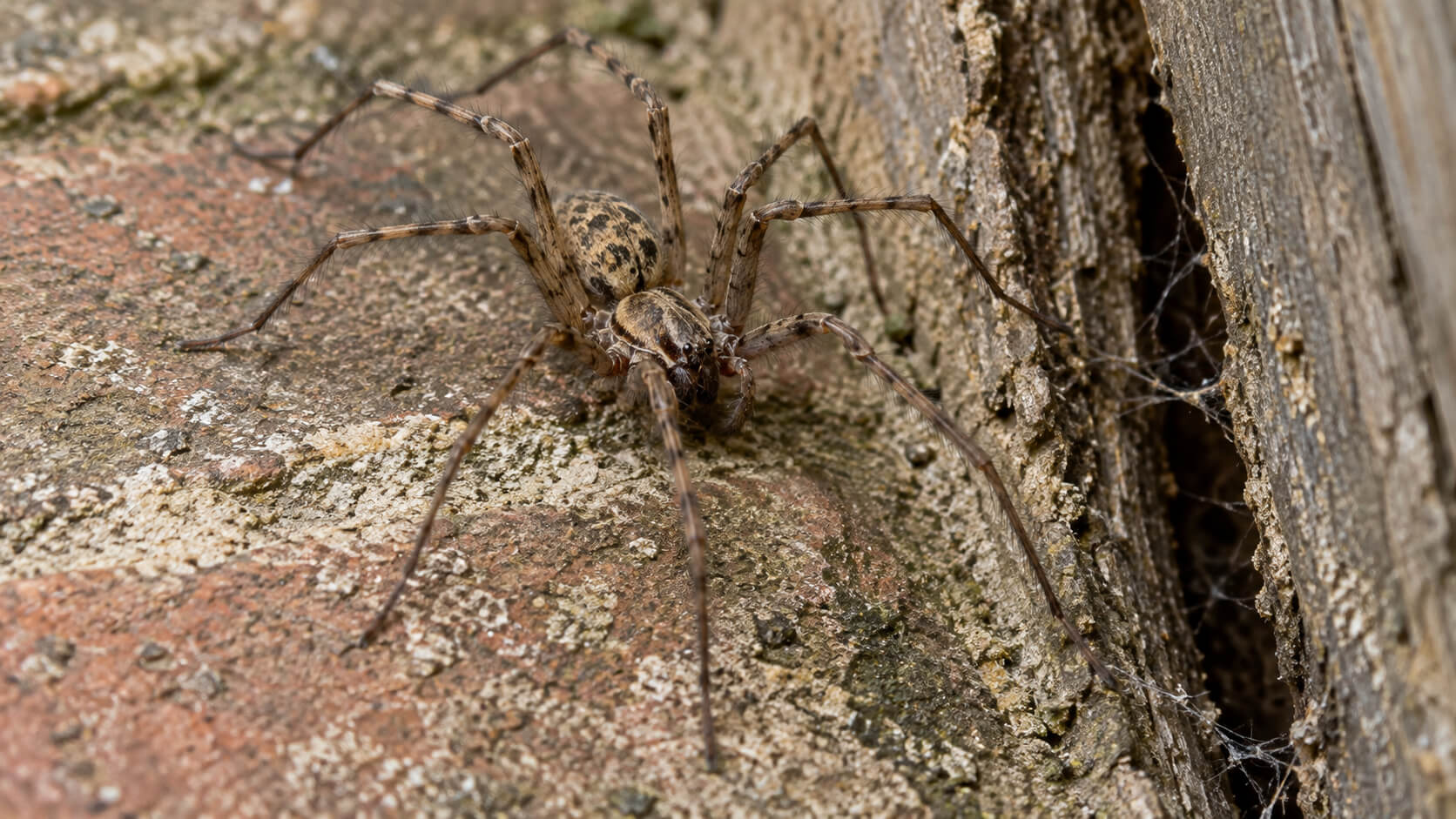
The cardinal spider, Tegenaria parietina, is a large brown spider found in parts of the UK, particularly around buildings and other sheltered places.
This guide explains its appearance, cardinal spider size, male and female differences, UK distribution and the features that help distinguish this species from similar large spiders.
Cardinal Spider: Key Features
- Adult males can have especially long legs in proportion to the body
- Females are generally more robust in appearance than the longer-legged males
- The species is associated with buildings and other sheltered places
- Its web includes a sheet of silk leading towards a sheltered retreat
- Adults are most often noticed during the later part of the year



Who will come to my home?
A certified pest control technician from our vetted network, on the day and time you choose. You get a confirmation by email as soon as you book.
Is the treatment safe for children and pets?
Yes. Technicians use HSE-approved products and methods: tamper-resistant bait stations for rodents, and sprays or gels that are safe for children and pets once dry. You are told before the visit if a room needs to stay clear for a few hours.
What if the pests come back?
Follow-up visits are included where the treatment lists them, so if activity continues after the first visit, the next one is already covered at no extra charge. The price you see is the full price for the whole treatment cycle.
Do I need to prepare anything or be at home?
Someone needs to be at the property to let the technician in. Preparation is minimal and depends on the pest; the technician confirms anything needed by SMS and email after you book.
Do I pay now?
No. You see the price, then pick a date and time. Payment is only confirmed at checkout, and cancellation is free.
Is the £50 inspection fee deducted from the treatment?
Yes. If you are not sure what the pest is, you can book a £50 inspection visit. The technician identifies the pest and quotes the treatment on site, and if you go ahead the £50 is deducted from that treatment price.
Recently booked jobs



How to Identify a Cardinal Spider
The cardinal spider, Tegenaria parietina, is a large brown spider with notably long legs and a strong association with buildings. In Britain it belongs to the same broad house-spider group as several other long-legged species, so identification should rely on proportions, leg characteristics and habitat rather than colour alone.
Cardinal spiders can look imposing because the legs contribute much of their overall span. The species is particularly distinctive for the difference in leg length between mature males and females, while the web and the type of building or sheltered site can add useful context.
Cardinal Spider Size
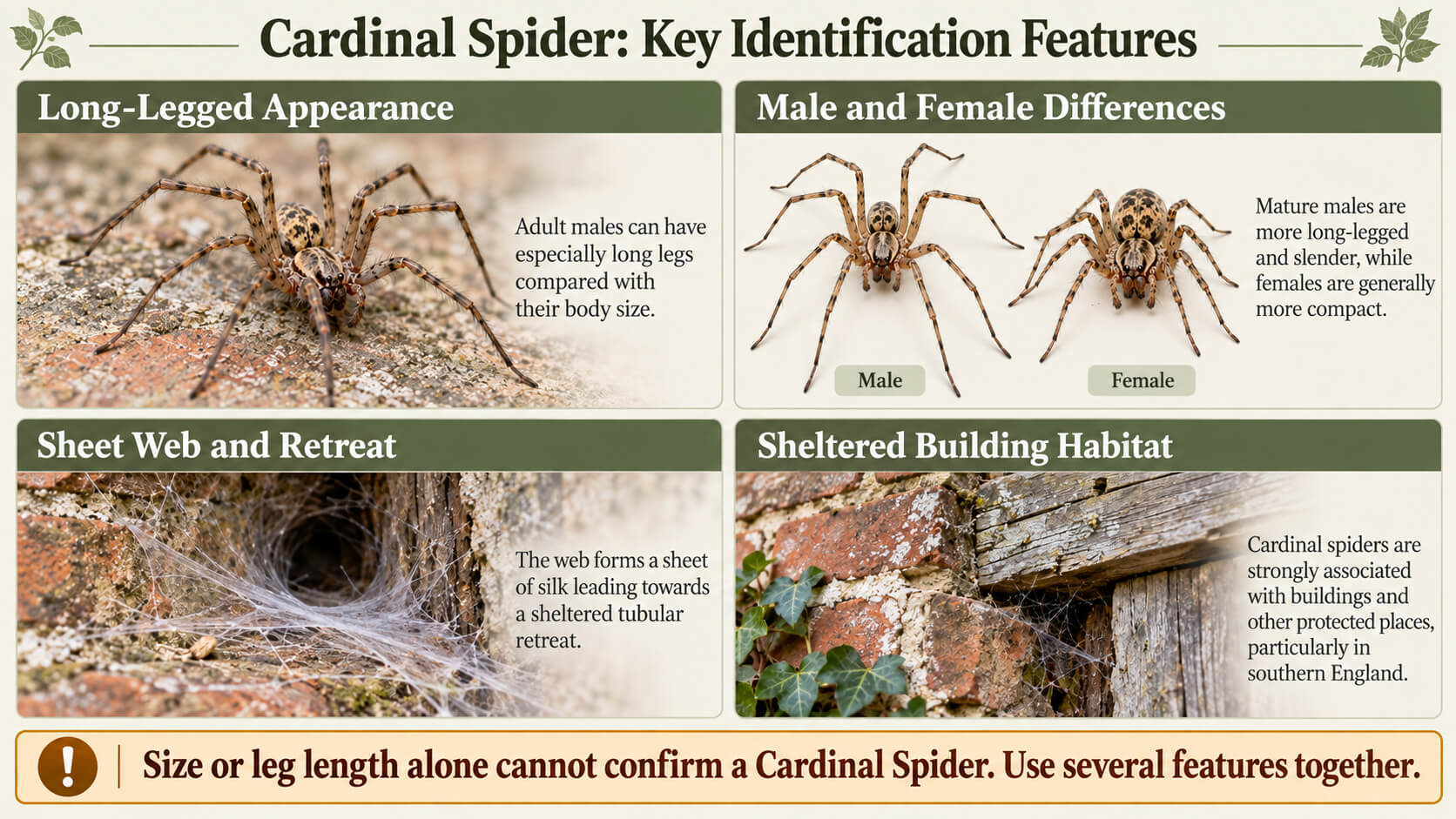
Adult male cardinal spiders can reach a leg span of about 12 centimetres, although the body itself is far smaller. The body can reach around 20 millimetres, which is why photographs that focus only on the full leg span can make the spider appear much larger than its body measurement suggests.
Size should still be treated as supporting evidence rather than a species test. Other large brown spiders can overlap in general appearance, so leg proportions, body shape, web structure and location should be considered together.
Male and Female Cardinal Spiders
Mature male cardinal spiders have much longer legs than females of a similar body size. This difference is especially pronounced in the species, with mature males able to have legs approaching twice the length of those of females when their body sizes are comparable.
This can make males look unusually long-legged and slender, while females appear more compact and robust. The difference is useful for identification, but it is safer to compare several visible features than to assign sex or species from leg length alone.
How It Differs from Similar Large House Spiders
Cardinal spiders can be confused with other large, brown, long-legged spiders found around buildings. Tegenaria parietina is noted for especially long, hairy legs and a comparatively large sheet web, although these features should still be considered together rather than used alone.
This is one reason a cardinal spider may be mistaken for a giant house spider, although a casual photograph may not always separate similar species confidently. Use the Cardinal-specific features here alongside the broader guide to UK house spiders when the identification is uncertain.
Where Are Cardinal Spiders Found in the UK?
British records of the cardinal spider are concentrated in the southern counties of England. The species is associated with buildings, particularly older structures, but records also show that it can occur on the outside of buildings and in other sheltered vegetation or wall habitats.
That distribution is narrower than the general phrase “UK house spider” might suggest. A large spider found elsewhere in Britain should not be assumed to be a cardinal spider from size alone.
Southern England Distribution
Tegenaria parietina is widespread within its British range but is mainly recorded from southern England, excluding the extreme south-west. It is described as locally common where it occurs, so the species can be well established in suitable places without being evenly distributed across the UK.
Location therefore matters when assessing a possible identification. A sighting from within the known southern-English range is more consistent with the species than one far outside it, but distribution alone cannot confirm an individual spider.
Buildings, Webs and Sheltered Habitats
Cardinal spiders are often associated with old buildings and other sheltered structures. They produce a sheet web leading towards a tubular retreat, a web form shared with related house spiders, and the cardinal spider's sheet can be comparatively large.
The species has also been recorded on the outside of buildings and away from occupied houses, including sheltered walls and vegetation. Adults of both sexes are most often recorded in late summer and autumn, so sightings can become more noticeable during that period.
Frequently Asked Questions


Cardinal spiders can bite, but bites are considered very rare. Like other large house spiders in the Tegenaria group, they are more likely to retreat than bite and are not regarded as aggressive towards people.
Female cardinal spiders can live for several years, while adult males usually have a much shorter lifespan after maturity. Males typically wander in search of females and may survive only a relatively short time after mating.
Cardinal spiders feed mainly on small insects and other arthropods that become caught in or approach their sheet-like webs. Like other house spiders, they act as predators rather than feeding on household materials, fabrics or stored food.
The name “cardinal spider” is linked to a story that spiders living at Hampton Court frightened Cardinal Wolsey. The species is scientifically known as Tegenaria parietina, and this historical association is the commonly given origin of its English name.