


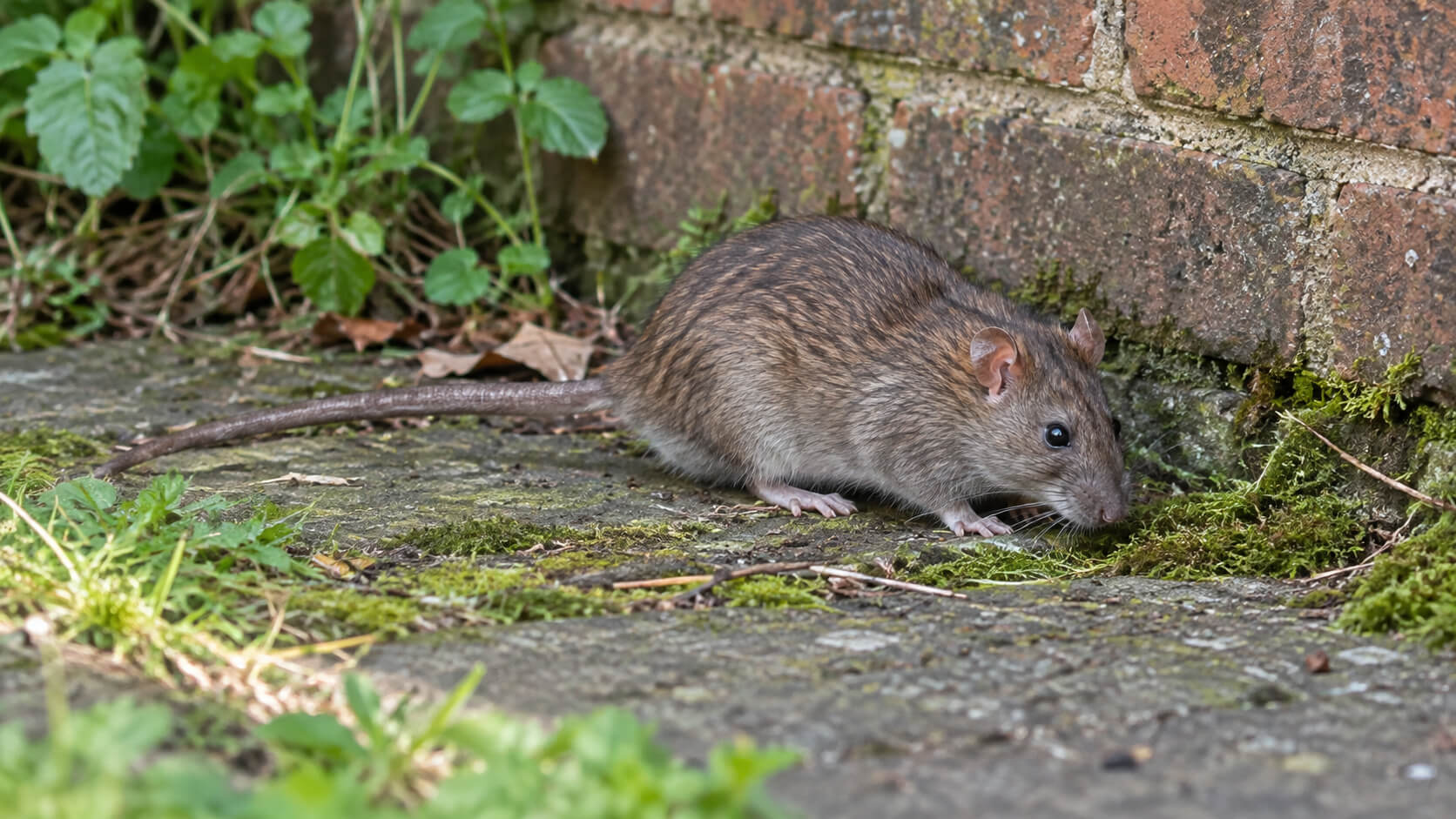
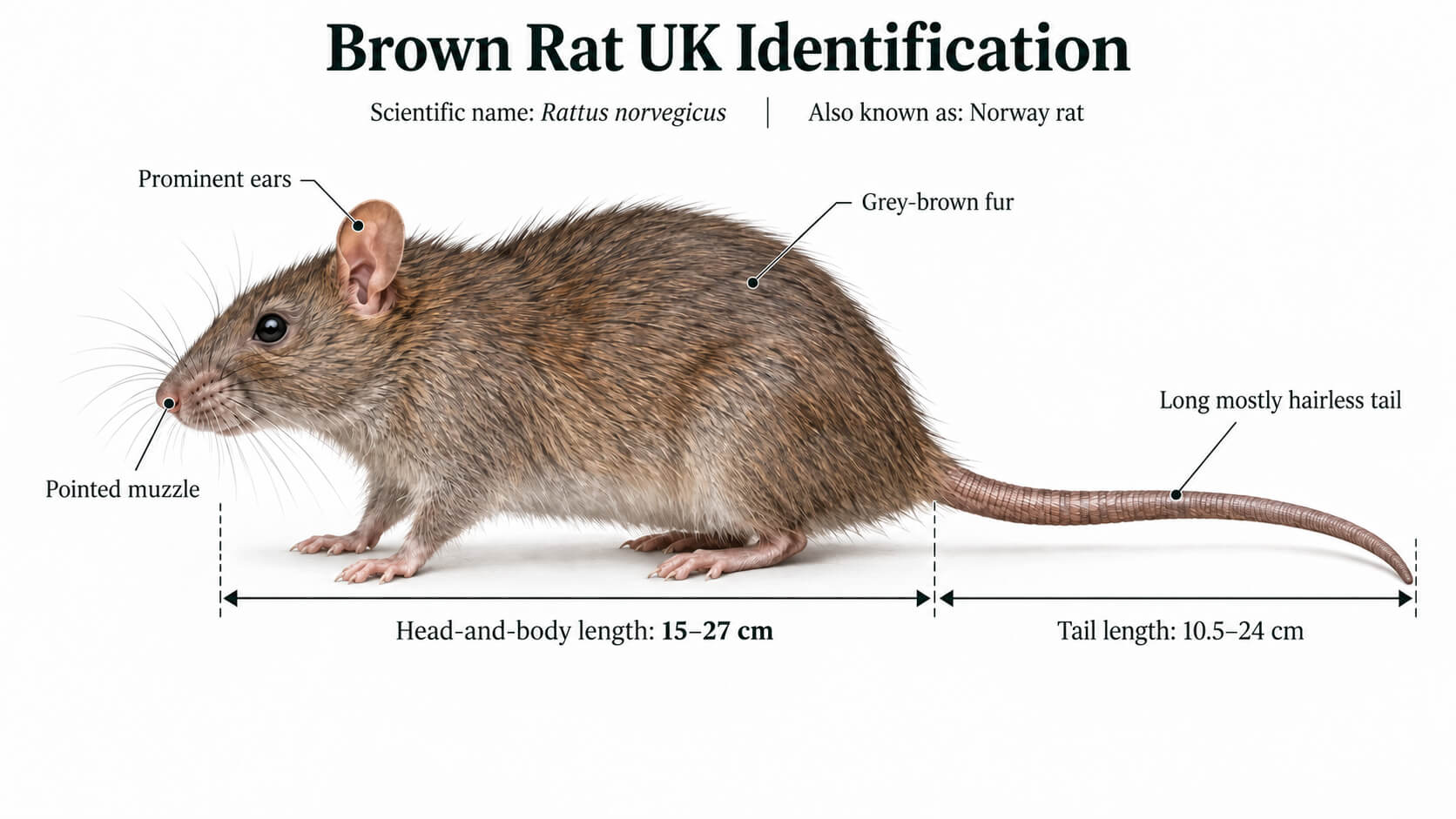
The brown rat (Rattus norvegicus) is a widespread rodent found across the UK in urban, garden, farmland and other habitats. It has grey-brown fur, a pointed muzzle, prominent ears and a long, mostly hairless tail. This guide covers the species’ main characteristics, size, habitat and behaviour.
Recently booked jobs


Brown Rat: Species Overview
The brown rat is widespread across Britain and is strongly associated with both human environments and a wide range of natural habitats. The species originated in central Asia and reached Britain in the early eighteenth century, probably through shipping and trade. It is now established across much of the country and can occupy a very wide range of habitats. Brown rats are members of the rodent family Muridae and the genus Rattus. Their success is closely linked to adaptability: they can use natural cover, burrows and human-made structures, and their diet changes according to what food is locally available.
This close association with transport, food storage and settlements helped the species spread, but it is not restricted to buildings. Populations also occur in natural and semi-natural habitats where cover and feeding opportunities are suitable across the country.
Brown Rat Size and Physical Features
Adult brown rats have a robust body covered in grey-brown fur, with a lighter grey underside in many individuals. The muzzle is pointed, the ears are clearly visible and the tail is long, scaly and only lightly haired. According to the Mammal Society, head-and-body length is typically 15–27 cm, while tail length is about 10.5–24 cm. Adult weight varies, but many individuals are around 200–300 g.
Size, body condition and coat tone can vary between animals, so several physical features should be considered together when describing the species.
Where Brown Rats Live in the UK
Brown rats are widespread in Britain and occur in towns, gardens, farmland, woodland, wetlands, coastal areas and around freshwater habitats. They need suitable shelter and access to food, rather than one particular type of landscape.
Suitable habitat can change with local conditions and the availability of resources. Brown rats may shelter beneath dense vegetation, around waterways, within earth banks or close to structures that offer protected spaces. Their ability to move between different sources of food and shelter allows populations to persist in both densely built areas and less developed landscapes.
Brown rats also dig their own burrows. Their ability to use many different habitats is one reason the species has become established across such a broad geographical range.
Brown Rat Scientific Name and Other Names
The scientific name of the brown rat is Rattus norvegicus. The species is also widely called the Norway rat, and some UK wildlife sources use the name common rat. These names refer to the same species rather than separate types of rat.
Despite the name “Norway rat”, the species is considered to have originated in central Asia. It later spread internationally through human transport and trade before becoming established in Britain and many other parts of the world.
Brown Rat Behaviour and Life Cycle
Brown rat behaviour, movement and reproduction are influenced by habitat, food availability and local environmental conditions. Their adaptability allows them to use a wide range of food sources and shelter, while young rats develop quickly when conditions support breeding.
Brown Rat Behaviour and Activity
Brown rats are omnivores and can eat cereals, seeds, fruit, invertebrates and many other available foods. In places where people live or work, discarded food and animal feed can also become food sources. They usually forage from areas of shelter and may repeatedly use established routes through their surroundings.
Brown rats are capable swimmers and can also climb when conditions require it. They may live in loose colonies, with small family groups occurring within the wider colony. Their behaviour can vary according to habitat, food availability and local disturbance.
Activity patterns may also change where regular disturbance affects when feeding and movement are safest.
Young Brown Rats and the Life Cycle
Brown rats can reproduce throughout the year when conditions provide dependable food and shelter. Females may begin breeding from around three to four months of age. Young are born blind and hairless and develop rapidly during their first few weeks. The Mammal Society reports that they are generally weaned at about three weeks.
Breeding frequency and litter size are not fixed and can vary with the female’s age, condition and access to resources. In the wild, many brown rats do not survive beyond their first year.
For side-by-side identification of rats and mice, see our rat vs mouse comparison guide.
Sources:
Frequently Asked Questions


Yes, brown rats are strong swimmers. They can enter and move through water when travelling or searching for food, and brown rats are commonly associated with waterways, wetlands and other habitats close to water.
Brown rats are omnivores and can eat a wide range of foods. Their diet can include cereals, seeds, fruit, invertebrates and other animal material, while discarded food and animal feed can provide additional food sources around human environments.
No, brown rats are not native to the UK. The species originated in central Asia and was introduced to Britain in the early eighteenth century, after which it became widespread across the country.
Brown rats can live for several years, but survival in the wild is often much shorter. Many wild individuals do not survive beyond their first year, while UK wildlife sources report that brown rats can live substantially longer under protected conditions.