


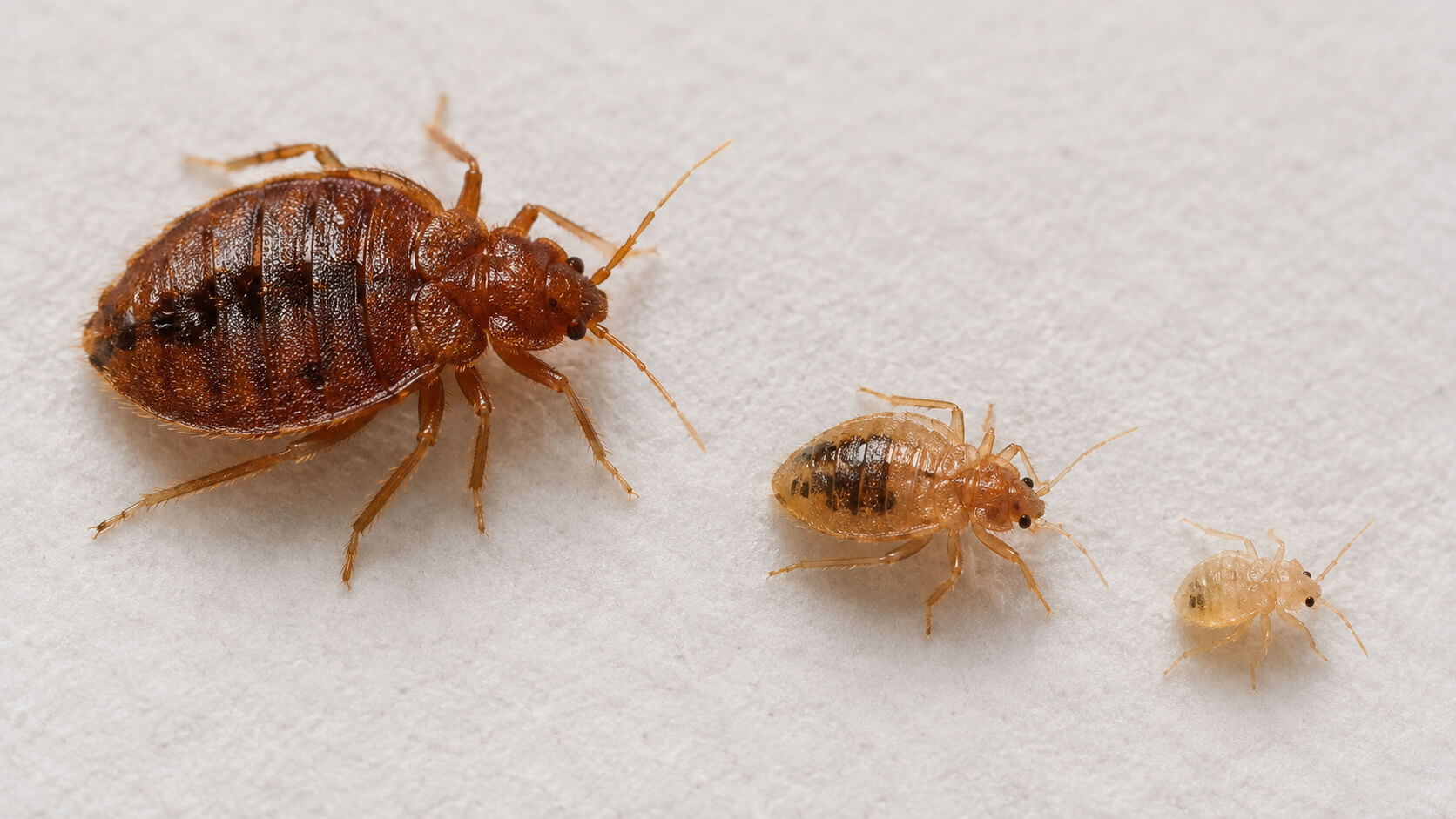
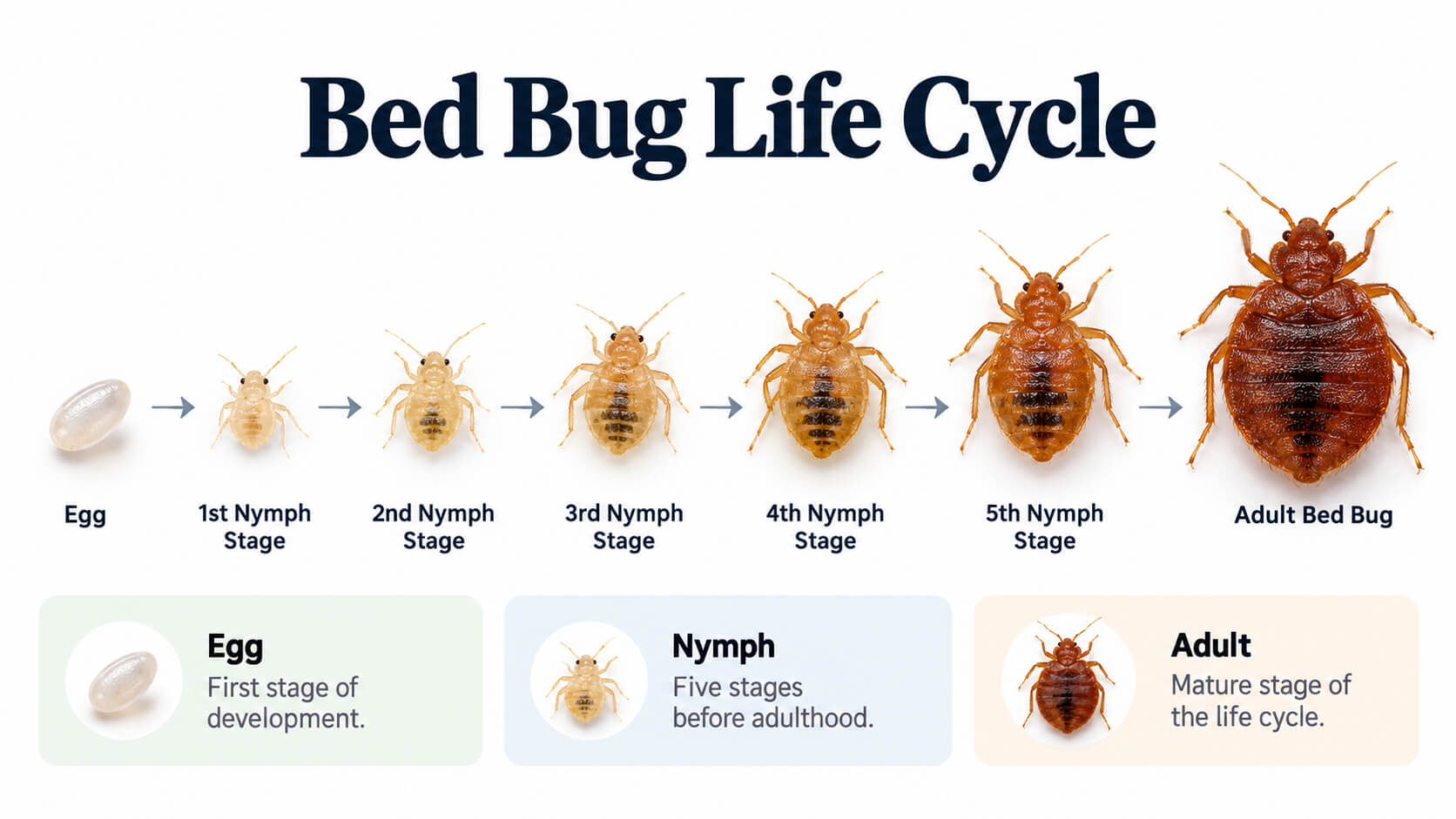
The bed bug life cycle moves from egg through five nymph stages before the insect becomes an adult. These stages explain how young bed bugs develop and mature over time.
This guide explains the main bed bug stages, what bed bug nymphs look like, why the term “bed bug larvae” is misleading, how long development can take and how long bed bugs can live.
Recently booked jobs



Stages of the Bed Bug Life Cycle
The bed bug life cycle develops from egg to nymph and then to adult. These bed bug stages are a form of incomplete metamorphosis, so young bed bugs resemble smaller, paler versions of adults rather than passing through a separate caterpillar-like larval or pupal stage. The life cycle of a bed bug can progress quickly under favourable indoor conditions, but temperature and access to a blood meal affect how fast development continues.
Bed Bug Eggs and Hatching
Bed bug eggs are the first stage of the life cycle. They are very small and pale, and under favourable conditions they can hatch in roughly a week. Bed bug eggs hatching marks the transition to the nymph stage, with the newly emerged insect beginning as a first-stage nymph.
Bed Bug Nymph Stages
A bed bug passes through five nymph stages before becoming an adult. The first-stage nymph is about 1.5 mm long, and each later stage becomes progressively larger. Searches for the bed bug first stage or bed bug 1st stage usually refer to this newly hatched nymph. A blood meal is normally required before each moult, allowing the nymph to move on to the next stage.
Adult Bed Bugs
After the fifth nymph stage and another moult, the insect becomes an adult. Adult females can lay eggs after mating and feeding, beginning the next generation and continuing the bed bug life stages.
Bed Bug Nymphs and Young Bed Bugs
A bed bug nymph is an immature bed bug that has hatched from an egg but has not yet reached adulthood. Nymphs are central to the bed bug life cycle because they pass through five developmental stages, increasing in size after each moult.
What Does a Bed Bug Nymph Look Like?
In the bed bug early stages, young nymphs are smaller and generally paler than adult bed bugs. The earliest stages may appear translucent or whitish-yellow when unfed, making them harder to notice. As nymphs grow through later stages, their size increases and their appearance becomes closer to that of an adult.
Unfed Bed Bug Nymphs
An unfed bed bug nymph can be especially difficult to see because of its small size and pale colouring. After feeding, the body becomes more noticeable and changes in appearance. What a nymph looks like therefore depends partly on its developmental stage and whether it has recently fed.
Do Bed Bugs Have Larvae?
The phrase bed bug larvae is commonly searched, but bed bugs do not have a separate larval stage like fleas, moths or beetles. The correct term for the immature stage after the egg hatches is nymph. The first nymph stage is followed by four further nymph stages before adulthood.
If you have found a small insect, shed skin, egg or other physical evidence and are trying to work out whether bed bugs are present, see our bed bug signs and identification guide for the main clues to check around beds and sleeping areas.
How Long Do Bed Bugs Live?
How long bed bugs live depends on temperature, feeding opportunities and other environmental conditions. A typical bed bug lifespan of around ten months, although survival and development can vary considerably when conditions change.
How Long Does the Bed Bug Life Cycle Take?
For anyone comparing the bed bug life cycle in days, there is no single fixed figure. Under favourable conditions, development from egg to adult can take only several weeks, while cooler conditions or limited access to food can slow the process substantially. At around 22°C, the whole bed bug life cycle can take roughly two months to complete.
Bed Bug Lifespan
The bed bug lifespan should not be confused with the time needed to develop from egg to adult. Once mature, an adult can continue living and reproducing for months, so the lifespan of one insect is longer than a single developmental cycle.
How Long Can Bed Bugs Live Without Food?
Bed bugs can survive extended periods without feeding, particularly when temperatures are low and development slows. This means a bed bug life cycle without food does not continue at the same normal pace: nymph development is delayed because blood meals are required between moults.
Frequently Asked Questions


Bed bugs develop through an egg stage, five nymph stages and then adulthood. Each nymph stage ends with a moult, and the insect gradually becomes larger before reaching its final adult form.
Yes, young bed bugs are called nymphs. They hatch from eggs and pass through five nymph stages before becoming adults. Early nymphs are smaller and paler than mature bed bugs.
Bed bug nymphs normally need a blood meal before progressing to the next stage. After feeding, a nymph can moult and continue developing through the successive stages towards adulthood.
Development from egg to adult can take several weeks under favourable conditions. Temperature and access to feeding affect the timing, so the full bed bug life cycle does not always take the same amount of time.
Yes, lack of feeding can slow bed bug development. Nymphs require blood meals between moults, so limited access to food can delay progression through the immature stages and extend the overall development period.