


Signs of Bed Bugs: Check Your Bed and Mattress
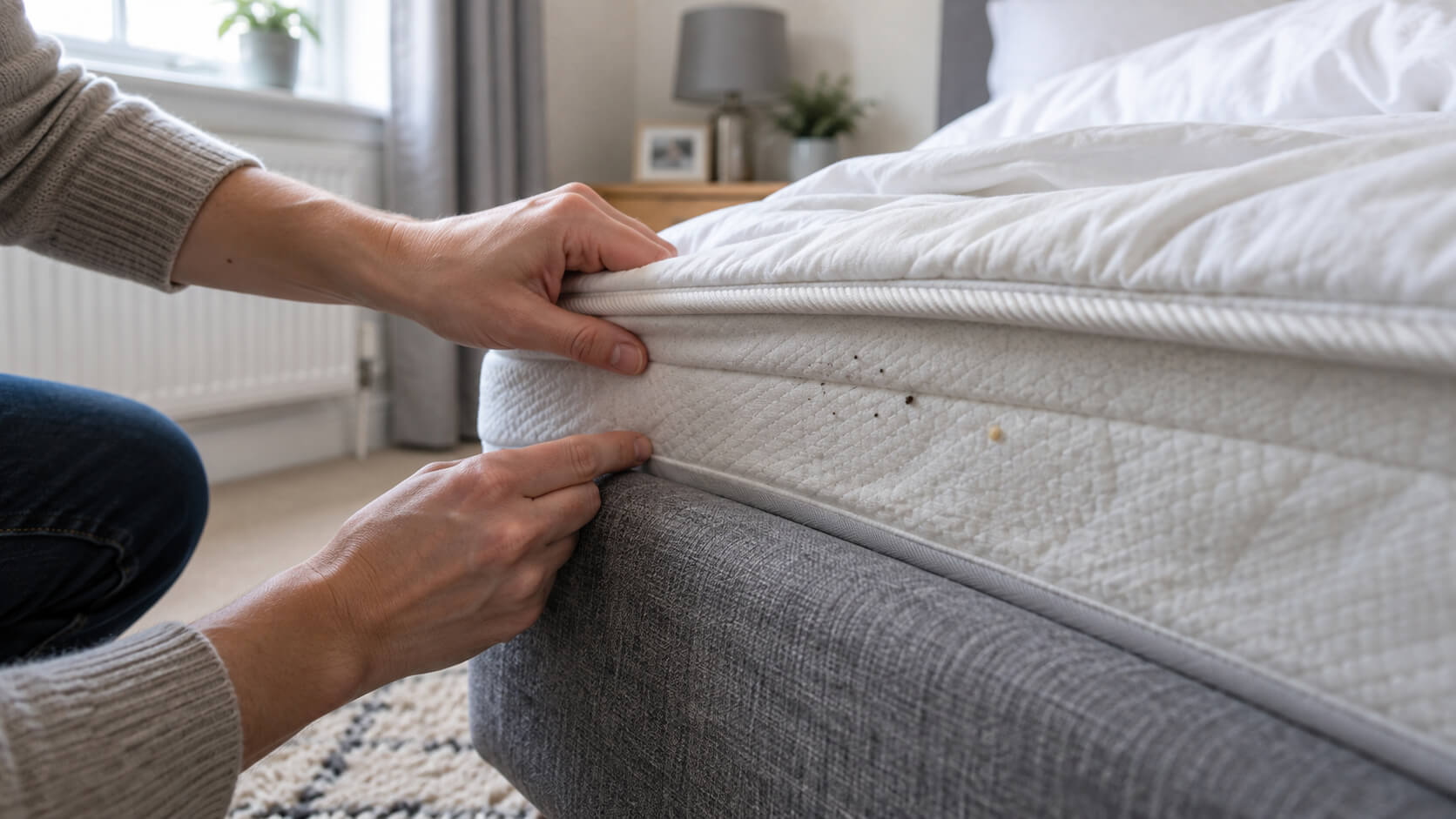
Signs of bed bugs can include dark faecal spots, small blood marks, shed skins, pale eggs and live insects around the bed or nearby furniture. These signs are often easier to spot than the insects themselves, especially in the early stages of an infestation.
Check mattress seams, bed frames and headboards carefully for physical evidence. Bites can occur, but bites alone do not confirm bed bugs, so look for several signs together before assuming they are present.
Bed Bug Pest Control
- Same-day bookings available
- Flexible appointment times
- Chemical or heat treatment options for confirmed bed bug problems
- Inspection option if you are unsure whether the signs are bed bugs
- Pay us by Card, PayPal, Google Pay, Apple Pay or Pay on-site



Who will come to my home?
A certified pest control technician from our vetted network, on the day and time you choose. You get a confirmation by email as soon as you book.
Is the treatment safe for children and pets?
Yes. Technicians use HSE-approved products and methods: tamper-resistant bait stations for rodents, and sprays or gels that are safe for children and pets once dry. You are told before the visit if a room needs to stay clear for a few hours.
What if the pests come back?
Follow-up visits are included where the treatment lists them, so if activity continues after the first visit, the next one is already covered at no extra charge. The price you see is the full price for the whole treatment cycle.
Do I need to prepare anything or be at home?
Someone needs to be at the property to let the technician in. Preparation is minimal and depends on the pest; the technician confirms anything needed by SMS and email after you book.
Do I pay now?
No. You see the price, then pick a date and time. Payment is only confirmed at checkout, and cancellation is free.
Is the £50 inspection fee deducted from the treatment?
Yes. If you are not sure what the pest is, you can book a £50 inspection visit. The technician identifies the pest and quotes the treatment on site, and if you go ahead the £50 is deducted from that treatment price.
Recently booked jobs


Early Signs of Bed Bugs
Early signs of bed bugs usually appear around the places where people sleep. Look for dark faecal spots, small blood marks on bedding, pale eggs or eggshells, shed skins and live insects around the bed frame, mattress seams or headboard.
Bites can occur, but they are not enough on their own to confirm an infestation. The first signs of bed bugs may be subtle, so finding several types of physical evidence around the same hiding area is more useful than relying on one sign alone.
The most useful signs of a bed bug infestation are physical clues that appear together around the same sleeping or resting area, rather than one isolated mark or bite.
What Do Bed Bugs Look Like?
Adult bed bugs are small, flat, wingless insects that are usually brown to reddish-brown. Their flattened bodies allow them to hide inside narrow cracks, seams and joints around beds and nearby furniture.
Young bed bugs can be smaller and paler, which makes them harder to spot. A live insect is strong evidence, although many infestations are first noticed through dark spotting, shed skins or eggs rather than by seeing an adult bug.
How to Check for Bed Bugs
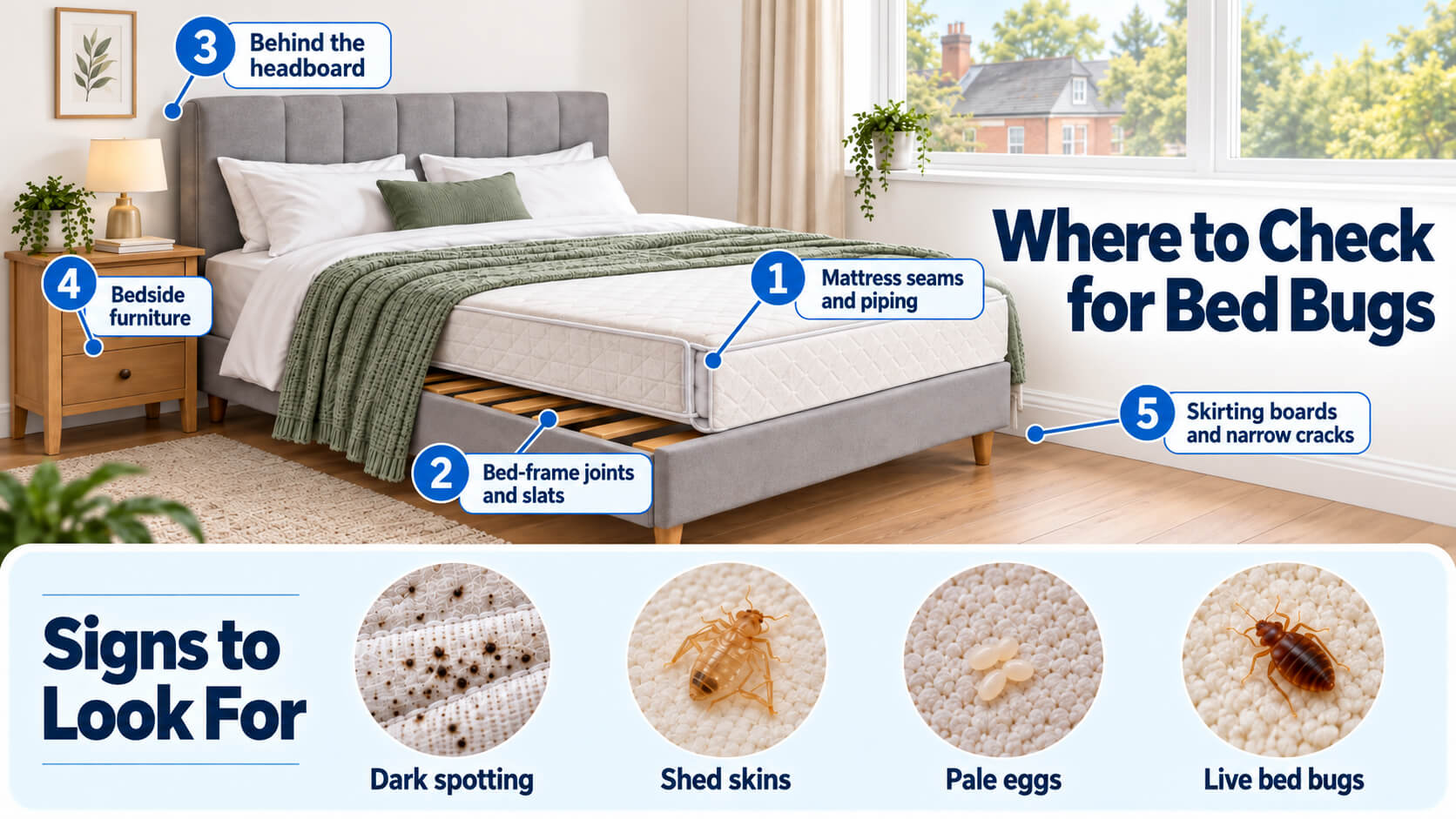
To check for bed bugs, start with the areas closest to where you sleep. Remove the bedding and inspect the mattress seams, piping and labels, then check the bed frame, slats, joints and headboard carefully.
Use a torch to inspect narrow gaps and cracks. If you do not find anything on the bed itself, check bedside furniture, skirting boards and other nearby hiding places rather than assuming the room is clear.
How to Find Bed Bugs in Mattress Seams
Inspect the edges and seams of the mattress slowly rather than checking only the open surface. Look for dark spotting, shed skins, pale eggs or live insects, then inspect the frame and headboard immediately surrounding the mattress.
Bed Bug Stains on a Mattress: Eggs, Droppings and Blood Marks
Bed bug stains on a mattress can include dark faecal marks or small blood spots on nearby bedding. Eggs, empty eggshells and shed skins can also be found close to the places where bed bugs hide.
One mark on its own does not necessarily confirm bed bugs. Finding several types of evidence in the same area gives a much stronger indication of activity.
Bed Bug Eggs
Bed bug eggs are pale, very small and easy to miss. They may be found in protected cracks and crevices around mattress seams, frame joints, headboards and other nearby hiding places.
Empty eggshells can remain behind after hatching, so they can be useful when checking whether bed bugs have been active in a particular area.
Bed Bug Droppings
Bed bug droppings can appear as small dark or ink-like spots. They are often found close to hiding places such as mattress edges, bed frames, upholstery and narrow furniture joints.
Dark spotting is more useful as evidence when it appears together with other signs such as eggs, shed skins or live insects.
Where Do Bed Bugs Hide?
Bed bugs usually hide close to sleeping or resting areas, particularly around mattress seams, bed frames and headboards. They can also hide in nearby furniture, behind skirting boards, behind pictures, under loose wallpaper and inside other dark, narrow gaps.
If clothing or belongings have been kept close to an affected sleeping area, our guide on can bed bugs live in clothes explains how clothing can be involved and how to handle laundry.
How to Know If You Have Bed Bugs
The clearest way to know if you have bed bugs is to find physical evidence such as live bugs, eggs, shed skins or characteristic dark spotting around a sleeping area.
If you are trying to work out how to tell if you have bed bugs, look for several signs together rather than relying on bites alone. Bites can have other causes, while physical evidence around the bed or nearby hiding places gives a stronger indication of activity.
If clear signs indicate an infestation, avoid moving bedding, clothing or furniture unnecessarily between rooms.
If you need help with an infestation, you can check professional bed bug treatment options, prices and availability through MyConstructor.
Sources: NHS – Bedbugs, British Pest Control Association (BPCA) – Bed Bugs.
Frequently Asked Questions


No, bed bug bites cannot confirm an infestation on their own. Bites can resemble other insect bites or skin reactions, so look for physical evidence around the sleeping area before treating bites as proof of bed bugs.
Yes, you can have bed bugs without seeing a live insect. Bed bugs spend much of their time hidden, so dark spotting, shed skins, eggs or small blood marks may be noticed before a live bug is found.
Yes, the absence of noticeable bites does not rule out bed bugs. People can react differently to bites, so physical evidence around beds and nearby hiding places is more useful when checking whether bed bugs may be present.
Yes, a clean home can have bed bugs. Their presence is not a reliable sign of poor hygiene. Keeping rooms uncluttered can make checking easier, but cleanliness alone does not prevent bed bugs from being introduced into a property.
No, signs of bed bugs are not always found on the mattress. Evidence may also be found around bed frames, headboards, nearby furniture and other narrow hiding places close to where people sleep or rest.