


Shower Pump Not Working: Causes and Safe Checks
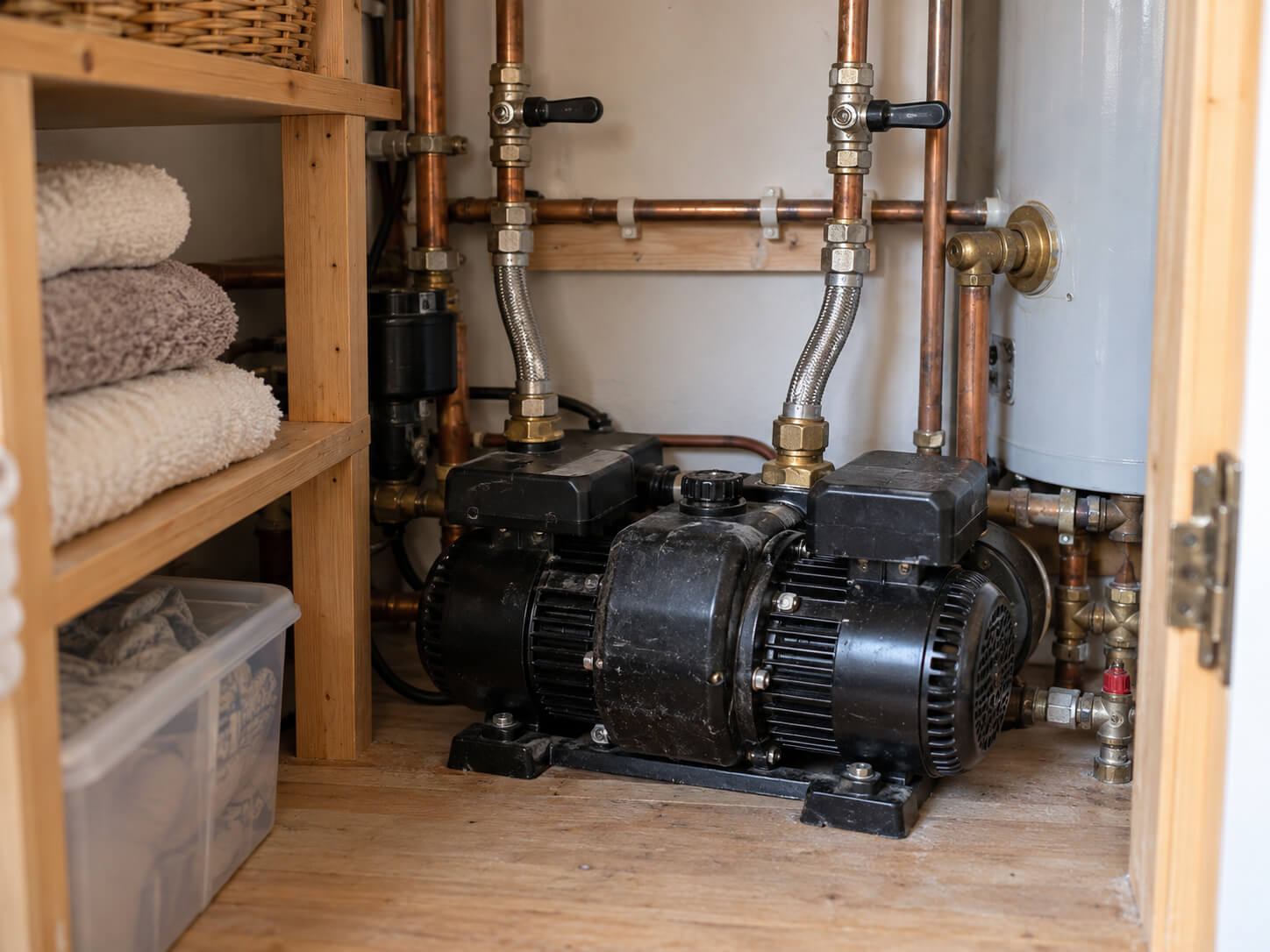
A shower pump not working may fail to start, activate late, run intermittently or make unusual noise when the shower is used. The cause may be local to the pump, its water supply, an airlock, restricted flow or a fault affecting the pump motor or controls.
This guide explains the main shower-pump symptoms, the likely causes behind them, what can be checked safely without dismantling the unit, and when the problem belongs to a wider pressure, electrical or pipework fault instead.
Checks for a Shower Pump Fault
- Check whether the pump starts at all when the shower is turned on
- Listen for humming, rattling, cycling or other unusual pump noise
- Note whether the pump starts immediately, after a delay or only intermittently
- Check whether the problem affects only the pumped shower or other outlets as well
- Stop using the pump if it becomes unusually hot, repeatedly cuts out or shows signs of electrical damage


Who will come to my home?
A certified local plumber from our vetted network, on the day and time you choose. You get a confirmation by email as soon as you book.
Are the parts included?
Small parts like washers, seals, valves and flush mechanisms are always included: the plumber brings the right one. For things you choose, like taps, toilets or radiators, you can supply your own or the plumber brings a standard one, as shown on your quote.
What if the plumber finds something else?
The fixed price covers the work on your quote. If the plumber finds something different on site, they explain it and quote it before starting, and you decide whether to go ahead.
What does the call-out fee cover?
When a fault needs to be found first, the plumber diagnoses it at your property and repairs what they can on the spot, with up to 1 hour of work included.
Do I pay now?
No. You see the price, then pick a date and time. Payment is only confirmed at checkout, and cancellation is free.

Recently booked jobs


Why Has My Shower Pump Stopped Working?
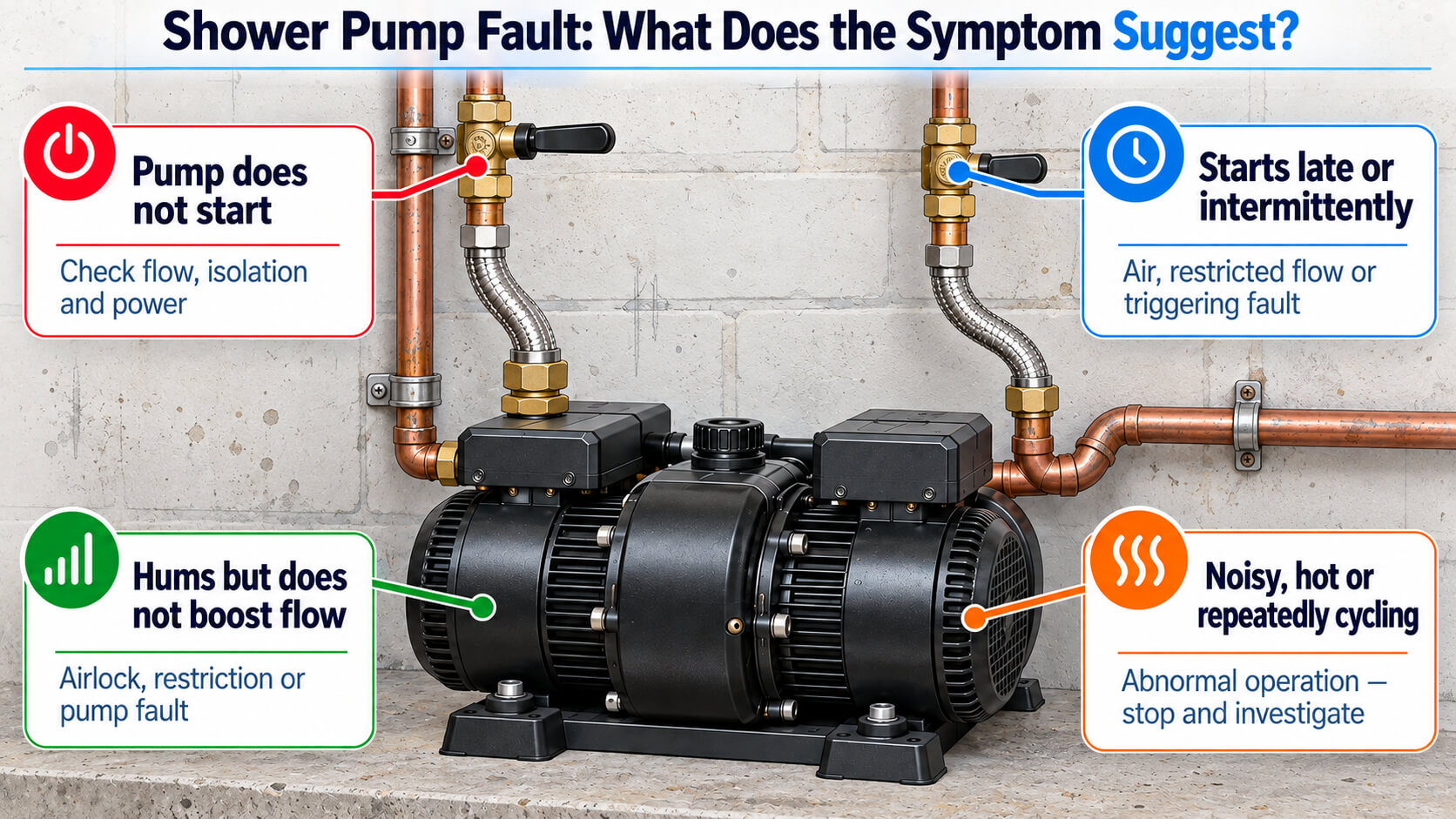
A shower pump can stop working completely or develop a fault that only appears when water starts flowing. The way the pump behaves when the shower is turned on can help separate a starting problem from restricted flow, trapped air or a mechanical or electrical fault within the unit.
Before assuming the pump itself has failed, note whether it makes any sound, whether it starts immediately or after a delay, and whether water still reaches the shower without the usual boost.
| Shower pump symptom | What it may indicate |
|---|---|
| Pump does not start | Insufficient flow to trigger the pump, local isolation, electrical supply fault or pump failure |
| Pump starts after a delay | Low triggering flow, trapped air, a sticking flow switch or a restriction in the supply |
| Pump works intermittently | Unstable flow, air entering the system, an intermittent control fault or overheating protection |
| Pump hums but flow does not improve | A stalled pump, airlock, restricted inlet or internal mechanical fault |
| Pump becomes unusually noisy | Air in the system, poor water supply, vibration or wear inside the pump |
| Pump keeps running or repeatedly cycles | A flow-detection problem, unstable water movement or a control fault |
The Pump Does Not Start With the Shower
If your shower pump is not kicking in when the shower is opened, first establish whether water is actually flowing through the shower. Many pumps rely on water movement to trigger operation, so a restricted supply or insufficient flow can look like a pump failure even when the motor has not yet been asked to start.
Check whether accessible isolation valves serving the pump appear to be open and whether the shower still produces some unboosted flow. Do not remove electrical covers or dismantle the pump while it is connected to the water and power supplies.
The Pump Starts Late or Works Intermittently
If your shower pump is not kicking in when the shower is opened, first establish whether water is actually flowing through the shower. Many pumps rely on water movement to trigger operation, so a restricted supply or insufficient flow can look like a pump failure even when the motor has not yet been asked to start.
Notice whether opening the shower further causes the pump to start, whether the delay happens every time, and whether the fault affects both hot and cold flow. Repeated delayed activation is more useful diagnostically than simply knowing that the pump eventually runs.
The Pump Hums but Water Flow Does Not Improve
If the pump can be heard humming but the shower receives little or no additional flow, the motor may be energised without the pump moving water properly. Trapped air, restricted water entering the pump or an internal mechanical problem can produce this symptom.
Do not allow a humming pump to continue running for long periods if water is not being moved normally. If the unit becomes hot, smells unusual or repeatedly stops and restarts, discontinue use rather than repeatedly testing it.
What Can Cause a Shower Pump Fault?
Shower pump faults are often caused by conditions around the pump rather than by the motor alone. Water supply, trapped air, restrictions, installation type and electrical condition can all change how the pump starts and runs.
Air Trapped in the Pump or Supply
Air trapped in a shower-pump installation can prevent the pump from moving water smoothly and may cause poor flow, noise or unreliable starting. This can happen after the water supply has been interrupted, pipework has been drained or air has entered the feed to the pump.
Do not confuse a pump-specific air problem with a general airlock affecting several domestic outlets. If the symptoms are limited to the pumped shower and started after work on the pump or its water supply, the pump installation is the more relevant place to investigate.
Restricted Flow, Closed Valves or Blocked Filters
A shower pump needs an adequate and unrestricted water supply to operate correctly. A partly closed isolation valve, blocked inlet filter or restriction in the supply pipe can reduce the flow reaching the pump and affect both activation and performance.
Only inspect components that are designed to be accessible without dismantling the pump. If a filter or valve cannot be checked without opening pressurised pipework or disturbing electrical parts, stop at the observational checks.
Electrical Supply or Pump Motor Problems
If the pump receives no power, repeatedly trips protection or shows signs of an electrical fault, the problem should not be treated as a routine plumbing adjustment. A failed motor, damaged cable, control fault or electrical supply problem can prevent the unit from starting or cause it to stop during use.
Do not remove electrical covers, bypass protective devices or attempt internal electrical testing unless you are appropriately competent. A burning smell, damaged cable, repeated tripping or visible electrical damage is a reason to stop using the pump.
What Should You Check Before Further Repair?
The most useful safe checks are those that establish whether the problem is local to the shower pump or part of a wider water-supply or electrical fault. This avoids dismantling the pump when the symptom is actually being caused elsewhere.
Is the Problem Limited to the Pumped Shower?
If the shower pump runs but the shower pressure remains low, compare the pumped shower with other outlets in the property. If other taps and showers have normal flow and pressure, the problem is more likely to be local to the shower pump, its water supply or the shower it serves.
If several outlets also have weak or reduced flow, the wider water supply should be investigated rather than assuming the shower pump is responsible. A fault within an electric shower unit also belongs to a different electrical or shower-system diagnosis.
Is the Pump Noisy, Hot or Running Continuously?
Unusual noise, excessive heat or continuous running can indicate that the pump is operating under abnormal conditions. Note whether the sound is a hum, rattle, vibration or repeated starting and stopping, and whether it begins as soon as the shower is opened.
A pump that remains running after the shower has been turned off, repeatedly cycles or becomes unusually hot should not be left operating indefinitely while the cause is unknown.
When Should You Stop DIY Checks?
Stop DIY checks when the problem cannot be investigated without opening the pump, disturbing pressurised pipework or working on electrical components. The following symptoms are clear reasons to move beyond basic observation:
- The pump repeatedly trips an electrical protective device
- There is a burning smell, damaged cable or visible electrical damage
- The pump becomes unusually hot or repeatedly cuts out
- The unit hums but does not move water normally
- Water is leaking from the pump body or an inaccessible connection
- The pump continues running after the shower has been turned off
If the fault is clearly a wider pressure, pipework or electrical problem, it should follow that troubleshooting route instead. If the shower pump itself still fails to start, runs intermittently or behaves abnormally after the basic checks, the unit and its installation may need professional assessment.
Frequently Asked Questions


There is no fixed lifespan for a shower pump, because service life depends on the pump type, installation, water conditions and how often it operates. Increasing noise, delayed starting, repeated cut-outs or a noticeable loss of performance can indicate that a pump needs assessment before complete failure occurs.
A new shower pump may fail to start if the installation has not been fully primed, an isolation valve remains closed, air is trapped in the supply or there is not enough flow to trigger the pump. A newly installed unit should not be repeatedly run dry or dismantled to force it into operation; installation and commissioning should be checked first.
Yes, water can leak from a shower pump itself or from the pipe connections immediately around it. Fresh moisture around a union or connection may indicate a joint problem, while leakage from the pump body should be treated as a pump fault. Isolate the relevant supplies if this can be done safely and avoid operating a pump that is leaking near electrical components.
A shower pump should be installed in a suitable accessible location that meets the pump manufacturer's installation requirements and allows safe access for inspection and maintenance. The exact position depends on the water system and pump type, so an existing fault should not be corrected simply by moving the pump without checking the installation design first.