


Shower Leaking: Causes, Leak Points and Safe Checks
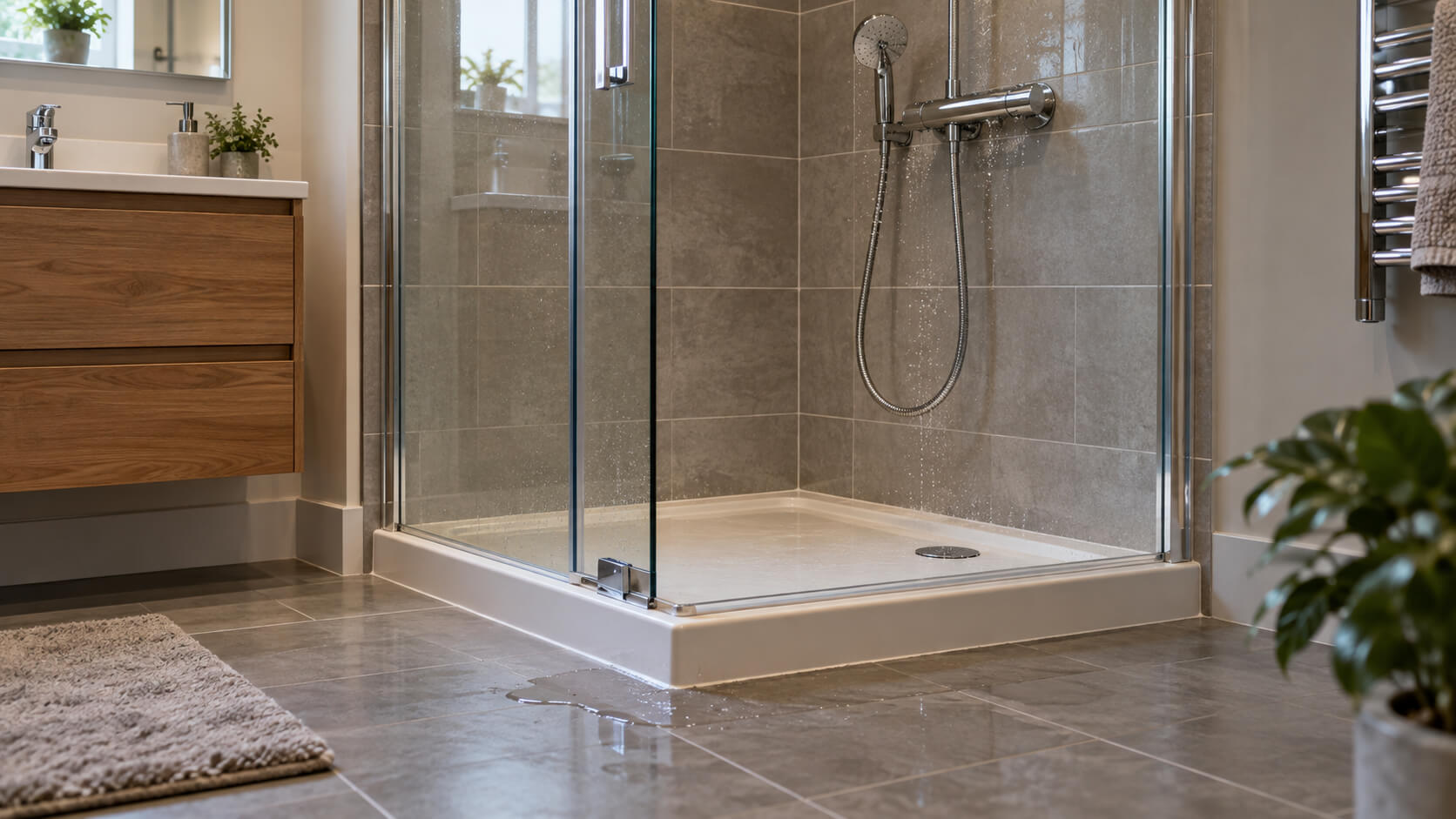
A leaking shower can come from the shower head, hose, valve, tray, drain or concealed pipework. The first step is to identify when the water appears and which part of the shower is actually wet first.
This guide explains common shower leak causes, safe checks for dripping shower heads and hose or valve leaks, how to recognise tray or drain problems and what to do if water is appearing through a ceiling or wall.
Checks for a Leaking Shower
- Check whether the shower head continues dripping after the water is turned off
- Dry the hose, valve and connections before checking where fresh water appears
- Notice whether the leak appears only while the shower is running or while water is draining away
- Check the tray, seal and drain area for visible signs of escaping water
- Stop using the shower if water is reaching electrics or appearing from an electrical shower unit


Who will come to my home?
A certified local plumber from our vetted network, on the day and time you choose. You get a confirmation by email as soon as you book.
Are the parts included?
Small parts like washers, seals, valves and flush mechanisms are always included: the plumber brings the right one. For things you choose, like taps, toilets or radiators, you can supply your own or the plumber brings a standard one, as shown on your quote.
What if the plumber finds something else?
The fixed price covers the work on your quote. If the plumber finds something different on site, they explain it and quote it before starting, and you decide whether to go ahead.
What does the call-out fee cover?
When a fault needs to be found first, the plumber diagnoses it at your property and repairs what they can on the spot, with up to 1 hour of work included.
Do I pay now?
No. You see the price, then pick a date and time. Payment is only confirmed at checkout, and cancellation is free.

Recently booked jobs



Where a Shower Leak Can Start
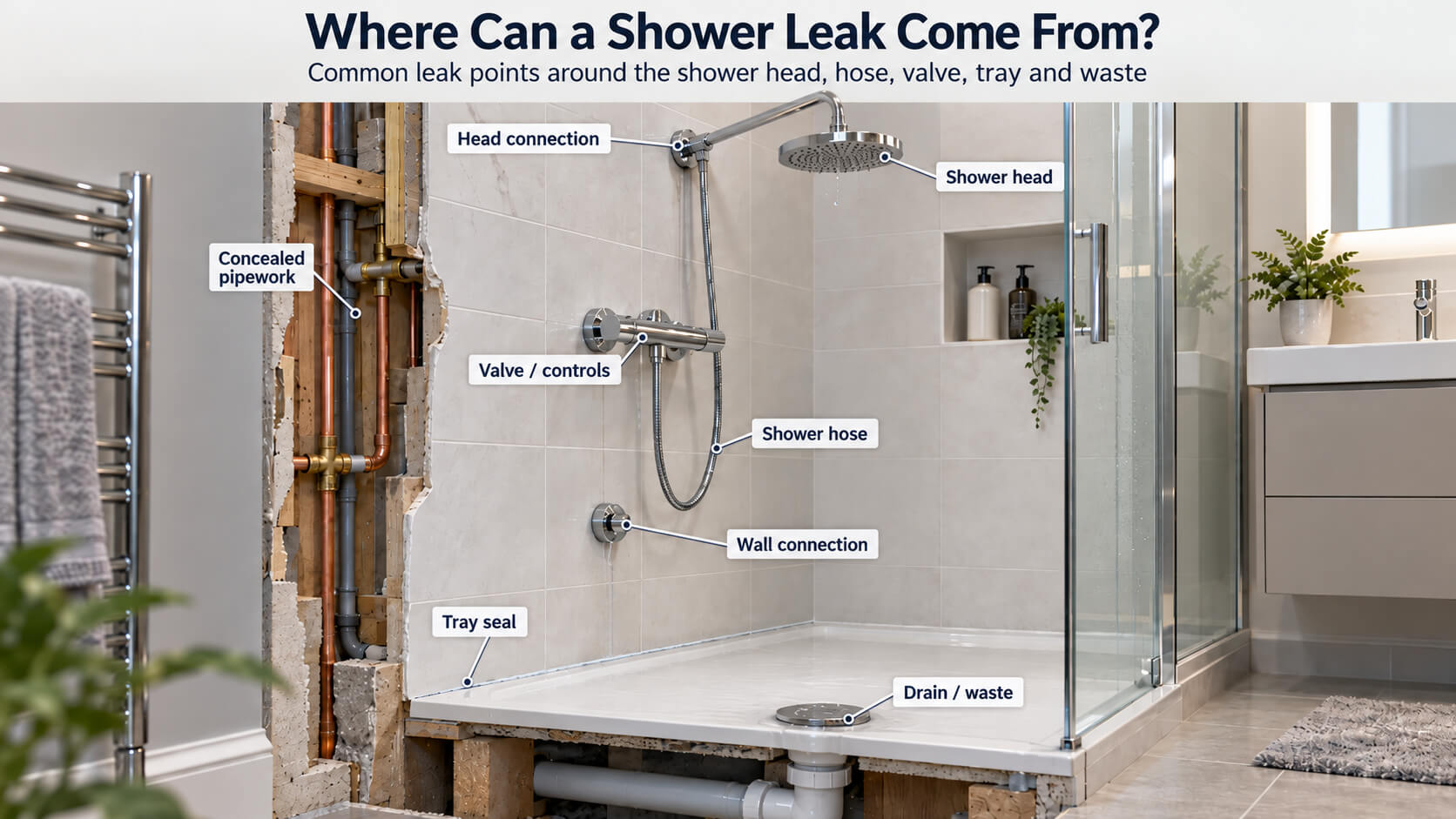
A shower leak can start at the shower head, hose, valve, tray, drain or pipework hidden behind the wall. The wettest area is not always the original source because water can travel along fittings, tiles or the underside of the tray before it becomes visible.
The most useful first clue is when the leak appears. A drip after the shower is switched off points in a different direction from water that appears only while the tray is draining or from a damp patch developing on the ceiling below.
When does the shower leak appear?
Select the pattern that most closely matches what you can see.
Shower Head Leaking or Dripping
A shower head that continues dripping after the water has been turned off may be releasing retained water or may indicate that water is still passing through the shower controls. The duration and frequency of the dripping matter more than a few isolated drops immediately after use.
Dry the head and the connection to the hose or shower arm, then observe where fresh water first appears. Water coming through the spray holes is different from water escaping around a threaded connection or the base of the head.
Shower Head Drips When the Water Is Off
Repeated dripping when the shower is fully switched off suggests that water is continuing to reach the head or that retained water is draining unusually slowly. Note whether the dripping stops after a short period or continues for much longer.
Do not dismantle concealed shower controls simply to investigate a dripping head. If the leak clearly continues from the supply side when the shower should be shut off, the valve or control mechanism may need further investigation.
Leak at the Shower Head or Hose Connection
Water around the base of the shower head may be escaping from the connection rather than through the spray face. Dry the joint first and run the shower briefly so that the first fresh water is easier to identify.
Check only accessible hand-tight fittings without forcing seized connections. A damaged washer, seal, hose end or fitting can produce a leak that looks as though it is coming from the head itself.
Shower Leaking From the Hose or Valve
A shower hose or valve leak is easiest to trace when the surrounding fittings are completely dry before the shower is switched on. Water can run down the hose or wall and make the lowest connection appear faulty even when the leak begins higher up.
Run the shower only long enough to observe the fittings safely. Look for the first bead of fresh water around the hose ends, valve body, controls or visible wall connections rather than following water after it has already travelled.
Shower Hose Leak
A hose may leak from an end connection or from damage along the flexible hose itself. Check both ends and then inspect the hose while it is under normal water pressure without twisting or sharply bending it.
If water emerges through the outer hose rather than from a connection, replacing the damaged hose is normally more appropriate than trying to seal the damaged section.
Leak From the Shower Valve or Controls
Water appearing around a shower valve or control may come from an accessible connection or from pipework concealed behind the fitting. The visible point where water emerges does not by itself prove which internal component has failed.
Do not remove fixed controls, covers or electrical shower components simply to continue the diagnosis. Persistent leakage from behind the fitting needs further investigation before the source can be confirmed.
Shower Leaking Around the Tray or Drain
Water around the shower tray does not automatically mean the tray itself is damaged. The source may be the drain connection, surrounding seal, enclosure, pipework or water escaping beyond the normal wet area during use.
The timing of the leak helps narrow the possibilities. Water that appears as soon as the shower is switched on suggests a different source from water that becomes visible only after the tray has filled and started draining.
Water Appears Only While the Shower Is Running
If the leak begins before much water has entered the drain, check the shower fittings and areas where spray water can escape. Observe the head, hose, controls, enclosure and tray edge before assuming the waste connection is leaking.
A controlled observation is more useful than repeatedly soaking the area. Stop the test if water is spreading into flooring, walls or the room below.
Leak From the Drain or Waste Area
A leak that starts as the tray drains can point towards the waste fitting, trap or connected waste pipe. Where the area beneath the tray is safely visible, look for fresh water appearing around the waste connection while water is draining.
Do not remove a fixed tray or inaccessible waste assembly simply to inspect it. If the connection cannot be seen without disturbing finished surfaces, further investigation may be needed.
Water Escaping Around the Tray or Seal
Damaged or separated seals can allow shower water to pass beyond the tray edge and into surrounding surfaces. Look for obvious gaps, lifting sealant or places where water regularly collects during use.
A visible seal defect is useful evidence, but it should not automatically be blamed if water is also appearing from pipework, the waste or concealed fittings.
Trace the leak before assuming the source
Work through the checks in order and note where fresh water appears first.
Head or hose: focus on the head, hose and their connections.
Around the controls: the valve or a connection behind it may need investigation.
Only while draining: check the drain, waste and accessible waste connections.
Along the tray edge: inspect the seal, enclosure and tray area.
Ceiling or wall only: stop repeated testing and investigate the hidden water path.
Shower Leaking Through a Ceiling or Wall
Water appearing on a ceiling or wall near a shower can come from the shower, but the visible damp patch may be some distance from the original leak. Water can travel along pipework, joists, boards or finished surfaces before becoming visible.
Try to establish whether the dampness appears specifically during or shortly after shower use. If it develops independently of the shower, a different plumbing source or another form of water ingress may need to be considered.
Water Appears in the Room Below
If water appears below only when the shower is used, the shower area becomes a strong diagnostic starting point. The source may still be a supply fitting, waste connection, tray seal or concealed pipe rather than the point directly above the visible stain.
Stop repeated testing if water is actively dripping through the ceiling, spreading quickly or approaching lights, wiring or other electrical equipment.
Hidden Leak Behind the Shower Wall
A concealed leak may be suspected when visible fittings remain dry but water continues to emerge from a wall, floor or adjacent room during shower use. Accessible observations can narrow the source, but concealed pipework should not be opened purely on assumption.
If the fault is ultimately traced to general domestic supply pipework rather than the shower fitting itself, the problem belongs to the wider leaking-pipe diagnosis rather than the shower-specific fault.
Safe Checks Before Further Investigation
Safe shower-leak checks should concentrate on timing, visible connections and the first point where fresh water appears. Drying the area before a brief test often provides more useful information than dismantling components or repeatedly running the shower.
Stop using the shower if water is entering electrical equipment, escaping from an electrical shower unit, causing an active ceiling leak or cannot be investigated without removing fixed electrical or concealed plumbing components.
Need help finding where the shower is leaking? Describe when the water appears and which part of the shower seems to get wet first.
Check the Next StepShower Leaking FAQs


A leaking shower can become a safety concern if water reaches electrical equipment, spreads through a ceiling or causes surfaces to deteriorate. Stop using the shower if water is entering an electrical shower unit, reaching lights or wiring, or actively dripping into another part of the property.
Water beneath the floor can come from the shower waste, tray area, supply fittings or concealed pipework. Check whether the leak appears while the shower is running, while the tray is draining or afterwards. Do not lift finished flooring purely on assumption if the source cannot first be narrowed from accessible areas.
Water around a shower handle or control can come from the valve, spindle area or a connection behind the visible control. Dry the area before a brief test and check where fresh water first appears. Avoid dismantling fixed controls if the source appears to be concealed behind the fitting.
Water escaping beneath a shower door often points to the enclosure, door seal, tray edge or the way water is being directed during use. Check for damaged seals, gaps or water collecting against the door, while also confirming that the water is not travelling from a separate leak higher up the shower.