


Overflow Pipe Leaking: Causes and Safe Checks
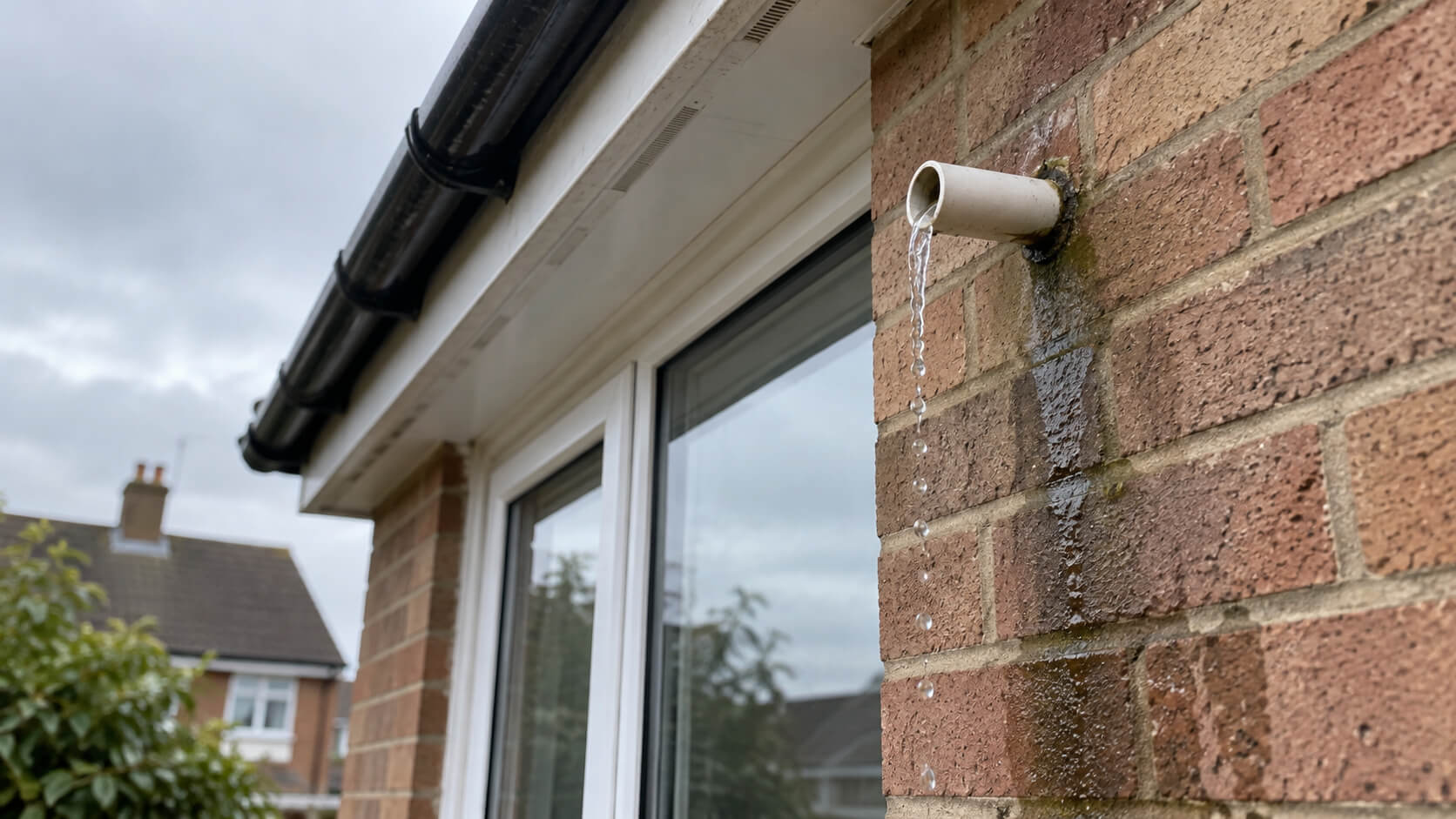
An overflow pipe leaking outside usually means a cistern or water-storage tank is filling higher than it should. The first step is to identify which part of the system is feeding the pipe and whether the discharge is occasional or continuing.
This guide explains the common causes of a leaking overflow pipe, safe visual checks, how to trace the likely source and when the problem may belong to a boiler, toilet or another system instead.
Checks for a Leaking Overflow Pipe
- Check whether the overflow is dripping occasionally or running continuously
- Identify which cistern or water-storage tank the pipe appears to come from
- Check whether the water level is unusually high without forcing any components
- Look for a float or inlet valve that is not shutting off normally
- Do not assume an external pipe belongs to the same system without tracing its source


Who will come to my home?
A certified local plumber from our vetted network, on the day and time you choose. You get a confirmation by email as soon as you book.
Are the parts included?
Small parts like washers, seals, valves and flush mechanisms are always included: the plumber brings the right one. For things you choose, like taps, toilets or radiators, you can supply your own or the plumber brings a standard one, as shown on your quote.
What if the plumber finds something else?
The fixed price covers the work on your quote. If the plumber finds something different on site, they explain it and quote it before starting, and you decide whether to go ahead.
What does the call-out fee cover?
When a fault needs to be found first, the plumber diagnoses it at your property and repairs what they can on the spot, with up to 1 hour of work included.
Do I pay now?
No. You see the price, then pick a date and time. Payment is only confirmed at checkout, and cancellation is free.

Recently booked jobs



Why an Overflow Pipe Can Start Leaking
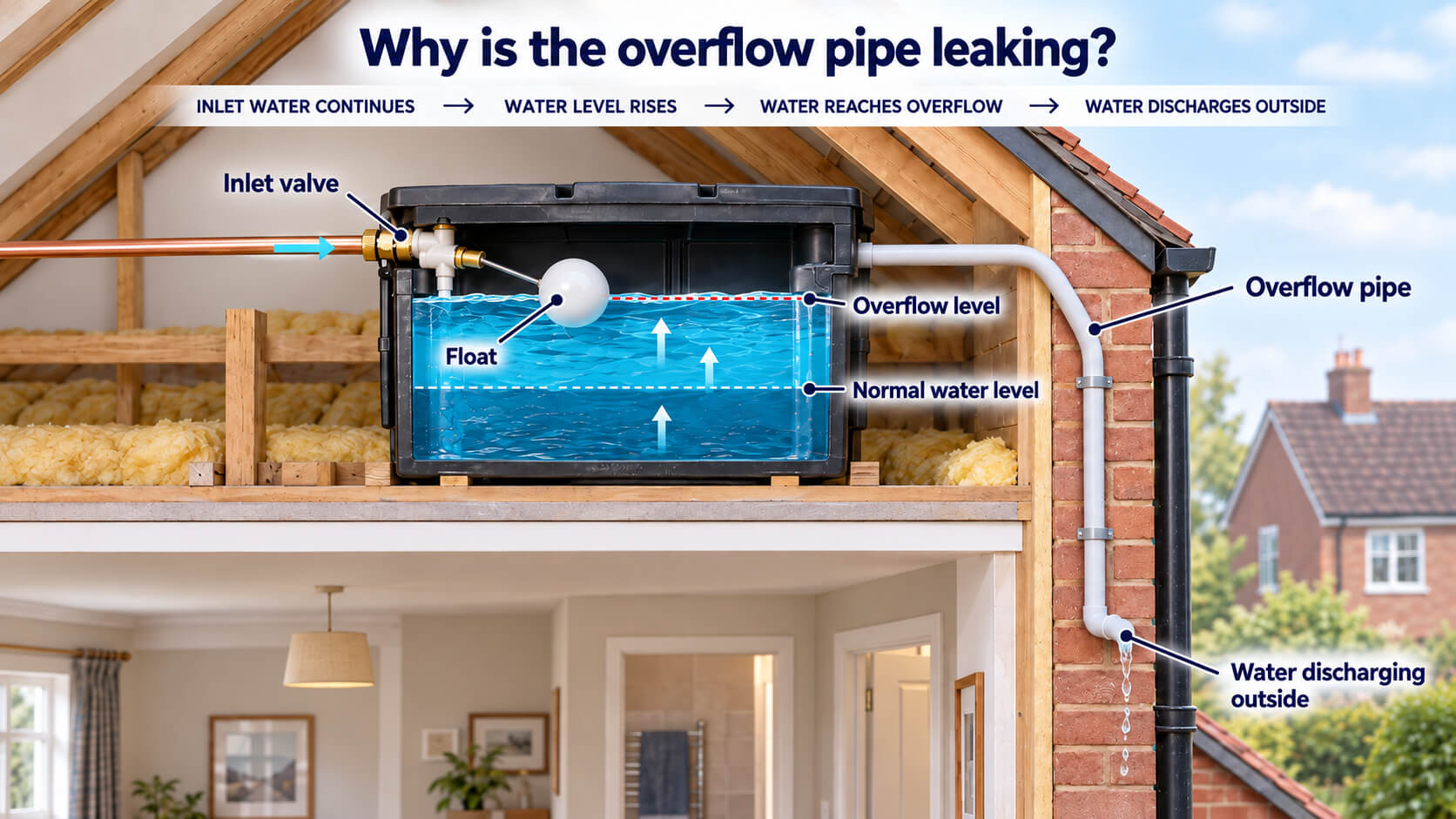
An overflow pipe usually starts discharging because the water level inside a cistern or storage tank has risen higher than its normal operating level. The overflow provides a route for excess water to escape rather than continuing to rise inside the container.
A few drops and a continuous flow do not necessarily point to the same fault. Before touching any component, first establish whether the water keeps running, whether it stops by itself and which cistern or tank appears to feed the pipe.
What does the overflow pattern suggest?
The pipe is running continuously
A continuing flow suggests that water is still entering the connected cistern or tank and the level is not being controlled normally.
The pipe only drips occasionally
An occasional drip may mean the water level is only reaching the overflow at certain times. Note when it happens and what water-using activity occurred beforehand.
The flow stops and then starts again later
The timing may help identify which system is feeding the overflow. Check what happens inside the suspected cistern when the external discharge begins.
Water Level Rising Too High
If the water level reaches the overflow opening, the cistern is receiving more water than its normal level-control arrangement is stopping. This may produce an occasional drip, a steady trickle or a more continuous discharge outside.
Where the cistern is safely accessible, observe the water level without reaching into moving parts or forcing the valve. The useful first check is whether the level stabilises below the overflow or continues to rise towards it.
Float Valve or Inlet Valve Not Shutting Off
A float-operated or inlet valve that does not close normally can allow the cistern to continue filling after the intended water level has been reached. The cause may be within the valve, its movement or the way the inlet is being controlled.
Do not bend the float arm, force the mechanism or dismantle the inlet valve simply to stop the symptom. If gentle movement does not allow the valve to shut off normally, further investigation is safer than repeated adjustment.
Water Entering the Cistern From Another Source
If the normal inlet appears to shut off but the water level still rises, the source may not be obvious from the float valve alone. Further investigation may be needed to establish how water is entering the cistern before any component is replaced.
This is especially important where several water or heating components are located close together. Identifying the system first prevents a generic overflow symptom from being treated as the wrong plumbing fault.
How to Identify Which Overflow Pipe Is Leaking
An outside overflow pipe does not identify its source by position alone. Similar-looking discharge pipes can serve different cisterns or systems, so the important check is where the pipe originates and what happens inside the connected container while water is escaping.
Look at the direction of the pipework where this can be done without entering unsafe areas or disturbing concealed plumbing. Do not assume that a pipe near a bathroom, boiler or roofline automatically belongs to that appliance or room.
Check Where the Pipe Comes From
Try to establish which cistern or tank is connected to the external pipe. A visible route through a loft, cupboard or service area may help, but concealed sections can make the source less obvious than the outside outlet suggests.
If the pipe cannot be traced safely, use the behaviour of the connected systems as additional evidence. A water level that is visibly reaching an overflow opening is much stronger evidence than the external position of the pipe alone.
Overflow From a Water Storage Cistern
A cold-water storage cistern can discharge through an overflow or warning pipe when its water level rises too high. Check whether the inlet continues running as the water approaches the overflow level and whether the float mechanism appears to move normally.
A continuing discharge should not simply be ignored because the overflow is carrying the water outside. The overflow is a warning route; the underlying reason the cistern is overfilling still needs to be identified.
When the Pipe May Belong to a Boiler or Toilet
Not every pipe releasing water outside should be diagnosed as a domestic storage-cistern overflow. Boiler discharge and condensate arrangements belong to the heating system, while toilet overflow faults belong to the toilet cistern and should follow their own troubleshooting route.
If the source clearly belongs to a boiler or toilet, stop the generic overflow diagnosis rather than applying water-storage-tank advice to a different system.
Which system is most likely feeding the pipe?
You can trace the pipe back to a water-storage cistern
Check whether the water level is reaching the overflow opening and whether the inlet or float-operated valve is still allowing water into the cistern.
The pipe appears to come from a toilet cistern
Treat this as a toilet-specific fault rather than a generic storage-cistern overflow and follow the relevant toilet troubleshooting route.
The pipe appears connected to boiler or heating equipment
Do not apply storage-cistern advice. Boiler discharge, pressure-relief and condensate arrangements belong to the heating system and need separate diagnosis.
You cannot identify where the pipe comes from
Do not diagnose the source from the outside position alone. Trace the pipe only where this can be done safely and use the behaviour of accessible cisterns as supporting evidence.
Safe Checks When an Overflow Pipe Is Dripping
Safe checks should focus on identifying the source and observing the water level rather than dismantling the valve or cistern. Where the relevant tank is accessible, check whether water is continuing to enter, whether the float moves freely and whether the level falls when the inlet stops.
If access requires climbing into an unsafe loft area, removing fixed covers, disturbing electrical equipment or forcing seized plumbing components, stop the DIY check and arrange further investigation instead.
Check the Water Level Without Forcing Components
Observe where the water level sits in relation to the overflow opening. If the level continues to rise while the inlet remains active, the filling control is not stopping the incoming water at the expected level.
Do not hold, bend or heavily adjust the float mechanism simply to make the water stop. A temporary change in position does not establish why the valve failed to control the level normally.
Watch Whether the Flow Stops or Continues
A continuous discharge gives stronger evidence of an active overfilling problem than an isolated drip. Note whether the overflow runs constantly, appears only after water has been used elsewhere, or stops once the cistern level falls.
The timing can help narrow the source, but it should be combined with what is happening inside the connected cistern rather than used on its own.
When the Overflow Needs Further Investigation
Further investigation is sensible when the overflow continues, the source cannot be identified safely or the cistern keeps refilling after the obvious inlet checks. A damaged valve, inaccessible fitting or fault elsewhere in the connected system may need to be confirmed before parts are replaced.
Do not block or cap the overflow pipe to stop the visible discharge. Its purpose is to provide a route for excess water, so the cause of the rising water level should be addressed instead.
Need help with a leaking overflow pipe? Describe where the pipe is discharging and what you can see happening inside the connected tank or cistern.
Check the Next StepOverflow Pipe Leaking FAQs


A leaking overflow pipe is not always immediately dangerous, but a continuing discharge should not be ignored. It usually means excess water is not being controlled normally somewhere in the connected system. If water is entering the building, reaching electrical equipment or creating another immediate hazard, the problem needs more urgent attention.
A pipe discharging near the roofline may be an overflow or warning pipe connected to a cistern in the loft or another elevated part of the property. The outside position alone does not confirm the source, so trace the pipe where this can be done safely and check whether an accessible cistern is filling to its overflow level.
First establish whether the pipe serves your flat, another property or a shared part of the building. Note whether the water is dripping or running continuously and where the outlet is located. If the source is in a communal or inaccessible area, the building manager, landlord or relevant maintenance contact may need to investigate it.
Regular or repeated dripping from a storage-cistern overflow is not normal operation. It indicates that water is reaching the overflow level at least some of the time. An occasional drip and a continuous flow may have different causes, so note when the discharge occurs and check the connected cistern rather than blocking the pipe.